The Global Technology Industry Association Launches Major Initiative to Standardize the Managed Service Provider Sector

The barrier to entry for the Managed Service Provider (MSP) market has historically been negligible, allowing virtually any entity with basic technical infrastructure to market themselves as a professional IT service provider. This lack of a formal, universally recognized certification or regulatory framework is now being challenged as the stakes of digital operations reach an all-time high. Dan Wensley, CEO of the Global Technology Industry Association (GTIA), has announced a strategic effort to formalize the industry through the creation of a new self-regulatory organization (SRO), aiming to establish rigorous professional, operational, and technical standards that could redefine the channel.
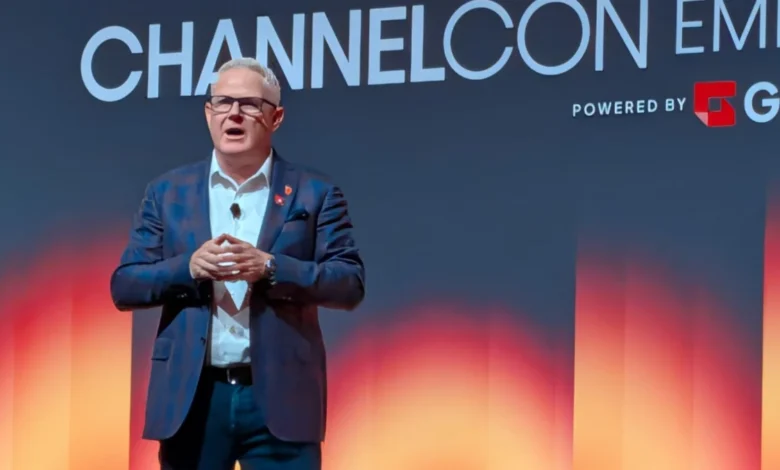
The initiative, unveiled during the GTIA ChannelCon EMEA event in London, arrives at a pivotal moment. As businesses increasingly outsource their cybersecurity, intellectual property management, and mission-critical data infrastructure to third-party providers, the MSP has become the gatekeeper of the modern enterprise. Despite this central role in the global economy, the industry remains largely unregulated, creating a "wild west" environment where service efficacy is often measured by marketing claims rather than objective, audited performance metrics.
The Growing Need for Professionalization
For decades, the MSP sector has grappled with the fundamental challenge of differentiation. Providers have long relied on a fragmented ecosystem of vendor-specific certifications and anecdotal testimonials to win business. However, as the sophistication of cyber threats increases and the complexities of AI-driven IT environments grow, these traditional markers of competence are proving insufficient.
Wensley argues that the current state of the industry is untenable given the level of access MSPs possess. "We have keys to all the IP; we have keys to all the data. An MSP is responsible for keeping their customers secure, but there is no way to measure the effectiveness of that," Wensley noted during his keynote. This lack of standardization is not merely a competitive issue for businesses; it represents a systemic vulnerability. When an MSP suffers a security breach or operational failure, the downstream effects on their clients—who may include healthcare providers, financial institutions, or critical infrastructure firms—can be catastrophic.
The Consortium for Responsible IT Services
To address these systemic gaps, the GTIA has formed a formal partnership with the Texas A&M University’s Global Cyber Research Institute. This collaboration has birthed the Consortium for Responsible IT Services, an entity designed to act as the architect for a new, self-regulatory framework.
The consortium’s primary mission is to establish a set of standards that move beyond the "technical check-list" approach common in today’s vendor certifications. Instead, the framework aims to incorporate operational proficiency, ethical standards, and comprehensive cybersecurity readiness. By doing so, the GTIA hopes to provide a standardized, objective benchmark that clients can use to evaluate potential partners, effectively raising the bar for the entire profession.
Chronology of the Initiative
The move toward self-regulation did not emerge in a vacuum. It follows years of increasing pressure from international regulatory bodies and a string of high-profile supply chain attacks that targeted MSPs as a vector to reach multiple downstream clients.
- 2020-2022: A series of major ransomware attacks targeted Remote Monitoring and Management (RMM) software used by MSPs, highlighting the vulnerability of the service provider model to hackers.
- Late 2023: Industry discussions regarding the potential for government-imposed regulations began to circulate, particularly in the UK and European markets, where data protection laws like GDPR have set a high bar for accountability.
- Early 2024: GTIA begins foundational discussions with the Global Cyber Research Institute at Texas A&M to explore the feasibility of an SRO model.
- Mid-2024: Official announcement of the Consortium for Responsible IT Services at ChannelCon EMEA.
- 2024-2026 (Projected): The development phase of the framework, including peer reviews, industry feedback cycles, and the creation of operational guidelines.
Market Data and Risk Context
Supporting the need for this shift is a growing body of data regarding the state of the MSP market. According to recent industry reports, the global Managed Services market is expected to grow at a Compound Annual Growth Rate (CAGR) of over 12% through 2030, reaching a valuation exceeding $500 billion. Despite this massive influx of capital and reliance, the Cybersecurity and Infrastructure Security Agency (CISA) has repeatedly identified MSPs as high-value targets for nation-state actors.
Data suggests that while many MSPs have improved their internal security postures, the variance in capability remains extreme. A report from a leading cyber insurance provider indicated that claims originating from MSP breaches have risen by nearly 40% year-over-year. The primary cited causes include misconfigured cloud instances, lack of multi-factor authentication (MFA) on administrative portals, and inadequate disaster recovery testing—all of which could theoretically be mitigated by the professional standards proposed by the GTIA.
The Case for Proactive Self-Regulation
Wensley’s warning regarding government intervention is shared by many in the channel. In the United Kingdom, the Department for Science, Innovation and Technology (DSIT) has been actively reviewing the cybersecurity landscape, with a specific focus on the resilience of third-party digital service providers. Similar sentiments are echoed in the United States, where the SEC and other regulatory bodies have begun to scrutinize the oversight of outsourced IT services.
"We’re one of the few industries on the planet that haven’t already been regulated by the government," Wensley stated. "Certification, training, and standards are coming to this industry whether we build them or it is pushed upon us."
By taking the lead, the GTIA aims to create a "Gold Standard" that is flexible enough to accommodate the diverse nature of IT service providers, yet rigorous enough to satisfy the demands of insurers, regulators, and enterprise clients. If the industry can demonstrate that it is capable of holding its own members to high standards, it may succeed in staving off heavy-handed legislative measures that could stifle innovation and increase the administrative burden on smaller providers.
Implications and Future Outlook
The success of the Consortium for Responsible IT Services will depend heavily on adoption rates. If the standards are perceived as too burdensome or expensive, independent MSPs may ignore them, leaving the market just as fragmented as before. However, if the framework is adopted by major industry players and becomes a requirement for inclusion in top-tier insurance policies or government contracts, it will quickly become the baseline for the industry.
The technical community is watching closely. Questions remain regarding the specific nature of the requirements. Will they include mandatory audits? Will there be tiered certifications based on the size and scope of the MSP? Furthermore, the role of AI in these standards is expected to be significant, as providers look for ways to use automated compliance monitoring to ensure their clients remain within the bounds of the new, prospective standards.
Ultimately, the GTIA’s initiative represents an attempt to transition the MSP sector from an informal collection of small businesses into a recognized, mature profession. By shifting the focus from "what can you do for me" to "how do you demonstrate your competence," the industry is positioning itself to be a more stable and reliable partner in an increasingly volatile digital landscape. As the consortium begins its work, the coming two to three years will prove critical in determining whether the channel can successfully self-regulate or if the mantle of oversight will be taken up by regulators who may not fully grasp the intricacies of the modern managed services model.