The Strategic Vision of Sandhya Venkatachalam: How Axiom Partners is Reshaping the AI Investment Landscape


The career trajectory of Sandhya Venkatachalam reflects the evolution of modern computing, spanning from the foundational days of data center hardware to the current, hyper-accelerated era of generative artificial intelligence. Having held product leadership roles at companies acquired by industry titans like Cisco and Microsoft—the latter through the acquisition of Skype—Venkatachalam occupied a front-row seat to the transformation of software ecosystems long before AI became the dominant focus of global venture capital. Today, as the founder and managing partner of Axiom Partners, she oversees a $52 million fund specifically designed to identify and scale startups that apply artificial intelligence to solve concrete problems in non-obvious, "real-world" industries such as industrial manufacturing, construction, and insurance.
A Career Built on Technical Evolution
Venkatachalam’s professional background is distinct in an industry often dominated by individuals with purely financial or theoretical academic backgrounds. Her early experience was rooted in the tangible aspects of data center infrastructure, an area that provided her with the technical intuition required to identify high-potential infrastructure plays before they became mainstream. Her transition into venture capital saw her serving as a general partner at Social Capital, where she was instrumental in securing early institutional investment for Groq, a pioneer in AI inference chips.
This move to early-stage investing was not merely a career shift but a strategic evolution of her core belief: that the most significant value in the tech ecosystem is often hidden in the "last mile" of industrial application. Her subsequent tenure at Khosla Ventures further refined her investment philosophy, particularly regarding the tolerance for risk and the identification of non-obvious founders who operate outside the traditional Silicon Valley pipeline of Stanford-affiliated computer scientists.
The Axiom Approach: The "Axiom Brain" and Practitioner-Led Diligence
Axiom Partners operates on a unique model that differentiates it from conventional venture capital firms. Recognizing that the velocity of AI development renders static market research obsolete, Venkatachalam has built her firm around a cohort of active AI practitioners. These individuals are not passive advisors; they are operators currently engaged in building, productizing, and pricing AI solutions in the field. By retaining these practitioners—who receive carry in the fund—Axiom ensures that its investment thesis remains tethered to the reality of the market.
To further amplify this, the firm utilizes an internal system dubbed the "Axiom Brain." This proprietary tool monitors market signals, maps potential investment targets, and automates elements of the due diligence process. The objective is to increase the speed of decision-making in a market where timing is often the difference between a successful series and a missed opportunity. This operational efficiency is essential for a firm that expects to deploy capital across approximately 35 startups, with a clear-eyed acceptance that a significant portion—roughly 50%—may not achieve the desired growth trajectory.
Investing in the Real World: Beyond Conventional Software
The core thesis of Axiom Partners is the shift from "software as a tool" to "digital workers that perform jobs." In many enterprise contexts, AI has been deployed as an add-on feature that assists a human user. Venkatachalam argues that this is an inefficient use of the technology. Instead, Axiom targets companies where AI is integrated to deliver a specific, measurable result, effectively replacing or augmenting a labor-intensive process.
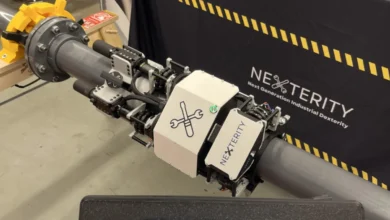
This criterion has led the firm to focus on sectors often overlooked by consumer-facing AI startups. For instance, in the construction industry, an AI solution might involve sensor-integrated robotics that analyze structural integrity or manage supply chain logistics, providing a tangible output rather than a simple software interface. By focusing on industries where labor costs are high and processes are manual, Axiom targets firms capable of securing high-value contracts—often in the range of hundreds of thousands of dollars—which contrasts sharply with the lower-margin, mid-market software tools that characterize many standard SaaS business models.
Durability and the "Last Mile" Problem
One of the most persistent concerns in the current AI market is the "commoditization of intelligence." As open-source models become more sophisticated, the barriers to entry for software-based AI tools are dropping, leading to a crowded market of "wrapper" products. Venkatachalam posits that the key to durability in this environment is the mastery of the "last mile" of a job.

For a startup to be truly defensible, it must integrate deeply into the legacy systems of its customers. By training models on proprietary industry data and learning the nuanced workflows of a specific sector, a company creates a moat that is difficult for general-purpose AI giants to bridge. This level of specialization requires a commitment to the specific operational needs of the customer, an approach that large, general-purpose AI model developers often lack the focus to pursue.
The Legacy of the Groq Investment
The influence of Venkatachalam’s early investment in Groq remains a cornerstone of her current strategy. When she backed the company in 2016, the concept of "AI inference"—the process of running a trained model to make predictions—was largely overshadowed by the focus on model training. Venkatachalam’s research into why companies like Google were developing their own proprietary networking hardware and chips led her to Jonathan Ross, the founder of Groq.
Recognizing that the massive scaling of AI models would eventually create an insatiable demand for efficient inference infrastructure, she made an early, contrarian bet. That experience solidified her conviction that investors must be willing to be early, patient, and capable of seeing the "infrastructure layer" beneath the surface-level hype. At Axiom, she continues to apply this logic: looking for the foundational layers of technology that will support the next generation of industrial AI applications before those applications become common knowledge.
Risk Management and Portfolio Philosophy
The financial model of Axiom Partners is rooted in the principles of power-law returns. With a $52 million fund and a target of 35 investments, the firm acknowledges that the majority of its bets will not return the capital invested. However, the model is calibrated for the "outlier"—a single, highly successful investment that can return the entire fund and offset the losses of the less successful ventures.
This approach necessitates a high tolerance for failure, which Venkatachalam views as an inevitable consequence of early-stage investing in nascent technology categories. By focusing on non-obvious founders—individuals who may not fit the traditional "Silicon Valley archetype"—the firm seeks to identify untapped talent and overlooked market opportunities. This strategy is not merely a preference; it is a fundamental requirement for achieving outsized returns in an increasingly competitive venture capital landscape.
Broader Implications for the AI Market
The shift toward "AI for the real world" as championed by firms like Axiom Partners carries significant implications for the broader tech economy. As the initial "gold rush" of generative AI tools for creative and administrative tasks begins to consolidate, the next frontier of growth is expected to be the digitization of legacy physical industries.
If successful, this transition will likely result in a fundamental change in how industries such as manufacturing and infrastructure are managed. The integration of AI into these sectors is expected to drive significant productivity gains, effectively lowering the cost of labor-intensive tasks and creating new value chains. However, as Venkatachalam notes, this will require more than just technical prowess; it will demand a deep, granular understanding of the specific problems facing these industries—a domain expertise that is becoming the most valuable currency in the next phase of the AI revolution.
Conclusion
As the AI landscape matures, the focus is clearly shifting from the sheer capability of models to their practical, industrial utility. Sandhya Venkatachalam’s approach with Axiom Partners underscores a broader trend: the move toward specialized, high-utility, and deeply integrated AI solutions. By prioritizing operator-led diligence, targeting real-world labor replacement, and maintaining a contrarian perspective on market timing, Axiom is positioning itself to capture value where it is hardest to create—in the complex, often messy, and critically important physical sectors of the economy. For the venture capital industry, the success of this strategy may serve as a blueprint for the next decade of institutional investment in artificial intelligence.
Related posts: