The Physics of the Light Boom Understanding the Mechanics and Legacy of Cherenkov Radiation

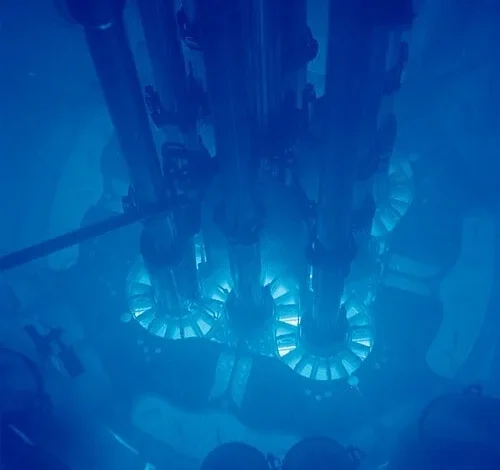
In the quiet, deep-blue glow of a nuclear reactor pool, a phenomenon occurs that challenges the popular conception of the speed of light as an unbreakable universal limit. This ethereal luminescence, known as Cherenkov radiation, serves as the electromagnetic equivalent of a sonic boom. While Albert Einstein’s theory of special relativity dictates that nothing can travel faster than the speed of light in a vacuum, the rules change when light enters a medium such as water, glass, or plastic. In these environments, high-energy particles can outpace the local phase velocity of light, creating a shock wave of photons that manifests as a distinct, ghostly radiance.
The discovery and subsequent analysis of this radiation have provided physicists with an invaluable tool for detecting subatomic particles, monitoring nuclear activity, and exploring the farthest reaches of the cosmos. By understanding how a particle "breaks" the local light barrier, scientists have unlocked a deeper understanding of the relationship between matter, energy, and the mediums through which they travel.
The Threshold of Luminosity: Surpassing the Phase Velocity of Light
To understand Cherenkov radiation, one must first distinguish between the universal speed limit ($c$) and the local speed of light within a material. In a vacuum, light travels at approximately 299,792,458 meters per second. However, when light travels through a medium, it interacts with the electromagnetic fields of the atoms within that material, effectively slowing its progress. This reduction is measured by the material’s refractive index ($n$). For example, in water, light travels at roughly 75% of its vacuum speed, or about 225,000,000 meters per second.
When a charged particle, such as an electron, enters a medium at a velocity ($v$) that exceeds this local speed of light ($c/n$), it creates a unique disturbance. As the particle traverses the medium, it polarizes the molecules along its path. These molecules quickly return to their ground state, releasing a pulse of electromagnetic radiation. Under normal circumstances, when a particle moves slowly, these pulses radiate outward in all directions and interfere destructively, essentially canceling each other out. However, when the particle moves faster than the light it is emitting, these wave fronts "pile up" behind the particle.
This accumulation of wave fronts creates a coherent shock wave. Much like the wake following a speedboat or the pressure wave trailing a supersonic jet, the light waves align and reinforce one another. The result is a concentrated cone of light that emanates from the particle’s trajectory. This is the "light boom," a visual manifestation of a particle outrunning the very information of its own presence.
A Chronological History of the Discovery
The history of Cherenkov radiation is a testament to the importance of observing the "unexplained" in experimental physics. While various scientists had noted a strange blue light in liquids near radioactive sources as early as the late 19th century—including Marie Curie—it was often dismissed as a form of fluorescence or a byproduct of chemical impurities.
1934: Pavel Cherenkov, a Soviet physicist working under the supervision of Sergey Vavilov, conducted a series of rigorous experiments. He observed a faint blue glow emanating from a bottle of water subjected to gamma radiation. Unlike fluorescence, which is isotropic (radiating in all directions) and dependent on the chemical composition of the substance, Cherenkov noted that this light was highly directional and occurred in any transparent medium regardless of its chemical makeup.
1937: Theoretical physicists Ilya Frank and Igor Tamm developed the mathematical framework to explain Cherenkov’s observations. They successfully linked the phenomenon to the classical theory of electromagnetism, proving that the radiation was a result of a charged particle moving faster than the phase velocity of light in a dielectric medium.
1958: The significance of the discovery was globally recognized when Pavel Cherenkov, Ilya Frank, and Igor Tamm were jointly awarded the Nobel Prize in Physics. The committee cited the discovery and interpretation of the Cherenkov effect as a foundational contribution to modern experimental physics.
The Mechanics of the Electromagnetic Shock Wave
The geometric structure of Cherenkov radiation is a perfect cone, with the particle at its apex. The angle of this cone ($theta$) is directly related to the velocity of the particle and the refractive index of the medium. The relationship is expressed by the formula: $cos(theta) = 1 / (beta n)$, where $beta$ is the ratio of the particle’s velocity to the speed of light in a vacuum ($v/c$).
This predictable geometry allows scientists to use Cherenkov radiation as a speedometer for subatomic particles. By measuring the angle of the emitted light cone, researchers can calculate the exact velocity of the particle that produced it. This is a critical function in particle accelerators and large-scale physics experiments.
The characteristic blue color of the radiation is not a matter of chance but a result of the physics of wave interference. According to the Frank-Tamm formula, the amount of energy emitted per unit length of the particle’s path is proportional to the frequency of the light. Higher frequencies (shorter wavelengths) result in more intense radiation. Because blue and ultraviolet light have higher frequencies than red or orange light, they dominate the spectrum of the Cherenkov glow. To the human eye, which is insensitive to ultraviolet, the radiation appears as a brilliant, electric blue.
Quantitative Analysis and Supporting Data
The intensity of Cherenkov radiation is relatively low compared to other forms of light emission, yet it is highly detectable due to its coherence. In a typical nuclear reactor, the electrons (beta particles) emitted during fission travel at nearly the speed of light in a vacuum. Upon entering the cooling water, they find themselves moving significantly faster than the 225,000 kilometers per second allowed by the water’s refractive index.
Data from nuclear facility monitoring shows that the brightness of the Cherenkov glow is directly proportional to the rate of fission occurring in the core. This provides a real-time, visual confirmation of reactor activity. Furthermore, in medical physics, Cherenkov imaging is used to verify the dose delivery in external beam radiation therapy. As high-energy X-rays or electron beams pass through a patient’s tissue (which is mostly water), they generate Cherenkov light. Sensitive cameras can capture this glow to ensure that the radiation is hitting the intended target with the correct intensity.
Modern Applications in Astrophysics and Particle Detection
The implications of Cherenkov’s discovery extend far beyond the laboratory. One of the most ambitious applications is found at the South Pole, in the IceCube Neutrino Observatory. This facility utilizes a cubic kilometer of Antarctic ice as a detection medium. When neutrinos—nearly massless particles that rarely interact with matter—occasionally strike an atom in the ice, they produce high-energy secondary particles. These particles travel through the ice faster than the speed of light, creating Cherenkov radiation. A grid of thousands of optical sensors buried deep in the ice detects these blue flashes, allowing astronomers to trace the neutrinos back to their cosmic sources, such as black holes or supernovae.
Similarly, the Super-Kamiokande observatory in Japan uses a massive underground tank filled with 50,000 tons of ultra-pure water. Surrounded by photomultiplier tubes, the facility waits for the telltale cone of blue light that signals a neutrino interaction. These experiments have been pivotal in proving that neutrinos have mass, a discovery that earned the Nobel Prize in Physics in 2015.
Global Scientific Implications and Safety Monitoring
Cherenkov radiation serves as a critical safety indicator in the nuclear industry. In spent fuel pools, where used nuclear fuel rods are stored to cool, the presence of the blue glow confirms that the material is still highly radioactive. This visual cue is used by inspectors from the International Atomic Energy Agency (IAEA) to verify that nuclear materials are being handled and stored correctly. Because the glow cannot be easily faked or masked without changing the physical properties of the fuel, it remains a reliable "fingerprint" of nuclear activity.
From a theoretical perspective, the study of Cherenkov radiation continues to yield insights into "metamaterials"—engineered substances with negative refractive indices. In these exotic materials, the Cherenkov cone can actually point in the opposite direction of the particle’s movement, a phenomenon known as "reversed Cherenkov radiation." This research has potential applications in developing new types of sensors and communication technologies.
Conclusion: The Legacy of a Scientific Instinct
The story of Cherenkov radiation is a reminder that even the most subtle observations can lead to revolutionary changes in our understanding of the universe. What Pavel Cherenkov first saw as a faint, unexplained glow in a bottle of water has become a cornerstone of modern science. It allows us to "see" the invisible, from the subatomic debris of a nuclear reaction to the ghostly particles arriving from the edges of the observable universe.
By bridging the gap between classical electromagnetism and high-energy particle physics, the "light boom" remains one of the most visually stunning and scientifically productive phenomena in nature. As we continue to refine our detection methods and explore new mediums, the eerie blue light of Cherenkov radiation will undoubtedly continue to illuminate the path toward future discoveries.