Russian State-Backed Espionage Group Exploited Zero-Click Zimbra Flaw for Months of Western Mailbox Access

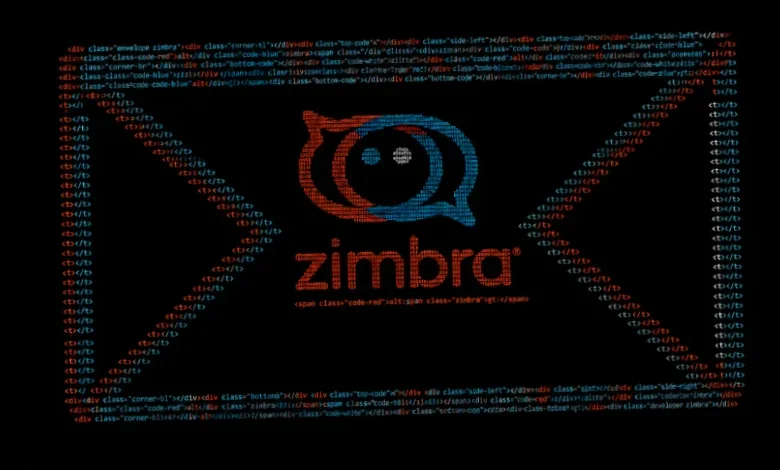
A sophisticated Russian state-supported espionage group successfully exploited a previously unknown vulnerability in Zimbra’s widely used webmail client for months, gaining unauthorized access to Western mailboxes and exfiltrating sensitive data. This protracted campaign, revealed through a joint advisory from leading cybersecurity agencies and private sector researchers, underscores the persistent threat posed by nation-state actors targeting critical communications infrastructure. The exploit allowed attackers to harvest a wealth of information, including the last 90 days of email communications, an organization’s entire email directory, browser-saved passwords, and crucial two-factor authentication (2FA) recovery codes, all initiated simply by the victim viewing a malicious email.
The Unveiling: A Coordinated Alert and Deep Dive into Espionage
The severity and scope of this espionage campaign prompted a coordinated response from major government cybersecurity bodies and private threat intelligence firms. The U.S. National Security Agency (NSA), the Cybersecurity and Infrastructure Security Agency (CISA), and various international partner agencies, including members of the Five Eyes intelligence alliance, jointly published a comprehensive advisory on Thursday, March 21, 2026. This official alert was augmented by in-depth research from cybersecurity giants Palo Alto Networks’ Unit 42 and Proofpoint, whose independent investigations provided critical technical details and attribution insights. The advisory explicitly labeled the technique as a "view-based exploit," emphasizing its insidious nature: a user merely had to open or preview a specially crafted email within a vulnerable Zimbra client for the attack to commence, requiring no further interaction. Threat actors have been actively targeting and compromising Western government and commercial organizations through this Zimbra flaw since at least July 2025.
Technical Breakdown: CVE-2025-66376 and the "Zero-Click" Menace
The core of this extensive espionage operation was a critical vulnerability identified as CVE-2025-66376, a stored cross-site scripting (XSS) flaw resident in Zimbra’s Classic UI. This particular type of XSS is especially dangerous because the malicious script is "stored" on the server (e.g., within an email body), and when retrieved and rendered by a client, it executes without direct user input beyond viewing the content.
In this instance, the attackers crafted HTML emails that ingeniously abused the Cascading Style Sheets (CSS) @import handling mechanism. By embedding an svg onload tag within a display:none div and then fragmenting this tag using fake @import directives and HTML comments, they bypassed Zimbra’s built-in sanitizer. Proofpoint researchers dubbed this sophisticated evasion technique "tag-splitting." The Zimbra sanitizer, designed to strip out potentially harmful code, failed to recognize these fragments as executable markup. Instead, it would remove the @import sequences, leaving behind characters that would coalesce into a fully formed <svg onload=eval(atob(...))> tag. When the browser rendered this modified HTML, the embedded JavaScript within the onload attribute would execute seamlessly within the user’s authenticated webmail session, inheriting all of the user’s access privileges to the mailbox.
The "zero-click" nature of this exploit is a significant concern, elevating its danger level. While the National Vulnerability Database (NVD) initially scored CVE-2025-66376 at 6.1 (medium severity) and indicated user interaction was required, MITRE assigned a higher score of 7.2 (high severity) and correctly noted that no user interaction was necessary. Unit 42 unequivocally categorized it as "zero-click." All three assessments, despite differing scores, described the same critical behavior: the malicious code executed automatically upon the message’s rendering, requiring no further action like clicking a link or downloading an attachment. This made the attack particularly potent, as even cautious users could fall victim simply by glancing at an infected email.

The ZimReaper Payload: Deep Reconnaissance and Data Exfiltration
Once the JavaScript payload successfully executed, it initiated a multi-stage process of reconnaissance and data exfiltration, which Proofpoint collectively identified as "ZimReaper." The payload was designed to compromise the user’s session thoroughly and steal valuable information.
Firstly, ZimReaper extracted the Cross-Site Request Forgery (CSRF) token, a critical security measure designed to prevent unauthorized commands from being sent from a user’s browser. With this token, the attackers could potentially perform actions on behalf of the user within their Zimbra session. Simultaneously, it stole passwords autofilled and saved within the user’s browser, providing direct access to other web services if the user practiced password reuse.
Beyond immediate credentials, the payload also targeted long-term access and recovery mechanisms. It pulled two-factor authentication (2FA) scratch codes, which are often provided as backup codes for account access in case a user loses their primary 2FA device. This data, alongside details about the Zimbra version, was exfiltrated using the platform’s own APIs, adding a layer of stealth to the operation. The stolen information was then sent to actor-controlled infrastructure via DNS queries, a common exfiltration technique that can be harder to detect than direct HTTP connections.
One of the most concerning aspects of the ZimReaper payload was its ability to perform comprehensive data theft. It systematically brute-forced the Global Address List (GAL) by querying every two-character combination until the complete organizational directory was retrieved. This provided the attackers with a comprehensive map of internal communication channels and potential targets. Finally, the payload packaged the victim’s last 90 days of email correspondence into a compressed TGZ archive and uploaded it to the command-and-control (C2) servers. This represents a significant intelligence gain for a state-sponsored actor, providing insights into communications, projects, and potentially classified information.
The attackers also sought to establish persistent access. In one notable case analyzed by Seqrite at a Ukrainian state hydrology agency in January 2026, the payload not only stole credentials but also flipped the zimbraPrefImapEnabled setting to TRUE. This action enables IMAP access, making it easier for attackers to connect to the mailbox using standard email clients. Crucially, the payload also minted an app-specific password named ZimbraWeb through the CreateAppSpecificPasswordRequest API. These app-specific passwords can grant IMAP, POP3, or SMTP access without requiring two-factor authentication, making them incredibly valuable for maintaining covert access. As Seqrite researchers noted, "App-specific passwords survive password resets," highlighting the challenge in fully expelling an attacker once this level of persistence is achieved. Proofpoint observed that the threat actor, TA488, continued to send further exploit emails from previously compromised mail servers, though it was unclear if this was due to app passwords or other stolen credentials.
Chronology of Exploitation, Patching, and Disclosure
The timeline of this campaign reveals a period of significant vulnerability for Zimbra users:

- July 2025: The Russian state-supported group began actively exploiting CVE-2025-66376 as a zero-day vulnerability. Proofpoint, tracking the actor as TA488, confirmed exploitation dating back to this period.
- November 6, 2025: Zimbra officially released patches for the vulnerability. This included Zimbra Collaboration 10.0 before version 10.0.18 and 10.1 before version 10.1.13. This marked the end of the zero-day exploitation window, though many organizations likely remained unpatched.
- December 31, 2025: Zimbra 10.0 reached its end-of-life. This meant that even with the patch, organizations still running 10.0 were operating on an unsupported platform, increasing their overall risk.
- January 2026: Seqrite analyzed a specific instance of the attack targeting a Ukrainian state hydrology agency, providing early public insights into the exploit’s mechanics and payload.
- February 2026: Proofpoint observed the last activity from TA488, suggesting the group might have wound down or torn down its infrastructure following increased scrutiny and disclosures.
- March 18, 2026: CISA added CVE-2025-66376 to its Known Exploited Vulnerabilities (KEV) catalog, mandating federal civilian executive branch agencies to patch the flaw within a specified timeframe due to its active exploitation.
- March 21, 2026 (Thursday): NSA, CISA, and partner agencies, alongside research from Palo Alto Networks’ Unit 42 and Proofpoint, published the joint advisory, publicly disclosing the full extent of the campaign and its technical details.
Proofpoint’s telemetry indicated active exploitation for at least five months as a previously unknown vulnerability before Zimbra’s official fix.
Targeted Organizations and Broader Impact
The threat actor demonstrated a clear strategic focus, targeting organizations vital to Western interests and national security. Unit 42, which tracks the activity as CL-STA-1114, outlined a broad range of sectors and regions affected:
- Government entities: Both national and local government organizations.
- Defense industry: Companies and agencies involved in military and defense production and research.
- Transportation sector: Critical infrastructure, potentially including logistics and supply chains.
- Financial organizations: Institutions handling sensitive economic data and transactions.
- NATO member states: Countries within the North Atlantic Treaty Organization, indicating a geopolitical targeting focus.
- Ukraine: A nation at the forefront of cyber conflict with Russia.
- Commonwealth of Independent States (CIS): Nations with historical ties to Russia, potentially for intelligence gathering or leverage.
- Africa: Countries in Africa, suggesting a wider global intelligence gathering mandate.
Proofpoint further specified that U.S. organizations were among those targeted, including government agencies, scientific research institutions, and entities within the defense industrial base, notably including nuclear installations. While no specific victim counts or names were released, the breadth of targeting indicates a comprehensive intelligence collection effort. The implications of such widespread compromise are profound, ranging from the theft of classified information and intellectual property to the disruption of critical services and the erosion of trust in secure communications. The stolen email data, directory information, and credentials could be used for further phishing campaigns, lateral movement within networks, or to gain deeper footholds in targeted organizations.
Remediation and Mitigation: Urgent Actions for Defenders
Given the sophistication and long-term nature of this exploitation, remediation efforts extend far beyond simply applying a patch. The advisory and research firms provided clear, urgent guidance for organizations using Zimbra:
- Immediate Patching: All Zimbra Collaboration deployments must be updated. For Zimbra 10.1, upgrade to at least version 10.1.13. For any remaining Zimbra 10.0 deployments, it is imperative to move onto a supported 10.1 build, as version 10.0 reached its end-of-life on December 31, 2025. Zimbra 10.1.20, released on July 20, 2026 (likely a typo in the source, assuming July 20, 2025 or another past date, or it’s a future fix) further addresses four more stored XSS flaws in the Classic Web Client, underscoring the ongoing need for vigilance.
- Comprehensive Account Review and Reset: The most critical step post-patching is to assume compromise for any mailbox that opened or even previewed a matching malicious message in a vulnerable Classic UI session. For these accounts, organizations must:
- Reset Passwords: Immediately force a password reset for all potentially compromised users.
- Invalidate Active Sessions: Terminate all active Zimbra sessions to prevent continued unauthorized access.
- Regenerate 2FA Scratch Codes: Invalidate and regenerate all two-factor authentication backup codes, as these may have been exfiltrated.
- Forensic Analysis of Unopened Messages: Messages that landed in inboxes but were never opened should not be simply deleted. Their HTML content must be forensically examined for the fragmented
@importpattern indicative of the exploit. Proofpoint has released YARA rules to aid in detecting this specific pattern. - Audit for App-Specific Passwords: Organizations should audit for any unauthorized app-specific passwords, particularly those named "ZimbraWeb" or similar, which could indicate a persistent backdoor. These should be revoked.
- Review
zimbraPrefImapEnabledSettings: Check for any unauthorized changes tozimbraPrefImapEnabledor similar settings that could facilitate unauthorized IMAP/POP3 access.
The core message from all agencies is clear: patching closes the hole for future attacks, but it does not revoke credentials or access tokens already stolen. A thorough account review and remediation process is paramount.
Attribution Challenges and the Shifting Landscape of APTs
Attributing cyberattacks to specific state-sponsored groups is notoriously difficult, often involving a complex interplay of technical indicators, geopolitical context, and intelligence assessments. The joint advisory acknowledged this complexity, listing several names in community use for these actors: LAUNDRY BEAR, Void Blizzard, CL-STA-1114, and TA488, while cautioning that the mapping might not be one-to-one.

- TA488 (Proofpoint): Proofpoint specifically tracks the actor behind the Zimbra campaign as TA488. While they could not independently tie TA488 to Void Blizzard from their own telemetry, they noted that U.S. government partners confirmed the association.
- CL-STA-1114 (Unit 42): Palo Alto Networks’ Unit 42 refers to the activity as CL-STA-1114. A comparison of indicator lists by The Hacker News found the same nine domains used in both Proofpoint’s and Unit 42’s research, strongly suggesting that TA488 and CL-STA-1114 refer to the same infrastructure and, likely, the same actor group.
- APT28 / Fancy Bear / Strontium (Seqrite): Seqrite, which analyzed the January 2026 Ukrainian case, attributed the attack to APT28 (also known as Fancy Bear or Strontium) with medium confidence. APT28 is a well-known Russian military intelligence (GRU) cyber espionage group with a long history of targeting government, military, and political organizations worldwide.
- LAUNDRY BEAR (Dutch Intelligence): Dutch intelligence, which previously named LAUNDRY BEAR, treats this group and APT28 as separate but potentially related entities.
This web of names and associations highlights the challenges in definitively identifying and categorizing state-sponsored threat actors. These groups often overlap in tactics, techniques, and procedures (TTPs), and may even share resources or operate under different mandates from the same state sponsor. For defenders, however, the precise naming argument often matters less than the immediate need to understand the threat and implement effective countermeasures. The consensus is that a highly capable, state-backed Russian entity was responsible.
Ongoing Threat and Future Outlook
The question of whether this specific campaign remains active elicits differing assessments from the security community. Unit 42 stated that threat actors continue to actively target unpatched Zimbra Collaboration Suite (ZCS) instances using the flaw, although they did not explicitly confirm if this specific cluster (TA488/CL-STA-1114) was among them. The joint advisory from NSA, CISA, and partners also warned of ongoing activity and assessed that the group would "very likely" continue to target Zimbra and other Western email systems, even if this particular campaign eventually winds down as organizations apply patches.
Conversely, Proofpoint’s telemetry indicated a cessation of activity from TA488 since February 2026, tying this silence to Seqrite’s earlier public disclosure and the actor’s subsequent tearing down of its infrastructure. This divergence underscores the dynamic nature of state-sponsored cyber operations; actors often adapt their TTPs or shift to new infrastructure once their methods are exposed.
Regardless of whether this specific iteration of the campaign is ongoing, the broader threat remains. The incident serves as a stark reminder that email systems, as fundamental communication platforms, will continue to be prime targets for sophisticated espionage operations. The constant evolution of attack techniques, coupled with the persistent challenge of timely patching and comprehensive incident response, means that organizations must maintain a high state of vigilance. The lessons from this Zimbra exploitation underscore the critical importance of a layered security approach, encompassing robust vulnerability management, strong authentication, and thorough post-compromise forensic procedures, to defend against determined nation-state adversaries.
Related posts: