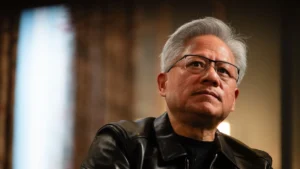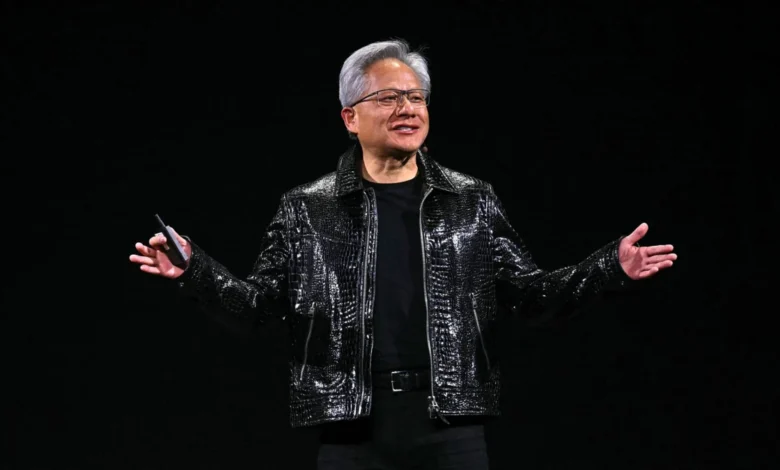
The reinstatement marks a dramatic reversal for the Silicon Valley titan, which has become the epicenter of the global artificial intelligence boom. The board of directors confirmed that they had sought and received input from senior levels of the United States government before finalizing their decision. According to the official statement, the board is now "confident that Mr. Huang’s reinstatement poses no national security risk," effectively clearing the path for his return to the helm.
A Chronology of the Crisis
The saga began in early November when the integrity of Nvidia’s leadership was called into question following reports of personal misconduct. On November 5, the situation escalated significantly when the U.S. House Committee on Foreign Affairs formally requested that Huang appear for a closed-door briefing. The summons was tied to allegations that Huang had engaged in multiple extramarital affairs, most notably with a business executive named Alice Huang, who had been identified by U.S. intelligence officials as a potential asset for the Chinese government.
These revelations placed Nvidia, a company whose high-end H100 and Blackwell GPUs are considered strategic assets in the U.S.-China technology race, in a precarious geopolitical position. Under intense pressure, Huang stepped down on November 12, citing the need to prioritize the company’s stability. During his brief absence, Colette Kress, the company’s chief financial officer, assumed the role of interim CEO. Kress has now transitioned back to her former duties, with board chair Harvey Jones publicly thanking her for her "outstanding service" during a period of extreme volatility.
Governance and Compliance Reforms
In response to the scandal, the Nvidia board has moved to insulate the company from future vulnerabilities. The formation of a new "National Security and Export Control Committee," comprised entirely of independent directors, is perhaps the most significant structural change. This committee is tasked with overseeing trade compliance and mitigating national security risks, a move intended to reassure both regulators and shareholders that the company’s operations remain aligned with U.S. national interests.
Furthermore, the company is actively searching for a new Chief Compliance Officer, a role that will carry significant weight in monitoring corporate conduct and international partnerships. This individual will report directly to the board and work in tandem with the newly formed committee to ensure that all business practices meet stringent government standards.
The Weight of Leadership
In his first public statement since returning to the role, Huang expressed humility and a renewed sense of duty. "I am honored to return to Nvidia and lead one of the most consequential technology companies in the world," Huang said. "I take this responsibility with the greatest humility and renewed commitment. I want to thank the Nvidia Board for its confidence and deliberation through this process."
Industry analysts suggest that Huang’s return is a reflection of his irreplaceable role in Nvidia’s meteoric rise. Since he founded the company in 1993, Huang has been the architect of its pivot from a gaming-focused graphics card manufacturer to the primary supplier of the world’s AI infrastructure. Market observers have noted that while the board’s decision to bring him back is a signal of stability, the company remains under a microscope, with investors waiting to see how the new compliance measures will impact its aggressive growth strategy.
Broader Implications for the Semiconductor Industry
The semiconductor industry is currently operating within a complex web of export controls and geopolitical tensions. As the primary provider of the hardware required to train large language models, Nvidia has found itself at the heart of the U.S. government’s "small yard, high fence" strategy regarding technology transfers to China. The allegations involving Huang highlighted the extent to which the personal lives of high-profile tech executives can now overlap with matters of national security.
The involvement of the House Committee on Foreign Affairs underscores that Washington views Nvidia not merely as a private entity, but as a critical component of American national power. For competitors like AMD and Intel, the recent instability at Nvidia has served as a reminder of the fragility of the current AI supply chain. However, with the board now signaling its full support for Huang, the market is expected to focus once again on the company’s quarterly earnings and the upcoming rollout of its next-generation architecture.
Supporting Data and Financial Context
Nvidia’s market capitalization has fluctuated significantly during the two-week crisis, reflecting the high stakes of the situation. As of the most recent market close, the company remains one of the most valuable in the world, largely driven by the insatiable demand for its data center hardware. Investors have largely reacted with relief to the news of the reinstatement, with shares ticking upward in early trading following the announcement.
The company’s reliance on Taiwan Semiconductor Manufacturing Company (TSMC) for its wafer fabrication and its complex assembly chain in Southeast Asia necessitates a high degree of geopolitical maneuvering. Huang’s return is expected to stabilize the company’s relationships with its key manufacturing partners, many of whom were reportedly concerned about the potential for a leadership vacuum.
The Road Ahead
As Huang settles back into his office, the immediate priority will be to demonstrate that the internal investigation launched earlier this month has addressed the core concerns of the board and, by extension, the federal government. The newly established compliance committee is expected to issue a report in the coming months, outlining the steps taken to prevent any future conflicts of interest.
While the immediate crisis has passed, the long-term impact on Nvidia’s corporate culture remains to be seen. The company has historically prided itself on a flat, fast-moving, and innovative culture, but the need for increased oversight and bureaucratic layering—driven by the new compliance office—may alter the way business is conducted at the executive level.
For now, the focus shifts back to the technology. Nvidia continues to push the boundaries of computational power, with the industry waiting for updates on the supply chain health of its latest chips. By reinstating Huang, the board has made a calculated bet that his vision and deep-rooted knowledge of the company’s operations are worth the risk of further public scrutiny.
"I am also deeply thankful to our employees, shareholders, leaders across the industry and partners around the world for their extraordinary support," Huang said in his closing remarks. "Above all, I am grateful for the love and support of my family. I can’t wait to get back to work."
As Nvidia navigates the remainder of the fiscal year, the eyes of the tech world remain fixed on the company. Whether this brief period of uncertainty will be viewed as a minor bump in the road or a precursor to more rigorous federal oversight remains an open question. However, the message from the board is clear: the company is unified under its founder, and the focus is firmly on the future of artificial intelligence.
In the coming weeks, the company is expected to hold an investor briefing to further clarify its strategic roadmap for 2026. This event will likely serve as the true test of investor confidence, as shareholders look for evidence that the company’s internal governance reforms are effective and that its market leadership remains unchallenged. For the employees and partners who have navigated these past weeks, the return of Huang provides a sense of continuity that is essential for the execution of the company’s massive, capital-intensive projects. The technology landscape continues to evolve at a breakneck pace, and Nvidia is betting that with its founder back in the lead, it can maintain its position at the front of the pack.