Google Pixel Needs a Ryzen Moment to Define Its Future in Mobile Computing

The Google Pixel series has long been celebrated for its sophisticated software, industry-leading camera processing, and an unmatched commitment to long-term software support. However, the hardware engine driving these innovations—the proprietary Google Tensor processor—has become the subject of intense scrutiny. As the smartphone industry reaches a plateau in traditional performance gains, analysts and tech enthusiasts are increasingly calling for a fundamental architectural shift. The current discourse suggests that for Google to maintain its competitive edge against heavyweights like Apple and Qualcomm, the Tensor platform requires a "Ryzen moment"—a transformative shift in architectural efficiency and raw performance that mirrors AMD’s historic turnaround in the desktop CPU market.
![The Google Pixel is fine and all, but still needs a ‘Ryzen moment’ [Video]](https://9to5google.com/wp-content/uploads/sites/4/2025/08/pixel-10-repair-tensor-g5-1.jpg?quality=82&strip=all&w=1600)
The Historical Context: Lessons from the Bulldozer Era
To understand the current state of Google’s silicon strategy, one must look back at the history of x86 computing. In the early 2010s, AMD faced a severe crisis with its "Bulldozer" microarchitecture. Designed to optimize for throughput, the FX series processors suffered from high thermal output, poor single-threaded performance, and inefficient power consumption. This failure allowed Intel to maintain a virtual monopoly, leaving the consumer market stagnant for nearly a decade.
The pivot point for AMD arrived in 2017 with the launch of the "Zen" microarchitecture. By moving away from the flaws of the Bulldozer design and embracing a chiplet-based approach and superior manufacturing processes, AMD delivered the Ryzen 1000 series. This launch provided multi-threaded performance that challenged, and in many cases surpassed, high-end Intel offerings, effectively resetting the industry standard.
![The Google Pixel is fine and all, but still needs a ‘Ryzen moment’ [Video]](https://9to5google.com/wp-content/client-mu-plugins/9to5-core/includes/obfuscate-images/images/9to5google-default.jpg)
Google’s Tensor lineup, while significantly more successful in a mobile context, shares some of these early systemic challenges. Since the introduction of the first Tensor chip in the Pixel 6, Google has prioritized machine learning and AI-driven features over pure computational throughput. While this has resulted in a unique, "smart" user experience, it has also led to concerns regarding thermal management, power efficiency, and sustained performance under heavy workloads—echoing the struggles of the early FX series.
The Transition to TSMC and the Performance Gap
For several years, Google relied on Samsung Foundry for the production of its Tensor chips. Industry observers noted that this choice likely limited the potential of the hardware, as competing chipmakers utilizing TSMC’s fabrication nodes consistently achieved superior efficiency and performance metrics. When Qualcomm shifted its Snapdragon 8 Gen 1 production from Samsung to TSMC’s 4nm node, the resulting Snapdragon 8+ Gen 1 saw immediate improvements in heat dissipation and battery longevity, highlighting the critical importance of the manufacturing partner.
![The Google Pixel is fine and all, but still needs a ‘Ryzen moment’ [Video]](https://9to5google.com/wp-content/uploads/sites/4/2026/08/App-drawer-on-Pixel-11-Pro-XL-and-iPhone-17-Pro-Max.jpg?quality=82&strip=all&w=800)
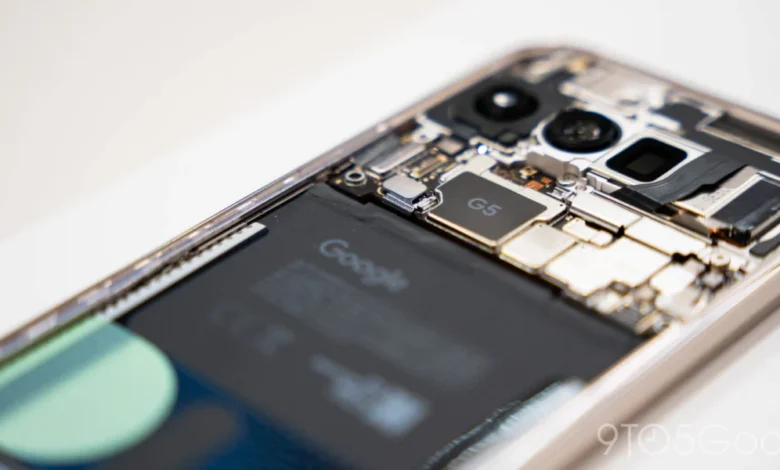
Google eventually made the transition to TSMC, a move that many industry analysts hoped would serve as a "clean slate" for the Tensor architecture. With the introduction of the Tensor G5 and the subsequent G6 powering the Pixel 11 lineup, the transition has successfully mitigated some of the extreme thermal throttling issues seen in earlier generations. However, the year-over-year performance gains have remained incremental rather than revolutionary. While the current hardware is undoubtedly "fine" for standard consumer tasks like social media browsing or photography, a significant performance delta remains when compared to the flagship silicon from Apple and the latest Snapdragon iterations.
Technical Implications and Thermal Constraints
The performance gap is not merely a matter of benchmark scores; it carries tangible implications for the end-user experience. High-end mobile devices are increasingly expected to handle desktop-class tasks, including high-bitrate 4K video recording, complex AI-driven image manipulation, and background task management. When a processor lacks the necessary overhead, these tasks can trigger thermal warnings or aggressive performance throttling, which in turn limits the device’s functional longevity.
![The Google Pixel is fine and all, but still needs a ‘Ryzen moment’ [Video]](https://9to5google.com/wp-content/uploads/sites/4/2022/09/tensor-g2.jpeg?quality=82&strip=all&w=800)
Furthermore, Google has set a benchmark for the industry by promising seven years of operating system updates for its Pixel devices. While this is a significant consumer benefit, it poses a long-term engineering challenge. A processor that is barely sufficient for today’s OS requirements may struggle to maintain fluid performance four or five years into its lifecycle as future iterations of Android become more resource-intensive. Ensuring that the hardware can sustain its performance standards through the entirety of its support window is a growing concern for long-term users.
The Vision of Desktop-Class Android
The necessity for a high-performance breakthrough becomes even clearer when examining the broader ecosystem. Apple’s recent move to integrate its A-series smartphone silicon into fanless, entry-level laptops—as seen with the MacBook Neo—demonstrates the potential for high-efficiency mobile chips to power desktop workflows.
![The Google Pixel is fine and all, but still needs a ‘Ryzen moment’ [Video]](https://9to5google.com/wp-content/uploads/sites/4/2025/08/pixel-10-repair-tensor-g5-2.jpg?quality=82&strip=all&w=800)
Google has spent the last several years laying the groundwork for full desktop windowing and external monitor support within Android. The company’s trajectory suggests a future where a single, high-powered mobile processor could serve as the engine for a phone, a tablet, and potentially a desktop-docked productivity station. If Google intends to push Android into this professional computing space, the current "good enough" approach to silicon will not suffice. The hardware must be capable of handling desktop-grade multitasking without compromising thermal or power efficiency.
Market Positioning and Future Outlook
From a market perspective, the "Ryzen moment" is not just a technical requirement but a strategic necessity. Marketing a $1,000 smartphone relies heavily on the promise of unrivaled performance. When competitors consistently offer superior thermal management and raw speed, Google’s value proposition—centered on software and AI—is forced to carry an outsized burden.
![The Google Pixel is fine and all, but still needs a ‘Ryzen moment’ [Video]](https://9to5google.com/wp-content/uploads/sites/4/2026/04/macbook-neo-citrus-0002.webp)
While Google’s engineering teams have performed miracles in optimizing Android to run smoothly on diverse hardware, this is effectively a form of damage control. By forcing the software to compensate for hardware limitations, the company limits its own potential. A truly high-performance, custom-silicon breakthrough would allow the software to excel rather than simply survive.
Conclusion: The Path Toward a Breakthrough
The foundational work for a potential transformation is already present. The transition to TSMC and the development of the Tensor G5/G6 architecture have provided a stable base. However, stability is only the first step. To achieve a true "Ryzen moment," Google must move beyond incremental gains and address the core architectural inefficiencies that have persisted since the inception of the Tensor line.
![The Google Pixel is fine and all, but still needs a ‘Ryzen moment’ [Video]](https://9to5google.com/wp-content/uploads/sites/4/2026/08/Tensor-G6.jpg?quality=82&strip=all)
If Google can successfully marry its advanced software capabilities with a new generation of high-performance, thermally efficient hardware, the company would be positioned to redefine the mobile experience. Such a shift would not only close the current performance gap but would also solidify the Pixel ecosystem as a viable alternative for users who require the power and reliability of a desktop machine in the palm of their hand. The blueprints are in place, the foundation is set, and the market is waiting to see if Google can deliver the architectural leap necessary to lead the next era of mobile computing.