Empowering Global Digital Sovereignty: Microsoft Redefines the Continuum of Cloud Control for Public and Regulated Sectors

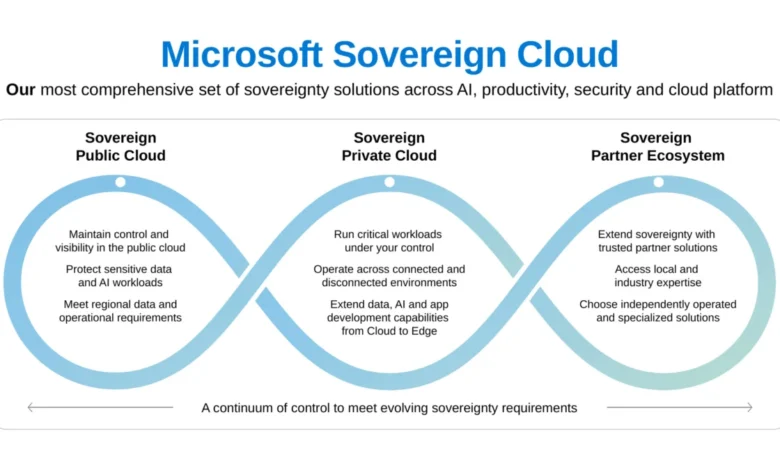
In an era where geopolitical volatility, evolving regulatory frameworks, and the rapid acceleration of artificial intelligence converge, organizations managing critical infrastructure and sensitive public data face a paradox: how to leverage the immense scale of cloud innovation without compromising the autonomy and security of their most vital digital assets. Microsoft, aiming to address this tension, has unveiled a comprehensive expansion of its Sovereign Cloud strategy, introducing a “continuum of control” designed to allow governments and highly regulated entities to tailor their security posture to the specific needs of each individual workload.
The initiative marks a significant shift in how hyperscalers approach the market. Rather than forcing a binary choice between public cloud innovation and private infrastructure security, Microsoft is now offering a modular framework that spans sovereign public clouds, customer-operated private environments, and a robust partner ecosystem. This strategic pivot comes at a time when the European Union’s Data Act and various national security mandates have placed immense pressure on technology providers to demonstrate complete transparency and operational resilience.
The Evolution of Sovereignty: A Chronology of Strategy
The formalization of Microsoft’s sovereign cloud journey began in earnest as global regulatory scrutiny intensified. Throughout 2023 and 2024, Microsoft sought to bridge the gap between global cloud scalability and local operational requirements. By introducing the Microsoft Sovereign Cloud, the company began integrating specific compliance capabilities—such as regional data residency and enhanced encryption—directly into its Azure infrastructure.
At the upcoming Microsoft Ignite conference, the company intends to transition from foundational commitments to operational implementation. This includes the public preview of the Sovereign Control Panel, a centralized dashboard that provides auditors and IT leaders with a granular view of their sovereignty posture. The rollout represents the culmination of a multi-year effort to demystify cloud operations for public sector regulators who previously viewed the "black box" of public cloud management with suspicion.
Understanding the Continuum of Control
The core of Microsoft’s updated strategy is the "workload-based" approach. Recognizing that a public-facing traffic management system requires a different risk profile than a classified intelligence database, Microsoft has categorized its offerings into three distinct, yet interoperable, domains.
The Sovereign Public Cloud remains the flagship for innovation. It utilizes the hyperscale capabilities of Azure but introduces enhanced transparency tools. Key among these are the new Data Guardian services for EU and EFTA customers, which allow for oversight by local partners during Microsoft engineer interventions. Furthermore, the Production Touch Ledger—a tamper-evident record of all system access—addresses the "who, what, and when" of maintenance operations, a frequent point of contention in GDPR compliance audits.

In contrast, the Sovereign Private Cloud is designed for scenarios where data residency and operational independence are non-negotiable. By leveraging Azure Local, organizations can now run critical workloads in disconnected or highly restricted environments. The expansion includes the integration of SQL Server, DocumentDB, and Blob Storage within customer-controlled infrastructure, effectively bringing the "cloud experience" into the server room.
Technical Safeguards and the Role of Confidential Computing
A critical pillar of this strategy is the advancement of Azure Confidential Computing. By utilizing hardware-based trusted execution environments (TEEs), Microsoft enables organizations to process data in encrypted memory. This ensures that even in a multi-tenant environment, the underlying data remains invisible to the cloud provider’s own administrators.
The introduction of "Confidential Clean Rooms" represents a forward-thinking application of this technology. These environments allow disparate agencies or organizations to collaborate on sensitive datasets—such as cross-border law enforcement data or combined health records—without exposing the raw underlying information to the other parties or the platform host.
For organizations requiring total physical control, the general availability of external key management via Azure Managed HSM is a decisive development. By keeping the root encryption keys on-premises or with a trusted third-party hardware provider, customers ensure that they retain a "kill switch" for their data, regardless of where that data resides in the cloud.
The Sovereign Partner Ecosystem
Recognizing that technology alone cannot solve the complexities of national law and cultural expectations, Microsoft has bolstered its partner ecosystem. The company is actively moving away from a "one-size-fits-all" model by fostering regional partnerships.
Entities such as Bleu Cloud in France and Delos Cloud in Germany serve as prime examples of this model. These are independently operated environments that utilize Microsoft’s intellectual property while maintaining a sovereign operational structure that aligns with local legal requirements. This ecosystem approach provides a hybrid solution: customers benefit from Microsoft’s AI and data processing tools, but the operating authority remains in the hands of local entities.
The inclusion of 33 strategic partners—ranging from hardware giants like Dell and HPE to specialized security firms like Fortinet and Rubrik—underscores the depth of this integration. These partners provide the local expertise required to bridge the gap between global technology standards and local regulatory nuances.

Broader Implications and Market Impact
The implications of this shift are profound for the public sector. Analysts note that as AI becomes embedded in critical services, the reliance on large-scale models creates new "dependency risks." If an AI agent controlling a national power grid fails due to a connectivity issue or a cross-border regulatory dispute, the consequences could be catastrophic.
By building for "operational independence," Microsoft is attempting to mitigate these risks. The ability to transition workloads from connected to disconnected operations ensures that essential services remain functional even in a "black swan" scenario, such as a major network outage or geopolitical blockade.
However, the strategy also places a heavy burden of responsibility on the customer. With increased control comes the need for increased expertise. Organizations must now manage more complex architectures that span hybrid environments. To support this, Microsoft is releasing comprehensive business continuity architecture patterns, providing a blueprint for how to design systems that are both resilient and compliant.
Future-Proofing the Digital Estate
As the industry looks toward the next chapter of digital sovereignty, the focus is shifting toward "agentic" systems. The integration of GitHub Enterprise Local and Foundry Local—which allows for the hosting of AI models on-premises—means that organizations can now build, train, and deploy AI agents entirely within their own perimeter.
This capability is particularly vital for sectors dealing with highly classified information, such as defense, intelligence, and central banking. The ability to ground AI responses in local enterprise data, while keeping that data strictly confined to a local SharePoint or Exchange server, provides a level of security that was previously difficult to achieve with standard cloud-based AI tools.
Conclusion
Microsoft’s expansion of its Sovereign Cloud strategy is a clear signal that the era of "cloud-by-default" is evolving into an era of "sovereign-cloud-by-design." By providing a continuum of control that addresses the distinct needs of each workload, the company is positioning itself as the primary partner for governments and regulated industries navigating the AI revolution.
Whether through the transparency of the Sovereign Control Panel, the physical security of external key management, or the operational autonomy of Azure Local, the message to the market is consistent: innovation no longer requires the surrender of control. As regulatory landscapes continue to fragment globally, the ability to maintain a consistent security and operational philosophy across a complex, multi-layered digital estate will likely become the definitive competitive advantage for technology providers in the coming decade.