AMD Launches Rocm.ai to Streamline AI Development and Challenge Software Dominance in the Enterprise GPU Market

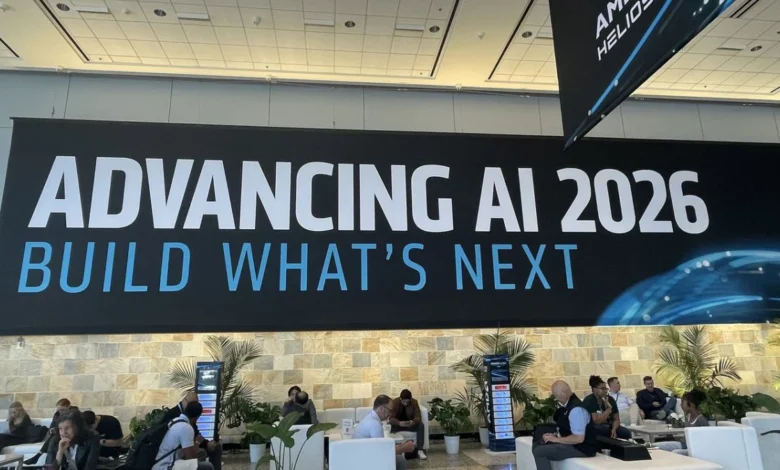
Advanced Micro Devices (AMD) has unveiled a significant evolution of its software ecosystem with the introduction of Rocm.ai, an AI-native component designed to simplify and accelerate the development, deployment, and optimization of artificial intelligence workloads. Announced during the company’s flagship AMD Advancing AI 2026 conference, the new suite represents a strategic shift in how the semiconductor giant approaches the "software moat" that has historically protected its primary competitors. By integrating AI-assisted development tools directly into the Rocm (Radeon Open Compute) stack, AMD aims to lower the technical barriers that have previously deterred developers from migrating their workloads to AMD Instinct accelerators.
The launch of Rocm.ai marks a pivotal moment in the hardware industry’s transition toward agentic workflows. As software development increasingly relies on large language models (LLMs) and autonomous coding agents, AMD is positioning its software stack to be "agent-friendly" rather than merely human-readable. The suite is built upon three primary pillars: the Rocm Command Line Interface (CLI), AMD Skills, and Hyperloom. Together, these tools are designed to automate the most labor-intensive aspects of GPU programming, from initial environment setup to the fine-tuning of complex model kernels.
The Architecture of Rocm.ai: Three Pillars of Innovation
To understand the impact of Rocm.ai, it is necessary to examine the three components that Vamsi Boppana, Senior Vice President of AI at AMD, detailed during his keynote presentation. Each component addresses a specific friction point in the current AI development lifecycle.
1. Rocm CLI: Unified Management
The Rocm CLI serves as the foundational interface for the new suite. Historically, setting up a heterogeneous computing environment—especially one involving multiple GPUs, complex driver versions, and specific library dependencies—has been a significant hurdle for IT departments and individual researchers. The Rocm CLI provides a unified command-line experience for the installation, validation, servicing, and troubleshooting of AI workloads. By centralizing these functions, AMD intends to reduce the "document crawling" that Boppana identified as a primary drain on developer productivity. This tool ensures that the underlying environment is correctly configured before the first line of model code is even executed.
2. AMD Skills: Empowering AI Coding Agents
Perhaps the most forward-looking element of the announcement is AMD Skills. This component is designed to bridge the gap between popular third-party AI coding assistants—such as Cursor, Claude, and Codex—and the specific technical intricacies of AMD’s hardware architecture. AMD Skills essentially acts as a specialized knowledge layer that informs these agents about the nuances of Rocm.
In practice, this means a developer using an AI agent to write code can receive hardware-specific optimizations in real-time. Instead of the agent suggesting generic CUDA-centric code, AMD Skills ensures the agent understands how to leverage AMD-specific libraries and memory architectures. Boppana described this as turning popular coding agents into "Rocm superusers," allowing developers to describe a target performance goal in natural language and letting the agent handle the underlying implementation.
3. Hyperloom: Automated Performance Optimization
The third pillar, Hyperloom, is an AI-assisted optimization system. Performance tuning for high-end GPUs like the MI355 requires deep expertise in kernel selection, parallelism strategies, and memory management. Hyperloom automates this process by analyzing specific workloads, choosing the optimal configurations, and iterating through various runtime strategies to hit performance targets.
Boppana highlighted a case study involving a lead developer who used Hyperloom to optimize a suite of 14,000 different models. According to AMD, such a feat would have been "impossible to imagine" for even a large team of human developers using traditional manual methods. Hyperloom’s ability to pull "known good recipes" and test them against live workloads represents a move toward self-optimizing software stacks.
Context and Chronology: The Evolution of the Rocm Ecosystem
The introduction of Rocm.ai in 2026 is the culmination of a multi-year effort by AMD to achieve parity with Nvidia’s CUDA platform. To understand the significance of this launch, one must look at the timeline of AMD’s software development over the past decade.
In the late 2010s, Rocm was often criticized for its lack of documentation and difficulty of use compared to its competitors. However, beginning with the launch of the Instinct MI300 series in late 2023 and early 2024, AMD began an aggressive push to broaden its software support. This included closer collaborations with the PyTorch and TensorFlow communities to ensure that major AI frameworks ran "out of the box" on AMD hardware.
By 2025, AMD had significantly expanded its software engineering team, focusing on the concept of "Software-Defined Hardware." The announcement of the MI355 GPU earlier in 2026 set the stage for a software solution that could match the massive throughput of the new silicon. Rocm.ai is the answer to that need, shifting the focus from manual "bit-banging" to high-level, AI-driven orchestration.
Industry Landscape and Supporting Data
The shift toward AI-native software is driven by the sheer complexity of modern AI models. According to industry data, the time required to optimize a large-scale model for a specific hardware architecture has grown exponentially as parameter counts have moved into the trillions. In 2024, it was estimated that senior ML engineers spent up to 40% of their time on environment configuration and low-level optimization rather than model architecture.
AMD’s internal benchmarks suggest that Rocm.ai can reduce the "time-to-first-token" for new deployments by as much as 60% through its automated validation and setup protocols. Furthermore, by utilizing Hyperloom, enterprise clients can potentially see a 20% to 30% increase in hardware utilization rates, as the AI-driven system identifies parallelism strategies that human developers might overlook in complex rack-level deployments.
The competitive landscape also dictates this move. While Nvidia’s CUDA remains the industry standard, the high cost and limited availability of H100 and B200 GPUs have forced enterprises to look for alternatives. The primary barrier to switching has not been the hardware performance—where AMD’s Instinct line is highly competitive—but the "software tax" associated with porting code. Rocm.ai is specifically designed to eliminate this tax.
Executive Vision and Strategic Rationale
During the Advancing AI conference, Vamsi Boppana emphasized that the goal of Rocm.ai is to democratize high-performance computing. "Developers shouldn’t have to manually reason through every layer of model architecture, kernel selection, prompt strategy, and rack-level deployment," Boppana stated. This philosophy reflects a broader trend in the technology sector where the complexity of the underlying systems is hidden behind intelligent abstractions.
For AMD, the strategic rationale is clear: to capture a larger share of the data center market, they must make the transition from CUDA to Rocm as frictionless as possible. By integrating with the tools developers already use—like Claude and Cursor—AMD is meeting the market where it currently resides. This "Trojan Horse" strategy allows AMD to enter the workflow of a developer through the AI agent they are already talking to, rather than requiring the developer to learn an entirely new proprietary language.
Stakeholder Reactions and Market Implications
Initial reactions from the developer community and industry analysts have been cautiously optimistic. Analysts at major research firms suggest that if Rocm.ai delivers on its promise of automated optimization, it could significantly disrupt the secondary market for AI compute. Cloud service providers (CSPs) like Microsoft Azure and Oracle Cloud, which already offer AMD-based instances, are expected to be the first to integrate Rocm.ai into their managed service offerings.
"The bottleneck in AI today is no longer just the silicon; it’s the human talent required to make that silicon perform," said one industry analyst following the keynote. "If AMD can prove that an AI agent can do the work of five senior performance engineers, the value proposition for the MI355 becomes undeniable."
However, some experts note that the success of Rocm.ai will depend on the continued cooperation of the AI agent developers. For AMD Skills to be effective, it must remain deeply integrated with the evolving APIs of companies like Anthropic and OpenAI.
Broader Implications and the Road to August 2026
The release of Rocm.ai, scheduled for August 2026, signals a new era of "Agentic Engineering." This shift suggests that in the near future, the primary interface for GPU programming will not be a C++ compiler or a Python script, but a natural language dialogue with an intelligent orchestrator.
For the broader tech industry, this move underscores the necessity of AI-driven tools to manage AI-driven infrastructure. As models become more specialized and hardware becomes more diverse, the "manual" era of computing is reaching its limit. AMD’s decision to bake AI assistance directly into the core of its software stack is a recognition that the only way to manage the complexity of future AI is with AI itself.
As the industry moves toward the August 2026 release date, the tech community will be watching closely to see if Rocm.ai can truly bridge the gap. If successful, it will not only bolster AMD’s position in the data center but also redefine the standards for how hardware companies support their developer ecosystems. The move represents a "very, very big shift," as Boppana noted, signaling that the battle for AI supremacy will be won as much in the IDE (Integrated Development Environment) as it is in the fabrication lab.