TikTok Releases Strategic Q5 Marketing Playbooks to Help App and Gaming Brands Capitalize on the Post-Holiday Surge

The digital advertising landscape undergoes a significant shift once the mainstream holiday shopping season concludes on December 25. While many traditional marketers scale back their operations and budgets during the final week of the calendar year, a lucrative and frequently overlooked window of opportunity opens up for specific industries. Recognizing this potential, short-form video platform TikTok has officially published two comprehensive marketing guides focused entirely on what the industry has dubbed "Q5"—the strategic period spanning from Christmas Day to New Year’s Eve.
Designed specifically for mobile application developers and gaming companies, these new playbooks aim to help brands harness high consumer engagement, capitalize on reduced advertising costs, and drive downloads during a time when users are remarkably active on their mobile devices. As competition for consumer attention peaks and then abruptly drops in late December, TikTok’s latest resources provide a timely roadmap for digital marketers looking to squeeze maximum value out of their annual marketing expenditures.
Understanding the Phenomenon of Q5 Marketing
The term Q5 is not an official financial quarter recognized by corporate accountants, but rather a widely accepted industry moniker within digital marketing and advertising circles. It represents the crucial, high-velocity transitional week bridging the gap between the chaotic peak of Q4 holiday shopping and the fresh start of Q1. Historically, brands pour billions of dollars into Black Friday, Cyber Monday, and pre-Christmas campaigns, only to completely pull their ads offline immediately after December 25, assuming that consumer fatigue has set in and wallets have closed.
However, modern consumer behavior tells a vastly different story. Data consistently reveals that the post-Christmas week is characterized by a unique paradox: overall advertising competition decreases significantly because major retailers have exhausted their budgets, yet consumer screen time, purchasing intent, and digital activity surge. Armed with newly acquired gift cards, holiday cash, smartphones, and tablets, millions of consumers find themselves with abundant free time as they take time off work or school for the year-end holidays.
TikTok’s newly released data underscores the sheer scale of this consumer activity. According to the platform’s internal metrics, an overwhelming 70 percent of consumers actively plan to shop during the week immediately following December 25. This shopping behavior is largely driven by the desire to take advantage of post-holiday clearance sales and to redeem gift cards received during the holidays.
Furthermore, platform-specific engagement remains exceptionally high. TikTok reports that 75 percent of its global user base spends the exact same amount of time—or even more time—shopping and browsing content on the app during Q5 compared to earlier peak shopping periods. Perhaps most importantly for non-retail app developers, 63 percent of these shoppers report that they are purchasing items specifically for themselves during this window, highlighting a powerful psychological shift from gift-giving to self-care, entertainment, and personal indulgence.
Strategic Playbooks Tailored for Gaming Brands
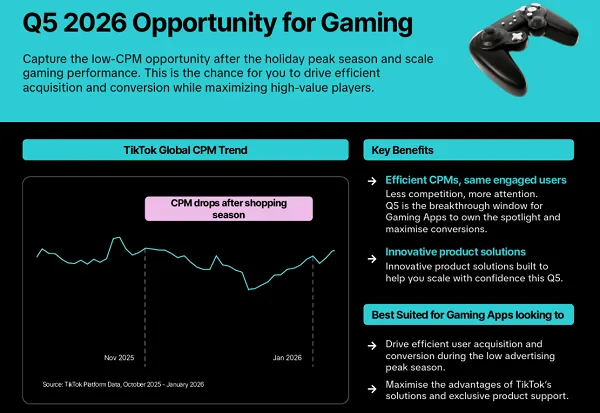
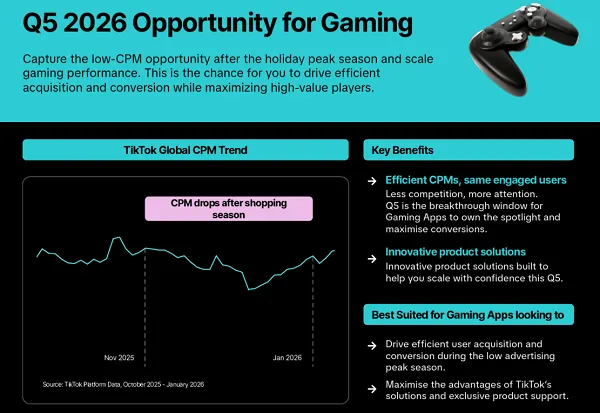
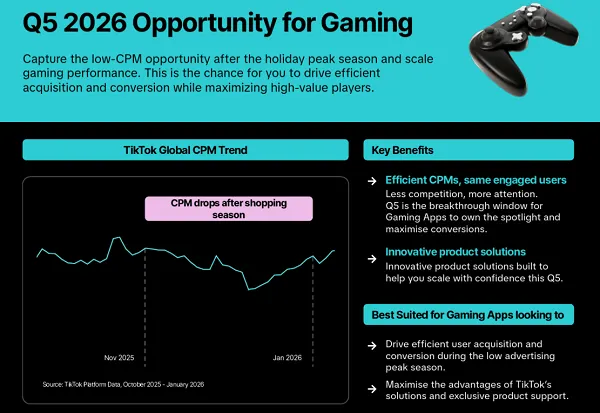
The first of the two newly published resources is a targeted four-page guide created specifically for gaming companies and publishers. The mobile gaming industry is notoriously competitive, with user acquisition costs (UAC) frequently skyrocketing during major holiday periods due to intense bidding wars between massive retail brands, entertainment giants, and rival studios.
TikTok’s gaming playbook emphasizes that the Q5 period offers a rare reprieve from this financial pressure. Because many mainstream consumer packaged goods and large retail advertisers retreat from auctions between Christmas and New Year, the overall cost per ad (CPA) and cost per mille (CPM) across the platform drop considerably. This reduction in advertiser density creates an environment where gaming brands can acquire high-value users at a fraction of the cost experienced just weeks prior.
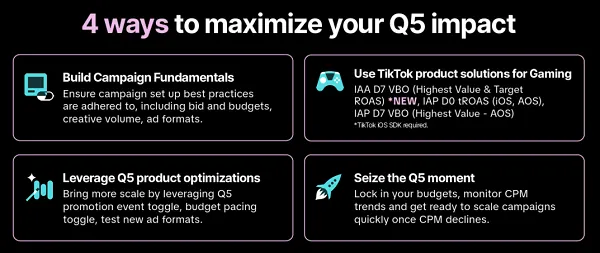
In addition to highlighting cost efficiencies, the guide delivers granular, actionable instructions on how gaming studios can set up specific campaign types tailored to holiday audiences. This includes utilizing Spark Ads to leverage organic influencer content, implementing App Installation campaigns optimized for high-intent users, and designing creative assets that resonate with players who have unwrapped new mobile devices, consoles, or gaming accessories on Christmas morning. The playbook provides strategic notes on messaging, encouraging developers to focus on instant gratification, new year challenges, and holiday-themed in-game events that appeal to users looking to dive into immersive new gaming experiences during their time off.
Optimizing Mobile App Promotions Beyond Gaming
Recognizing that the gaming sector represents only a portion of the broader app ecosystem, TikTok’s second playbook focuses on non-gaming mobile applications. This includes a wide array of categories, such as fintech and budgeting apps, health and fitness platforms, subscription services, e-commerce applications, and lifestyle tools.
The mobile app marketing guide shares foundational parallels with its gaming counterpart while addressing the unique conversion pathways required for non-gaming software. A critical component of this handbook involves technical tracking setup and attribution best practices. During high-traffic periods like Q5, ensuring that software development kits (SDKs) and mobile measurement partners (MMPs) are properly configured is essential for accurately tracking downloads, in-app purchases, and user retention.
TikTok’s guide outlines step-by-step recommendations for configuring campaign structures to match the specific goals of app developers. Whether a brand’s objective is driving immediate subscriptions ahead of New Year’s resolutions—such as fitness or productivity apps—or encouraging users to organize their holiday gift-card spending through financial apps, the playbook provides structural advice on ad formats, targeting parameters, and creative iteration. By aligning app promotions with the psychological mindset of users who are actively setting goals and organizing their digital lives for the upcoming year, marketers can significantly improve their return on ad spend (ROAS).
A Chronological Evolution of Year-End Digital Strategy
To fully appreciate the introduction of TikTok’s Q5 playbooks, it is helpful to examine the historical evolution of digital advertising strategies over the past decade. In the early days of programmatic advertising, year-end strategies were binary: brands either spent heavily through Christmas Eve or went entirely dark until the first Monday of January.
Over time, data analytics revealed hidden pockets of high user engagement during the twilight days of the year. As mobile devices became the primary medium for entertainment and shopping, the week between Christmas and New Year transformed from a digital ghost town into one of the most active online periods of the year. Consumers cocooning at home during cold winter weather increasingly turned to their phones to pass the time, stream content, and explore new apps.
Recognizing this shift, major publishers began introducing specialized insights around 2018 and 2019, though these reports were often broad and lacked specific vertical guidance. By 2022 and 2023, platforms like Meta, Google, and TikTok began formalizing Q5 as a distinct phase in the annual marketing calendar. TikTok’s release of these dedicated, highly granular playbooks for 2026 represents the maturation of this trend, moving Q5 from an industry buzzword into a disciplined, data-driven marketing science complete with technical implementation frameworks.
Industry Implications and Future Outlook
The publication of these guides carries significant implications for the broader digital marketing ecosystem. As performance marketing grows increasingly complex and privacy regulations constrain traditional tracking mechanisms, brands are under immense pressure to find cost-effective avenues for user acquisition.
By pointing out the structural advantages of lower post-holiday auction competition, TikTok is actively encouraging brands to rethink their traditional budgeting cycles. Rather than allowing marketing funds to sit idle during the final week of December, performance marketers are being urged to reallocate a portion of their Q4 budgets into this high-converting transitional window.
From an economic perspective, this strategy benefits both advertisers and the platform itself. Advertisers gain access to cheaper inventory and highly engaged consumers who are primed to download apps and make purchases, while publishers secure continuous ad revenue during a period that historically suffered from steep seasonal drop-offs. Furthermore, consumers benefit by discovering relevant apps, games, and services that align with their personal interests and post-holiday goals.
As mobile-first consumption continues to dominate global media habits, the concept of Q5 is expected to cement itself permanently in corporate marketing calendars. TikTok’s comprehensive playbooks serve as a blueprint for how modern platforms can help advertisers navigate seasonal transitions with precision, transforming a quiet post-holiday week into a vital engine for growth and user acquisition.