Britain’s Solo Leap into Orbit: The Historic Launch of the Prospero Satellite and the Legacy of the Black Arrow Rocket

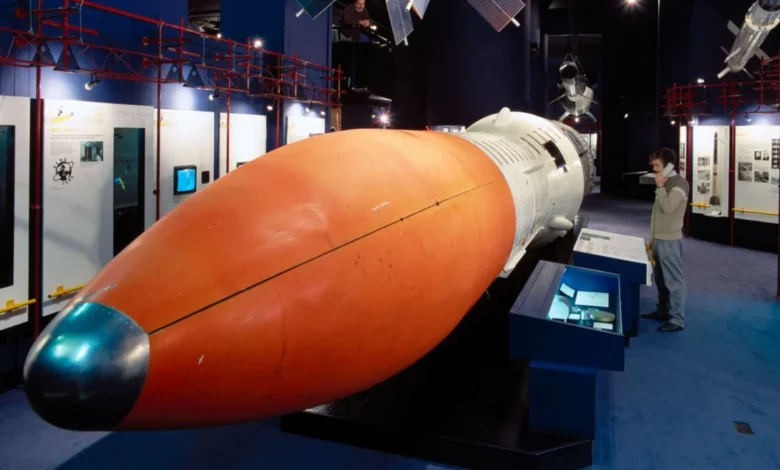
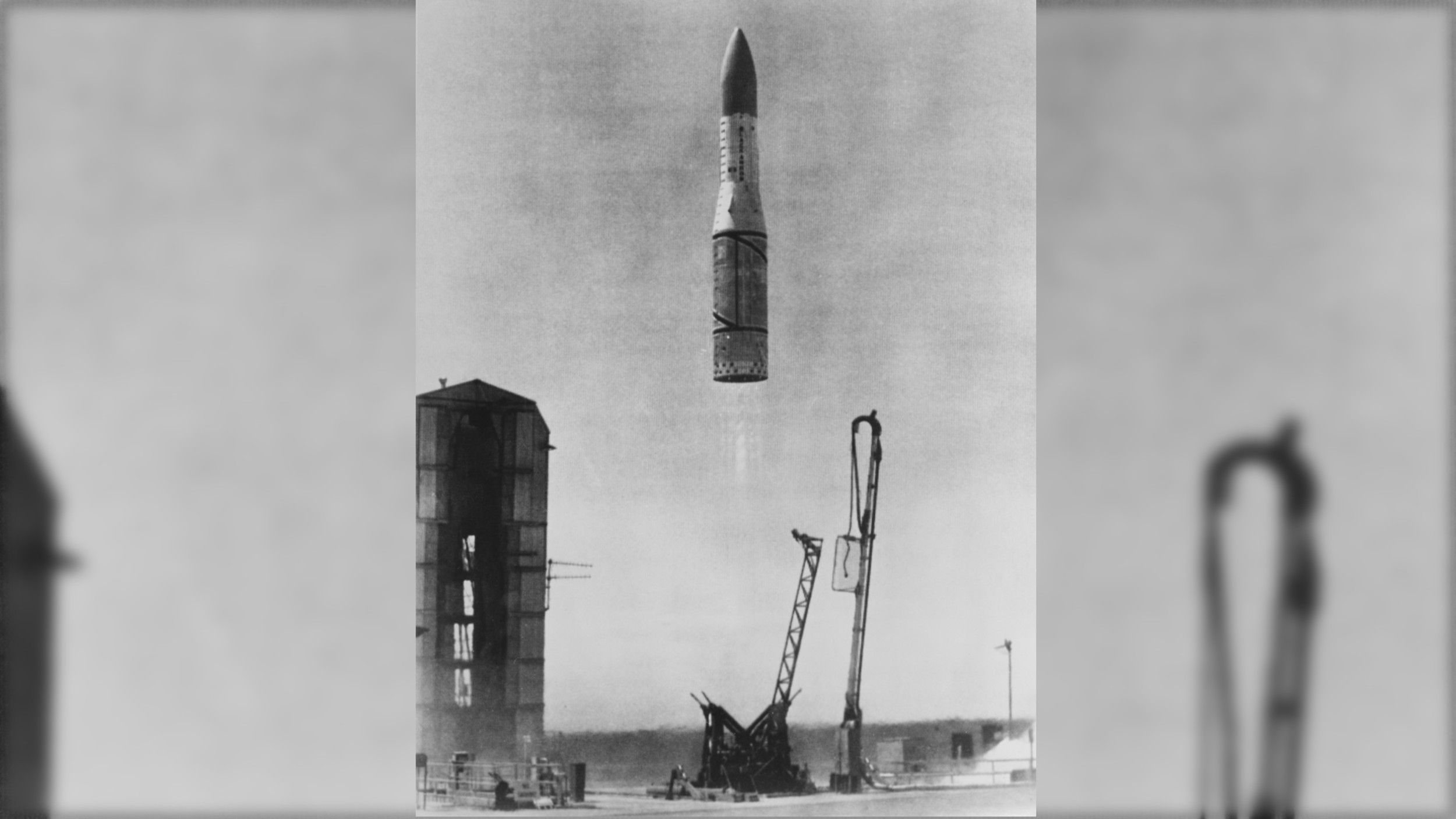
On October 28, 1971, the United Kingdom achieved a monumental yet solitary milestone in its aerospace history by successfully launching its first domestic satellite, Prospero, also designated as the X-3, into orbit. Lifted off from the remote Woomera Range Complex in South Australia aboard a British-built Black Arrow carrier rocket, the mission marked the only time the United Kingdom independently placed a spacecraft into orbit using its own native rocket technology. Prior to this historic event, Britain’s burgeoning space ambitions relied entirely on foreign partnerships, launching its first six satellites aboard National Aeronautics and Space Administration (NASA) rockets from American soil.
The launch of Prospero was not merely a symbolic gesture of national pride; it was a carefully engineered scientific expedition designed to test technologies vital to the future of global telecommunications. Weighing roughly 66 kilograms and structured as an elliptical-orbit research satellite, Prospero carried a suite of advanced experimental instruments. Among them were cutting-edge solar cells, telemetry systems, and a dedicated micrometeoroid detector meant to evaluate the operational hazards posed by small debris and space particles to long-duration spacecraft. Despite a post-separation malfunction in which the rocket’s final stage inadvertently bumped into the satellite—severing one of its four vital radio antennas—Prospero proved remarkably resilient, functioning nominally and transmitting data until its primary mission concluded in 1973.
The Origins and Chronology of the Black Arrow Program
To understand the weight of the Prospero mission, one must examine the trajectory of the British space program during the Cold War era. In the 1960s, the United Kingdom sought to establish independent access to space, leading to the development of the Black Arrow rocket program. Derived from the smaller Black Knight research rocket, the three-stage Black Arrow stood nearly 13 meters tall and represented the pinnacle of British propulsion engineering at the time.
The program’s flight history, however, was fraught with technical hurdles and shifting government priorities:
- Summer 1969: The inaugural flight test of the Black Arrow (R0) took place at Woomera, resulting in a failure when the first stage suffered a thrust vector control failure, forcing a range safety officer to destroy the vehicle.
- March 20, 1970: The second flight (R1) successfully tested the rocket’s second stage, but an issue with the third stage prevented the payload from reaching orbit.
- September 2, 1970: The third flight (R2) achieved a major milestone by successfully launching the Orba test payload into orbit, though the third stage experienced a minor malfunction.
- October 28, 1971: The fourth and final flight (R3) successfully carried the Prospero satellite into its intended elliptical orbit, ranging from 522 kilometers to 1,300 kilometers above the Earth.
Despite the ultimate success of the Prospero mission, the economic climate of the early 1970s heavily favored international collaboration over costly indigenous launch systems. Shortly after the R3 flight, the British government abruptly canceled the Black Arrow program, deeming the development and maintenance of a sovereign orbital launch capability too expensive compared to purchasing services from the United States or the European Space Organization. Consequently, Prospero stands eternally as both the first and the last British satellite launched by a British-built rocket.
Operational Lifespan and Sustained Contact
Following its dramatic launch and the minor collision with its spent upper stage, Prospero exceeded initial mission expectations. While primary scientific operations ceased in 1973 as onboard batteries and systems gradually degraded, the satellite refused to fade entirely into the silence of space.
Amateur radio operators and institutional trackers continued to monitor the derelict spacecraft for decades. According to archival records from the BBC, ground stations successfully contacted Prospero at least once every year through 1996, highlighting the structural durability and stable orbital mechanics of the 66-kilogram craft. Today, more than five decades after its historic ascent, the satellite remains trapped in a persistent Earth orbit, gradually evolving from a functioning scientific instrument into a piece of historical space debris.
Modern Implications and the Quest for Orbital Remediation
The enduring presence of Prospero in low-Earth orbit has recently transformed it from a historical relic into a focal point for modern discussions regarding space sustainability and orbital debris mitigation. As commercial space ventures proliferate and the congestion of Earth’s orbits increases exponentially, aerospace firms are increasingly looking at ways to clean up legacy hardware left behind by early space pioneers.
In 2021, Scotland-based space startup Skyrora announced an ambitious initiative to locate, capture, and deorbit the historic Prospero satellite. The proposed mission involves utilizing one of the company’s advanced space tugs to rendezvous with the defunct spacecraft, securely latch onto its structure, and drag it downward into the dense layers of Earth’s atmosphere, where both the tug and the satellite would safely burn up. Skyrora intended to launch this recovery mission using their proprietary Skyrora XL rocket from the newly established Saxavord Spaceport in the Shetland Islands, Scotland.
Volodymyr Levykin, founder and CEO of Skyrora, emphasized the symbolic and practical importance of the endeavor at the time of its announcement. "By recovering Prospero, we are not only coming together as a space nation and taking responsibility for what we have launched into orbit, but also confirming our commitment to the sustainable use of outer space," Levykin stated.
Broader Significance and Economic Analysis

The legacy of the Prospero satellite encapsulates a complex chapter in aerospace history. On one hand, it demonstrates the remarkable ingenuity and technical capability of British engineers who successfully designed, built, and launched an operational spacecraft with minimal resources. On the other hand, the cancellation of the Black Arrow program serves as a cautionary tale of the high economic barriers associated with maintaining independent launch infrastructure.
For decades, the United Kingdom relied entirely on foreign soil and launch vehicles for its space needs, creating a strategic dependency that lasted well into the 21st century. However, with the modern resurgence of domestic spaceports—such as Saxavord and Spaceport Cornwall—and the development of indigenous vertical and horizontal launch systems, the British aerospace sector is actively attempting to reclaim the independent capabilities it relinquished in the wake of the Prospero launch.
Ultimately, Prospero remains a testament to a brief moment when Great Britain stood shoulder-to-shoulder with the world’s primary spacefaring superpowers. Whether it is eventually retrieved by modern commercial space tugs or remains in orbit as a quiet monument to 1970s engineering, the satellite’s place in the annals of space exploration is secure, marking the day the United Kingdom briefly touched the stars on its own terms.
Related posts: