Microsoft Positioned as a Leader in the 2026 Gartner Magic Quadrant for Container Management

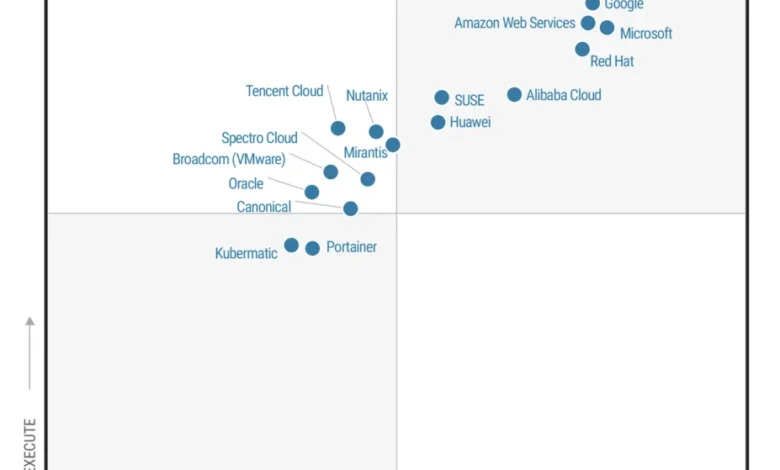
Microsoft has officially been recognized as a Leader in the 2026 Gartner Magic Quadrant for Container Management, securing the position furthest to the right for Completeness of Vision. This recognition arrives at a pivotal juncture in the evolution of cloud-native infrastructure, as enterprise organizations transition from traditional container orchestration to complex, AI-driven, and highly distributed operating models. The accolade serves as an external validation of Microsoft’s strategic pivot toward a unified, hybrid-first container portfolio that spans Azure Kubernetes Service (AKS), Azure Container Apps, Azure Arc, and Azure Kubernetes Fleet Manager.
A Decade of Evolution in Distributed Systems
To understand the significance of this milestone, one must look at the trajectory of Kubernetes over the last decade. When Kubernetes was first open-sourced by Google and subsequently adopted as a cornerstone of Microsoft’s Azure infrastructure strategy, the primary objective was the democratization of distributed systems. The goal was to simplify the development of reliable services by abstracting away the underlying hardware. By decoupling workload definitions from their physical deployment environment, Microsoft empowered developers to build portable applications.
However, the requirements of 2026 have surpassed the original scope of container management. Modern enterprises are no longer just running stateless web applications; they are deploying massive AI training clusters, real-time inference agents, and mission-critical edge computing workloads. These applications must frequently operate within strict sovereign and regulatory boundaries, requiring a paradigm shift from centralized cloud management to a more fragmented, yet consistent, hybrid architecture.
The AI-Driven Shift in Infrastructure Requirements
The emergence of Generative AI has fundamentally reshaped the requirements for container management platforms. According to industry analysis, AI workloads introduce two distinct architectural demands that often conflict. The first is the requirement for persistent, platform-managed infrastructure—where platform teams maintain control over GPU scheduling, model lifecycles, and compliance boundaries. The second is the need for high-elasticity, serverless execution environments that can spin up inference capacity on demand and terminate resources the moment a task is complete.
Microsoft’s dual-pronged approach, utilizing AKS for stable, long-running AI model hosting and Azure Container Apps for burstable, event-driven inference, addresses these disparate needs. The integration of CNCF AI Conformance certification within AKS further ensures that as the AI ecosystem evolves, enterprise applications remain compatible with the broader open-source community, mitigating the risk of vendor lock-in.
Chronology of Azure’s Cloud Native Strategy
The path to this Gartner recognition is marked by several key strategic investments:
- 2015-2017: Microsoft joins the Cloud Native Computing Foundation (CNCF) and begins the rapid expansion of Azure Kubernetes Service to provide managed Kubernetes clusters.
- 2019-2021: Recognizing the rise of hybrid environments, Microsoft introduces Azure Arc, extending Azure management capabilities to on-premises servers and other cloud providers.
- 2022-2023: The launch of Azure Container Apps provides a serverless alternative to Kubernetes, catering to developers who prioritize speed and scalability over low-level cluster management.
- 2024-2025: Microsoft accelerates its focus on fleet management and AI tooling, releasing Azure Kubernetes Fleet Manager to solve coordination challenges in large-scale multi-cluster environments.
- 2026: Recognition as a Leader in the Gartner Magic Quadrant, reflecting a mature, comprehensive portfolio that bridges cloud, edge, and hybrid needs.
Data and Operational Efficiency at Scale
As organizations scale their container estates, the complexity of management grows exponentially. Data indicates that many enterprises face "coordination failure" rather than technical failure; configuration drift, inconsistent policy enforcement, and uneven upgrade cycles often plague teams that manage hundreds of clusters across disparate regions.
To counter this, Microsoft has introduced "AKS Automatic," a service that applies operational best practices derived from running some of the world’s largest Kubernetes environments. By automating routine maintenance, security patching, and scaling, Microsoft aims to reduce the "operational tax" on engineering teams. Furthermore, the introduction of the Azure SRE Agent and the AKS MCP Server marks a shift toward agentic operations—leveraging AI to diagnose and remediate infrastructure issues in real-time. This reduces the manual burden on SRE (Site Reliability Engineering) teams, allowing them to focus on architecture rather than routine incident response.

Industry Impact and Strategic Implications
The implications of Microsoft’s leadership position are significant for the broader cloud market. By maintaining a steadfast commitment to upstream Kubernetes and contributing heavily to the CNCF—Microsoft currently stands as the second-largest contributor to CNCF projects—the company has managed to satisfy both the enterprise demand for stable, managed services and the open-source community’s demand for transparency.
This "no-proprietary-fork" strategy is critical for customer retention. As Brian Sutliffe, Vice President of Engineering at CallRevu, noted in a recent company statement, the ability to scale GPU resources based on call volume while testing new models without modifying the underlying production architecture is a competitive necessity. This flexibility—the ability to change the "where" of an application without needing to rewrite the "what"—is the defining feature of the modern container platform.
Expert Perspectives and Market Analysis
Analysts monitoring the container management space have observed that the "Leader" designation in the 2026 Magic Quadrant is not merely a reflection of market share, but a recognition of how well a vendor integrates AI-native capabilities into their existing stack.
"The challenge for vendors in 2026 is no longer just orchestrating containers," says an industry analyst familiar with the report. "It is about orchestrating the intelligence that sits on top of those containers. Microsoft has successfully moved from being a provider of ‘infrastructure-as-a-service’ to a provider of ‘platform-as-a-service’ that inherently understands the requirements of AI workloads, including hardware-isolated sandboxes and specialized GPU scheduling."
However, the market is not without challenges. As containers move closer to the edge—sometimes into environments with intermittent connectivity or strict data residency laws—the complexity of maintaining a "single pane of glass" increases. Microsoft’s reliance on Azure Arc for this purpose is a strategic bet that the future of enterprise IT will be defined by hybrid interoperability.
Conclusion and Future Outlook
The recognition from Gartner provides a moment of reflection for Microsoft’s Azure Cloud Native team. As they look toward the next phase of development, the focus is expected to remain on reducing the "surface area" of complexity. The goal is to build platforms that are sufficiently robust to handle highly regulated, business-critical applications, yet sufficiently flexible to support the rapid, often unpredictable, development cycles of AI agents.
Ultimately, the shift toward a unified operating model across cloud, edge, and hybrid environments is not just a technological trend; it is a business imperative. As the lines between application development and AI integration continue to blur, the platforms that offer the most seamless transition between these two worlds will likely set the standard for the next decade of enterprise computing. Microsoft’s positioning as a leader suggests they are well-positioned to define that standard, provided they can continue to balance the rapid pace of innovation with the stability that their global enterprise customer base requires.
Gartner Disclaimer: Gartner does not endorse any company, vendor, product, or service depicted in its research publications, and does not advise technology users to select only those vendors with the highest ratings. Gartner research publications consist of the opinions of Gartner’s research organization and should not be construed as statements of fact.