The SaaSpocalypse Narrative Faces A Reality Check As Industry Titans Defend The Future Of Enterprise Software

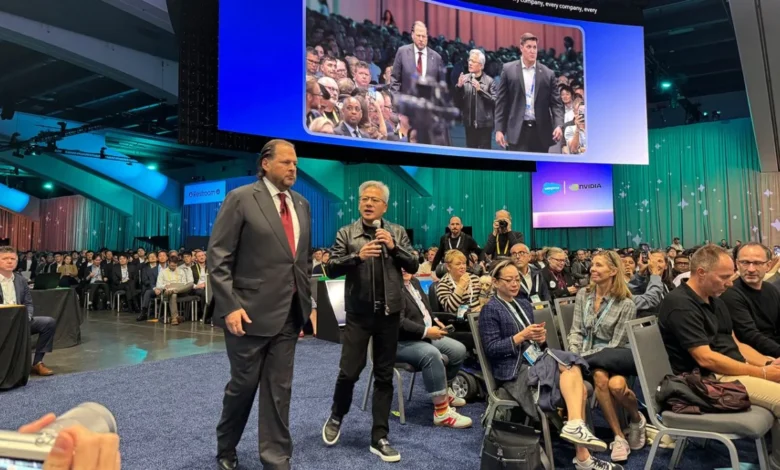
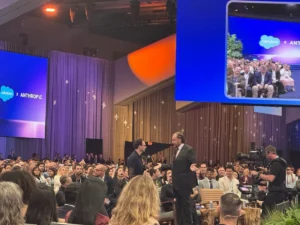
The year 2026 has been defined by an overarching narrative of technological disruption, characterized by widespread anxiety regarding the impending obsolescence of Software as a Service (SaaS). As generative AI models and autonomous agents move from experimental phases to enterprise-grade integration, market observers have frequently predicted a “SaaSpocalypse,” suggesting that traditional software business models would collapse under the weight of AI-driven automation. However, during the opening keynote of Dreamforce 2026, Salesforce CEO Marc Benioff and Nvidia CEO Jensen Huang moved to dismantle this narrative, reframing the rise of artificial intelligence not as a replacement for software, but as its most significant evolution to date.
The skepticism regarding the future of SaaS gained significant momentum earlier this year, particularly following the launch of Anthropic’s Claude Cowork. This platform, which provides enterprises with specialized AI agents capable of performing complex, sector-specific workflows, triggered a sharp contraction in market confidence. In early February, the S&P 500 Software and Services index plummeted by nearly 5%, wiping out approximately $830 billion in total market capitalization within a matter of days. Investors, fearing that AI agents would negate the need for the seat-based licensing models that have underpinned the SaaS economy for two decades, initiated a rapid sell-off.
A Chronology of Industry Anxiety
The origins of this volatility can be traced back to the rapid proliferation of autonomous agents. By mid-2025, companies began experimenting with internal AI tools that could automate data entry, customer service, and financial reporting. When Anthropic’s Claude Cowork was introduced in early 2026, it served as a catalyst for a broader market re-evaluation. The logic behind the sell-off was straightforward: if an AI agent could perform the functions of five human employees, the demand for enterprise software licenses would theoretically collapse.
However, the industry sentiment began to shift by mid-year. In late June, reports from market intelligence firms began to highlight that while the form of software was changing, the utility was increasing. By the time Dreamforce 2026 commenced in August, the conversation had shifted from "the end of software" to "the augmentation of software."
Defending the Software Ecosystem
During their joint appearance at the Dreamforce keynote, Jensen Huang and Marc Benioff provided a unified front against the doomsday projections. Huang, whose company Nvidia has been the primary architect of the hardware infrastructure fueling this AI revolution, was explicit in his rebuttal. "I was the first CEO to come out—not in the software industry—to say the end of software is nonsense," Huang stated. "This is going to be a layer on top of software. This new layer on top of software is going to be agentic. It’s going to make software so much better."
Huang’s perspective emphasizes that AI requires a robust, data-rich foundation to function effectively. SaaS platforms provide the structured environment, data pipelines, and security protocols that AI agents require to operate safely within an enterprise. In his view, software is the infrastructure, and AI is the intelligent orchestration layer that sits atop it.
Benioff, meanwhile, dismissed the "SaaSpocalypse" terminology as "crazy nonsense." He argued that the industry is not witnessing the death of software, but rather the death of inefficient, labor-intensive software. "We realize that the SaaSpocalypse isn’t about the end of software, but it may be about the end of software that makes humans do all the work," Benioff noted.
Financial Resilience and Market Performance
Salesforce’s Q2 fiscal year 2027 earnings report, released in August, served as a concrete validation of the company’s pivot toward AI-centric offerings. The results were the strongest the company has seen since 2020. Revenue generated from its newly integrated platforms, specifically Agentforce and Data 360, reached nearly $3.9 billion—a 210% increase year-over-year.
These figures suggest that customers are not abandoning software; rather, they are reallocating their budgets toward platforms that offer integrated, agentic capabilities. The market, initially spooked by the prospect of disruption, appears to be responding positively to companies that can successfully bridge the gap between legacy CRM interfaces and modern, agent-driven workflows.
The Shift Toward Agentic Arbitrage
While the "death" of SaaS may be an exaggeration, the transformation of the industry is undeniably underway. AWS CEO Matt Garman, speaking earlier this year, noted that while the fear was overblown, the competitive landscape has fundamentally shifted. Software vendors are now under immense pressure to abandon legacy UI-heavy interfaces in favor of agentic architectures.
A key concept driving this change is "agentic arbitrage," a term gaining traction among analysts at Gartner. According to their research, up to $234 billion of enterprise application spending is currently exposed to this phenomenon. Agentic arbitrage describes a scenario where AI agents bypass traditional software interfaces, pulling data directly from multiple sources and executing tasks autonomously. This forces software providers to move away from charging per user (seat-based models) toward value-based or outcome-based pricing models.
Salesforce has positioned itself to lead this transition with the unveiling of AIforce. By creating a "live interface layer," Salesforce allows users to interact with their data through external agents like Claude, rather than being confined to the traditional Salesforce dashboard. This is a radical departure from the "walled garden" approach of traditional SaaS, reflecting a market demand for interoperability and intelligence over static functionality.
Implications for IT Decision-Makers
The shift toward an agentic future presents significant challenges and opportunities for IT leadership. The primary implication is a move toward decentralized data access. As AI agents become the primary interface for business operations, the focus for IT departments must shift from managing user permissions and interface training to managing data quality, API security, and agent governance.
Furthermore, the "SaaSpocalypse" scare has served as a forcing function for digital transformation. Companies that were previously hesitant to migrate to cloud-based, AI-ready platforms are now being compelled to do so to remain competitive. The integration of agents means that software is no longer a tool that a human uses; it is a system that coordinates work autonomously.
Looking Ahead: The Future Focus
As the industry moves into the latter half of 2026, the consensus among major players is that the software industry is entering a phase of "intelligent utility." The initial panic regarding the disruption of revenue models has given way to a more pragmatic approach. Vendors that can successfully integrate agentic AI while maintaining the reliability and security of traditional SaaS will likely see continued growth.
For organizations, the message from industry leaders like Benioff and Huang is clear: the era of software is not concluding. Instead, the era of "passive software"—tools that require constant human input to generate output—is coming to an end. The next generation of enterprise technology will be defined by its ability to act, reason, and adapt, fundamentally changing the relationship between the worker, the application, and the enterprise data they consume.
In summary, the transition is not a collapse, but a restructuring. The industry is moving from a state of fragmentation to one of intelligent integration. While the transition will undoubtedly result in the loss of market share for legacy providers who fail to adapt, it promises a significant increase in productivity and efficiency for the broader economy. The "SaaSpocalypse" has, in effect, become a catalyst for a necessary and overdue modernization of the entire software sector.
Related posts: