Inside Insight Partners: Devin Parekh on $90 Billion, AI Concentration Risks, and the Realities of Venture Capital

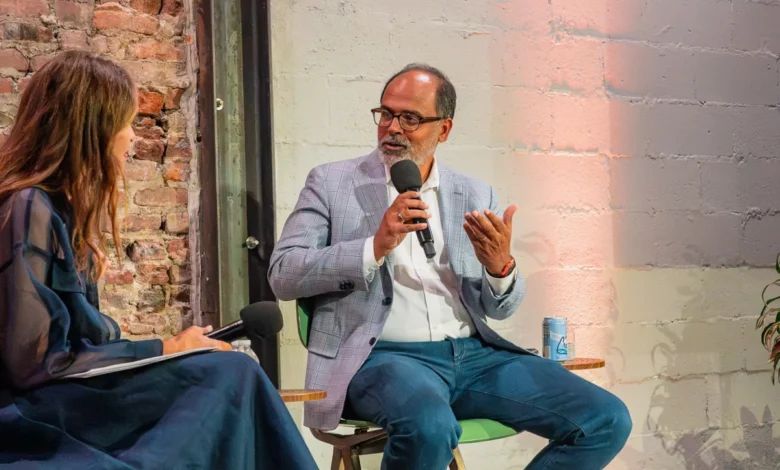
The landscape of venture capital is frequently dominated by loud voices, active social media presences, and a constant rotation of podcast appearances. Yet, heavyweight investment firm Insight Partners has quietly maintained a commanding position in the technology sector for over two decades without the typical digital theatrics. Co-running the $90 billion assets-under-management (AUM) firm for 26 years, Devin Parekh represents a more traditional, performance-driven ethos in an industry increasingly obsessed with public persona.
During a candid sit-down discussion at TechCrunch’s StrictlyVC event in New York City, Parekh offered a rare, unfiltered look inside the machinery of one of software investing’s most prolific institutions. From discussing marquee wins like Databricks, OpenAI, and Anthropic to detailing missed opportunities—such as losing buzzy AI legal-tech startup Legora to General Catalyst—Parekh provided a comprehensive masterclass on global investment strategy, market corrections, and the shifting dynamics of artificial intelligence.
Main Facts and Strategic Philosophy
Insight Partners operates on a massive scale, deploying capital across early-stage startups, growth-stage enterprises, buyouts, and secondary markets. However, unlike firms that maintain rigid geographic or stage-allocation formulas, Insight takes a fluid, temporal approach.
The firm’s performance, according to Parekh, is designed to speak for itself through the portfolio rather than partner self-promotion. This quiet confidence has allowed Insight to navigate multiple economic cycles since its inception, steering clear of the ideological echo chambers that often consume the venture ecosystem during macro events.
A central theme of Insight’s current strategy involves adapting to hyper-inflated valuations in the venture market. Parekh noted that early-stage and follow-on valuations are accelerating at a pace reminiscent of the frothy market of 2021. Because modern funding rounds move with unprecedented velocity, investors frequently pay higher prices for follow-on rounds without receiving the benefit of reduced risk or incremental data.
To mitigate this risk, Insight relies on a scale-fund advantage. By writing smaller initial checks—ranging from $20 million to $25 million rather than committing hundreds of millions upfront—the firm can spot emerging winners and double down aggressively during subsequent rounds. This exact playbook was utilized with cybersecurity unicorn Wiz, where an initial Series A check was followed by successive deployments, resulting in outsized financial returns that would have been diluted by a conservative, one-and-done approach.
Chronology and Market Evolution: From the 2021 Peak to Modern Liquidity Pressures
The venture capital ecosystem has undergone a dramatic transformation over the past five years, characterized by a post-pandemic boom, a subsequent correction, and a sudden resurgence of mega-rounds driven almost entirely by generative AI.
In 2021, cheap capital and historically low interest rates fueled record-breaking fundraising years. However, the subsequent tightening of monetary policy by global central banks drastically altered exit markets, freezing traditional buyouts and reducing software exit multiples. Parekh noted that Insight has not executed a major buyout since 2024, citing high interest rates, unreceptive debt markets for software companies, and deflated public valuations.
As the industry emerged from the dry spell of 2022 and 2023, secondary transactions and liquidity became paramount. Parekh issued a stern warning to emerging fund managers: generating paper gains is insufficient. LPs demand tangible liquidity, measured by distributed to paid-in capital (DPI). Insight itself has returned more than $20 billion to its limited partners over a recent two-year window via strategic sales and initial public offerings, proving that returning cash remains the fundamental mandate of asset management.
Supporting Data and Portfolio Concentration in the AI Era
The modern AI boom has fundamentally altered capital distribution within venture capital. Industry data indicates that the first half of the year saw foundational AI labs—specifically OpenAI and Anthropic—absorb roughly half of all venture capital dollars deployed globally.
This extreme concentration of capital has sparked intense debate regarding risk management. While some venture firms have built their entire fundraising pitches around dedicating 35% to 40% of a single fund to one or two frontier AI companies, Insight rejects this approach in favor of historical diversification. Operating on its thirteenth flagship fund, Parekh emphasizes that long-term venture success rewards broad portfolio construction over decades rather than single-asset bets.
Despite this diversified stance, Insight maintains stakes in both OpenAI and Anthropic—a dual investment that would have been considered a severe conflict of interest in earlier eras of venture investing. Parekh explained that at later stages, when an investment fund is off the board and not directing corporate governance, holding shares in competing market leaders functions similarly to buying liquid stock. While early-stage investments maintain strict information-sharing barriers and non-compete guardrails, the sheer capital requirements of training frontier models—running into the tens of billions of dollars—have rendered strict exclusivity obsolete among major market players.
Geographic Shifts and Talent Density
The geography of venture investing has similarly evolved. While Silicon Valley remains the undisputed epicenter for foundational AI infrastructure talent, specialized vertical applications are dispersing geographically.
Parekh pointed to supply-chain and financial-tech powerhouses like Ramp, which are anchored in New York, and international powerhouses like Stockholm-based Legora. Although Insight narrowly lost the Legora deal to General Catalyst after a transatlantic pitch by partner Jeff Horing, Parekh pragmatic view of deal flow remains intact: winning every deal is neither realistic nor necessary in a globalized economy.
Meanwhile, physical AI and robotics remain on the periphery of Insight’s active deployment strategy. Parekh views robotics companies as sophisticated science projects, noting that successful investments require accurately timing the commercial adoption curve rather than merely backing technological breakthroughs—a cautious view that routinely clashes with the unbridled enthusiasm of younger investors, including his own 23-year-old son.
Broader Impact and Implications for the Industry
As the technology sector looks toward an impending wave of massive initial public offerings—with companies like Anthropic, OpenAI, and SpaceX potentially hitting public markets at multi-trillion-dollar valuations—the venture capital landscape is reaching an inflection point.
The successful absorption of these titanic offerings will set the valuation benchmark for the next tier of enterprise software and AI companies. However, Parekh cautions that the hyper-exponential growth rates of early-stage startups cannot defy economic gravity indefinitely. Eventually, even the most dominant technology giants must mature into standard, sustainable growth enterprises.
For limited partners and institutional investors navigating the current market cycle, the lessons imparted by Insight Partners are clear. The temptation to chase market frenzies and over-concentrate capital in a handful of high-profile names often leads to cyclical vulnerability. True institutional durability, as demonstrated by Insight’s 26-year run, relies on disciplined check sizes, relentless focus on liquidity, and the willingness to let historical performance supersede the fleeting noise of social media and podcast culture.