Farwave Reimagines Global Audio Consumption Through Immersive 3D Interface Design

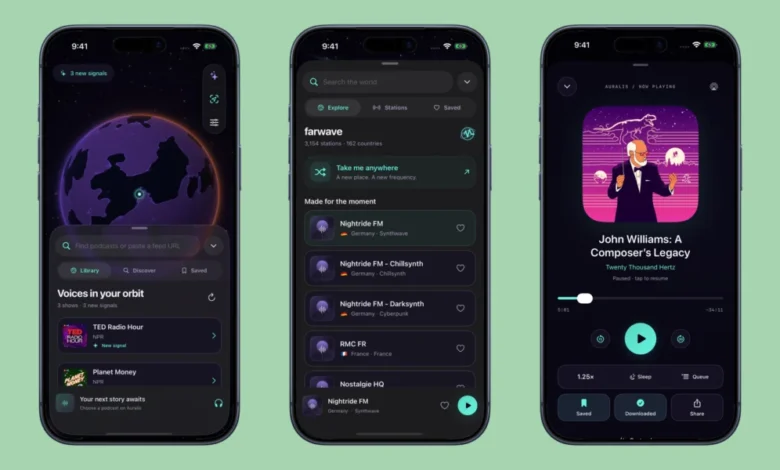
The digital audio landscape has long been dominated by monolithic streaming platforms that prioritize algorithmic curation over exploration. However, the release of Farwave, a new independent application for iOS and iPadOS, represents a significant departure from this trend. By integrating global radio streaming, podcast management, and local file playback into a cohesive 3D planetary interface, Farwave seeks to gamify the auditory experience while providing users with granular control over their media consumption. Developed as part of the growing independent software movement, the application utilizes spatial metaphors to organize disparate types of audio content, effectively turning the act of "tuning in" into a navigational experience.
The Evolution of Digital Audio Discovery
For over a decade, the audio industry has shifted toward centralized ecosystems such as Spotify, Apple Music, and various podcast aggregators. While these platforms have made music and spoken-word content more accessible than ever, critics have argued that the homogenization of interfaces has led to "content fatigue," where listeners rely heavily on automated recommendations rather than active discovery.
Farwave enters the market at a time when users are increasingly seeking "sovereign" software—applications that allow for local file management and RSS-based content discovery without being tethered to the proprietary algorithms of major streaming services. The core philosophy behind the app is the restoration of the "radio experience," which historically required a physical adjustment of a tuner to locate signals, translated into a modern, tactile digital environment.
A Chronology of the Application’s Development
The conceptualization of Farwave began in early 2025, driven by a design requirement to move away from flat, list-based interfaces that have defined mobile media players since the inception of the App Store. By September 2026, the development team finalized the transition from beta testing to a public release, ensuring full compatibility with the architecture of iOS 18.

The development roadmap focused on three distinct pillars:
- The Radio Globe (Q1–Q2 2026): Implementing a 3D spherical projection that allows users to interact with real-time radio feeds geographically.
- The Podcast and Audio Engine (Q2 2026): Developing a robust RSS parser capable of handling offline downloads, playback speed adjustments, and metadata synchronization.
- Local Media Integration (Q3 2026): Ensuring seamless import protocols for users to bring audio files from external sources, specifically through the Files app and iCloud integration, bypassing the need for cloud-based synchronization services.
Core Functionality and User Experience
At the heart of the Farwave experience is the "Radio Globe." Unlike traditional radio apps that utilize simple search bars or alphabetical lists, Farwave presents a rotating sphere where stations are mapped to their respective geographic origins. This tactile approach serves a dual purpose: it provides a visual representation of global culture through sound and offers a "Take me anywhere" feature that functions as a randomized discovery tool.
For the podcast enthusiast, the application introduces a separate orbital interface. By supporting standard RSS feeds, Farwave empowers users to curate their own subscription lists, a feature that has seen renewed interest as users migrate away from closed platforms like YouTube Music or exclusive podcast networks. The inclusion of offline playback and variable playback speed—standard features in professional-grade podcast players—ensures that the application is not merely a novelty visualizer but a functional tool for daily commuters and power users.
Perhaps most distinct is the application’s stance on local media. In an era where streaming-only services have effectively "rented" music to users, Farwave allows for the import of local audio files. Each artist or collection is visualized as an individual signal within the app’s 3D environment. By keeping this data on-device, the application circumvents the need for active internet connections for music playback, a critical factor for users in regions with limited connectivity or those who prefer to own their digital media libraries.
Market Context and Economic Implications
The market for indie audio players is currently experiencing a period of revitalization. As major platforms increase subscription prices and enforce stricter data-harvesting practices, independent alternatives are gaining traction. Farwave operates on a "freemium" model, a strategic choice that lowers the barrier to entry while providing a sustainable path for long-term development.

According to industry analysts, the "Indie App" sector has seen a 15% increase in annual recurring revenue for developers who focus on niche, high-quality design rather than broad-market utility. By pricing the Pro tier at $2.99 per month or $14.99 per year, the developers of Farwave are positioning the app as a "utility-as-a-service," targeting users who value design and privacy over the convenience of all-in-one streaming giants.
Broader Impact on Media Consumption
The implications of Farwave’s design philosophy extend beyond the aesthetic. By separating radio, podcasts, and personal music into distinct "planets" within the application, Farwave acknowledges that listeners have different psychological needs for different types of audio. Radio satisfies a desire for serendipity and cultural exploration; podcasts provide information and structured learning; and local music represents personal taste and ownership.
Critics of the app have noted that the 3D interface, while visually striking, may present a learning curve for users accustomed to the ultra-minimalist, text-heavy interfaces of modern operating systems. However, the developers maintain that the added layer of interaction is essential to the "intentional listening" experience they are trying to foster.
Furthermore, the integration of RSS technology as a primary pillar of the podcasting side of the app underscores a broader shift in the creator economy. By supporting open standards, Farwave ensures that it remains platform-agnostic, allowing users to subscribe to any podcast regardless of which distribution network hosts the content. This is a significant point of differentiation from platforms that engage in "walled garden" strategies, where certain content is only available through specific apps.
Technical Requirements and Accessibility
Farwave is built specifically for the high-performance capabilities of modern iPhones and iPads running iOS 18 and later. The app leverages the Metal graphics framework to render its 3D environments, ensuring that the navigation remains fluid even when the globe is densely populated with thousands of active radio stations.

For accessibility, the app includes standard support for dynamic text and system-level screen readers, though the developers have indicated that they are continuing to refine the interface to ensure that the 3D navigation is navigable for users with varying physical needs. The decision to keep the app free for basic radio listening while gatekeeping "Pro" features—such as unlimited local file imports and advanced RSS management—follows a transparent pricing structure that has been well-received by the indie software community.
Future Outlook
As digital audio continues to evolve, the success of applications like Farwave will likely be measured by their ability to balance high-concept design with practical utility. The development team has signaled that future updates will include more granular filtering for radio stations, such as sorting by genre, language, or audio quality, as well as enhanced social features that would allow users to share their "signal" or current station with others.
In conclusion, Farwave serves as a compelling case study in modern software design. It challenges the assumption that audio players must be purely functional, suggesting instead that the interface itself can enhance the emotional and intellectual value of the content being consumed. By bridging the gap between the nostalgic, analog feel of radio and the high-tech capabilities of modern mobile devices, Farwave offers a unique, albeit specialized, solution for those looking to reclaim agency over their digital audio experience. Whether this approach signals a broader shift in how we interact with media remains to be seen, but for now, it stands as a hallmark of independent innovation in a crowded digital space.