Microsoft Solidifies Market Leadership in 2026 as Enterprise AI Adoption Shifts to Integrated Systems Architecture

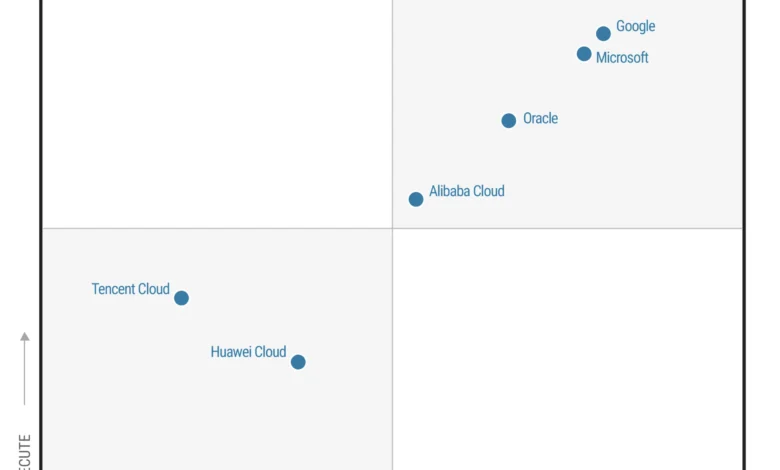
The landscape of enterprise artificial intelligence has reached a critical inflection point in the third quarter of 2026, as organizations transition from experimental, isolated AI pilot projects to large-scale, production-ready systems. Amidst this industry-wide evolution, Microsoft has been formally recognized as a market leader in both the 2026 Gartner Magic Quadrant for Strategic Cloud Platform Services and The Forrester Wave: Public Cloud Platforms, Q3 2026. These dual accolades underscore a strategic pivot in the cloud computing sector, where success is increasingly defined not by the sophistication of an individual model, but by the seamless integration of infrastructure, data, and developer workflows.
A Chronology of Strategic Dominance
Microsoft’s position as a dominant force in cloud services is not a recent development, but rather the result of a multi-year, consistent strategy. Since 2023, the company has maintained a "Leader" status in the Gartner Magic Quadrant for Strategic Cloud Platform Services, marking four consecutive years of sustained top-tier recognition.
This sustained performance is rooted in the company’s early and aggressive investment in generative AI. By integrating large language models (LLMs) directly into the Azure stack, Microsoft effectively bypassed the traditional "infrastructure-as-a-service" (IaaS) model, moving toward a more holistic "AI-as-a-system" architecture. This trajectory mirrors the industry’s broader maturation: from the 2023 gold rush of model experimentation to the 2026 reality of rigorous governance, cost-management, and operational reliability in production environments.
The Shift to Multi-Model Ecosystems
As the enterprise AI market matures, the "one-size-fits-all" approach to LLMs has become obsolete. Organizations are now shifting toward a multi-model strategy, balancing the high capability of frontier models against the economic efficiency and specialized utility of smaller, open-weight models.
This shift presents a massive engineering challenge for cloud providers: how to maintain consistent security, identity, and governance protocols across heterogeneous compute environments. Microsoft’s response, encapsulated in its Azure AI Foundry, focuses on removing the friction between these layers. By providing a unified interface for model evaluation and deployment, the company allows enterprises to pivot between different models—whether proprietary or open-source—without needing to overhaul their underlying data architecture.
Data Gravity and the Foundation of Intelligence
Industry analysts have long noted that while models may be transient, data remains the permanent anchor of enterprise value. Forrester’s recent report famously emphasized that "models come and go; data has gravity." This observation is central to Microsoft’s current architectural philosophy.
Microsoft Fabric, combined with Purview for governance and the Azure database ecosystem (SQL and Cosmos DB), serves as the connective tissue for this data gravity. By creating a unified intelligence layer—referred to as Microsoft IQ—the company enables agents to access and process business context across silos. This capability is critical for regulated industries, such as healthcare and finance. For instance, the recent digital transformation at UNC Health demonstrates how creating a governed, modernized data environment is a prerequisite for safely deploying AI in high-stakes operational settings. Without such a foundation, AI applications risk data leakage or compliance violations, making infrastructure-level integration the primary competitive differentiator for 2026.
Modernization as a Catalyst for AI
A significant obstacle to AI adoption in the enterprise is the existence of legacy infrastructure. Many large organizations are burdened by decades of technical debt, proprietary business logic, and siloed data stores. Microsoft has positioned itself to address this through a philosophy that treats application modernization not as a precursor to AI, but as an integral component of the AI journey.
The case of Levi Strauss & Co. serves as a key industry case study. Rather than abandoning legacy systems, the company used Azure to migrate and modernize its existing architecture, subsequently layering in agentic AI to streamline decision-making. This approach highlights a vital insight for the current market: successful AI adoption is rarely a "rip-and-replace" exercise. Instead, it is an incremental refinement where modern cloud tools act as a bridge between historical business data and future-facing AI capabilities.
The use of GitHub Copilot to assist in the modernization of .NET and Java applications further illustrates this trend. By automating the refactoring, testing, and migration of legacy code, Microsoft is essentially using AI to build the infrastructure necessary for more advanced AI. This recursive loop—using AI to improve the software lifecycle—has been highlighted by analysts as a key reason for Microsoft’s continued leadership in the sector.
Market Implications and Analyst Perspectives
The recognition from Gartner and Forrester provides an independent validation of the "system-level" approach to cloud computing. Analysts suggest that the market is currently experiencing a consolidation phase. Enterprises are no longer interested in stitching together a patchwork of specialized AI startups and disparate cloud services. Instead, they are prioritizing platforms that offer a cohesive "silicon-to-agent" experience.
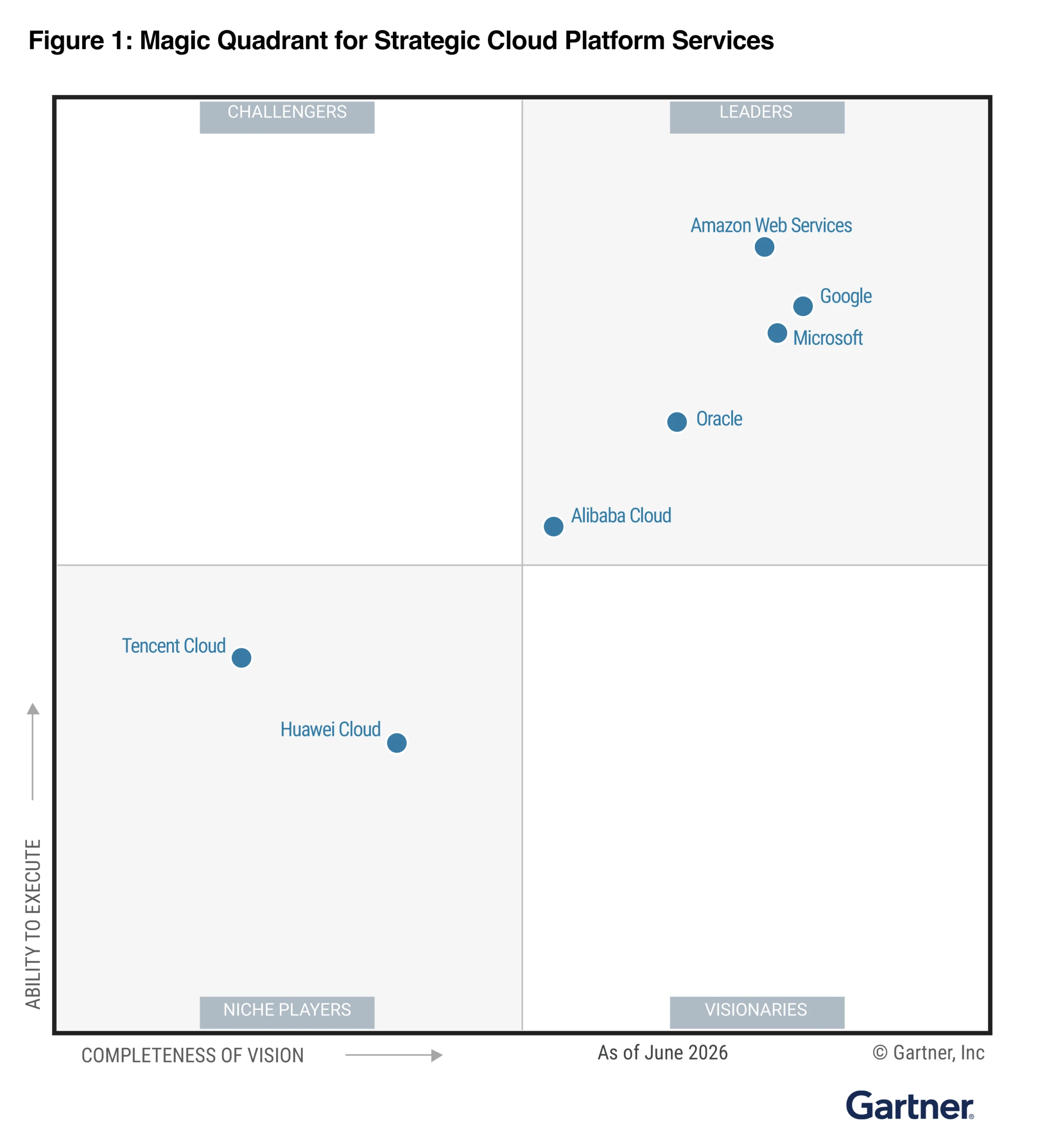
Gartner’s 2026 report specifically identifies Microsoft’s pragmatic approach to application modernization as a key strength. Similarly, the Forrester evaluation emphasizes the company’s capability to deliver a vertically integrated system that addresses the entire software developer lifecycle.
For the broader market, the implication is clear: the era of the "AI hype cycle" is being replaced by the "AI implementation cycle." The vendors that will thrive in the coming decade are those that can effectively hide the complexity of the AI stack behind a reliable, secure, and developer-friendly interface.
Future Outlook and Strategic Direction
Looking toward the remainder of 2026 and into 2027, the focus for Microsoft appears to be on scalability and efficiency. As companies move more mission-critical processes into AI agents, the demands on the underlying cloud infrastructure will increase exponentially. Reliability, latency, and cost-control—the traditional virtues of the cloud—have returned to the forefront of the conversation.
By investing in custom silicon, optimizing infrastructure for diverse model requirements, and integrating AI into the core fabric of its enterprise tools, Microsoft is attempting to define the next generation of cloud architecture. The company’s strategy suggests that the next phase of growth will not come from "bigger" models, but from "better" systems that enable enterprises to derive actual, measurable ROI from their existing data.
As the industry continues to evaluate these platforms, the pressure on competitors to provide a similarly integrated, full-stack experience will intensify. For the enterprise customer, the takeaway is a significant increase in capability, provided they choose a platform that offers the necessary abstraction layers to manage the inherent complexity of modern AI. The competition is no longer just about the cloud; it is about who can best serve as the operating system for the intelligent enterprise.
Summary of Key Findings
- Systemic Integration: Leadership is increasingly determined by how well a vendor integrates infrastructure, data, and developer tools into a single, cohesive workflow.
- The Multi-Model Reality: Customers are actively diversifying their AI models, requiring cloud platforms that support flexibility without sacrificing governance.
- Modernization as AI Strategy: Successful AI adoption is inextricably linked to the modernization of legacy business systems.
- Data-Centric AI: Business value is derived from the ability to keep data where it resides while securely exposing it to AI agents, a task handled by platforms like Microsoft Fabric.
- Sustained Recognition: Microsoft’s consistent placement as a leader underscores the market’s pivot toward established, integrated platforms over fragmented, specialized offerings.
The convergence of these factors marks a maturing market where the "best" technology is no longer defined by raw power, but by the ability to orchestrate complex systems in a reliable, secure, and cost-effective manner. As organizations continue to scale their AI ambitions, the role of the cloud provider as a foundational orchestrator of business intelligence will only grow in importance.