Dolphin X Remote Access Trojan Leverages AI Profiling to Automate Victim Prioritization, Raising Cybercrime Efficiency


A new and sophisticated remote access trojan (RAT) dubbed "Dolphin X" has emerged on the cybercrime landscape, distinguishing itself with an alleged AI-powered profiling feature designed to score and rank infected users. This innovative capability aims to streamline the targeting process for cybercriminals, allowing them to identify and prioritize high-value victims with unprecedented efficiency. The malware, advertised as an all-in-one solution on underground forums, represents a significant evolution in the tools available to malicious actors, shifting the burden of victim triage from manual review to automated analysis.
The discovery and initial analysis of Dolphin X were conducted by Daniel Kelley, a researcher at Varonis Threat Labs. Kelley identified the RAT being promoted on a prominent cybercrime forum by a vendor operating under the alias "Kontraktnik." This advertising not only highlighted the malware’s extensive capabilities but also specifically touted its "AI Profiler" as a key differentiator. The existence of such a feature underscores a growing trend where artificial intelligence is increasingly being weaponized to enhance the effectiveness and scalability of cyberattacks, moving beyond mere data collection to intelligent data exploitation.
The Architecture of a New Threat: Dolphin X’s Extensive Features
Varonis’s analysis of the Dolphin X operator panel revealed an alarmingly comprehensive suite of features, totaling 329 functionalities organized across ten distinct categories. This breadth of capability positions Dolphin X as a formidable tool in a cybercriminal’s arsenal, covering nearly every aspect of remote access and data exfiltration. Among these, a robust credential-stealing module stands out, claiming to target more than 300 different applications. This includes a wide array of commonly used software, from web browsers and cryptocurrency wallets to password managers and cloud command-line tools, indicating a broad-spectrum approach to data harvesting.
The sheer volume of applications targeted by Dolphin X highlights the malware’s ambition to maximize its data collection potential. Specifically, the panel advertises capabilities to steal credentials from at least nine Chromium and Gecko-based browsers, over 100 cryptocurrency wallet extensions, 65 desktop cryptocurrency wallets, and more than ten popular password managers. Furthermore, it targets credentials from over 30 cloud command-line tools, which could grant attackers access to sensitive cloud environments and critical infrastructure. Beyond these, Dolphin X also claims to exfiltrate highly sensitive developer credentials, including .env files, SSH keys, and cloud access tokens, which are invaluable for lateral movement within corporate networks and compromising development pipelines.

It is important to note that while Varonis extensively analyzed the Dolphin X operator panel, its builder, and associated network traffic in an isolated lab environment, they did not execute a live Dolphin X agent on an infected computer. Consequently, the full scope and efficacy of the malware’s advertised collection capabilities, particularly those related to credential theft from hundreds of applications, could not be independently confirmed by the researchers. This distinction is crucial, as claims made by malware vendors on underground forums sometimes exaggerate actual capabilities to attract buyers. Nevertheless, the detailed structure and explicit claims within the operator panel suggest a high level of sophistication and malicious intent.
The "AI Profiler": A Game-Changer in Victim Prioritization
The most notable and concerning feature of Dolphin X is undoubtedly its "AI Profiler." This module represents a significant leap forward in cybercriminal operational efficiency. In traditional credential-stealing operations, attackers often face the daunting task of sifting through vast quantities of stolen data—hundreds or even thousands of compromised accounts—to identify targets of significant value. This manual review is time-consuming, resource-intensive, and prone to human error, often limiting the overall return on investment for the attackers.
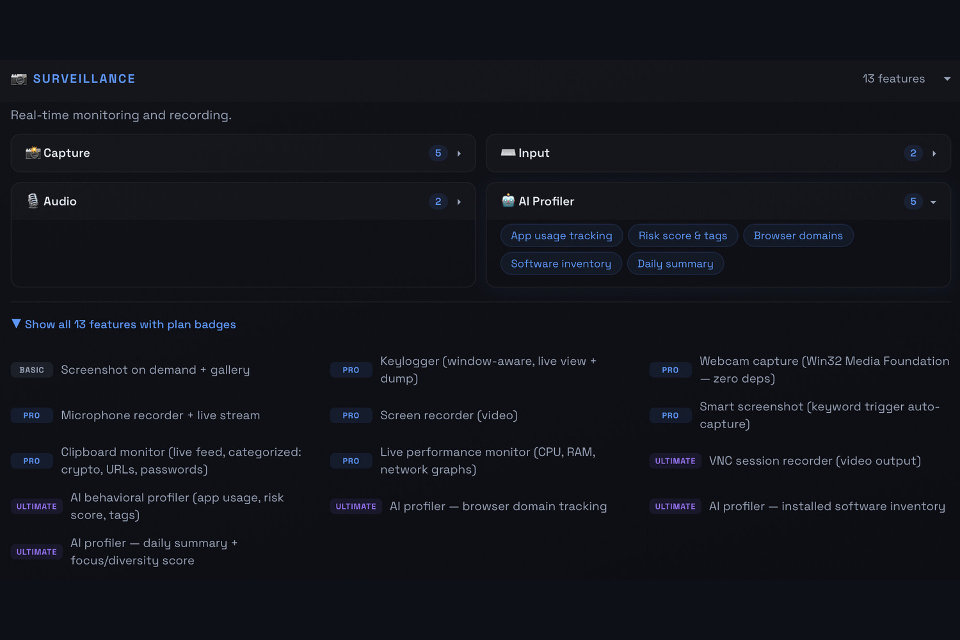
Dolphin X’s AI Profiler aims to automate and optimize this critical step. As described by the vendor and corroborated by Varonis’s analysis, the profiler analyzes information collected from infected computers to assign each victim a "risk score." This score, combined with other behavioral data, categorizes and ranks infected machines, effectively creating a hierarchical list of targets. Daniel Kelley elaborated on this, stating, "Beyond credential collection, the panel includes a surveillance tab containing the AI Profiler. The seller describes it as an ‘AI behavioral profiler with app usage tracking, risk score, and daily summary.’"
The operator panel further details the profiler’s analytical scope, claiming its ability to process victims’ application usage patterns, risk scores and associated tags, browser domains visited, and installed software. This comprehensive data aggregation allows the AI to construct a detailed profile for each victim, which is then used to generate ranked profiles presented to the attackers in daily summaries. These summaries enable cybercriminals to immediately identify and prioritize machines that likely offer access to highly valuable assets, such as substantial cryptocurrency holdings, critical corporate network access, sensitive cloud environments, or production systems. This intelligent triage mechanism drastically reduces the attackers’ operational overhead and significantly increases their chances of exploiting the most lucrative targets.
Technical strings discovered by Daniel Kelley during the analysis further support the profiling workflow within the operator panel. These strings, including Auto-Start AI Profiler, ProfilerStart, ProfilerGetData, risk_score, risk_factors, and categoryusage, indicate that the underlying infrastructure for the profiling process is genuinely integrated into the malware’s command and control system. Kelley confirmed that these strings demonstrate the profiling workflow’s inclusion and the panel’s capability to process the necessary data for victim ranking. However, without analyzing a live Dolphin X malware sample, Varonis could not definitively ascertain the specific artificial intelligence engine or algorithms employed to produce these rankings. This gap underscores the challenges in fully understanding and mitigating such advanced threats in a laboratory setting.

The Broader Context: AI’s Escalating Role in Cybercrime
The emergence of Dolphin X with its AI Profiler is not an isolated incident but rather indicative of a broader and concerning trend: the increasing integration of artificial intelligence into cybercriminal operations. While AI has long been a tool for cybersecurity defenders, its adoption by threat actors is rapidly accelerating, fundamentally reshaping the landscape of cyber warfare.
In recent years, the cybersecurity community has observed several instances of AI being leveraged for malicious purposes. For example, services like "SpamGPT" have utilized generative AI models to craft highly convincing phishing emails and social engineering lures, making them more difficult for human targets and traditional security filters to detect. More alarmingly, reports have detailed "AI agents" capable of conducting autonomous cyberattacks, automating entire kill chains from reconnaissance to exfiltration without constant human intervention. These examples illustrate the diverse applications of AI in cybercrime, ranging from enhancing social engineering tactics to automating complex attack sequences.
Dolphin X’s use of AI, however, stands apart from these examples in its specific application. Rather than generating content or executing autonomous attacks, its AI component is primarily designed to solve an operational problem: efficiently processing and prioritizing massive amounts of stolen data. This application of AI transforms a significant logistical challenge for cybercriminals—the manual review of vast datasets—into an automated, scalable process. By intelligently sorting infected users into "highest-value" victims, Dolphin X enables attackers to maximize their return on investment from compromised systems, making every successful infection potentially more profitable. This strategic application of AI highlights its potential to optimize various stages of the cyberattack lifecycle, making criminal operations more efficient, effective, and ultimately, more dangerous.
Chronology of Discovery and Analysis:
The timeline of Dolphin X’s emergence began with its appearance on underground cybercrime forums.
- Initial Advertisement: The malware was first spotted being advertised by the vendor "Kontraktnik" on a prominent cybercrime forum, promoting it as an "all-in-one remote access trojan." This advertisement caught the attention of cybersecurity researchers.
- Varonis Threat Labs Investigation: Varonis Threat Labs researcher Daniel Kelley initiated an in-depth analysis of Dolphin X. This involved obtaining access to the malware’s operator panel and builder.
- Lab Analysis: Varonis conducted its research in an isolated lab environment. The team focused on examining the malware builder, the operator panel’s functionalities, and its network traffic. This crucial step allowed them to understand the advertised features and the underlying mechanisms without risking a live infection.
- Feature Verification: During this analysis, Kelley confirmed the presence of the "AI Profiler" option within the operator panel and identified technical strings supporting its functionality, such as
risk_scoreandProfilerGetData. This provided strong evidence for the AI profiling claims. - Public Disclosure: Following their comprehensive analysis, Varonis Threat Labs released their findings, bringing Dolphin X and its advanced AI capabilities to the attention of the broader cybersecurity community and the public.
Implications and Cybersecurity Responses
The advent of tools like Dolphin X carries profound implications for cybersecurity defenses. The ability of malware to automatically identify and prioritize high-value targets means that the window of opportunity for defenders to respond to an initial breach is significantly reduced. Attackers, armed with intelligent triage, can move much faster from initial compromise to high-impact exploitation. This necessitates a proactive and adaptive approach to cybersecurity.
For Individuals:
The extensive credential-stealing capabilities of Dolphin X underscore the critical importance of robust personal cybersecurity hygiene. Individuals must:
- Implement Multi-Factor Authentication (MFA): MFA adds a crucial layer of security, making it significantly harder for attackers to access accounts even if they steal credentials.
- Use Strong, Unique Passwords: A password manager can help manage complex, unique passwords for every online service, mitigating the impact of any single credential breach.
- Exercise Caution with Downloads and Links: Be wary of unsolicited emails, suspicious attachments, and unknown links, as these are common vectors for RAT distribution.
- Keep Software Updated: Regularly updating operating systems, browsers, and applications helps patch known vulnerabilities that malware often exploits.
For Organizations:
The AI profiling feature poses a particular threat to businesses and institutions, as it can accelerate the compromise of critical assets. Organizations must strengthen their defenses across multiple fronts:
- Enhanced Endpoint Detection and Response (EDR): Advanced EDR solutions are essential to detect and respond to suspicious activities on endpoints, including the initial stages of RAT infection and data exfiltration attempts.
- Network Segmentation: Segmenting networks limits lateral movement, preventing attackers from easily accessing high-value corporate assets even if one part of the network is compromised.
- Privileged Access Management (PAM): Strict controls over privileged accounts, including regular audits and just-in-time access, are crucial to protect sensitive systems targeted by developer credentials.
- Security Awareness Training: Employees are often the first line of defense. Regular training on phishing, social engineering, and safe computing practices can reduce the likelihood of initial infection.
- Threat Intelligence Integration: Staying abreast of emerging threats like Dolphin X through proactive threat intelligence can help organizations anticipate and defend against new attack methodologies.
- Regular Security Audits and Penetration Testing: Proactively testing security controls helps identify weaknesses before attackers can exploit them. Breach and Attack Simulation (BAS) platforms, as highlighted by industry experts, are becoming increasingly vital for continuously testing SIEM and EDR rules, ensuring that threats do not slip past existing detection mechanisms.
The evolution of cyber threats, exemplified by Dolphin X’s AI Profiler, presents an ongoing challenge to the cybersecurity community. As threat actors leverage increasingly sophisticated technologies to enhance their operations, defenders must also continuously innovate and adapt. The integration of AI into malware signals a future where attacks are not only more automated but also more intelligently targeted, demanding a correspondingly intelligent and agile defense. The fight against cybercrime is an ever-escalating arms race, and the emergence of tools like Dolphin X underscores the urgent need for continuous vigilance, proactive security measures, and collaborative intelligence sharing to protect digital assets from these evolving threats.
Related posts: