Cosmic Dinosaurs May Not Be Extinct as James Webb Space Telescope Finds Little Red Dots Could Be Ancient Globular Clusters

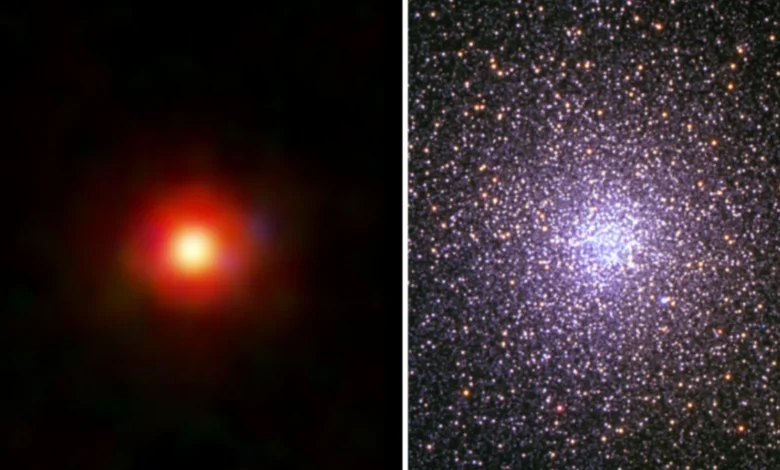
The evolution of the universe often mirrors the biological history of Earth, where ancient lineages do not necessarily vanish but transform into the familiar forms of the modern era. Just as paleontologists have established that many dinosaur lineages survived through their evolution into modern birds, a burgeoning field of "cosmic archaeology" is suggesting a similar fate for the mysterious "Little Red Dots" observed by the James Webb Space Telescope (JWST). New research led by astronomers at the University of Texas at Austin suggests that these enigmatic objects, which appear in the very early universe, did not simply go extinct. Instead, they likely evolved into globular clusters—densely packed, spherical collections of hundreds of thousands, or even millions, of stars that are common sights in the modern cosmos.
The Emergence of the Little Red Dot Mystery
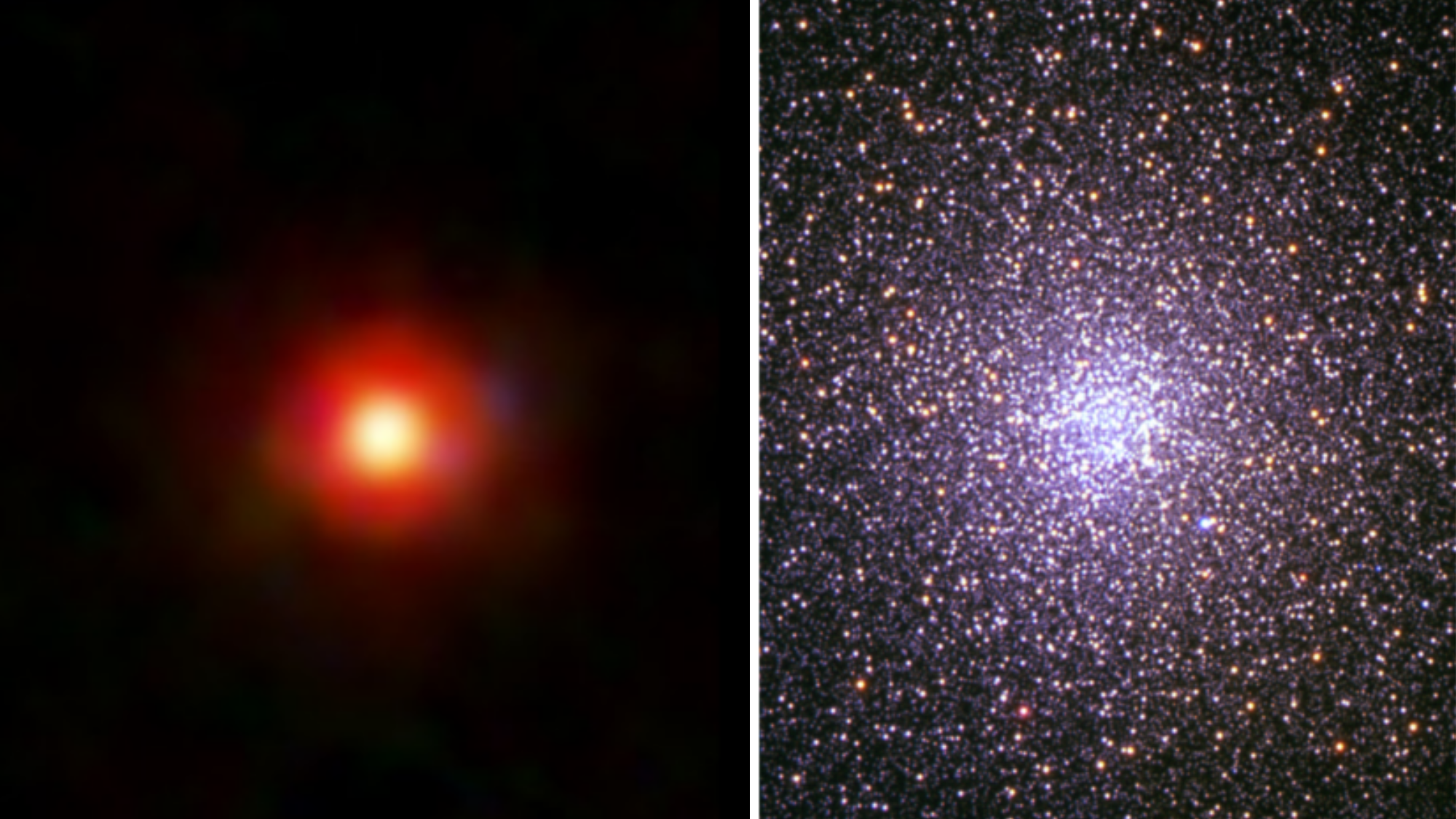
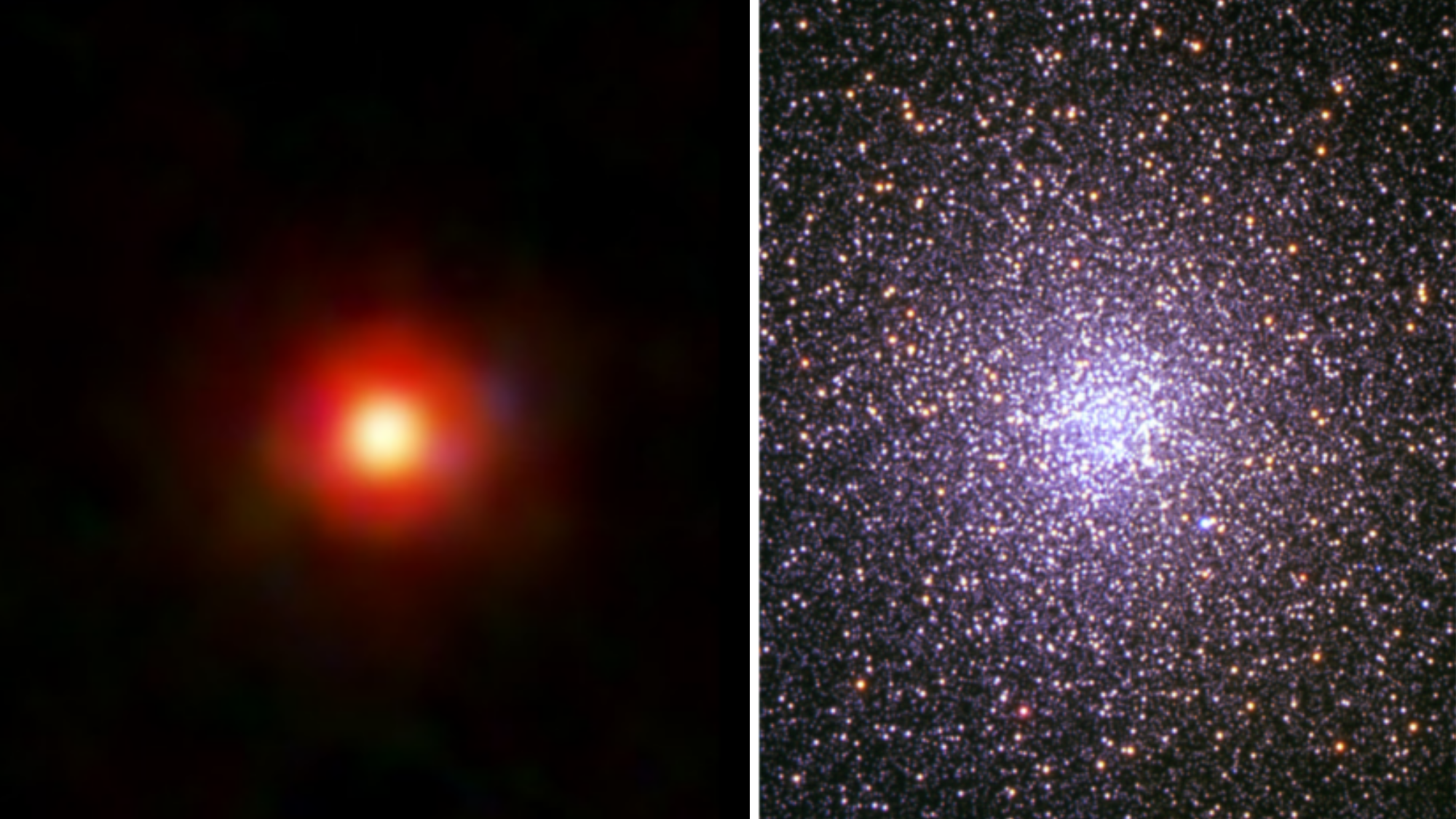
Since the James Webb Space Telescope began its science operations in mid-2022, it has consistently challenged established models of the early universe. One of its most persistent puzzles has been the "Little Red Dots" (LRDs). These objects were detected in abundance in the deep-field images captured by JWST’s Near-Infrared Camera (NIRCam). They appear as tiny, ruby-colored pinpricks of light in the distant reaches of space, corresponding to a time roughly 600 million to 800 million years after the Big Bang.
The mystery of the LRDs is two-fold: their nature and their sudden disappearance. Astronomers noted that while these red dots are ubiquitous in the very early universe, they seem to vanish from the cosmic record by the time the universe reached an age of approximately 2 billion years. This "extinction" led to various theories. Some researchers suggested they were "black hole stars"—massive black holes obscured by thick cocoons of dust and gas. Others hypothesized they were extremely compact galaxies undergoing intense bursts of star formation.
However, the team led by John Chisholm, an assistant professor at the University of Texas at Austin, proposes a different lineage. Their research suggests that these LRDs represent the birth pangs of globular clusters, specifically those harboring "supermassive stars" at their centers. This theory provides a crucial link between the chaotic conditions of the early universe and the stable, ancient star clusters we observe today in the Milky Way and neighboring galaxies.
Decoding the Anatomy of Globular Clusters
To understand the connection, one must first look at the "end product": the globular clusters of the modern universe. These clusters are among the oldest structures in the cosmos. The Milky Way alone hosts at least 150 of them, including famous examples like 47 Tucanae and Omega Centauri. They are characterized by their extreme stellar density, with stars packed so tightly that collisions and gravitational interactions are frequent.
For decades, globular clusters have presented a chemical paradox to astronomers. According to the standard model of stellar evolution, the first stars in the universe were composed almost entirely of hydrogen and helium, with only trace amounts of heavier elements, which astronomers refer to as "metals." As stars live and die, they fuse lighter elements into heavier ones like carbon, oxygen, and magnesium, which are then dispersed into the interstellar medium to seed the next generation of stars.
Curiously, the stars within many globular clusters do not match the chemical signature of their surroundings. They are often enriched with helium and nitrogen, as well as sodium and aluminum, while simultaneously lacking the expected levels of oxygen and magnesium. This specific chemical fingerprint is a hallmark of nuclear fusion occurring at incredibly high temperatures—temperatures far exceeding those found in the cores of standard massive stars.
The Role of Supermassive Stars in the Early Universe
The UT Austin team argues that the only environment capable of producing such extreme temperatures is the core of a "supermassive star." These are hypothetical stellar titans with masses ranging from 1,000 to 10,000 times that of our sun. While such stars do not exist in the modern universe because the conditions are no longer conducive to their formation, the high-density environments of the early universe provided the perfect nursery.
In the dense, gas-rich regions 600 million years after the Big Bang, proto-globular clusters were likely forming at a rapid pace. Within these clusters, stellar collisions and mergers would have been commonplace. These runaway collisions could have birthed a single, colossal supermassive star at the cluster’s center.
"A supermassive star is precisely the kind of environment that could produce this combination of elements," said team member Mike Boylan-Kolchin. These stars would have been "live fast, die young" entities. While our sun has a lifespan of roughly 10 billion years, a supermassive star would burn through its nuclear fuel in a mere 1 million years. When these giants eventually collapsed or exploded as supernovae, they would have ejected their uniquely enriched material into the surrounding cluster, providing the "polluted" building blocks for the subsequent generations of stars we see in globular clusters today.
Chronology of Cosmic Evolution: From Red Dots to Stellar Spheres
The timeline proposed by the researchers aligns with the observed history of the universe. The following chronology outlines the hypothesized transition:
- The Era of Formation (600 Million Years Post-Big Bang): The first massive star clusters begin to collapse from dense gas clouds. Frequent stellar collisions at the centers of these clusters create supermassive stars. The intense light from these giants, combined with surrounding dust, creates the "Little Red Dot" signature detected by JWST.
- The Chemical Seeding (601 Million Years Post-Big Bang): The supermassive stars reach the end of their brief lives. Their explosions enrich the cluster’s gas with nitrogen, sodium, and helium, while depleting oxygen and magnesium.
- The Disappearance (800 Million to 2 Billion Years Post-Big Bang): As the supermassive stars die off and the initial bursts of star formation settle, the clusters lose their intense red luminosity. They become less "flashy" and harder to detect across vast cosmic distances.
- The Modern Era (13.8 Billion Years Post-Big Bang): The clusters, now composed of long-lived, low-mass stars, persist as the globular clusters we observe today. Their ancient stars still carry the chemical scars of the supermassive stars that birthed them.
Supporting Data and Comparative Analysis
The researchers did not rely solely on chemical signatures to make their case; they also looked at the physical scales and distribution of these objects. One of the most compelling pieces of evidence is the mass-matching between LRDs and globular clusters.
The estimated masses of the Little Red Dots, derived from their light profiles, fall within the range of $10^5$ to $10^7$ solar masses. This aligns perfectly with the known masses of modern globular clusters. Furthermore, the researchers found that the spatial distribution of LRDs in the early universe—how they are spread out across space—matches the expected distribution of where globular clusters should have formed relative to the first galaxies.
"There’s no single smoking gun at this point that says Little Red Dots are globular clusters, but it would explain a lot of diverse and surprising observations," Boylan-Kolchin noted. The disappearance of LRDs after 2 billion years is no longer a mystery in this model; it is simply a phase change. Once the "engine" of the Little Red Dot—the supermassive star—is gone, the object essentially becomes "invisible" to the specific search parameters used to find LRDs, even though the cluster itself remains.

Implications for Modern Cosmology and Future Research
This study, currently available as a pre-print on the arXiv repository, has significant implications for how we view the history of our own galaxy. If globular clusters are indeed the descendants of Little Red Dots, it means that the "cosmic dinosaurs" of the early universe are currently orbiting the Milky Way. By studying the chemical composition of local clusters, astronomers are essentially performing a "DNA test" on the survivors of the early universe.
The research also provides a potential solution to the "Missing Link" problem in galaxy formation. Globular clusters are often found in the halos of galaxies, and their formation is thought to be tied to the assembly of the galaxies themselves. Understanding the LRD phase could explain how the first galaxies gathered enough mass and structure to survive and grow.
However, the "black hole star" theory has not been entirely ruled out. Some LRDs exhibit X-ray emissions that are more characteristic of accreting black holes than of stellar clusters. It is possible that the "Little Red Dot" category is a catch-all for several different types of objects that look similar at high redshifts.
"Little Red Dots could be galaxies, they could involve black holes, or they could be something even more unexpected," Chisholm said. "Our work shows that forming globular clusters with supermassive stars should be part of that conversation."
As the James Webb Space Telescope continues its mission, more data will be gathered to test these hypotheses. Future observations using JWST’s spectrographs will look for the specific "light fingerprints" of supermassive stars in the LRDs. If detected, it would confirm that these ancient red pinpricks were not a cosmic dead end, but the vibrant ancestors of the sparkling stellar cities that decorate our night sky today.