Apple Addresses Critical Hide My Email Flaw Exposing User Identities Amidst Mounting Legal Pressure

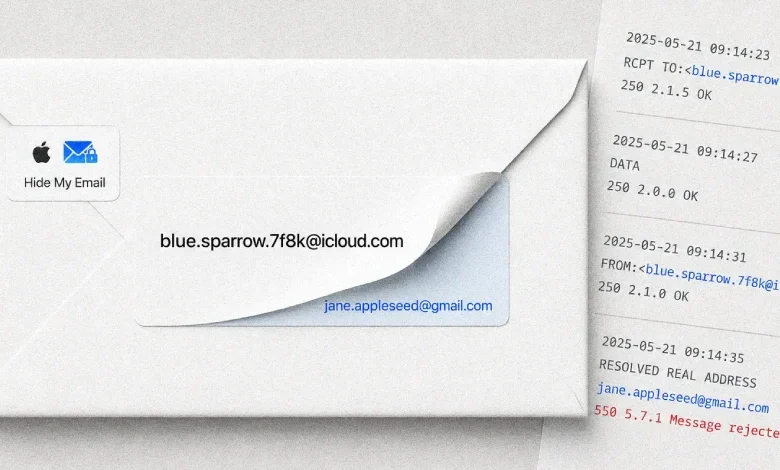
Apple has recently moved to rectify a significant security vulnerability within its "Hide My Email" service, a premium feature designed to safeguard user privacy by masking real email addresses with unique, generated aliases. This flaw, which persisted for over a year and eluded multiple patching attempts, allowed malicious actors to potentially unmask a user’s true email address, fundamentally undermining the very privacy guarantees that underpin the service. The revelation of this vulnerability and its subsequent fix comes at a sensitive time for Apple, as the company faces a class-action lawsuit alleging that it misled customers about the privacy efficacy of "Hide My Email" while simultaneously charging for the service.
Understanding "Hide My Email": A Core Privacy Feature
Introduced by Apple in June 2021 as part of its iCloud+ subscription offering, "Hide My Email" quickly became a cornerstone of the company’s broader privacy-focused ecosystem. The service allows users to generate unique, random email addresses for various online interactions, such as signing up for newsletters, making online purchases, or creating new accounts. These generated aliases automatically forward messages to the user’s personal email inbox, providing a crucial layer of abstraction. The core idea behind this feature is to empower users with greater control over their digital footprint, minimize unwanted spam, and protect their primary email address from being collected by data brokers or becoming compromised in data breaches. For a company that has heavily invested in marketing its commitment to user privacy as a key differentiator, "Hide My Email" was presented as a tangible manifestation of that pledge, requiring a paid iCloud+ subscription, thereby monetizing enhanced privacy.
The digital landscape is increasingly fraught with privacy concerns, from persistent spam and phishing attempts to sophisticated data harvesting operations. In this environment, tools like "Hide My Email" are not merely conveniences but essential safeguards for many users. Apple’s reputation as a privacy-centric tech giant has been cultivated over years, with executives frequently emphasizing the company’s dedication to protecting user data. Features like "Hide My Email" are critical components of this narrative, aiming to build and maintain consumer trust in an era of widespread digital surveillance and data exploitation.
The Unmasking Flaw: How it Worked
The vulnerability at the heart of this issue was first reported to Apple on June 13, 2025, by Tyler Murphy, co-founder of EasyOptOuts, a service dedicated to helping users manage their online data. Details of the flaw, which were initially withheld to prevent potential exploitation, have now been made public following Apple’s successful deployment of a fix. The crux of the problem lay in how the system handled certain email rejections, specifically those categorized as spam.
Ordinarily, when an email sent to a "Hide My Email" alias is rejected for any reason – be it a non-existent address, a full inbox, or a spam classification – the sender typically receives an automated bounce-back message. However, under specific conditions related to spam rejection, the system inadvertently exposed the user’s real, underlying email address in the mail transfer logs. This meant that a sender, even if their message was legitimate but simply misidentified as spam, could potentially glean the user’s true identity from these logs. The vulnerability essentially created a backdoor, allowing an attacker to bypass the intended privacy mechanism by simply sending a targeted message that triggered the specific spam rejection condition.
This bypass was particularly insidious because it didn’t require sophisticated hacking techniques; it leveraged a fundamental aspect of email communication – bounce messages and mail server logs. As Murphy and EasyOptOuts co-founder Ben Weiner explained to 404 Media, "We don’t know how often hidden email addresses were leaked in email logs. For many major email hosts, the leak was triggered simply by an email being automatically rejected as spam, even if it was a legitimate message. Such emails probably didn’t make it to your inbox, so you can’t review your spam folder to learn whether you were affected." This statement underscores the silent and potentially widespread nature of the data exposure, leaving users unaware that their privacy might have been compromised.
A Protracted Disclosure and Patching Timeline
The timeline of this vulnerability’s discovery and resolution highlights a concerning delay in addressing a critical privacy flaw.
- June 13, 2025: Tyler Murphy of EasyOptOuts initially reports the "Hide My Email" vulnerability to Apple, initiating the disclosure process.
- Over a year of communication: Following the initial report, Murphy engaged in ongoing communication with Apple regarding the flaw.
- March 2026: Apple makes its first attempt to patch the vulnerability. This attempt, however, proves unsuccessful in fully resolving the issue.
- June 30, 2026: Apple deploys a second patch, indicating a continued struggle to effectively mitigate the flaw. This attempt also reportedly failed to fully plug the loophole.
- July 3, 2026: After more than a year since the initial disclosure and multiple unsuccessful attempts, Apple finally deploys a successful fix for the "Hide My Email" vulnerability.
- July 7, 2026: This date is noted as a critical threshold, as real email addresses linked to "Hide My Email" addresses created before this date may have been captured in mail transfer logs when non-malicious emails were bounced, even after the final fix.
- July 21, 2026: News of the successful fix and the underlying vulnerability becomes widely reported, with 404 Media specifically highlighting Apple’s resolution.
The protracted nature of this timeline, particularly the gap of over a year between initial disclosure and final resolution, raises questions about Apple’s internal processes for handling security vulnerabilities, especially those impacting core privacy features. While patching complex systems can be challenging, a flaw of this magnitude, directly contradicting the service’s advertised purpose, typically demands a more expedited response.

The Bug’s Mechanics: Unpacking the Spam Rejection Loophole
To fully grasp the severity of this vulnerability, it’s important to understand the typical flow of email and how a spam rejection can expose data. When an email is sent to an address, it travels through various mail servers before reaching its destination. If, at any point, a server identifies the email as spam, it can reject the message. This rejection triggers a "bounce-back" notification to the sender, often containing details about why the message was rejected.
In the case of "Hide My Email," the system is designed to act as an intermediary. An email sent to an alias ([email protected]) is supposed to be processed by Apple’s servers, which then forward it to the user’s actual email address. The vulnerability manifested when an incoming email, destined for a "Hide My Email" alias, was flagged as spam by the forwarding mechanism itself or an upstream server handling the alias. Instead of simply bouncing the message back to the sender with a generic error, or merely indicating that the alias was invalid, the system included the real, underlying email address in the bounce log or rejection notification that was sent back to the original sender.
This was not a case of the spam filter in the user’s personal inbox exposing the address, but rather a leakage occurring within the infrastructure managing the "Hide My Email" forwarding service itself. The "logs" referred to are typically Mail Transfer Agent (MTA) logs, which record every step of an email’s journey. While these logs are not publicly accessible, they are often available to the sender’s email provider or, in some cases, directly to sophisticated senders who manage their own mail servers. The critical point is that the privacy promise of "Hide My Email" was broken at the infrastructural level, making the user’s primary email address discoverable through a common email operational event.
The Extent of the Exposure: When Was Data Leaked?
The implications of this flaw are significant for any user who relied on "Hide My Email" for privacy. While the bug has now been resolved, the past exposure remains a concern. The statement from Murphy and Weiner highlights that the leak could have been triggered by entirely legitimate messages being misclassified as spam. This means that users might have had their real email addresses exposed without any malicious intent from the sender, simply due to the inherent imperfections of spam filtering systems.
The article explicitly notes: "It bears noting that while the bug has been resolved, it’s possible that a real email address linked to a Hide My Email address created before July 7, 2026, may have been captured in mail transfer logs when non-malicious emails get bounced." This critical detail means that even if a user created an alias years ago, their privacy was at risk until Apple’s final fix, and the exposure might have occurred multiple times. Users have no way of knowing if their real email addresses were exposed through this mechanism, as the bounced emails would not have reached their inbox or spam folder. This lack of transparency regarding past exposure is particularly troubling for privacy-conscious users.
The primary risk stemming from such an exposure is a loss of privacy and an increased susceptibility to targeted spam, phishing attacks, and other forms of unwanted communication. Once a real email address is unmasked, it can be added to marketing lists, sold to data brokers, or used in social engineering campaigns. For users who specifically pay for iCloud+ to leverage "Hide My Email" as a shield against such threats, this vulnerability represents a direct failure of the promised security.
Apple’s Response and Broader Industry Context
Apple’s official response to the public disclosure of this fix has been notably subdued, largely communicated through its actions of deploying the patch rather than proactive public statements. While the company has a robust bug bounty program and generally acknowledges the work of security researchers, the prolonged resolution time and the lack of a public warning to users during the period of vulnerability are points of contention.
In the broader cybersecurity landscape, prompt and transparent vulnerability disclosure is considered best practice. When a significant flaw is discovered, especially in a privacy-centric feature, companies are often expected to:
- Acknowledge the flaw promptly.
- Work diligently to develop a fix.
- Communicate the potential impact to affected users.
- Provide guidance or remediation steps.
Apple’s handling of this specific issue, particularly the extended period of an unpatched vulnerability and the absence of user notification, contrasts with these expectations. This situation underscores the delicate balance tech companies must strike between maintaining operational security and informing users about potential risks to their data. The failure to warn users about the flaw, especially when they were paying for a privacy service, is a significant aspect of the ongoing class-action lawsuit.

Legal Ramifications: The Class-Action Lawsuit
The timing of the vulnerability fix coincides with Apple facing a class-action lawsuit, Alvarez v. Apple Inc., which directly challenges the integrity and marketing of its "Hide My Email" feature. Filed in federal court, the lawsuit alleges that Apple "promised Hide My Email as a privacy feature customers paid for, whether directly through iCloud+ or indirectly through Apple’s product-wide privacy representations, and failed to deliver it."
The complaint further escalates the accusation, stating, "Worse, Apple has been fully aware of this problem for over a year and has not fixed it." It also criticizes Apple for not disabling or pausing the service, warning customers, or correcting its privacy representations during the entire period the flaw was known and unpatched. The core of the legal argument rests on the premise that Apple knowingly sold and promoted a privacy feature that was, for a significant duration, fundamentally broken in its stated purpose.
Such lawsuits can have substantial financial and reputational consequences for large corporations. If successful, the class action could result in significant monetary damages for affected iCloud+ subscribers. Beyond monetary compensation, the lawsuit itself serves as a public challenge to Apple’s privacy narrative, potentially eroding consumer trust and inviting greater scrutiny from regulatory bodies focused on consumer protection and data privacy. The legal proceedings will likely scrutinize internal Apple communications and timelines related to the vulnerability, providing further insight into how such issues are managed within the company.
Repercussions for User Trust and Apple’s Privacy Image
Apple has meticulously crafted an image as a champion of user privacy, often contrasting its practices with those of other tech giants that rely heavily on data monetization. Features like "Hide My Email," along with App Tracking Transparency and on-device processing, are frequently cited as evidence of this commitment. However, a significant vulnerability that directly undermines a core privacy feature, especially one that users pay for, can severely damage this carefully cultivated reputation.
The long delay in patching, coupled with the lack of proactive communication to users about the flaw, risks fostering a sense of betrayal among the company’s most privacy-conscious customers. Trust, once lost, is difficult to regain, and incidents like this can lead users to question the efficacy and sincerity of other Apple privacy features. In a competitive market where privacy is increasingly a key battleground, any perceived lapse can push users towards alternatives.
Moreover, this incident highlights the inherent challenges in delivering absolute privacy guarantees in complex digital ecosystems. Even with the best intentions, vulnerabilities can emerge, and their resolution requires a delicate balance of technical expertise, transparency, and user communication. For Apple, this situation serves as a stark reminder that its privacy promises must be backed by flawless execution and swift, transparent action when flaws are discovered.
Looking Ahead: Lessons from the Incident
The resolution of the "Hide My Email" vulnerability, while welcome, offers several critical lessons for both Apple and the broader tech industry. For Apple, it underscores the importance of:
- Expedited Vulnerability Management: Critical privacy flaws require faster response times and more effective patching strategies.
- Proactive User Communication: When a core privacy feature is compromised, users deserve to be informed, even if it’s uncomfortable for the company.
- Rigor in Feature Development: Privacy features must be rigorously tested not only for their intended functionality but also for unintended side effects that could expose data.
For users, this incident serves as a crucial reminder that no digital service, however robust, is entirely immune to vulnerabilities. While "Hide My Email" now functions as intended, the period of exposure means that vigilance remains paramount. Users should always be cautious about sharing their primary email address and leverage privacy tools where appropriate, while also understanding their inherent limitations.
The ongoing class-action lawsuit will undoubtedly keep this issue in the public discourse, potentially setting precedents for how tech companies are held accountable for the privacy features they market and sell. As digital privacy continues to be a paramount concern for consumers and regulators alike, the "Hide My Email" saga will likely be referenced as a case study in the complexities of delivering on privacy promises in the ever-evolving landscape of cybersecurity.