Abbott Laboratories Grapples with Dual Cybersecurity Breaches Amidst Extortion Threats and Claims of Sensitive Data Theft


Abbott Laboratories, a global healthcare giant, is currently navigating the complexities of two distinct cybersecurity incidents, confirming unauthorized access to internal legacy Exact Sciences systems within its Cancer Diagnostics business, while simultaneously investigating a separate claim from a different threat actor regarding a breach of its LabCentral customer portal and the alleged exfiltration of company data. These incidents underscore the persistent and evolving cyber threats faced by the critical healthcare and medical technology sectors, highlighting the vulnerability of even large, established organizations to sophisticated attack methodologies and the far-reaching implications of compromised digital infrastructure.
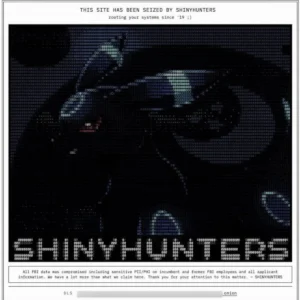
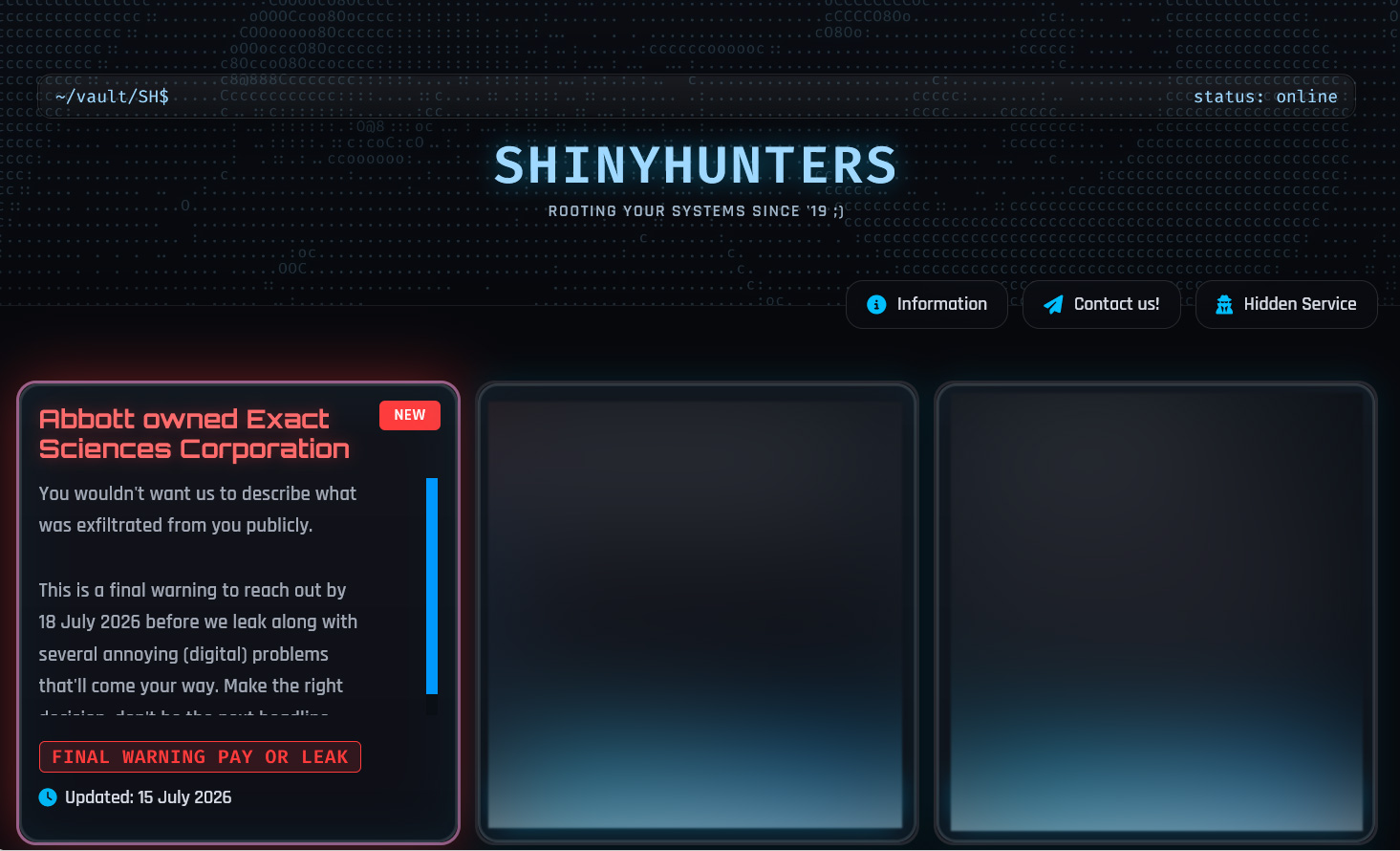
The first incident, impacting Abbott’s Cancer Diagnostics business, came to light after the notorious ShinyHunters extortion gang publicly added Abbott to its data leak site. This move, a common tactic for the group, served as a direct threat to publish allegedly stolen data unless the company engaged in negotiations. Initially setting a deadline of July 18, the group later extended this ultimatum to July 21, intensifying pressure on Abbott to respond to their demands. The inclusion on ShinyHunters’ leak site signals a significant escalation, as the group is known for its aggressive tactics and a history of making good on its threats to release compromised information if their demands are not met.
Upon inquiry from BleepingComputer, Abbott directed the publication to a formal statement released on its website. In this statement, Abbott confirmed, "Abbott is investigating a cyber incident in which there was unauthorized access to a limited number of internal systems in our Cancer Diagnostics business only." The company sought to reassure stakeholders and the public, emphasizing that "This does not impact any business operations, product or product availability, manufacturing or lab operations, or our ability to serve patients." Furthermore, Abbott clarified that the security incident had not affected any other Abbott businesses or systems, stressing that the compromised legacy Exact Sciences systems are separate from Abbott’s broader operational infrastructure. This distinction is crucial for Abbott, aiming to contain public concern and limit the perceived scope of the breach to a specific, older segment of its IT environment.
Abbott further detailed its immediate response to the incident, stating it had activated its comprehensive incident response procedures upon learning of the unauthorized access. This involved engaging external cybersecurity experts to assist with the investigation and remediation efforts, and promptly notifying law enforcement agencies, a standard protocol for breaches of this magnitude. Despite the severity of the incident and the public nature of the extortion threat, Abbott projected confidence in its ability to manage the fallout, asserting that it does not anticipate the incident will have a material impact on its overall business or financial results. This assessment, however, often depends on the verified extent of data compromise and subsequent regulatory or legal actions.
The Modus Operandi of ShinyHunters and the Exact Sciences Breach
ShinyHunters, a persistent and highly active cybercriminal group, provided BleepingComputer with details regarding their alleged method of entry into Abbott’s systems. The group claimed to have gained access through a sophisticated vishing attack targeting several Abbott employees in mid-June. Vishing, a portmanteau of "voice" and "phishing," is a form of social engineering that uses telephone calls to trick individuals into divulging sensitive information or taking actions that compromise security. According to the threat actor, this vishing campaign successfully led to the compromise of a Microsoft Entra single sign-on (SSO) account, which then provided the gateway to internal systems.

This alleged attack vector aligns perfectly with ShinyHunters’ established pattern of operations. For over a year, the extortion group has been actively conducting social engineering campaigns specifically designed to target employees’ SSO accounts across various platforms, including Microsoft Entra, Okta, and Google SSO. Their strategy is highly effective: once they gain unauthorized access to a corporate SSO account, they leverage this privileged access to exfiltrate vast amounts of data from connected Software-as-a-Service (SaaS) applications. These often include critical business platforms such as Salesforce for customer relationship management, Microsoft 365 and Google Workspace for productivity and collaboration, SAP for enterprise resource planning, Slack for internal communications, Adobe for creative assets, Atlassian for project management, Zendesk for customer support, and Dropbox for file storage, among many others. The interconnected nature of modern enterprise IT environments makes SSO a highly attractive target for threat actors, as compromising a single credential can unlock access to a multitude of vital applications and data repositories, allowing attackers to pivot through an organization’s digital ecosystem.
The healthcare and medical technology sectors have become a particular focus for ShinyHunters. The group has a documented history of targeting medtech companies, including major players like Medtronic, OneMedical, and AdaptHealth. BleepingComputer’s investigations have also linked ShinyHunters to the iRhythm data breach and revealed that the group targeted Stryker shortly after the company recovered from a destructive Iranian data-wiping attack. This pattern underscores the group’s strategic targeting of organizations rich in sensitive patient data and valuable intellectual property, which can be leveraged for significant financial gain through extortion or sale on illicit dark web markets. The healthcare industry’s reliance on legacy systems, coupled with the critical nature of patient care, often makes it a more vulnerable and lucrative target for such groups.
Allegations of Extensive Data Theft from Exact Sciences
ShinyHunters made sweeping claims regarding the nature and volume of the data allegedly stolen from Abbott’s Exact Sciences systems. When pressed for details, the group asserted it had exfiltrated data from multiple critical corporate applications, including Microsoft Entra, ServiceNow, SharePoint, Databricks, and Coupa. The alleged haul reportedly includes a wide array of sensitive information, such as internal documents, contracts, and customer information – data that could expose confidential business dealings and operational strategies.
More alarmingly, the threat actor claimed to have stolen an immense volume of personally identifiable information (PII), stating that over 30 million rows of customer PII were exfiltrated from various datasets. This PII reportedly encompasses names, email addresses, phone numbers, physical addresses, dates of birth, and, critically, more than one million Social Security numbers. The compromise of Social Security numbers, in particular, poses a severe risk of identity theft and financial fraud for affected individuals, leading to long-term consequences and potential legal liabilities for the compromised organization. Identity theft can take months, even years, for victims to fully resolve, incurring significant personal and financial distress.
Further claims from ShinyHunters included the theft of over 22 million client notes, which reportedly contain sensitive doctor-patient conversations. The compromise of such intimate medical information could have profound implications for patient privacy, trust in healthcare providers, and potentially violate stringent healthcare data regulations like HIPAA (Health Insurance Portability and Accountability Act) in the United States, or GDPR (General Data Protection Regulation) in the European Union, depending on the geographic scope of the affected individuals. The breach of medical records is particularly egregious as it can lead to medical identity theft, where an individual’s stolen information is used to obtain medical services, potentially creating erroneous entries in their health records that can affect future care. Additionally, the group claimed to have stolen more than 20 million medical orders, along with customer agreements and non-disclosure agreements (NDAs), which could expose confidential business dealings and intellectual property.
It is crucial to note that BleepingComputer, while reporting on these claims, has not independently verified the full extent or veracity of the data ShinyHunters alleges to have stolen. The discrepancy between threat actor claims and company admissions is a common feature in cyber incident reporting, with companies often minimizing the impact while attackers inflate their successes to maximize leverage and pressure for ransom payments.
The LabCentral Incident: Claims of IP Theft from Core Laboratory Diagnostics
In parallel with the ShinyHunters investigation, Abbott is also contending with a separate claim of a cyber incident involving its Core Laboratory diagnostics business. A different threat actor, identified as ShadowByt3$, contacted BleepingComputer, asserting that they had breached Abbott’s LabCentral customer portal.
ShadowByt3$ claimed to have gained access to the LabCentral unit through its customer portal by exploiting what they described as a "weak point" in the environment and utilizing compromised customer credentials. According to the threat actor, the intrusion occurred on July 4, 2026. This date, appearing in the future relative to typical news cycles, is presented as claimed by the threat actor. Following their initial access, ShadowByt3$ stated they systematically exfiltrated files by targeting API endpoints, indicating a methodical and technical approach to data extraction that suggests a degree of sophistication.
The data allegedly stolen by ShadowByt3$ is focused on sensitive business and intellectual property rather than customer PII. The group claims to have obtained CE manufacturing certificates, which are critical for product compliance in the European market; detailed operation manuals; technical specifications; regulatory documentation; product requirement archives; calibrator value assignments; assay files; and other proprietary product documentation related to Abbott’s sophisticated laboratory diagnostic systems. While ShadowByt3$ stated that no customer data was stolen, the alleged acquisition of such sensitive business documents and intellectual property could have significant ramifications for Abbott, potentially compromising competitive advantages, exposing trade secrets, or impacting future product development and regulatory approvals. The theft of intellectual property can be particularly damaging for a company like Abbott, which invests heavily in research and development, as it can be used by competitors to replicate products or accelerate their own development cycles. To substantiate their claims, ShadowByt3$ provided BleepingComputer with screenshots and a file listing, purporting to serve as proof of their intrusion and data exfiltration.
Abbott, in response to inquiries about the LabCentral incident, confirmed its awareness of a "potential" cyber incident but strongly disputed the threat actor’s characterization of the data alleged to have been stolen. An Abbott spokesperson told BleepingComputer, "LabCentral is an externally facing third-party hosted portal used by Abbott’s core laboratory diagnostics business. It houses publicly available technical product reference documents, including operating manuals, troubleshooting checklists and product specifications, and does not contain proprietary/sensitive customer or business information." This statement suggests a significant divergence in perspective regarding the sensitivity and confidentiality of the data housed within the LabCentral portal, with Abbott maintaining that the information is public knowledge and not critical business intelligence. The company’s stance indicates that while an intrusion might have occurred, the value of the exfiltrated data is negligible.
As of the current reporting, neither ShinyHunters nor ShadowByt3$ has publicly released the data they claim to have stolen from Abbott. This waiting game is typical in extortion scenarios, where the threat actors hold the data as leverage, hoping to compel the victim organization into negotiation or to maximize the impact of their eventual data leak.
Broader Context: Cybersecurity Challenges in the Healthcare Sector

These dual incidents at Abbott Laboratories highlight the acute and growing cybersecurity challenges facing the global healthcare and medical technology industries. Healthcare organizations are particularly attractive targets for cybercriminals due to the immense value and sensitivity of the data they hold. Electronic health records (EHRs) contain a treasure trove of PII, financial information, and highly personal medical histories, making them far more valuable on the black market than, for instance, credit card numbers alone. The average cost of a healthcare data breach continues to be the highest across all industries, reaching an estimated $10.93 million per breach in 2023, reflecting the stringent regulatory fines, reputational damage, and complex remediation efforts required.
The methods employed in these attacks – vishing, social engineering, and the compromise of SSO credentials – are indicative of a broader trend towards human-centric attacks. While technical vulnerabilities are always a concern, increasingly, attackers are exploiting the "human element" as the weakest link in an organization’s security chain. A 2023 report indicated that human error or compromised credentials were a factor in a significant percentage of data breaches. Training employees to recognize and resist social engineering attempts, implementing multi-factor authentication (MFA) across all systems, and regularly conducting security awareness programs are vital defenses against such tactics.
Moreover, the incidents underscore the complexities of managing cybersecurity risk within an extended enterprise. The compromise of "legacy Exact Sciences systems" points to the challenges of integrating and securing older IT infrastructure following mergers and acquisitions. These older systems often lack modern security features and patching capabilities, making them easier targets. Similarly, the LabCentral portal being a "third-party hosted" environment brings to the forefront the critical importance of third-party risk management. Organizations must ensure that their vendors and partners adhere to equally rigorous security standards, as a weakness in any part of the supply chain can become an entry point for threat actors. Supply chain attacks have seen a significant rise, accounting for a substantial portion of all cyber incidents in recent years.
Implications and Regulatory Landscape
Should
Related posts: