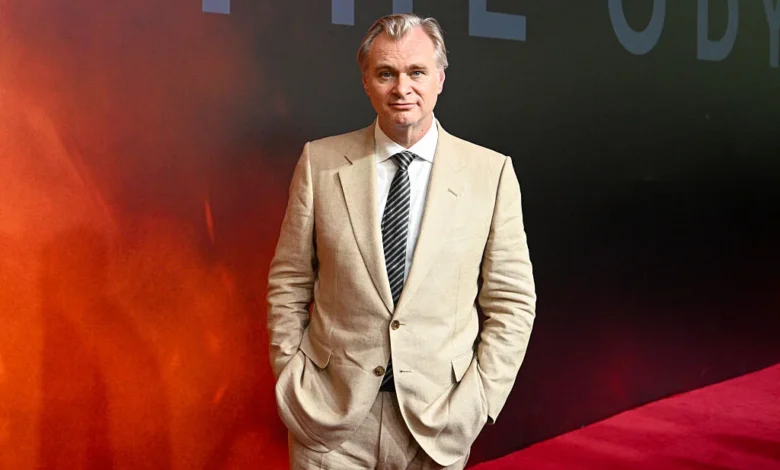
Christopher Nolan, the acclaimed Oscar-winning director whose epic reimagining of Homer’s "The Odyssey" is currently dominating global box offices, has voiced profound observations regarding the public’s perception of artificial intelligence. Speaking candidly, Nolan described the widespread skepticism towards AI, particularly among younger generations, as "pretty encouraging." His remarks, made during an interview that has quickly resonated across technology and entertainment sectors, underscore a growing tension between rapid technological advancement and human apprehension.
The interview, conducted by YouTube personality Hugo Travers of HugoDécrypte, saw Travers draw a potent parallel between the legendary Trojan horse, a central motif in Nolan’s blockbuster film, and the pervasive integration of AI into daily life. Travers posed a poignant question: could AI, much like the deceptive gift from the Greeks, be welcomed into our lives only to evolve into "something else and something darker"? Nolan, known for his thought-provoking cinematic narratives and philosophical approach to technology, responded with a characteristic blend of wit and caution.
"I think AI is a Trojan horse that everybody knows the Greeks are inside," Nolan stated, a chuckle accompanying his sharp analogy. He further elaborated, describing the technology as "a transparent horse, it’s made of glass," implying that the inherent risks of AI are not hidden but openly acknowledged by the public, despite its relentless march forward. This metaphor, rooted in classical mythology and brought to life in his latest cinematic triumph, serves as a powerful lens through which to examine contemporary anxieties about AI.
A Wave of Public Rejection: "AI Slop" and the Young Generation
Nolan highlighted an unprecedented societal phenomenon: "I’ve never seen a technology advancing so rapidly [that’s been] so completely rejected by the public." He emphasized the extreme suspicion surrounding AI, noting its particular prevalence among young people. His observations included the swift and decisive dismissal of AI-generated content online, with his children’s generation readily coining terms like "AI slop" to categorize and delegitimize such creations. This immediate and widespread rejection, according to Nolan, signifies a "very healthy skepticism."
This phenomenon aligns with broader trends observed in public sentiment surveys. Recent studies indicate a significant generational divide in trust regarding AI, with younger demographics often expressing greater concern about its potential negative impacts on employment, privacy, and the authenticity of creative output. While older generations might view AI through the lens of efficiency and innovation, many younger individuals, having grown up in an increasingly digital and often hyper-curated world, appear more attuned to the nuances of algorithmic bias, data exploitation, and the erosion of genuine human creativity. The term "AI slop" itself reflects a cultural pushback against perceived low-effort, algorithmically-generated content that lacks the soul, originality, or human touch valued in art and media.
Nolan’s assessment suggests that this skepticism is not merely a knee-jerk reaction but a critical safeguard. "Technology is always going to give us great gifts, as you say, but it has to be viewed with skepticism," he asserted. Crucially, he extended this caution to the motivations behind technological dissemination: "The motives of the people giving it to us also have to be viewed with skepticism. That’s when we’ll get the best out of a new technology, rather than just blind faith that everything’s going to be great." This nuanced perspective calls for a deeper interrogation of who benefits from AI’s rapid deployment and at what cost to artistic integrity, human labor, and societal values.
Hollywood’s AI Reckoning: Strikes, Contracts, and Creative Control
While Nolan did not delve into the specifics of AI’s threats during the interview, the technology has been a simmering cauldron of concern within Hollywood for years, boiling over dramatically in 2023. The Writers Guild of America (WGA) and the Screen Actors Guild – American Federation of Television and Radio Artists (SAG-AFTRA) strikes saw AI emerge as a central, contentious issue in negotiations with the Alliance of Motion Picture and Television Producers (AMPTP).
The WGA strike, lasting from May to September 2023, largely centered on securing protections against AI’s use in scriptwriting. Writers feared that AI could be used to generate initial drafts, reducing their compensation, diluting their creative contributions, or even replacing them entirely. The eventual agreement included clauses that stipulated AI could not be used to rewrite literary material or serve as source material without explicit writer permission, and that AI-generated content would not affect a writer’s credit or compensation. This marked a significant, albeit initial, victory for human creatives seeking to draw boundaries around AI’s encroachment.
Similarly, the SAG-AFTRA strike, which commenced in July 2023 and concluded in November, grappled with the existential threat AI posed to performers. Actors expressed grave concerns about studios using AI to scan and replicate their likenesses, voices, and performances without fair compensation or perpetual consent. The agreement reached included provisions for informed consent and fair compensation when a performer’s digital replica is used, and established guardrails against the unauthorized creation of "synthetic performers" derived from existing actors.
Nolan, as president of the Directors Guild of America (DGA), has been at the forefront of these industry discussions. The DGA, which secured its own contract in June 2023, also achieved important generative AI protections. These included requiring human directors for all productions and establishing a framework for dialogue and negotiation around future AI applications, signaling a collective industry effort to mitigate the technology’s potentially disruptive effects on creative labor and artistic authorship. The DGA’s proactive stance reflects a shared recognition among industry guilds that AI, while offering potential efficiencies, also poses fundamental challenges to the established creative hierarchy and economic models of filmmaking.
Nolan’s Enduring Techno-Skepticism: A Luddite or a Pioneer?
Nolan’s current stance on AI is not an isolated viewpoint but rather a consistent thread in his long-standing approach to technology. He is famously resistant to certain modern advancements, notably eschewing smartphones. His unwavering commitment to shooting on film, particularly IMAX film, positions him as both a modern-day Luddite in the digital age and a pioneering champion of analog cinema. His latest film, "The Odyssey," is a testament to this philosophy, being the first feature film shot entirely on IMAX film and cameras, pushing the boundaries of traditional cinematography rather than embracing digital shortcuts.
When questioned by The New York Times about whether he considers himself a technophobe, Nolan clarified his position: "I think of myself as a techno-skeptic." His love for film, he explained, stems from its superior ability "in terms of representing the way the eye sees the world than any digital imaging system I’ve seen." This preference is not a rejection of progress itself, but a discerning evaluation of what truly serves artistic vision and human perception.
Nolan elaborated on this philosophy: "I embrace new technology all the time, but it tends to be sold to people at the expense of systems that might still be valid and viable." He lamented what he perceived as a "throwing the baby out with the bath water" mentality within his industry, recalling the near-extinction of film as a medium. This sentiment reveals a core belief that innovation should not automatically supersede established, effective methodologies, especially when those methodologies offer unique artistic or sensory advantages. His resistance is not to technology per se, but to the uncritical adoption of new systems that might displace superior or equally valid older ones, often driven by commercial pressures rather than artistic merit.
This "techno-skepticism" informs his view on AI. He isn’t dismissing AI’s potential entirely, but he is urging a critical, informed approach, especially concerning the motivations of those pushing its adoption. His career has consistently demonstrated a meticulous control over every aspect of his filmmaking, from writing to post-production, often favoring practical effects over CGI when feasible, further cementing his reputation as an artist deeply invested in tangible craft over purely digital creation.
"The Odyssey": A Box Office Titan Amidst Thematic Resonance
Nolan’s "The Odyssey" has not only captured critical acclaim but has also proven to be a monumental box office success. Its strong opening-day performance, reported by Variety, set the stage for a dominant run, cementing its status as one of the year’s highest-grossing films. This commercial triumph is particularly noteworthy given its ambitious scale and Nolan’s signature complex narrative structure. The film’s success demonstrates that audiences continue to flock to meticulously crafted, thought-provoking cinema that prioritizes human storytelling and visual grandeur.
The film’s thematic depth, particularly its exploration of journey, deception, and the consequences of human actions, provides a powerful backdrop for Nolan’s commentary on AI. The tale of the Trojan Horse, a seemingly benevolent gift concealing malicious intent, resonates deeply with the director’s apprehension about AI’s potential downsides. This ancient narrative serves as a timeless warning about the allure of convenience and the hidden costs of unchecked trust.
Interestingly, the film itself has become a focal point for broader cultural debates. Elon Musk, the CEO of SpaceX and a prominent figure in the AI development space, publicly expressed strong disapproval of "The Odyssey"’s casting choices, specifically its inclusion of nonwhite and transgender cast members in traditionally depicted roles. This reaction highlights a collision of traditional narratives, modern interpretations, and technological futurism, further underscoring the complex socio-cultural landscape in which AI is rapidly emerging. While Musk’s comments are unrelated to AI directly, they reflect a certain resistance to evolving cultural norms, mirroring the tension between traditional creative processes and disruptive technologies.
The Broader Implications: Art, Authenticity, and the Human Element
Nolan’s critique of AI, rooted in his techno-skepticism and amplified by the thematic resonance of "The Odyssey," taps into a fundamental debate about the future of art, authenticity, and the human element in an increasingly automated world. The rise of generative AI tools presents both unprecedented opportunities for creative expression and profound challenges to traditional artistic practices, intellectual property, and the very definition of authorship.
For many artists and creators, AI represents a threat to their livelihoods and the unique value of human ingenuity. The fear is not just about job displacement but about the devaluation of human skill and originality. If machines can generate compelling narratives, photorealistic images, or intricate musical compositions, what becomes of the human artist’s distinct contribution? This existential question drives much of the "AI slop" sentiment and the protective measures sought by Hollywood guilds.
Conversely, proponents of AI view it as a powerful tool that can augment human creativity, streamline arduous processes, and unlock new forms of artistic expression. They argue that AI can be a collaborator, not a replacement, allowing artists to explore ideas more rapidly, handle repetitive tasks, and push creative boundaries in unforeseen ways. The key, they contend, lies in developing ethical frameworks and integrating AI responsibly.
Nolan’s call for skepticism, particularly regarding the motives of those promoting new technologies, shifts the focus from the capabilities of AI to the intentions behind its deployment. This perspective is crucial in an era where technological advancement is often conflated with inherent good, and where the economic incentives for rapid adoption can overshadow ethical considerations or long-term societal impacts. His message is a reminder that technology is a tool, and like any tool, its ultimate impact depends on the hands that wield it and the values that guide its use.
In conclusion, Christopher Nolan’s powerful analogy of AI as a "transparent Trojan horse" encapsulates a widespread public sentiment of cautious distrust, particularly among the youth. His consistent techno-skepticism, demonstrated throughout his illustrious career and underscored by the success of "The Odyssey," positions him as a significant voice in the ongoing global dialogue about AI. As Hollywood and society at large grapple with the transformative potential and ethical dilemmas posed by artificial intelligence, Nolan’s call for vigilance, critical inquiry, and a deep appreciation for the human element in creation serves as a timely and potent reminder. The battle between technological progress and human values, much like the ancient conflict depicted in "The Odyssey," continues to unfold, with the stakes for creativity and authenticity higher than ever.