Jennifer Hudson to Perform US National Anthem at FIFA World Cup 2026 Final Amid Debate Over Tournament Americanization

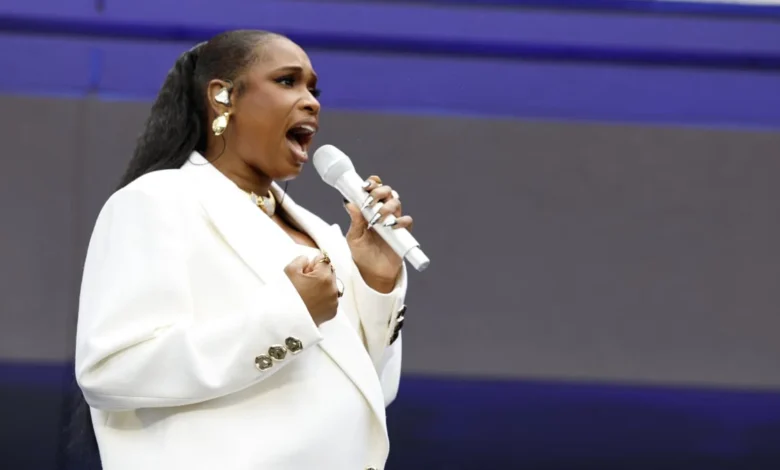
The 2026 FIFA World Cup is poised to reach its crescendo on July 19 at the New York New Jersey Stadium, and while the United States Men’s National Team will not be participating on the pitch, the American presence will be felt through a series of high-profile entertainment showcases. FIFA officially announced on July 14 that Grammy and Academy Award-winning artist Jennifer Hudson has been selected to perform a special rendition of "The Star-Spangled Banner" during the pre-game ceremonies. The performance is scheduled to take place at 1:30 p.m. ET, approximately 90 minutes before the highly anticipated kickoff between finalists Spain and Argentina.
The decision to feature the United States national anthem at a match where the host nation is not competing has ignited a complex debate among global soccer enthusiasts. Historically, FIFA World Cup finals have adhered to a strict protocol where only the anthems of the two competing nations are played immediately before the start of the match. However, FIFA has clarified that Hudson’s performance is part of a separate, elaborate closing ceremony designed to honor the conclusion of a historic tournament hosted across three nations: Canada, Mexico, and the United States. Because the final match is physically located on American soil—at the venue commercially known as MetLife Stadium—organizers have opted to highlight the host country’s cultural heritage through this musical tribute.
The Cultural Controversy and Fan Response
Despite the logistical explanation provided by FIFA, the announcement has met with significant pushback on social media and within international soccer circles. Critics argue that the inclusion of the American anthem feels exclusionary toward the other two host nations. Canada and Mexico, which played vital roles in organizing the expanded 48-team tournament, will not have their national anthems featured during the final’s pre-game festivities. This discrepancy has led to accusations of American exceptionalism, with fans from across the globe questioning why the "host nation" honors are not being shared equally among the three North American partners.
The debate extends beyond the choice of song to the broader "Americanization" of the sport. Soccer, or football as it is known to the vast majority of the world, has traditionally maintained a continuous flow with minimal interruptions. The introduction of a pre-game show of this magnitude, coupled with the first-ever halftime show in World Cup history, is seen by some traditionalists as a move to mirror the structure of the NFL’s Super Bowl. Online discourse has been filled with concerns that the soul of the international game is being compromised to cater to domestic broadcasting styles and advertising demands.
A Star-Studded Closing Ceremony Lineup
Jennifer Hudson is merely one piece of a massive entertainment puzzle assembled by FIFA to ensure the 2026 final is the most-watched sporting event in history. The pre-game event, which begins 90 minutes before the match, is headlined by American rapper and singer Post Malone. Joining him on the roster are international pop icons Robbie Williams and Nicole Scherzinger, Italian vocal powerhouse Laura Pausini, and the prominent internet personality and streamer IShowSpeed. Adding to the spectacle, Hollywood veteran Tom Cruise is slated to make a "special appearance," though the exact nature of his role remains a closely guarded secret by FIFA officials.
This entertainment-heavy approach is a stark departure from previous World Cups, which typically featured more modest cultural displays reflecting the host nation’s traditional arts. By leaning into global pop stardom, FIFA is signaling a shift toward a "mega-event" status that transcends the sport itself. Following the conclusion of the entertainment program, the match will return to standard international protocol. Both Spain and Argentina will have their respective national anthems played on the field just before the 3:00 p.m. ET kickoff, ensuring that the competitive integrity of the match remains intact.
The Historic 1994 Precedent
While the performance of a host nation’s anthem at a final involving other countries is rare, it is not without precedent. When the United States last hosted the men’s World Cup in 1994, the closing ceremony at the Rose Bowl in Pasadena, California, featured a performance of "The Star-Spangled Banner" by saxophonist Kenny G. That ceremony took place before the final match between Brazil and Italy. The 1994 tournament was a watershed moment for soccer in America, proving that the U.S. market could sustain record-breaking attendance and commercial interest despite the lack of a deep-rooted soccer culture at the time. FIFA appears to be drawing from that playbook, emphasizing the host’s identity as a way to anchor the event in the minds of the domestic audience.
The First-Ever World Cup Halftime Show
Perhaps more controversial than the pre-game anthem is the introduction of a formal halftime show. In a partnership with Global Citizen, FIFA has curated an 11-minute performance to take place during the interval between the first and second halves. The show is being overseen by Coldplay frontman Chris Martin and features an ensemble of global superstars, including Madonna, Shakira, BTS, and Justin Bieber. The production will also include Burna Boy, the PS22 Chorus, and iconic characters from Sesame Street and The Muppets, under the musical direction of conductor Gustavo Dudamel.
This extension of the halftime period from the traditional 15 minutes to approximately 25 to 30 minutes has drawn sharp criticism from coaches and analysts. In professional soccer, the halftime break is a critical window for tactical adjustments and player recovery. Many fear that lengthening this period for a musical performance could disrupt the players’ rhythm and physical conditioning. FIFA, however, maintains that the event serves a greater purpose. The halftime show is designed to support the FIFA Global Citizen Education Fund, an initiative aimed at expanding access to education and sports programs for underprivileged children worldwide.
Financial Stakes and the Drive for $13 Billion
The aggressive pursuit of entertainment value is deeply rooted in FIFA’s financial objectives. The organization has projected a record-breaking revenue of $13 billion for the 2023-2026 commercial cycle. To reach this ambitious target, FIFA must maximize the value of its broadcasting rights and sponsorships in the United States, which remains the world’s most lucrative media market.
The strategy appears to be yielding results. Ratings for the 2026 tournament have reached unprecedented levels. Fox’s English-language coverage of the group stages averaged more than 5 million viewers per match, nearly doubling the figures from the 2022 World Cup in Qatar. Similarly, Telemundo and Peacock have reported record-breaking Spanish-language viewership, particularly for matches involving the U.S. team and global giants like Argentina. By incorporating American stars like Hudson and Post Malone, FIFA is betting that it can draw in "event viewers"—people who may not be regular soccer fans but are attracted to the spectacle and celebrity culture surrounding the final.
Furthermore, the introduction of "hydration breaks" during matches, while officially for player safety in the North American summer heat, has been criticized as a thinly veiled excuse to insert additional television commercials. These breaks, along with the extended halftime, provide networks with more "inventory" to sell to advertisers, further driving the revenue growth that FIFA leadership has prioritized.
Venue and Logistics: The New York New Jersey Stadium
The choice of MetLife Stadium, referred to as the New York New Jersey Stadium for the duration of the tournament to comply with FIFA’s clean-site sponsorship rules, is symbolic of the tournament’s scale. Located in East Rutherford, New Jersey, the stadium has a capacity of over 82,000 and is one of the premier sporting venues in the world. Its proximity to New York City makes it an ideal stage for a global broadcast, offering a backdrop of one of the world’s most recognizable skylines.
For fans planning to watch the final and the preceding ceremonies, the broadcast schedule is as follows:
- Date: Sunday, July 19
- Closing Ceremony Start: 1:30 p.m. ET
- Match Kickoff: 3:00 p.m. ET
- English Language Broadcast: Fox, Fox One, and the Fox Sports App
- Spanish Language Broadcast: Telemundo and Peacock
Peacock has committed to streaming all 104 matches of the tournament live, providing a comprehensive digital platform for the Spanish-speaking audience.
Conclusion: A Tournament of New Horizons
As Spain and Argentina prepare to battle for the most prestigious trophy in sports, the 2026 World Cup Final represents a collision of traditions. On one side is the centuries-old heritage of international football, defined by national pride and athletic purity. On the other is the modern, commercialized reality of global entertainment, where sports serve as a platform for multi-billion-dollar media ventures.
Jennifer Hudson’s performance of the national anthem may be viewed by some as a breach of soccer etiquette, but in the context of FIFA’s 2026 strategy, it is a calculated move to solidify the sport’s place in the American zeitgeist. Whether this "Super Bowl-ization" of the World Cup becomes a permanent fixture or remains a unique experiment for the North American host remains to be seen. What is certain is that on July 19, the eyes of the world will be on New Jersey, witnessing a spectacle that is as much about the stars on the stage as the stars on the pitch.