Meta Platforms Shatter Engagement Records as 2026 World Cup Transforms Global Digital Landscape

The 2026 FIFA World Cup has officially transcended its status as the premier global sporting event to become a landmark moment in the history of digital communication and social media. As the first tournament to feature an expanded 48-team format across three host nations—the United States, Canada, and Mexico—the scale of the competition has been matched only by the unprecedented levels of engagement across Meta’s family of apps. From record-shattering message volumes on WhatsApp to a massive surge in Instagram followers for breakout athletes, the tournament has fundamentally redefined how fans consume, share, and participate in global sports. Meta’s latest data indicates that the "beautiful game" has found a permanent digital home, with billions of interactions occurring outside the 90 minutes of play on the pitch.
A Technical Milestone: WhatsApp Sets New Global Messaging Record
The sheer scale of real-time communication during the 2026 tournament reached its zenith during a high-stakes Round of 16 encounter. When Argentina faced off against Egypt in a match that captivated both South American and African audiences, WhatsApp recorded a staggering 29 million messages per second. This figure represents a new all-time record for the platform, eclipsing the previous benchmark set during the 2022 World Cup Final in Qatar.
The 29 million messages per second peak highlights a growing trend in consumer behavior: the "second-screen" experience. As fans watch live broadcasts, they simultaneously engage in frantic, high-speed communication with friends, family, and global community groups. This spike in traffic is not merely a technical achievement for Meta’s infrastructure but an indicator of how WhatsApp has become the primary infrastructure for emotional expression during live events. The intensity of the Argentina-Egypt match, which saw dramatic shifts in momentum, served as the perfect catalyst for this digital explosion. Analysts suggest that the expansion of the tournament to 48 teams has brought in diverse new markets, such as Egypt’s massive and digitally active population, contributing to these record-breaking numbers.
The Instagram Follower Revolution: 213 Million New Connections
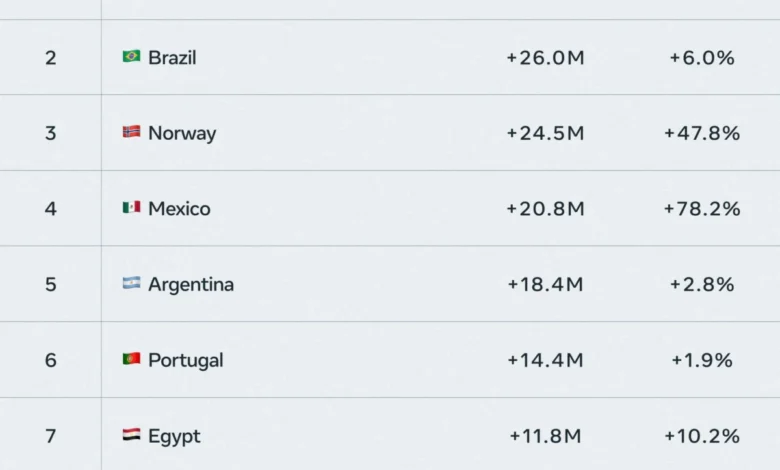
While WhatsApp handled the real-time pulse of the matches, Instagram served as the primary engine for athlete branding and fan connection. Between June 11 and July 11, the first full month of the tournament window, players in the final squads collectively added more than 213.6 million new followers. This represents a 6.6% increase in the total "activated" audience for professional footballers on the platform, bringing the combined following of all participating players from 3.26 billion to a massive 3.47 billion.
This growth signifies a shift in how fans interact with their idols. The World Cup is no longer just a series of games; it is a month-long content cycle where behind-the-scenes access, training footage, and personal celebrations drive as much engagement as goals and assists. The tournament provides a unique global stage where even players from lesser-known leagues can achieve overnight superstardom, bypassing traditional media gatekeepers to speak directly to a global audience.
The Vozinha Phenomenon: From Local Hero to Global Icon
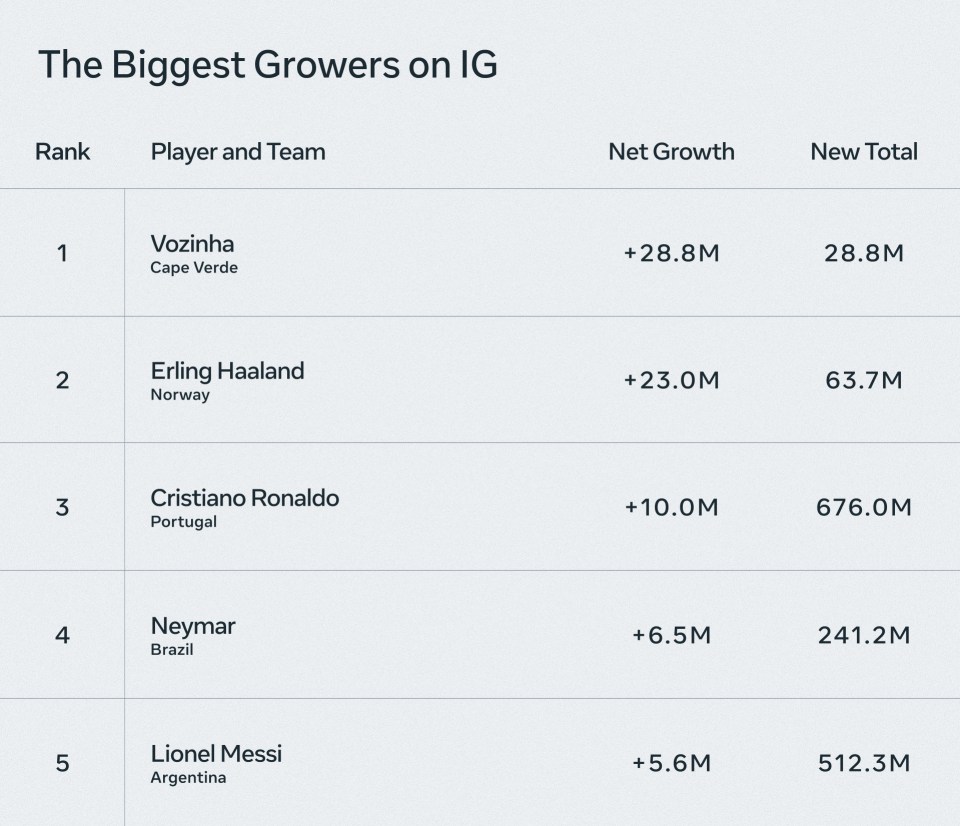
Perhaps the most compelling story of the 2026 tournament is the meteoric rise of Cape Verde’s goalkeeper, Vozinha. In what is being described as the "Vozinha Phenomenon," the veteran shot-stopper entered the tournament with a modest following of approximately 37,000 users. Following a series of electrifying, underdog performances that saw Cape Verde punch well above their weight on the global stage, his Instagram following surged to 28.8 million.

This represents an almost incomprehensible increase of over 77,000%. Vozinha’s rise is a testament to the power of the Instagram algorithm to identify and amplify "human interest" stories in real-time. His popularity was not confined to Cape Verde; it spanned continents, as fans from the United States, Brazil, and Europe gravitated toward his charismatic presence and heroic saves. This individual success had a halo effect on his national team, with the Cape Verde squad seeing a +2,000% increase in team-level followers, adding 32.1 million net followers across the roster.
Established Superstars and the Next Generation
While the tournament created new heroes, it also solidified the dominance of established icons. Cristiano Ronaldo, already the most-followed individual on Instagram, demonstrated that there is still room for growth at the top. Despite being in the twilight of his career, Ronaldo added 10 million new followers during the tournament, reaching a historic milestone of 676 million followers.
In the "next generation" category, Norway’s Erling Haaland led the charge. Although Norway has historically struggled to maintain a consistent presence at the top of the FIFA rankings, Haaland’s individual brand power was undeniable. He added 23 million new followers, nearly doubling his pre-tournament base. This growth underscores a trend where fans follow individual "super-players" regardless of their national team’s historical pedigree.
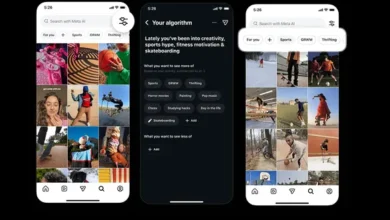
In North America, the "Your Algorithm" feature on Instagram—which allows users to curate their interests in Reels and Explore—showed a distinct preference for players with local and cultural ties. In the United States, the top five most popular players according to user-controlled algorithm settings included a mix of international superstars and rising talents from the CONCACAF region. Mexico, in particular, saw a 78% surge in engagement, driven by breakout stars like Gilberto Mora, who added 5.6 million followers, and Julian Quiñones, who gained 2.6 million. Japan also saw significant growth, with a 42% increase fueled by Keito Nakamura’s rising profile.
Threads and Facebook: The Hubs of Community and Discourse
Meta’s newer platform, Threads, also emerged as a significant player in the sports media landscape. During the tournament, posts tagged with World Cup-related keywords generated 1.5 billion impressions. The platform’s football community reached an average of 15 million people daily, with a peak reach of 25 million on July 6, coinciding with the quarter-final matchups.
Threads has positioned itself as the go-to destination for text-based commentary and real-time analysis, filling a void for fans who seek a more conversational and less cluttered environment than traditional social networks. The integration of high-quality clips and expert analysis has made it a favorite for "tactical" fans who want to debate coaching decisions and VAR (Video Assistant Referee) controversies.
On Facebook, the scale of conversation remained massive. Since the tournament’s opening ceremony, users published over 80 million posts mentioning the World Cup. Facebook remains a vital platform for long-form content, fan groups, and community-organized viewing parties. The data suggests that while younger fans gravitate toward Reels and Threads, the broader global population still relies on Facebook to share their tournament experiences with their social circles.
Official Response and Strategic Vision
Rob Pilgrim, Meta’s Global Football Lead, emphasized that the 2026 tournament was a deliberate strategic focus for the company. "This summer we set out to make Meta the cultural epicenter of the beautiful game—and thanks to our features and content the real winners were the fans," Pilgrim stated.
He highlighted the "everything outside the live game" strategy as the key to Meta’s success. "Our apps were the home of the highlights, the behind-the-scenes, the dressing room celebrations, the coaching analysis, and the Vozinha phenomenon. While fans watch the 90 minutes on TV, they come to our apps for everything around it—the community, the conversation, the clips and memes they love to share and debate."
Pilgrim also credited the success to Meta’s partnerships with rights holders, teams, and creators. By providing players with the tools to document their own journeys through the host nations, Meta enabled a level of intimacy between athletes and fans that was previously impossible.
Broader Impact and Digital Implications
The data from the 2026 World Cup points toward several long-term shifts in the sports and technology sectors. First, the "Vozinha Phenomenon" proves that the path to global stardom has been decentralized. A player from a small island nation can now command a digital audience larger than the populations of most countries, purely through performance and social media amplification.
Second, the record-breaking WhatsApp volumes suggest that telecommunications and social media infrastructure must now be built to handle "micro-bursts" of extreme activity. As global events become more interconnected, the demand for instantaneous, reliable messaging will only grow.
Finally, the 2026 tournament has shown that the "summer of football" is no longer just a sporting event; it is a digital economy. The 213.6 million new followers acquired by players represent significant commercial assets, increasing their marketability for sponsorships and brand deals. As the world looks toward the 2030 tournament, the digital blueprint established by Meta this year will likely serve as the standard for how global events are experienced in the 21st century. The 2026 World Cup has proven that while the matches are played on grass, the heart of the tournament beats in the digital cloud.
Related posts: