The Forgotten Pioneer: How the Dover Sun House Revolutionized Sustainable Architecture Decades Ahead of Its Time

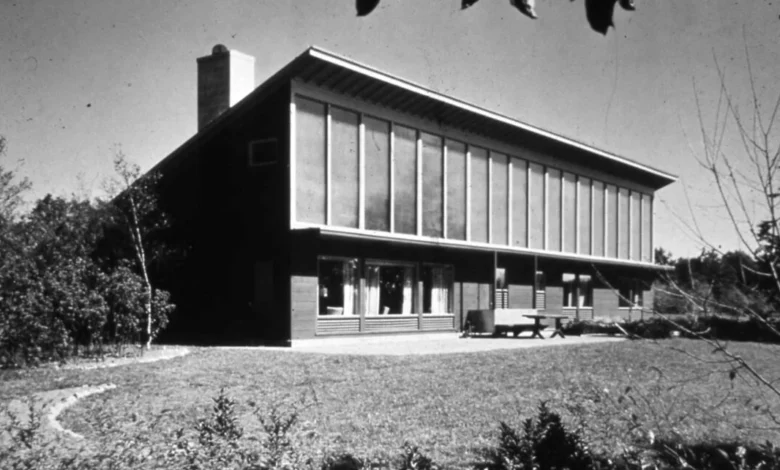
Long before the modern era of photovoltaic arrays and high-efficiency lithium-ion home battery storage systems, a modest, two-bedroom structure nestled in the quiet town of Dover, Massachusetts, stood as a radical testament to the potential of solar energy. Completed in 1948 and occupied for the first time on Christmas Eve of that year, the Dover Sun House represented a pivotal intersection of mid-century ingenuity, architectural vision, and chemical engineering. While today’s green energy movement relies heavily on silicon wafers and complex power grids, the Dover Sun House operated on a purely thermodynamic principle: the capture and storage of radiant solar heat through the clever application of phase-change materials.
The Architects of Innovation: A Collaborative Vision
The success of the Dover Sun House was not the result of a single inventor working in isolation, but rather a unique collaboration between three distinct pioneers. At the heart of the project was Dr. Mária Telkes, a Hungarian-born physical chemist and researcher at the Massachusetts Institute of Technology (MIT). Telkes, who would later earn the moniker "The Sun Queen," provided the technical framework for the home’s heating system. She was joined by Eleanor Raymond, a prominent architect who designed the residence, and Amelia Peabody, a sculptor and wealthy philanthropist who provided the $20,000 in funding required to bring the experimental project to fruition on her private estate.
The project emerged during a postwar period characterized by a rapid shift toward oil-dependent heating systems. While the scientific community was beginning to explore alternative energy sources, Telkes was uniquely positioned to test these theories in a real-world, residential setting. Her work was conducted under the auspices of MIT’s Solar Energy Conversion Project, an initiative that sought to move solar research from the laboratory to the domestic sphere.
Mechanical Design and The Science of Glauber’s Salt
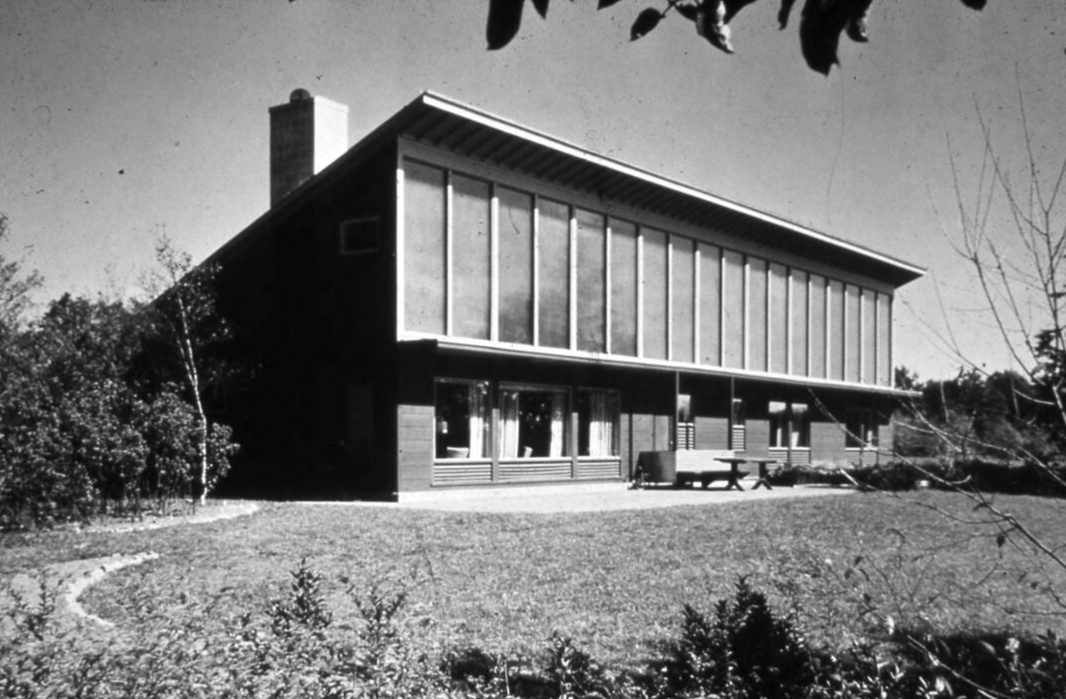
The design of the Dover Sun House was fundamentally different from contemporary passive solar homes. Rather than relying on simple thermal mass, such as stone floors or thick walls, Telkes engineered a sophisticated active solar heating system. The south-facing wall of the house featured eighteen large, double-paned windows designed to capture maximum solar radiation. Behind these windows sat a series of metal and glass panels that acted as heat collectors.
The innovation lay in the storage mechanism. Fans were utilized to push heated air from these collectors into specialized bins containing 21 tons of Glauber’s salt (sodium sulfate decahydrate). The choice of this specific material was grounded in its unique chemical properties: it acts as a phase-change material, absorbing vast amounts of heat as it transitions from a solid to a liquid at approximately 90 degrees Fahrenheit.
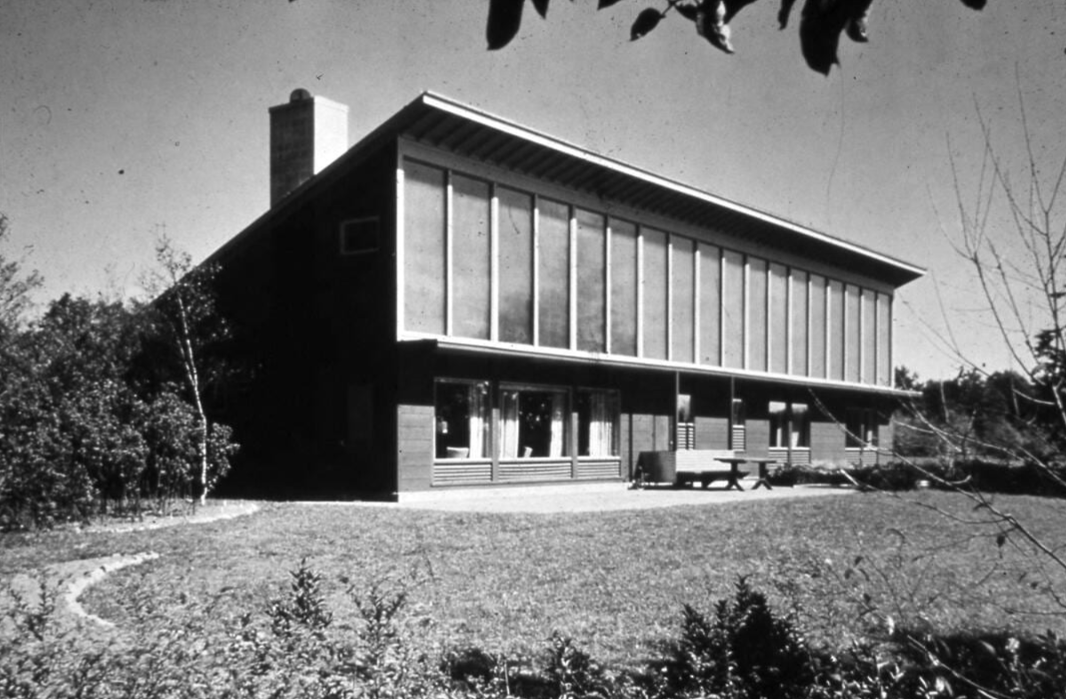
This mechanism allowed for a highly efficient "thermal battery." During the day, as the salt melted, it effectively "banked" the sun’s energy. As temperatures plummeted at night or during cloudy spells, the salt would recrystallize, releasing that stored latent heat back into the house. According to research documented by MIT Technology Review, this material was capable of storing heat roughly seven times more efficiently than water, allowing for a significantly smaller and more compact storage footprint than traditional water-based thermal tanks.
A Chronology of the Dover Experiment
The timeline of the Dover Sun House is marked by both technical success and eventual mechanical decline:
- 1940: Dr. Mária Telkes joins the MIT Solar Energy Conversion Project, beginning her long-term investigation into heat-to-electricity conversion and thermal storage.
- 1948: Construction of the Dover Sun House is completed; the first residents move in on December 24, 1948.
- 1948–1950: The system functions with notable success, providing consistent heat throughout the first two winters. The project gains significant attention from the scientific community.
- 1950: Telkes and Raymond present their findings at a major MIT symposium on solar heating, cementing the house’s status as a landmark in architectural history.
- 1951–1953: The system begins to show signs of mechanical fatigue. The physical separation of the sodium sulfate within the storage bins becomes a critical point of failure.
- 1954: Due to leaking storage containers and the degradation of the heating efficiency, the house is retrofitted with a conventional heating system.
Challenges and Technical Limitations
Despite the initial enthusiasm surrounding the project, the Dover Sun House encountered physical obstacles that modern engineers would eventually overcome. The primary issue was the chemical instability of the Glauber’s salt over repeated cycles. As the salt melted and solidified, the heavier components of the sodium sulfate would sink to the bottom of the bins, leading to stratification. This prevented the material from consistently recrystallizing, which severely hampered its ability to release heat effectively.
Furthermore, the salt proved to be chemically corrosive. The storage containers—which were not designed to withstand the long-term chemical interaction with the sulfate—began to leak. By 1954, the maintenance costs and technical inefficiencies necessitated a move toward traditional heating, marking the end of the house’s life as a fully solar-dependent residence.
Broader Impact and Scientific Legacy
While the Dover Sun House did not become the blueprint for mass-market residential heating, its impact on the field of solar energy was profound. Dr. Telkes’s work provided a fundamental proof-of-concept for latent heat storage, a technology that is now being revisited in modern commercial and industrial applications.
Telkes’s contributions extended far beyond the Dover experiment. During World War II, she developed a portable solar-powered desalination still for the U.S. military. This device, which distilled seawater into drinkable water using the heat of the sun, was instrumental for pilots downed in the Pacific. The design was later scaled for use in the Virgin Islands to provide fresh water to local populations, illustrating the versatility of her research.
By the end of her career, Telkes had secured seven patents related to heating, cooling, and heat storage, earning her a place in the National Inventors Hall of Fame. The "Sun Queen" successfully demonstrated that energy could be captured, stored, and managed through intelligent material science—an idea that remains the central challenge of the contemporary renewable energy sector.
Analysis: Why the Legacy Endures
The failure of the Dover Sun House was not a failure of concept, but a limitation of the materials science available at the time. Today, phase-change materials (PCMs) are being integrated into building insulation and modern HVAC systems to regulate internal temperatures with extreme precision. The transition from the 1948 prototype to modern "net-zero" architecture reveals a clear lineage of progress.
The Dover Sun House remains a quintessential example of high-stakes experimental engineering. It serves as a reminder that the path to energy independence is rarely linear. The researchers involved were not deterred by the eventual mechanical failures of the house; instead, they viewed the project as an essential data point in the global effort to reduce reliance on fossil fuels. In the broader context of environmental history, the house in Dover stands as an early, defiant challenge to the status quo, proving that even in the harsh New England winter, the sun was capable of providing warmth if humanity possessed the foresight to capture it.
As we continue to navigate the complexities of climate change and energy storage, the legacy of the Dover Sun House serves as a benchmark for innovation. It highlights that the most durable solutions often arise from the courage to test unconventional ideas, even when those ideas are decades ahead of the infrastructure required to support them. Telkes, Raymond, and Peabody proved that the sun was a viable power source long before the world was ready to fully embrace it, setting the stage for the sustainable energy revolution that continues to evolve today.