AI coding removed one bottleneck and created another — code review. Just like we learned from potato chips.


The software development industry is undergoing a profound structural transformation. For decades, the primary constraint limiting the output of engineering teams was the physical act of writing code. Developers spent hours manually typing syntax, debugging minor errors, and translating architectural designs into functioning software libraries. However, the rapid evolution and widespread adoption of generative artificial intelligence and agentic coding tools have fundamentally altered this paradigm. Writing code is no longer the primary bottleneck in the software development lifecycle. Instead, the incredible speed of AI-generated code has simply shifted the friction point elsewhere in the pipeline, creating an unprecedented logjam at the stage of code review.
This phenomenon offers a striking parallel to industrial manufacturing processes, echoing management theories first popularized decades ago. Much like optimizing a factory assembly line, software engineering is governed by the laws of capacity constraints. As the tech industry navigates this seismic shift, engineering organizations are discovering that removing one operational barrier inevitably exposes another, testing the limits of human oversight, code quality maintenance, and team collaboration.
The Industrial Parallels: Goldratt’s Theory of Constraints in Tech
To understand the current crisis in software engineering, one must look outside the tech sector to industrial manufacturing and supply chain management. Earlier this year, operational discussions frequently highlighted modern production techniques used by major consumer goods manufacturers, such as Frito-Lay. Brendan O’Donohoe, an operations expert at the company, famously detailed efforts to accelerate potato chip production lines by applying Goldratt’s Theory of Constraints.
Introduced by business physicist Eliyahu M. Goldratt in his 1984 book The Goal, the Theory of Constraints posits that any manageable system is limited in achieving more of its goals by a very small number of constraints—often just one at a time. The fundamental objective of process optimization is to identify this limiting step, elevate it until it is no longer a bottleneck, and then immediately shift focus to the next constraint that emerges in the workflow.
In the context of software development, industry observers initially believed that the ultimate constraint of the future would be product ideation and project prioritization. Analysts theorized that once AI made the generation of code virtually instantaneous, the hard part of software engineering would simply be deciding what features to build next and specifying precise product requirements.
While accurate in predicting the democratization of coding, this hypothesis overlooked how the acceleration of code generation would physically overwhelm internal review systems. Traditional estimation frameworks, such as "planning poker"—a consensus-based technique used by agile teams to estimate effort and complexity—have been rendered virtually obsolete. Complex product features that once required weeks or months of meticulous scoping, sprint planning, and incremental coding are now drafted by AI coding agents in a matter of hours. Consequently, project timelines have compressed so radically that traditional metric tracking has broken down.
The Rise of the Code Review Logjam
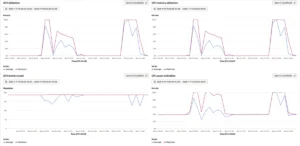
Rather than liberating engineering teams entirely, agentic coding has relocated the operational bottleneck directly into the code review queue. Recent empirical data from Faros, a prominent software engineering analytics platform, highlights this alarming shift. According to the Faros AI Engineering Report, development teams are writing code at such a breakneck pace that human reviewers cannot keep up, resulting in massive queues and unprecedented delays.
Historically, engineering teams monitored metrics like Mean Time in Review (MTiR) to gauge team velocity and ensure that code was scrutinized, refined, and merged efficiently. In a pre-AI environment, the rate at which code could be written naturally lagged behind the collective capacity of a team to read, test, and approve it. MTiR remained relatively low because human authors produced code at a sustainable human pace.
Today, that dynamic has completely inverted. AI agents can generate thousands of lines of complex, functional code in the time it takes a human developer to drink a cup of coffee. As a result, MTiR is skyrocketing across organizations of all sizes.

This logjam manifests differently depending on the scale of the operation. For independent open-source maintainers, the influx of automated or AI-assisted pull requests from eager contributors threatens to completely drown out human oversight. For enterprise software teams maintaining codebases comprising millions of lines of legacy code, the internal review process has transformed into a massive operational chokepoint that actively delays product deployment and time-to-market.
The Dangerous Trade-Off: Merging Without Review
Faced with an overwhelming deluge of pending pull requests, engineering teams are increasingly forced into making undesirable compromises. Industry analysts report a growing trend: an escalating percentage of pull requests are being merged directly into production without undergoing any formal human code review.
This practice carries severe implications for the long-term health and security of software systems. In enterprise environments, the code review process fulfills several indispensable functions that cannot currently be fully automated:
- Guarding Against Technical Debt: While modern AI models are remarkably proficient at generating syntactically correct code, they frequently lack contextual awareness regarding long-term architectural patterns. Without rigorous human oversight, codebases risk accumulating subtle structural flaws, redundancies, and maintenance nightmares that will hinder development cycles months or years down the road.
- Maintaining Collective Code Ownership: Code reviews act as an informal communication channel, keeping team members abreast of changes, new features, and system modifications. When large swaths of code enter a repository without team visibility, it increases the proportion of the codebase that no longer has a human champion who fully understands its mechanics.
- Security and Compliance Auditing: Automated testing suites can catch syntax errors and standard logic bugs, but nuanced security vulnerabilities, logic flaws, and compliance risks often require seasoned human judgment to detect.
Consequently, the daily responsibilities of software engineers have shifted dramatically. The traditional job description—characterized by spending significant time writing code and relatively little time reviewing the work of peers—has been replaced by a crisis-management role focused entirely on filtering, managing, and validating an unending onslaught of automated output.
Mitigating the Crisis: AI-Driven Solutions and Human Leadership
Faced with this bottleneck, the immediate reaction from engineering leadership has naturally been to ask whether artificial intelligence can be leveraged to solve a problem that artificial intelligence itself created.
Tech industry experts suggest that organizations are beginning to deploy multi-agent architectures to tackle the review backlog. By adopting a "mixed-model" approach, engineering teams can pit different foundational models against one another. For instance, an organization might utilize Google’s Gemini to write the initial implementation of a feature, while deploying Anthropic’s Claude to perform the code review and security audit. Alternatively, pairing models like xAI’s Grok with OpenAI-based codex engines allows organizations to leverage distinct algorithmic perspectives and blind spots. Because different models utilize different training sets and reasoning methodologies, cross-checking AI output with competing AI systems can help filter out suboptimal code before it ever reaches a human desk.
However, technology alone cannot solve the human-centric challenge of system comprehension and team alignment. While AI agents can assist in catching structural errors, they cannot ensure that a human team maintains a cohesive mental model of the product they are building.
Ultimately, this reality places renewed importance on technical leadership and product definition. If autonomous agents are capable of handling the heavy lifting of writing and even preliminary reviewing, the true value of human engineers shifts upstream. The most critical phase of software development is now the initial definition of the project—precisely crafting the prompts, architectural guardrails, and behavioral parameters fed into the AI systems.
When human engineers focus intensely on clear requirements, precise specifications, and robust intent modeling, the downstream code generation becomes more reliable. Paradoxically, as artificial intelligence revolutionizes the mechanics of programming, the ultimate bottleneck in software engineering returns full circle to human clarity, strategic planning, and visionary leadership.