The AI Gold Rush Is Redefining the Enterprise Server Landscape as Dell and HPE Pivot to Infrastructure Dominance

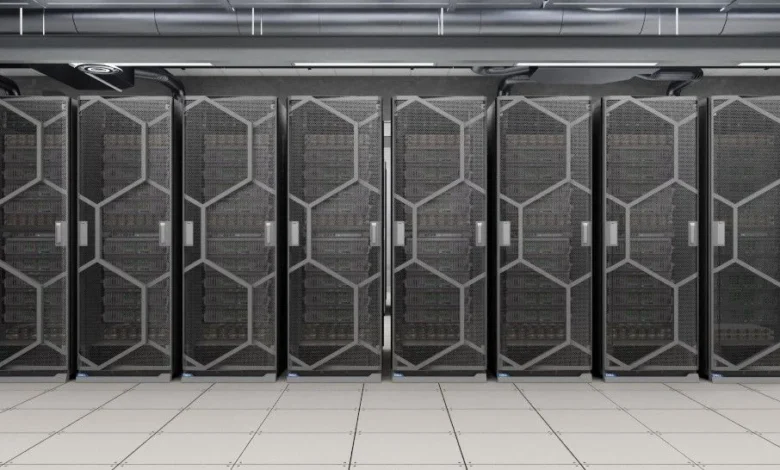
The global enterprise server market is undergoing a seismic shift, driven by an unprecedented surge in artificial intelligence infrastructure spending that has left the industry’s two largest titans, Dell Technologies and Hewlett Packard Enterprise (HPE), declaring themselves fundamentally transformed. In their recent fiscal disclosures, both companies signaled that their traditional business models have been permanently altered by the insatiable demand for AI-ready hardware, a trend that is currently masking significant supply chain volatility and inflationary pressures.
A Synchronized Strategic Pivot
The convergence of language from the leadership of these two competitors underscores the gravity of the shift. Antonio Neri, CEO of HPE, stated during the company’s fiscal 2026 fourth-quarter earnings call that HPE is now a “fundamentally different company.” Within twenty-four hours, Jeff Clarke, Vice Chairman and COO of Dell Technologies, echoed this sentiment almost verbatim during Dell’s third-quarter fiscal 2027 earnings report, characterizing the firm as a “different company” in the wake of the AI boom.
While the rhetoric is similar, the underlying strategies differ. HPE’s narrative is anchored in its $14 billion acquisition of Juniper Networks, a move designed to integrate sophisticated networking capabilities with its server infrastructure to capitalize on the next wave of AI-driven data center architectures. Conversely, Dell’s transformation is rooted in a dramatic recalibration of its internal revenue mix, where the Infrastructure Solutions Group (ISG) has surged to become the primary engine of both profit and growth, dwarfing the company’s traditional focus on client-facing PC sales.
The Role of Component Scarcity and Pricing Power
Beneath the corporate messaging lies a critical market reality: both companies are benefiting from a historic, industry-wide memory shortage. This supply crunch has enabled OEMs to command significantly higher average selling prices (ASPs) for servers. In many instances, this dynamic has allowed Dell and HPE to report robust revenue growth even as unit shipments remain constrained or stagnant.
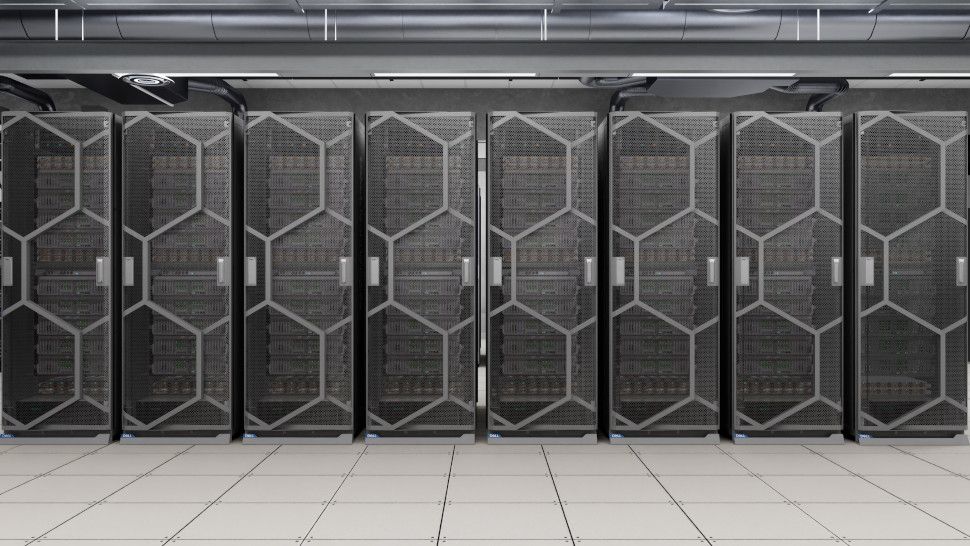
Recent data from the Financial Times and other industry monitors indicate that major server manufacturers, including Dell, HPE, Lenovo, and Supermicro, have engaged in the rare practice of renegotiating contract pricing months after initial agreements were signed. Some clients have reported price hikes reaching as high as 45%. This inflationary environment has created a unique "windfall" effect, where the scarcity of high-bandwidth memory (HBM) and DDR5 DRAM—essential components for the latest generation of AI GPUs—has shifted the balance of power toward the hardware providers.
Financial Performance and Segment Shifts
HPE’s latest results paint a complex picture of this transition. While the company reported a 50% revenue increase to $14.5 billion, the internal distribution of that growth is telling. Its networking division, once a primary profit driver, saw growth of 12% to $3.06 billion, with operating margins contracting from 23.4% to 22.1%. The growth engine was the Cloud & AI segment, which surged 68.6% to $11.3 billion. However, analysts note that this figure includes storage and financial services; pure-play AI systems accounted for approximately $2.5 billion, suggesting that the "AI revolution" for HPE is currently supported by a substantial volume of traditional server demand at inflated prices.
Dell’s shift is perhaps more pronounced in its raw numbers. The company reported revenue of $54.9 billion, with the Infrastructure Solutions Group (ISG) growing by 198% to $42.0 billion. In contrast, the Client Solutions Group (CSG), which covers the company’s PC business, grew by a meager 3% to $12.9 billion. ISG now generates roughly 91% of the combined operating income for these segments. Dell leadership has been candid about this shift, noting that "unit TAM (Total Addressable Market) destruction" is occurring as inflation makes systems more expensive, yet the high-margin, high-spec AI-optimized servers are effectively subsidizing the entire business.
Timeline of the AI Infrastructure Explosion
The current market landscape is the culmination of an accelerated timeline that began in 2024:
- Early 2024: Enterprise interest in Generative AI reaches a fever pitch, leading to the first major wave of orders for H100-based server clusters.
- July 2025: HPE officially closes its $14 billion acquisition of Juniper Networks after a prolonged 18-month regulatory review, positioning itself to capture the networking "fabric" layer of AI clusters.
- September 2026: HPE secures its first major order for the AMD Helios rack-scale platform, a $1.2 billion deal with Vultr, signaling a shift toward open-standard, massive-scale AI infrastructure.
- Late 2026/Early 2027: The industry faces a persistent, multi-year supply chain bottleneck for memory and GPU components, forcing vendors to prioritize server production over traditional consumer electronics.
Strategic Implications and Future Risks
The "different company" moniker carries inherent risks. For Dell, the primary concern is the sustainability of its $132.3 billion AI backlog. While the order book is record-breaking, it is built on the assumption that customers—many of whom are reliant on third-party financing—will maintain their capital expenditure trajectory despite rising power and cooling costs. Gartner has identified power as the primary constraint on future data center expansion, potentially acting as a ceiling for the growth that companies like Dell and HPE are currently projecting.
Furthermore, there is the question of margin normalization. Dell’s current ISG operating margin of 17% is largely attributed to the pricing windfall created by the memory shortage. As memory manufacturers expand capacity and the market for HBM potentially reaches an equilibrium in 2028, these margins are expected to face downward pressure. HPE, in its guidance for fiscal 2027, has already tempered expectations for its Cloud & AI segment margins, forecasting a drop to approximately 14% as the competitive landscape for AI hardware intensifies.
The Networking Frontier
For HPE, the pivot to networking is a long-term strategic bet that transcends current component pricing. By integrating Juniper’s technology, HPE aims to control the "scale-up" and "scale-out" fabrics that connect thousands of GPUs. The company is targeting $800 million in annual savings from the Juniper integration by fiscal 2028. If successful, this would provide a moat that is less dependent on the volatility of memory prices and more focused on the software-defined networking layer of the AI stack.
Conclusion: A Market in Transition
The transformation of Dell and HPE is undeniable, but it is also highly reactive to the current supply-constrained economic environment. While both companies have successfully pivoted to prioritize the lucrative AI sector, the true test of their "new identity" will arrive when the memory supply chain normalizes.
As of now, the AI market remains a seller’s paradise. Customers are paying premiums for the latest hardware, and the backlog for AI-optimized racks is sufficient to keep revenue projections high for the foreseeable future. However, the reliance on high-cost, low-volume shipments cannot last indefinitely. The next phase for these companies will involve moving beyond simply supplying hardware at inflated prices and proving that they can maintain profitability and market share once the initial "AI land grab" settles into a more traditional, albeit much larger, infrastructure replacement cycle. For investors and industry observers, the current quarter’s results are not just a display of success, but a snapshot of an industry that is currently navigating the most significant supply-side disruption in the history of the server market.