Navigating the Digital Horizon: Emplifi Report Outlines AI Integration and Social Media Strategies for 2027

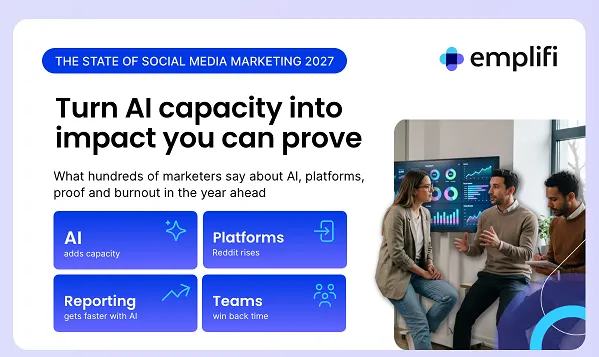
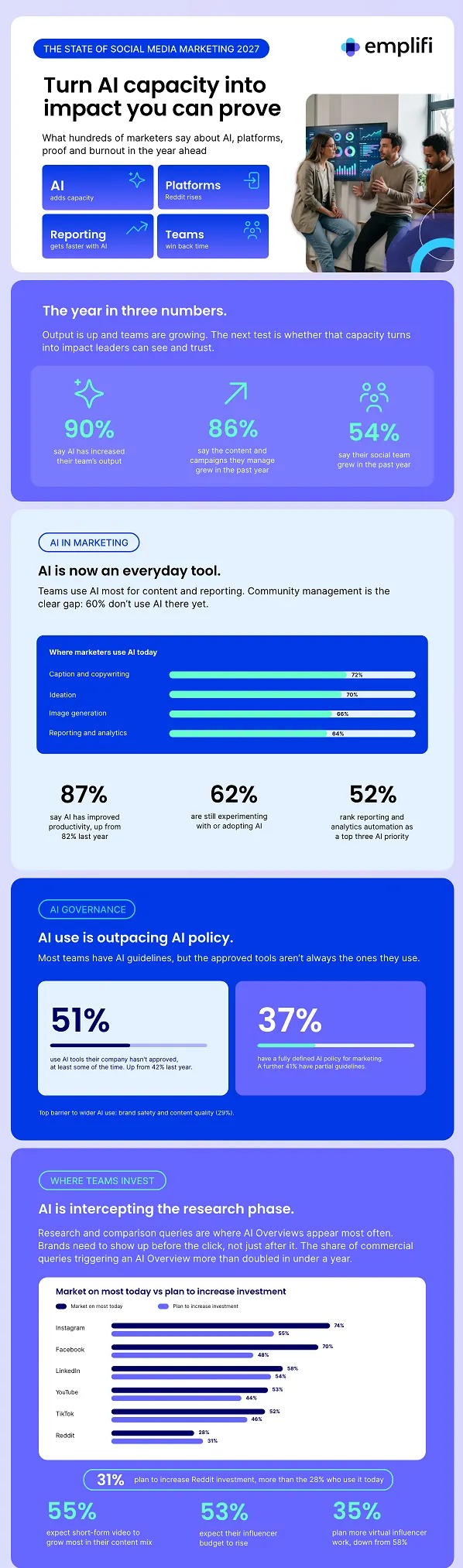
As marketing professionals and enterprise leaders look toward the latter half of the decade, corporate strategic planning increasingly hinges on the adoption of advanced technological frameworks. A comprehensive new industry study released by customer engagement platform Emplifi offers a vital window into these shifting priorities, surveying more than 400 marketing executives to uncover how brands intend to leverage artificial intelligence, overhaul product discovery channels, and redefine social media engagement by 2027.
The report, titled the Emplifi State of Social Media Marketing Report 2027, captures a pivotal juncture in corporate communications. With artificial intelligence transitioning from an experimental novelty into a foundational operational pillar, organizations are under mounting pressure to optimize their workflows, scale personalized messaging, and maintain consumer trust in an increasingly automated digital ecosystem.
Methodology and Participant Demographics
To construct a reliable roadmap for the future of digital marketing, the research team at Emplifi surveyed a targeted cohort of 405 marketing managers, directors, and C-suite executives. The participants represented a diverse cross-section of industries, ranging from fast-moving consumer goods and retail to financial services, technology, and business-to-business (B2B) enterprises.
By polling decision-makers directly responsible for budget allocation and campaign execution, the survey successfully captured the pragmatic realities facing modern marketing departments. Rather than focusing solely on theoretical technological capabilities, the research emphasizes practical implementation, operational friction points, and measurable return on investment (ROI) associated with emerging tech trends.
The findings underscore a universal consensus among marketing leadership: the traditional playbook of social media management and linear product discovery is rapidly expiring. In its place, brands must adopt agile, AI-driven architectures capable of processing vast streams of consumer data in real time.
The Evolution of Artificial Intelligence in Marketing Workflows
The integration of artificial intelligence into marketing operations has accelerated at an unprecedented pace over the past several years. While initial adoption was largely confined to rudimentary text generation and automated email responses, the 2027 outlook reveals a much deeper, systemic integration across the entire marketing lifecycle.
According to the insights gathered by Emplifi, marketing executives are increasingly relying on AI to streamline content creation, predict consumer behavior, and automate complex customer service interactions. Workflow optimization has emerged as a primary driver for these technological investments. By deploying machine learning algorithms to handle repetitive administrative tasks, data sorting, and initial content drafts, marketing teams can redirect human capital toward higher-order strategic planning and creative direction.
Industry analysts note that this shift is largely a response to economic pressures. Brands are continually tasked with doing more with less, maintaining high volumes of omni-channel content while managing flat or reduced marketing budgets. Artificial intelligence offers a viable solution to this equation, enabling brands to scale content output exponentially without incurring a proportional rise in labor costs.
However, this rapid integration is not without its challenges. Marketing directors surveyed in the report highlighted ongoing concerns regarding brand safety, algorithmic bias, and the potential homogenization of digital content. As more brands utilize similar foundational AI models to generate text, visuals, and video, distinguishing one’s corporate voice from the digital noise has become a formidable challenge. Consequently, the most successful brands by 2027 are expected to be those that successfully marry machine efficiency with authentic human oversight.
Transforming Product and Brand Discovery
Beyond internal workflow optimization, the Emplifi report delves deeply into how consumers discover new products and interact with brands across digital touchpoints. The traditional customer journey—historically anchored by search engine optimization (SEO) and traditional banner advertising—has been fundamentally disrupted by the proliferation of social commerce platforms and conversational AI search engines.
Consumers are increasingly bypassing traditional search engines in favor of discovery-driven social platforms like TikTok, Instagram, and YouTube. Furthermore, the rise of conversational commerce means that discovery is no longer a passive experience; it is an interactive, dialogue-driven process.
For brands planning their 2027 strategies, this behavioral shift necessitates a total rethinking of content distribution. Visibility is no longer merely a matter of keyword ranking; it requires a nuanced understanding of social algorithms, micro-influencer partnerships, and community-driven engagement. Brands must position their products natively within the digital spaces where consumers spend the majority of their time, ensuring that discovery feels organic rather than intrusive.
The report suggests that successful brand discovery in 2027 will rely heavily on shoppable media and frictionless checkout experiences. When a consumer discovers a product via a short-form video or an AI-curated recommendation feed, the distance between discovery and purchase must be collapsed to a matter of seconds. Friction in the buyer journey drastically diminishes conversion rates, making infrastructure modernization a top priority for e-commerce leaders.
Social Media Engagement Trends and the Quest for Authenticity
Social media engagement remains the bedrock of digital marketing, yet the metrics defining success have undergone a profound evolution. Vanity metrics such as raw follower counts and impressions are increasingly taking a back seat to deeper indicators of community health, sentiment analysis, and active consumer participation.
As automated content floods social feeds, consumers have developed a heightened skepticism toward overly polished, corporate messaging. The Emplifi findings indicate a growing consumer preference for raw, authentic, and creator-led content. Brands are responding by decentralizing their content creation, moving away from closed-door studio productions in favor of collaborations with independent creators and everyday users who command high levels of audience trust.
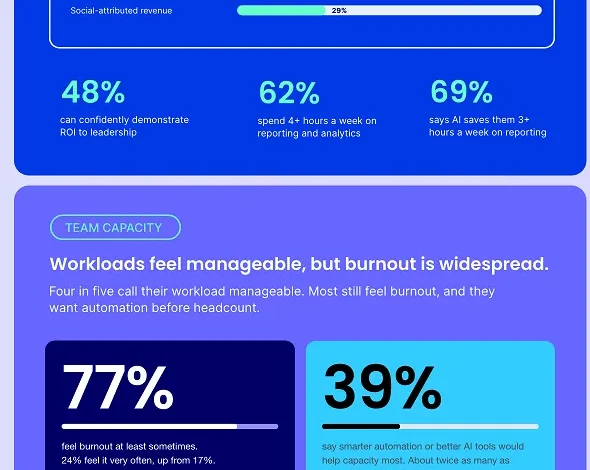
Moreover, community management has transformed from a reactive customer service function into an active driver of brand loyalty. Modern audiences expect brands to participate in cultural conversations, respond to inquiries instantaneously, and demonstrate social responsibility. AI-powered chatbots play a crucial role here, handling high volumes of routine inquiries 24/7, while human community managers step in for nuanced, high-stakes interactions.
Industry Reactions and Expert Analysis
The release of the Emplifi State of Social Media Marketing Report 2027 has sparked widespread discussion among digital marketing associations, agency leaders, and enterprise strategists. Industry analysts have praised the report for providing a grounded, data-driven perspective on a technological landscape that is frequently clouded by hyperbole.
"We are witnessing a fundamental recalibration of the marketing profession," noted a prominent digital strategy consultant commenting on the broader implications of the study. "For years, the conversation around AI was dominated by fear of job displacement or wild speculation about futuristic automation. What Emplifi’s research shows is that marketing leaders are now getting down to the brass tacks of implementation. They are asking how these tools can solve genuine operational bottlenecks and deliver measurable value to the bottom line."
Other industry commentators have emphasized the report’s warnings regarding audience fatigue. As generative AI makes it effortless to produce endless streams of content, the finite resource is no longer production capacity, but rather consumer attention. Experts argue that brands that rely solely on automated volume without investing in genuine emotional resonance risk alienating their target audiences.
Chronology of Modern Marketing Transformation
To fully understand the significance of the 2027 strategic outlook, it is instructive to examine the recent chronological progression of digital marketing:
- 2020–2021 (The Pandemic Acceleration): Global lockdowns forced an unprecedented migration toward e-commerce and digital communication. Brands scrambled to establish robust digital storefronts and ramped up social media ad spend to capture captive, at-home audiences.
- 2022–2023 (The Privacy Shift and Macroeconomic Pressures): Apple’s App Tracking Transparency (ATT) policies and impending cookie deprecation severely disrupted traditional digital attribution models. Simultaneously, rising inflation forced corporate boards to demand tighter fiscal discipline, initiating the first wave of marketing efficiency drives.
- 2024–2025 (The Generative AI Explosion): The mainstream emergence of advanced generative AI tools democratized content creation. Marketers rapidly experimented with text, image, and video generation, leading to both massive productivity gains and early concerns regarding content saturation and brand safety.
- 2026–2027 (Strategic Consolidation and Intelligent Automation): As outlined by current research, the focus has shifted from experimental adoption to enterprise-grade integration. Companies are institutionalizing AI workflows, redesigning customer discovery funnels around social and conversational platforms, and prioritizing authentic community engagement over sheer content volume.
Strategic Implications for Enterprise Leadership
For executive leadership teams tasked with finalizing their organizational roadmaps for 2027, the findings from Emplifi’s report provide several clear, actionable takeaways.
First, technology budgets must be strategically aligned with talent upskilling. Introducing advanced AI workflows into a marketing department yields little return if the personnel utilizing the tools lack the necessary media literacy and technical training. Organizations must invest in continuous education programs to ensure their marketing teams can effectively direct, critique, and refine AI-generated outputs.
Second, data silos must be dismantled. A seamless omnichannel strategy—where AI-driven customer service insights inform social media content creation, which in turn feeds into product discovery algorithms—requires unified data infrastructure. Marketing, sales, and IT departments must operate in close synchronization to maintain a single, holistic view of the consumer.
Finally, brands must maintain an unwavering commitment to human-centric creativity. While automation and machine learning will undoubtedly handle the heavy lifting of data analysis and content scaling, the spark of brand differentiation will remain a uniquely human endeavor. The brands that successfully navigate the digital horizon of 2027 will be those that use technology not to replace human connection, but to amplify it.
Related posts: