Looking Back at the Historic First Powered Flight of NASA’s Wingless Northrop M2-F3 Lifting Body

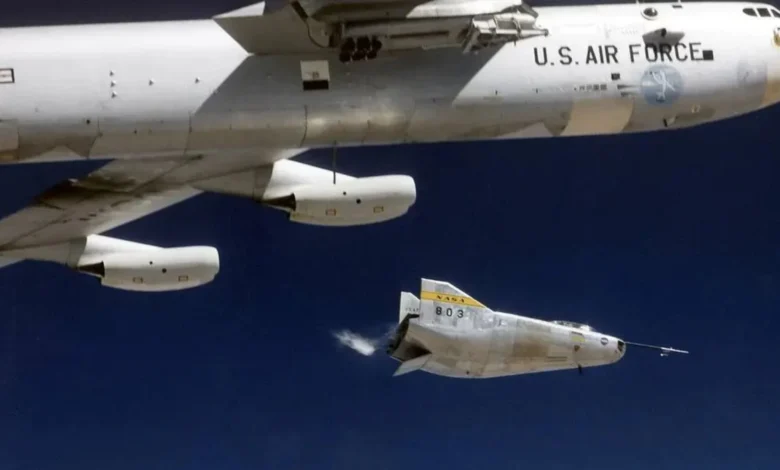
On November 25, 1970, the landscape of experimental aviation shifted dramatically when the Northrop M2-F3 successfully completed its maiden powered flight. Piloted by Air Force test pilot Bill Dana, the unusual, heavy "wingless" aircraft soared above the Mojave Desert, validating a radical aerodynamic concept that would ultimately influence the design of future spacecraft and high-speed atmospheric vehicles. While conventional aircraft rely heavily on wings to generate aerodynamic lift, the M2-F3 was engineered as a "lifting body," meaning its primary fuselage bore the burden of keeping the heavy machine aloft. This milestone flight not only marked a triumphant engineering recovery following a near-fatal crash of its predecessor but also paved the way for the technology that would eventually enable the routine operations of NASA’s Space Shuttle fleet.
The Origins of the Lifting Body Concept
To understand the significance of the November 1970 flight, one must examine the broader aerospace research objectives of NASA and the United States Air Force during the 1960s. As engineers conceptualized reusable spacecraft that could re-enter Earth’s atmosphere from orbit and glide to a controlled, horizontal runway landing, they realized that traditional capsule designs—like those used in the Mercury, Gemini, and Apollo programs—offered virtually no aerodynamic maneuverability during descent. Capsules plunged through the atmosphere largely uncontrolled, relying entirely on parachutes for terminal recovery.
To bridge the gap between orbital spacecraft and conventional airplanes, researchers at NASA’s Flight Research Center at Edwards Air Force Base in California turned to the lifting body concept. By designing an aircraft with a contoured fuselage capable of generating lift on its own, engineers could eliminate heavy, vulnerable wings that might otherwise burn up or suffer structural failure under the extreme thermal and aerodynamic stresses of atmospheric re-entry.
The M2-F2 to M2-F3 Evolution: Anatomy of a Crash and Rebuild
The M2-F3 was not born in a vacuum; it was the direct evolutionary successor to the Northrop M2-F2. The M2-F2 program had experienced a series of demanding glide tests, but its operational history took a dramatic and nearly tragic turn on May 10, 1967. During an unpowered glide flight piloted by NASA’s Milt Thompson, the M2-F2 suffered from severe lateral-directional instability—a dangerous phenomenon known as roll coupling.
As Thompson attempted to land on the dry lake bed at Edwards Air Force Base, a sudden shift in visual cues and ground roll rates caused him to lose control. The aircraft rolled violently from side to side, slammed into the ground, and tumbled over several times. Miraculously, Thompson survived the high-speed crash, though he sustained serious injuries. The dramatic footage of this brutal crash was famously immortalized in popular culture, serving as the opening sequence of the 1970s television series "The Six Million Dollar Man."
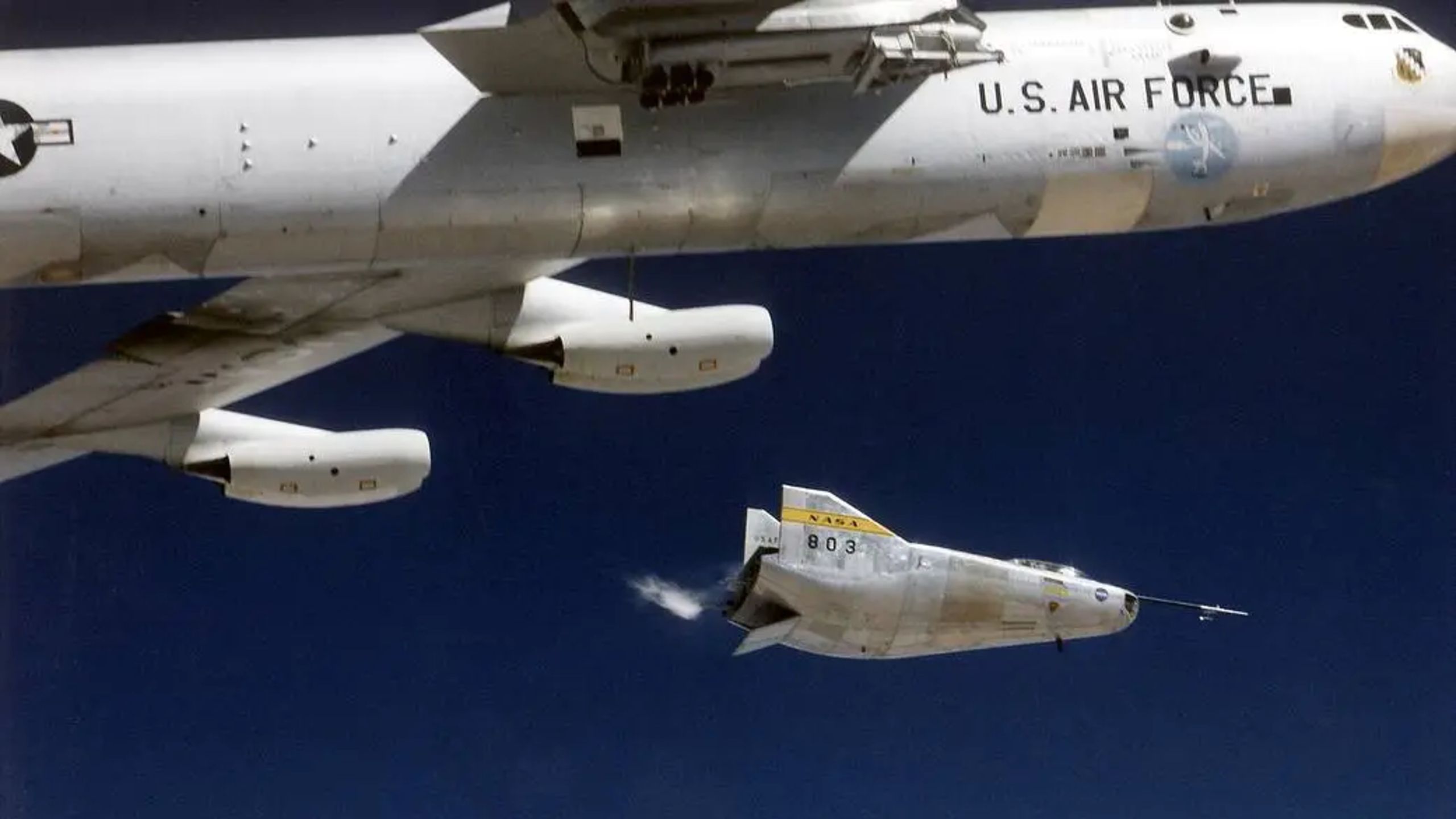
Rather than abandoning the program, NASA engineers analyzed the failure and resolved to redesign the vehicle to address its severe handling deficiencies. The heavily damaged M2-F2 airframe was shipped back to Northrop Corporation, where it underwent extensive reconstruction and was subsequently redesignated as the M2-F3.
The most notable modification was the addition of
a third, central vertical stabilizer. Positioned precisely between the two existing tip fins, this central fin was introduced to dramatically improve directional stability and eliminate the roll-coupling tendencies that had plagued the original design. Furthermore, engineers incorporated a sophisticated reaction control system—utilizing small thrusters similar to those deployed on orbiting spacecraft—to provide attitude control in the thin air of the upper stratosphere.
Chronology of the M2-F3 Flight Test Program
The testing regimen for the newly minted M2-F3 followed a methodical, safety-first protocol standard for experimental aviation. Before igniting the vehicle’s powerful rocket engine, test pilots had to master its aerodynamic handling through a series of unpowered glide flights.
- June 2, 1970: NASA research pilot Milt Thompson executes the first unpowered glide flight of the M2-F3, released from the starboard wing pylon of a modified Boeing B-52 mother ship at high altitude.
- Summer and Fall 1970: Following initial glide evaluations, Air Force test pilot Bill Dana takes over the flight schedule, conducting subsequent unpowered drop tests to verify that the new central vertical fin successfully resolved the stability issues of the old M2-F2.
- November 25, 1970: Bill Dana straps into the M2-F3 for a historic milestone—the aircraft’s first powered flight. After being released from the B-52 carrier aircraft at approximately 45,000 feet, Dana ignites the Reaction Motors XLR11 rocket engine. The flight lasts just over six minutes, pushing the vehicle through rigorous control maneuvers while collecting vital telemetry data.
- 1971–1972: Over the course of a three-year flight test campaign, the M2-F3 completes a total of 27 missions. Pilots progressively push the envelope, achieving a top recorded speed of Mach 1.6 (1.6 times the speed of sound) and reaching a maximum altitude of 71,500 feet.
- Final Phases (1972): Toward the conclusion of its operational lifespan, the M2-F3 is utilized to evaluate advanced flight control architectures, including a rate command augmentation control system and a side-arm control stick—technologies that would later become standard in modern fighter jets and fly-by-wire aircraft.
Technical Innovations and Flight Dynamics
Flying a lifting body was notoriously challenging. Because the aircraft lacked traditional wings, its glide angle was exceptionally steep, often compared by pilots to dropping a falling brick. Landing required immense precision, as pilots had only one chance to glide the unpowered vehicle down to the expansive lake beds of the Mojave Desert without the luxury of a traditional go-around maneuver.
The integration of the XLR11 rocket engine—the same powerplant famously used in the Bell X-1 and the North American X-15—transformed the M2-F3 from a mere falling glider into a high-performance research platform. This allowed engineers to study transonic and supersonic flight characteristics of wingless shapes.
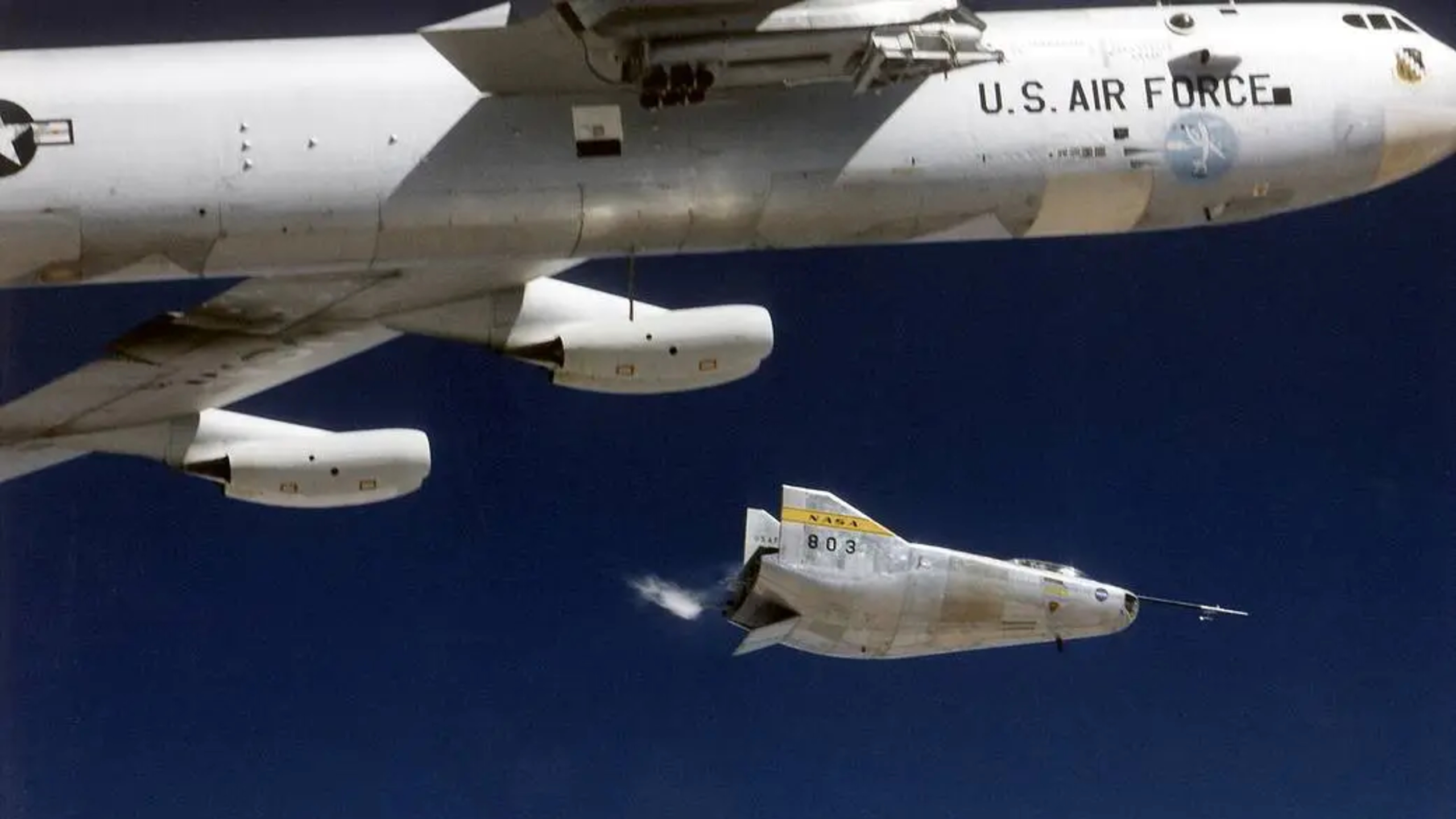
According to historical technical overviews published by NASA, the data gathered from the reaction control thrusters installed on the M2-F3 proved invaluable. By testing these space-like thrusters within the Earth’s atmosphere, aerodynamicists gained critical insights into how future reusable spacecraft could seamlessly transition from aerodynamic flight control surfaces to reaction control systems during orbital re-entry.
Official Reactions and Scientific Assessment
Aviation historians and NASA leadership have consistently pointed to the lifting body program as an essential bridge between atmospheric flight and space exploration. While other concurrent experimental aircraft, such as the rocket-powered X-15 program, focused primarily on high-altitude and hypersonic thermal research, the lifting body series specifically addressed the operational mechanics of horizontal landing for winged or body-lift spacecraft.
"The lifting body research conducted with vehicles like the M2-F3 provided the foundational aerodynamic database required for the development of the Space Shuttle," aerospace historians note. By proving that a blunt-bodied, unpowered fuselage could be safely maneuvered and landed by a human pilot from the edge of space, NASA engineers gained the empirical confidence necessary to commit to a reusable winged orbiter design in the post-Apollo era.
Legacy and Preservation
Following the conclusion of its flight test program in late 1972, the Northrop M2-F3 was retired from active service. Recognizing its monumental contribution to aerospace engineering and the development of America’s space transportation capabilities, NASA transferred ownership of the historic aircraft to the Smithsonian Institution.
Today, the M2-F3 hangs proudly on display at the National Air and Space Museum in Washington, D.C., serving as a silent testament to the ingenuity, courage, and perseverance of the test pilots and engineers who dared to conquer the physics of flight without the benefit of wings.