Revisiting the Intergalactic Hardwood: How Space Jam Defined Mid-90s Cinema and Pop Culture

Thirty years after its initial theatrical release, Warner Bros. Pictures’ 1996 hybrid live-action and animated feature film Space Jam continues to occupy a unique space in cinematic history and popular culture. Merging the traditional slapstick comedy of the Looney Tunes with the towering athletic persona of NBA superstar Michael Jordan, the film grossed over $250 million worldwide against a production budget estimated at roughly $80 million. Beyond its commercial success, Space Jam served as a masterclass in cross-media marketing, setting a high-water mark for corporate synergy that blended sports memorabilia, chart-topping pop soundtracks, and classic cartoon nostalgia into a singular cultural phenomenon.
Background Context and Development
During the mid-1990s, the intersection of professional sports, entertainment, and commercial advertising reached a fever pitch. Michael Jordan, universally regarded as the greatest basketball player of all time, had dominated the NBA with the Chicago Bulls before briefly retiring in 1993 to pursue a professional baseball career in the minor leagues with the Birmingham Barons. This high-profile career pivot captured global media attention and provided the ideal narrative setup for a fictionalized cinematic universe.
Concurrently, Warner Bros. was eager to revitalize its classic animated roster, particularly Bugs Bunny and his Looney Tunes compatriots, who had largely been relegated to television syndication and scattered merchandising since the golden age of animation. The genesis of Space Jam can be traced back to a wildly successful 1992 Nike commercial titled "Hare Jordan," which paired Michael Jordan with Bugs Bunny in a sneaker advertisement. Directed by Joe Pytka—who would go on to direct the feature film—the commercial demonstrated that the chemistry between the live-action athlete and the animated rabbit possessed immense commercial viability. Recognizing this potential, Warner Bros. greenlit a full-length feature film that would expand upon the commercial’s premise, combining state-of-the-art digital compositing with traditional hand-drawn cel animation.
Chronology of the Plot and Production
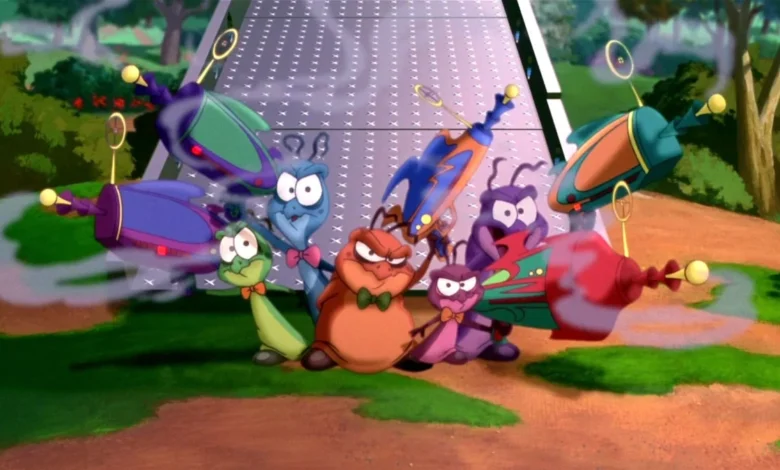
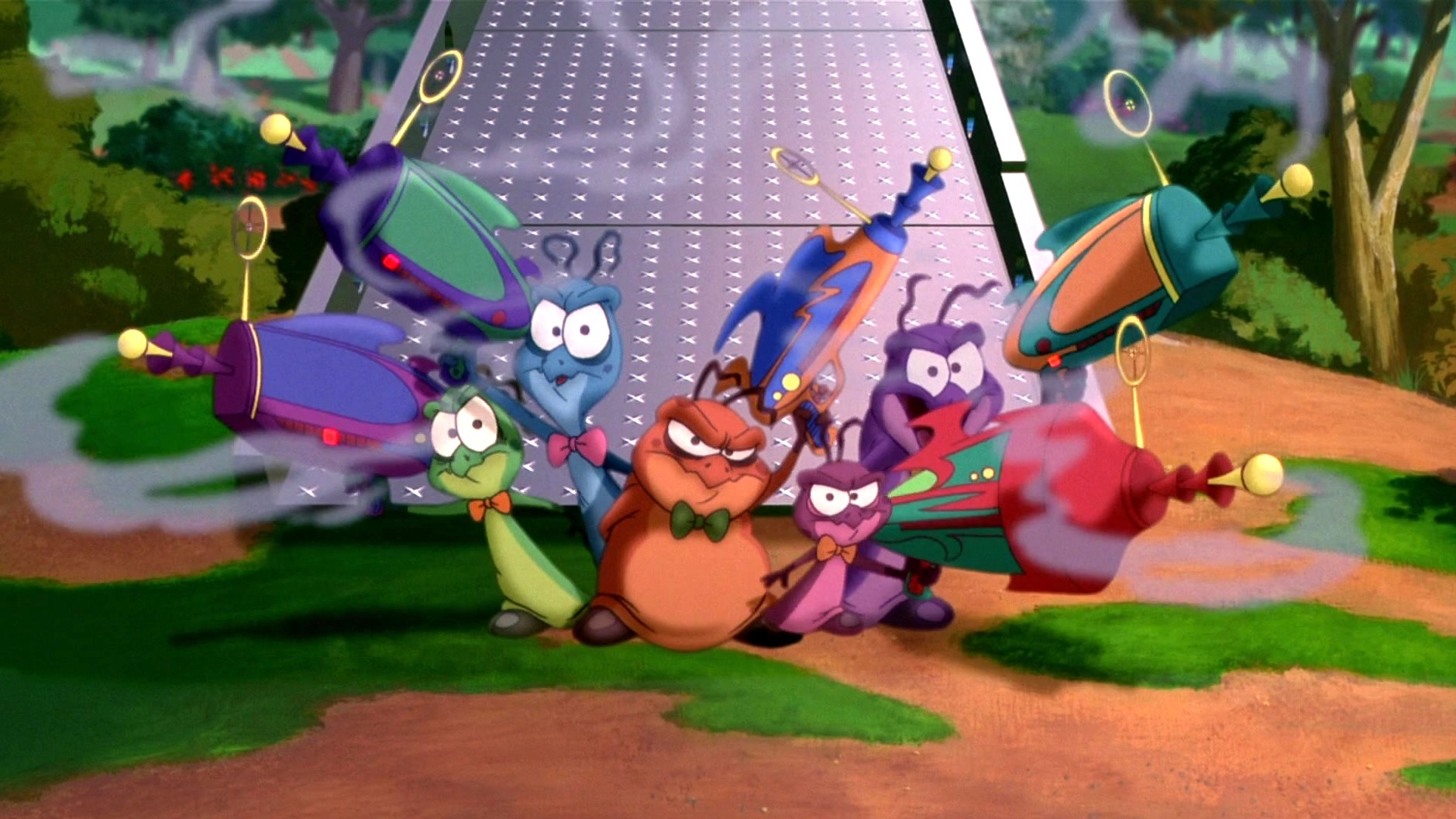
The narrative of Space Jam establishes its high-stakes premise early: the Nerdlucks, a diminutive alien species from the failing outer-space amusement park Moron Mountain, are dispatched to Earth by their tyrannical boss, Mr. Swackhammer (voiced by Danny DeVito). Their mission is to capture the Looney Tunes and bring them back as indentured theme park attractions to save the failing business.
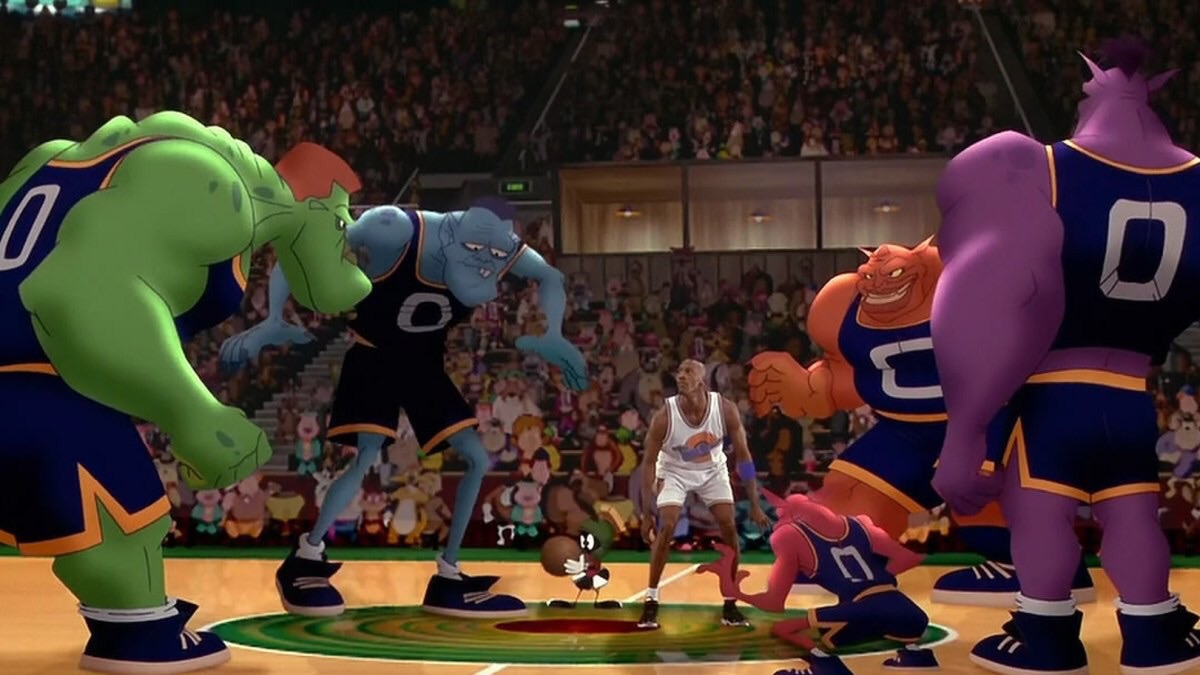
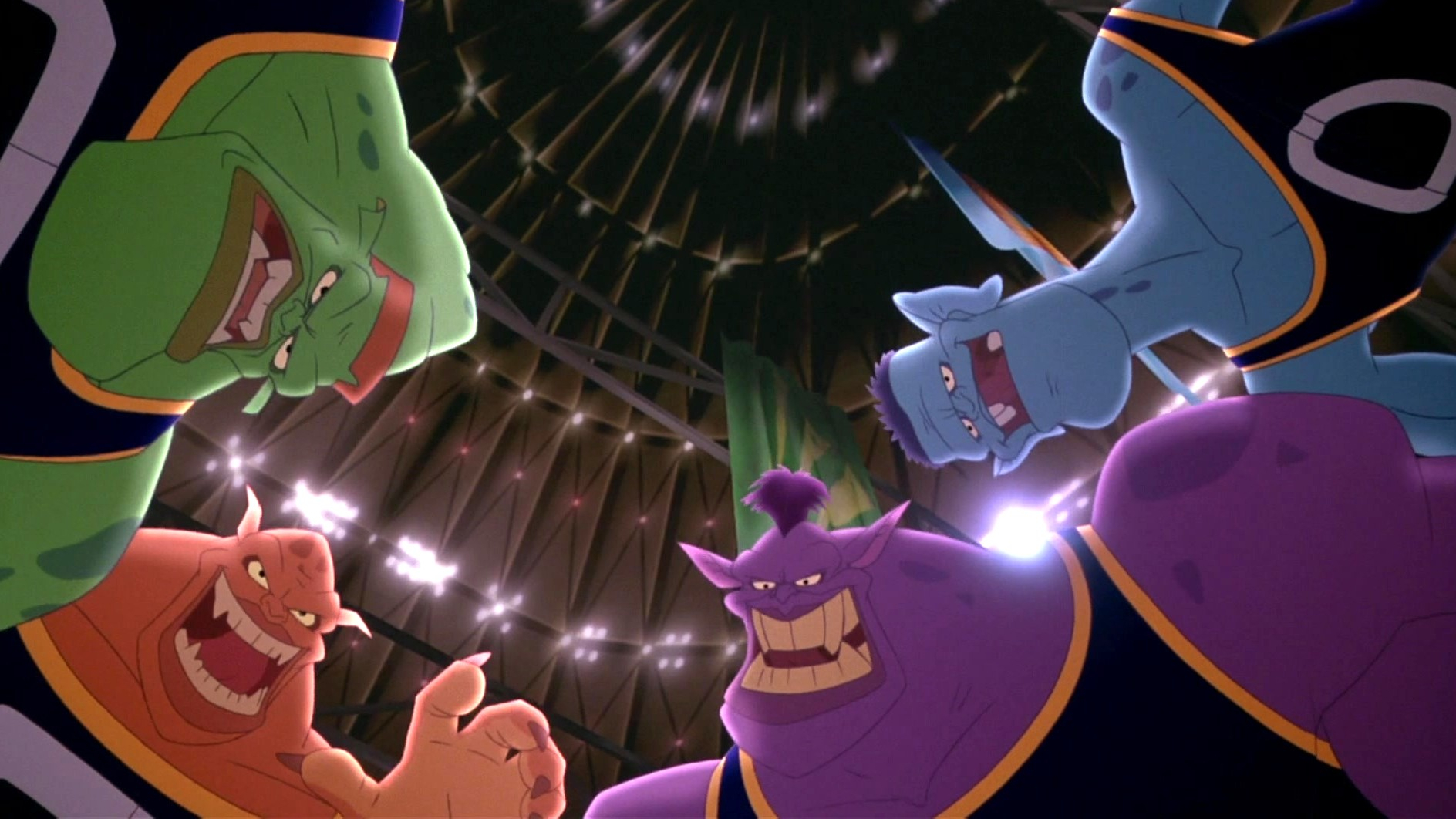
Faced with imminent enslavement, the quick-witted Bugs Bunny challenges the alien invaders to a high-stakes, winner-take-all basketball game. Realizing they lack the size and physical prowess to compete, the Nerdlucks utilize advanced alien technology to steal the basketball talents of prominent NBA stars of the era—Charles Barkley, Patrick Ewing, Muggsy Bogues, Larry Johnson, and Shawn Bradley—transforming themselves into the towering, formidable Monstars.
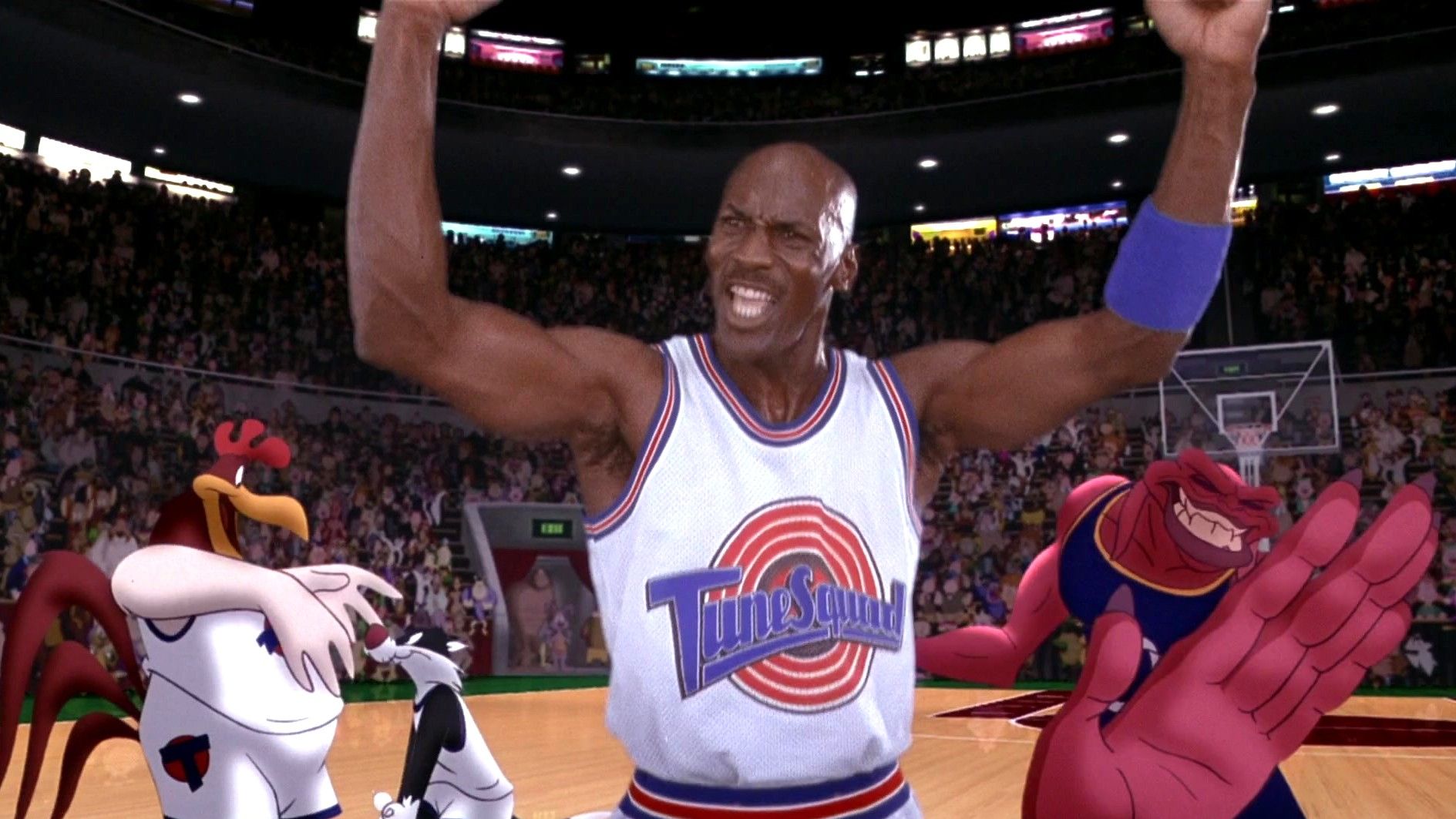
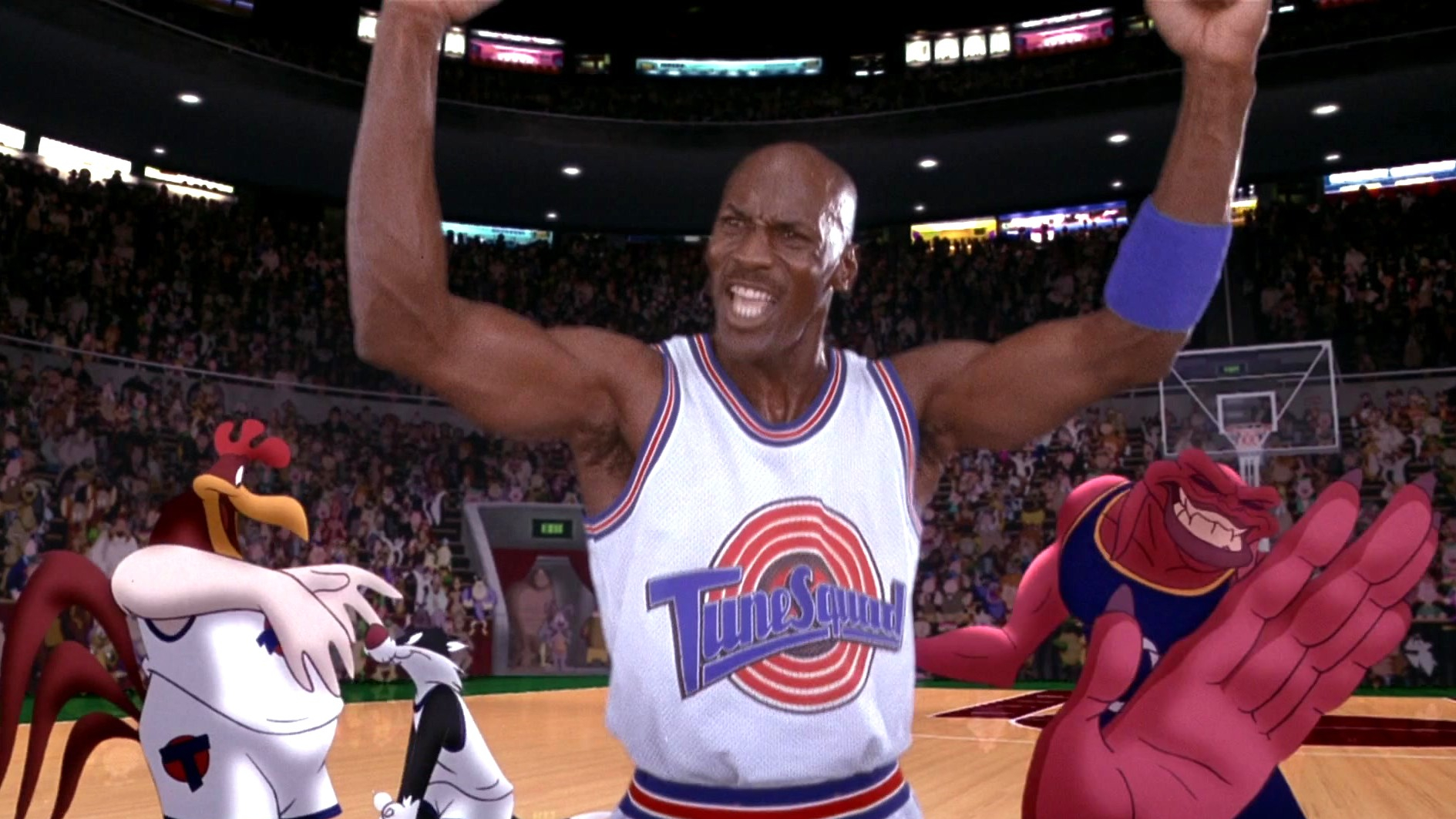
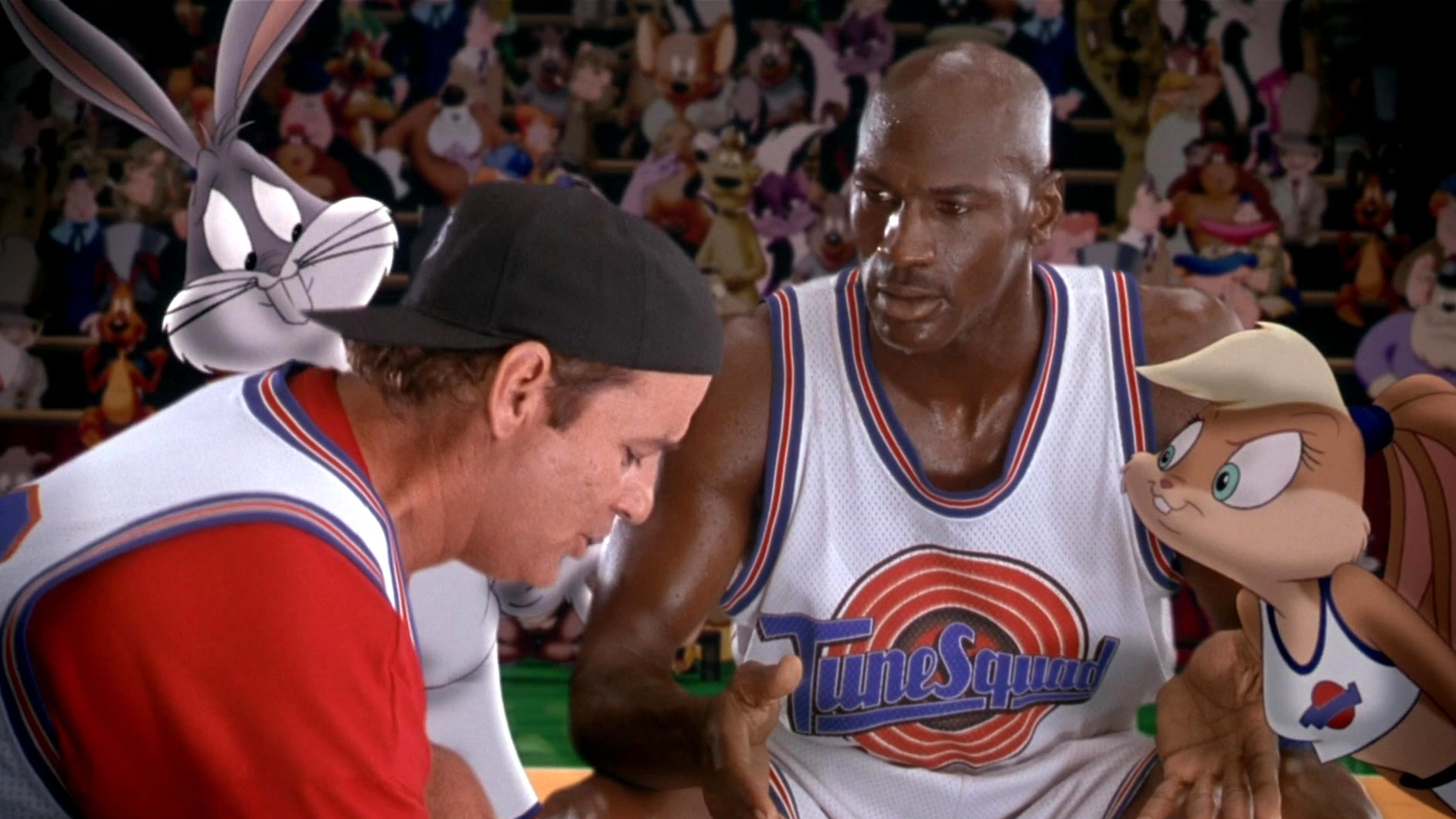
To counter this existential threat, the Looney Tunes recruit Michael Jordan, who is pulled directly from his baseball training regimen into the animated underworld. Joined by a supporting human cast featuring Wayne Knight as Jordan’s publicist and a memorable, unprompted cameo by actor Bill Murray, the newly formed Tune Squad prepares for the ultimate showdown. The climatic basketball game serves as the centerpiece of the film, blending classic cartoon physics, dangerous gags, and genuine athletic competition. Ultimately, Jordan leads the Tune Squad to victory, liberates the stolen talents of the NBA players, and assists the Monstars in overthrowing Mr. Swackhammer before returning safely to the human world.
Supporting Data and Commercial Impact
Upon its release on November 15, 1996, in the United States, Space Jam opened at number one at the box office, grossing $27.5 million in its opening weekend. It went on to accumulate $90.5 million domestically and a total worldwide box office gross of approximately $250.2 million, making it the highest-grossing basketball film of all time—a record it held for decades.
The film’s auxiliary economic impact was equally significant. The Space Jam soundtrack, released on quadruple-platinum-certified Atlantic Records, became a cultural touchstone of the era. Anchored by the R. Kelly-penned anthem "I Believe I Can Fly"—which won two Grammy Awards—the album featured contributions from Seal, Busta Rhymes, Coolio, and the Quad City DJ’s, whose title track became an inescapable fixture of 1990s radio and sporting arenas. Furthermore, the film generated tens of millions of dollars in licensed merchandise, establishing a blueprint for modern franchise marketing that studios continue to emulate.
Statements and Industry Perspective
Reflecting on the unique challenges of directing an athlete-turned-actor, filmmaker Joe Pytka noted the immense professionalism Michael Jordan brought to the production schedule. In retrospective interviews commemorating the film’s anniversaries, Pytka observed that Jordan executed his performance with discipline, adhering strictly to the demands of a rigorous shooting schedule that required him to interact primarily with empty space and green-screen markers before animators filled in the cartoon characters.
"He played himself, and remember, a lot of the film is based on his life, so there were realistic references there," Pytka stated. "He was very professional; he showed up, he knew his lines, and we made it as easy as possible."
Broader Implications and Cultural Legacy
Space Jam fundamentally altered how Hollywood viewed cross-media intellectual property integration. By placing a real-world sports icon inside an animated ecosystem, Warner Bros. demonstrated that nostalgia could be successfully monetized for contemporary family audiences. The film also offered a distinct narrative divergence from the standard science-fiction tropes of the 1990s. While contemporaneous alien invasion films such as Independence Day and Mars Attacks relied on military destruction, global panic, and apocalyptic annihilation, Space Jam opted for an egalitarian resolution: conflict arbitration via athletic competition.
The cultural footprint of the original film was further highlighted by the stark contrast of its 2021 sequel, Space Jam: A New Legacy, starring LeBron James. While the sequel updated the visual effects utilizing modern CGI and incorporated a wider breadth of Warner Bros.’ intellectual property catalog, it faced critical backlash and unfavorable comparisons to its predecessor. Critics and audiences frequently cited the original film’s grounded earnestness, iconic soundtrack, and era-specific charm as elements that could not easily be replicated through digital modernization.
Three decades after its debut, Space Jam remains an enduring artifact of 1990s popular culture. By successfully fusing sports fandom, animation history, and high-concept science fiction, the film secured a permanent, influential niche in cinema history, proving that even the most improbable creative concepts can achieve legendary status with total commitment from its creators.