
The automotive landscape of the 1980s was a vibrant tapestry woven from diverse threads: the lingering dominance of American behemoths, the ascendance of fuel-efficient Japanese imports, and the first tentative steps of new players onto the global stage. It was an era defined by economic shifts, evolving consumer demands, and rapid technological advancements. While some vehicles from this decade, like the iconic Ferrari Testarossa or the rugged Jeep Cherokee, have ascended to legendary status, commanding high prices and meticulous restorations, an equally significant, yet often overlooked, category of cars has all but vanished from public roadways. This article delves into the phenomenon of the "disappearing car" of the 1980s – vehicles that, despite their once-ubiquitous presence and often millions in production, are now remarkably rare sights, their existence largely confined to faded photographs and nostalgic memories.
The Vanishing Act: Why Millions Disappear
The narrative of automotive preservation often focuses on the rare, the exotic, and the historically significant. Classic Camaros, vintage Ferraris, and museum-piece Mercedes-Benz models receive millions in investment for restoration and conservation. Yet, for every meticulously maintained classic, countless ordinary cars, once integral to daily life, have simply dissolved into the ether of automotive history. Several factors contribute to this automotive extinction.
Firstly, many popular cars of the 1980s were designed as utilitarian, affordable transportation, not as collector’s items. Their perceived disposability meant owners often drove them until they were no longer economical to repair, rather than investing in long-term maintenance. Secondly, the prevailing manufacturing standards of the era, particularly concerning rust protection, were not as robust as they are today. Cars in regions with harsh winters and salted roads often succumbed to corrosion within a decade or two. Thirdly, some vehicles suffered from inherent mechanical flaws or poor build quality, leading to premature breakdowns and high repair costs, making them prime candidates for the junkyard. Finally, cultural factors, such as the popularity of demolition derbies for certain robust models or the tendency of younger drivers to modify and abuse affordable performance cars, further accelerated their demise. This article examines specific examples from the 1980s that exemplify this vanishing act, exploring their initial success, their inherent weaknesses, and the reasons for their dramatic disappearance.
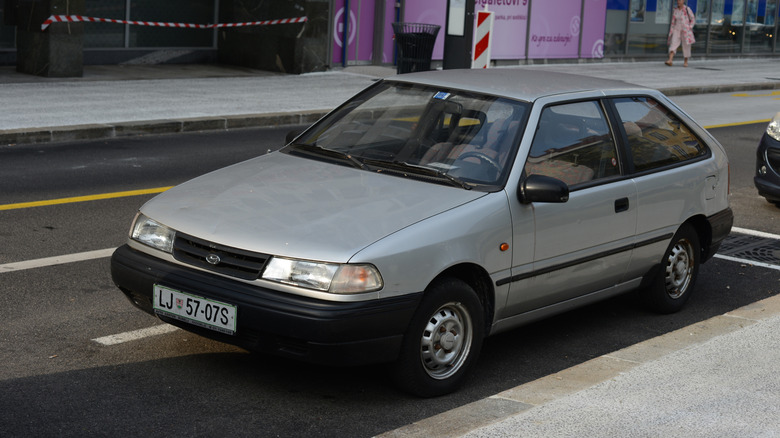
Hyundai Excel: The Affordable Entry Point

Hyundai, a Korean conglomerate with origins in construction, made its ambitious entry into the North American automotive market in 1986 with the introduction of the subcompact Excel. Positioned as the second-cheapest car available in the U.S. that year, priced at an enticing $4,995 (only slightly more than the notoriously spartan Yugo), the Excel quickly became a sales phenomenon. Its immediate appeal lay in its affordability and versatile offerings, available in two- and four-door hatchback and sedan configurations.
Market Introduction and Initial Success
Designed by the renowned Italian automotive designer Giorgetto Giugiaro, the Excel was marketed as an economical yet stylish option for budget-conscious buyers. Its launch was an undeniable triumph, breaking sales records for a new import brand. Hyundai sold an astonishing 169,000 units in its inaugural year, followed by over 250,000 units in 1987. By the close of the decade, nearly a million Excels had found homes on American driveways, serving as family hatchbacks, grocery-getters, student commuters, and first cars for a generation. Its sales success was a testament to a burgeoning market demand for inexpensive, fuel-efficient transportation, a segment previously dominated by Japanese manufacturers. The Excel, while basic, offered a compelling value proposition that resonated with consumers seeking practical mobility without a hefty price tag.
Design and Engineering Aspects
The Excel, internally codenamed X1, was based on the Mitsubishi Mirage platform, leveraging established Japanese engineering in its powertrain, including a 1.5-liter four-cylinder engine. While its design was contemporary for the mid-1980s, emphasizing aerodynamics and practicality, its construction focused on cost-effectiveness. This approach allowed Hyundai to offer the vehicle at an aggressive price point, but it also hinted at compromises in material quality and long-term durability.
Challenges and Decline
Despite its initial sales prowess, the Excel’s longevity proved to be its Achilles’ heel. The core reason for its near-total disappearance from today’s roads can be encapsulated in one word: disposability. While affordable to purchase, the Excel was not engineered for endurance. Its low initial cost often meant owners were less inclined to invest in significant repairs once issues arose. Early models, in particular, were plagued by a reputation for questionable build quality and susceptibility to rust, especially in regions exposed to salt and harsh weather conditions. Mechanical issues, including engine and transmission problems, were not uncommon, and the cost of repairs often quickly exceeded the car’s depreciated value. This led to a cycle where many Excels were simply driven into the ground, then scrapped rather than maintained or resold. The prevalence of young and inexperienced drivers among its owners also contributed to a higher rate of accidents, further diminishing the surviving population.
Legacy and Disappearance
The Hyundai Excel’s brief but impactful tenure in the 1980s served as a critical learning experience for the nascent Korean automaker. The lessons learned from its rapid ascent and equally rapid decline in terms of perceived quality and durability profoundly influenced Hyundai’s subsequent strategy. The company pivoted towards a strong emphasis on reliability, extended warranties, and improved engineering, transforming its brand image over the ensuing decades. Today, spotting a Hyundai Excel on the road is a genuine rarity, often warranting a social media post as if it were an unidentified flying object. Its disappearance is a stark reminder that sheer production numbers do not guarantee survival in the long run; sustained quality and a lasting enthusiast base are equally vital.
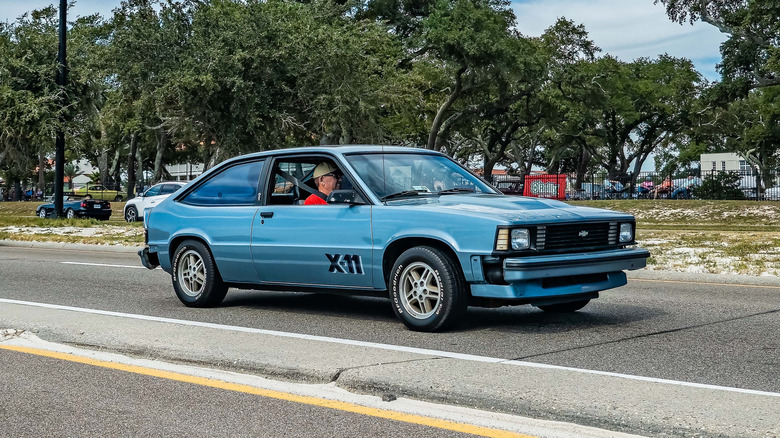
Chevrolet Citation: GM’s Flawed Front-Wheel-Drive Pioneer

The Chevrolet Citation represents a dramatic saga of ambition, initial success, and precipitous decline, marked by mechanical defects, widespread recalls, and federal litigation. Launched in 1980 as part of General Motors’ ambitious X-body platform strategy, the Citation was intended to spearhead GM’s response to the growing popularity of fuel-efficient, front-wheel-drive imports.
Market Introduction and Initial Success
The Citation debuted to immediate and overwhelming demand. Its modern front-wheel-drive architecture, relatively compact dimensions, and promise of improved fuel economy resonated with consumers still reeling from the energy crises of the 1970s. In its first year alone, Chevrolet sold over 800,000 Citations, making it one of the fastest-selling new models in GM’s history. The Citation, along with its X-body siblings – the Buick Skylark, Pontiac Phoenix, and Oldsmobile Omega – collectively sold millions of units throughout the early 1980s, temporarily reclaiming market share from foreign competitors. This initial sales explosion signaled a hopeful new direction for American automotive design.
Design and Engineering Aspects
The X-body platform was a significant departure for GM, marking its first widespread application of front-wheel drive in its compact car lineup. The Citation offered various body styles, including a two-door hatchback, a three-door hatchback, and a five-door hatchback, providing practical utility. It featured MacPherson strut front suspension and a torsion beam rear axle, intended to offer a balance of ride comfort and handling. Engine options included a standard 2.5-liter "Iron Duke" four-cylinder and an optional 2.8-liter V6.
Challenges and Decline
The Citation’s meteoric rise was tragically short-lived, quickly overshadowed by a litany of mechanical disasters and quality control failures. Reports of serious defects emerged almost immediately after its launch. Common issues included premature brake lock-up, particularly in emergency stops, leading to loss of control. Power steering failures, defective hoses, and problems with carburetion and stalling also plagued early models. These widespread defects not only tarnished the Citation’s reputation but also attracted the attention of the National Highway Traffic Safety Administration (NHTSA), which launched investigations and eventually pursued an unsuccessful lawsuit against General Motors regarding the brake issues. The negative publicity, coupled with actual owner experiences of unreliability and safety concerns, caused sales to plummet, halving year after year. The infamous "Car and Driver" comparison test, where a Citation suffered catastrophic brake failure, further cemented its image as a deeply flawed vehicle.
Legacy and Disappearance
The Chevrolet Citation’s spectacular failure served as a stark cautionary tale for the American automotive industry. It highlighted the immense challenges faced by domestic manufacturers in adapting to new technologies like front-wheel drive while maintaining stringent quality control standards. The legal battles and public outcry surrounding the Citation had long-lasting implications for consumer protection and manufacturer accountability. Despite millions of X-body cars being produced, their widespread mechanical problems and negative reputation led to an accelerated rate of attrition. Many were scrapped due to costly repairs or safety concerns, while others simply rusted away. Today, encountering an operational Chevrolet Citation or any of its X-body clones on the road is an exceptionally rare event, a testament to how quickly a once-ubiquitous car can vanish when its fundamental quality is compromised.
Honda CR-X: The Agile Icon for the Masses
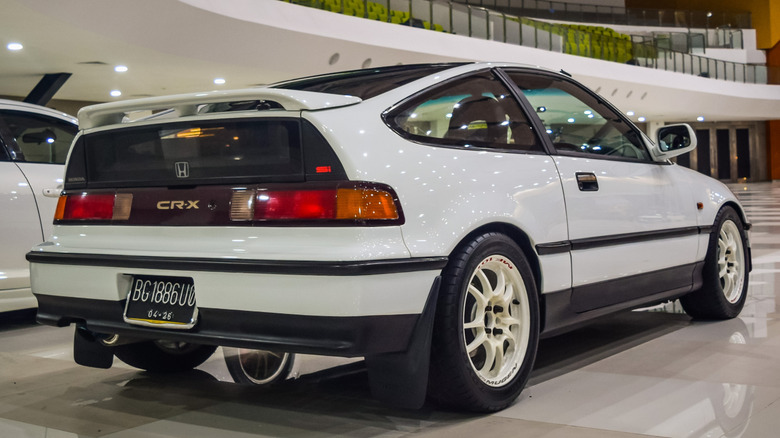
The Honda CR-X, produced between 1984 and 1991, carved out a distinct niche as the lightweight, affordable sports car for a generation. It quickly became a symbol of accessible performance and modding culture, embodying Honda’s burgeoning reputation for engineering prowess in compact, high-revving engines.
Market Introduction and Initial Success
Debuting as a compact, two-seater sport compact car, the CR-X (originally marketed as the Honda Civic CR-X) was based on the Civic platform but distinguished itself with a more aggressive, aerodynamic design and a focus on spirited driving. It offered exceptional fuel economy alongside a surprisingly engaging driving experience, a combination that proved irresistible to a wide demographic. By 1987, Honda had sold over 220,000 units, solidifying its position in the market. The introduction of performance-oriented Si models, featuring more powerful engines and sport-tuned suspensions, further cemented its appeal among enthusiasts seeking an affordable "hot hatch." The second generation (1988-1991) refined this formula, notably introducing Honda’s VTEC technology (in some markets) to deliver impressive power from small-displacement engines.
Design and Engineering Aspects
The CR-X was lauded for its innovative design and engineering. Its lightweight construction (some models weighing as little as 1,800 pounds) was key to its agility and performance. Honda’s mastery of small-displacement, high-revving engines, which would later culminate in its iconic VTEC technology, began to shine through in the CR-X. This car was instrumental in Honda’s development of performance engines, teaching the automaker how to extract maximum power and efficiency from compact powerplants. Its sleek, aerodynamic profile and distinctive rear glass hatch made it instantly recognizable.
Challenges and Decline
The CR-X’s disappearance is less a tale of inherent mechanical failure and more a consequence of its lifestyle and the specific challenges of its era. As an affordable and performance-oriented vehicle, it became a favorite among young drivers and amateur mechanics. This often led to hard driving, aggressive modifications (many of which were poorly executed), and a general lack of meticulous long-term maintenance. The "boy-racer" culture, while contributing to its legend, also ensured many CR-Xs were pushed beyond their limits or fell into disrepair.
Furthermore, the CR-X was notoriously susceptible to rust. Design flaws, such as poor drainage in certain areas, exacerbated moisture accumulation, leading to severe corrosion over time, particularly in older models and in regions with corrosive road treatments. Even those that survived track weekends, street races, and high-school antics often succumbed to structural rust, rendering them unsafe or uneconomical to repair. High theft rates, due to its popularity and ease of modification, also contributed to its attrition.
Legacy and Disappearance
The Honda CR-X remains a beloved icon among automotive enthusiasts, celebrated for its nimble handling, fuel efficiency, and tuneability. It profoundly influenced the hot hatch segment and the broader tuning culture, demonstrating that performance could be accessible and practical. Its legacy is evident in the continued appreciation for clean, unmolested examples that appear at car shows and enthusiast meetups. However, the combination of aggressive usage, amateur modifications, rust susceptibility, and theft has dramatically thinned its ranks on public roads, making a pristine CR-X sighting a special occasion rather than a common occurrence.
Oldsmobile Cutlass: The American Everyman’s Car
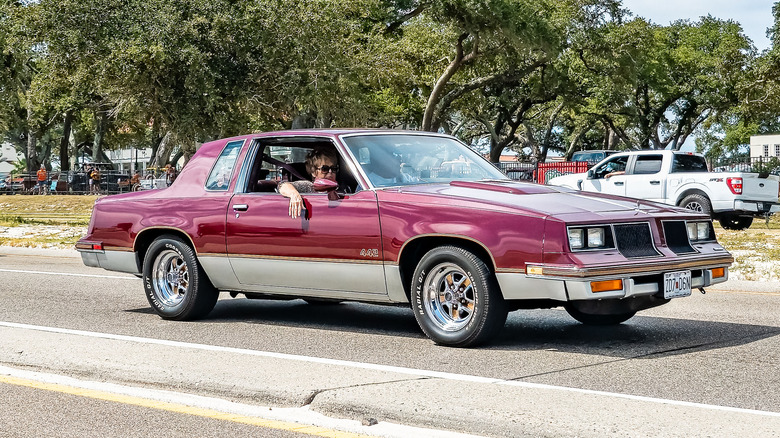
Oldsmobile, a venerable nameplate founded in 1897 and a long-standing division of General Motors, produced some of America’s most popular cars. Among them, the Cutlass stood out as a remarkably successful and versatile model, selling millions of units across various body styles throughout its long production run. By the 1980s, the Cutlass, particularly in its G-body iteration, epitomized comfort and American style.
Market Introduction and Initial Success
The Cutlass nameplate had been a consistent bestseller for Oldsmobile since the 1960s. By the 1980s, it was a core component of GM’s highly successful G-body platform, sharing its underpinnings with popular models like the Pontiac LeMans, Bonneville, and Grand Prix; the Chevrolet Malibu, Monte Carlo, and El Camino; and the Buick Regal. The ’80s G-body Cutlass, affectionately known as the "Old G," offered a distinctive blend of boxy, stately dimensions and comfortable interiors. It was available with a range of V6 and V8 engines, providing options for both economy and performance, making it a popular choice for families, commuters, and those seeking a touch of understated American luxury. Over 1.5 million Cutlasses were produced during this era, solidifying its status as a ubiquitous presence on American roads.
Design and Engineering Aspects
The G-body platform represented a conventional American approach to car building: body-on-frame construction (though some were unibody, the G-body was largely body-on-frame derived) that allowed for significant variations in body style and engine options. The Cutlass was known for its comfortable ride, spacious interior, and distinctive Oldsmobile styling cues, which often included chrome accents and conservative yet elegant lines. While not at the cutting edge of automotive technology compared to its European or Japanese rivals, it delivered reliable, predictable performance and comfort that resonated with a broad segment of the American public.
Challenges and Decline
Despite its immense popularity and robust production numbers, the 1980s Oldsmobile Cutlass has largely faded from the everyday automotive landscape. While the usual culprits of rust, accidents, and general wear-and-tear certainly played a role over four decades, two specific factors significantly contributed to its accelerated disappearance. Firstly, while built to 1980s American auto industry standards, these vehicles were not immune to the general decline in perceived build quality that plagued many domestic manufacturers during that period. Components would wear out, and maintenance, while not excessively complex, was often deferred on older, less valuable cars.
More uniquely, the G-body Cutlass became an extraordinarily popular choice for demolition derbies. Its durable body-on-frame construction, readily available parts, and relatively low resale value made it an ideal candidate for smashing and crashing. This cultural phenomenon, while a source of entertainment, actively removed thousands of otherwise functional Cutlasses from the road, accelerating their demise in a way that few other popular cars experienced.
Legacy and Disappearance
The Oldsmobile Cutlass of the 1980s represents a significant chapter in American automotive history, embodying a particular era of design, comfort, and mass appeal. While the Oldsmobile brand itself was ultimately phased out by GM in 2004, the Cutlass remains a fond memory for many. Today, clean examples are increasingly sought after by collectors and enthusiasts who appreciate its classic American lines and potential for customization. However, the combination of natural attrition, general build quality issues, and its unfortunate popularity as a demolition derby contender means that finding a well-preserved 1980s Cutlass on public roads is now a genuine rarity, a stark contrast to its once-dominant presence.
Ford Tempo: The Unassuming Commuter
The Ford Tempo holds a distinctive place in the collective memory of many Americans as the quintessential "everyman" commuter car of the 1980s and early 1990s. As the sedan still reigned supreme, the Tempo, introduced in 1984, was Ford’s answer to the evolving compact and mid-size market, succeeding the Ford Fairmont. Over its decade-long production run, Ford put an impressive 2.7 million Tempos on the road.
Market Introduction and Initial Success
Replacing the boxy, rear-wheel-drive Fairmont, the Ford Tempo marked a significant shift for Ford towards more aerodynamic, front-wheel-drive designs, a trend that defined the 1980s. Its initial marketing emphasized fuel efficiency, modern styling, and practical affordability. The Tempo quickly became a sales success, appealing to a vast segment of the population looking for reliable, no-frills transportation. It was available as a two-door coupe and a four-door sedan, offering sufficient interior space for families and daily commuters. Its sales success demonstrated Ford’s ability to adapt to changing consumer preferences for more efficient and contemporary vehicles.
Design and Engineering Aspects
The Tempo was one of the first Ford models to showcase the company’s "aero" design philosophy, which prioritized smooth lines and flush glass for improved aerodynamics and fuel economy. While not groundbreaking, its design was certainly more modern than its predecessor. It was built on the Ford "Topaz" platform (shared with the Mercury Topaz), featuring front-wheel drive and a choice of four-cylinder engines, with a later option for a V6. The car was engineered for mass appeal and cost-effective production, rather than performance or luxury. Its uninspiring 12-second 0-to-60 mph acceleration time reflected its utilitarian purpose.
Challenges and Decline
Despite its impressive production numbers, the Ford Tempo is remarkably absent from today’s classic car scene or even as a common older vehicle. This rapid disappearance can be attributed to a confluence of factors, primarily its lack of intrinsic appeal and a persistent reputation for mechanical and safety issues. Even by its final year of production in 1994, the Tempo was known for recurring problems, including failures of the head gasket, ignition module, and particularly, the transaxle. These issues often led to expensive repairs that quickly outstripped the car’s diminishing value, prompting owners to abandon them.
The Tempo was, by design, a bland and uninspiring vehicle. Its performance was adequate for daily commuting but offered no excitement or enthusiast appeal. This lack of character meant that few owners cherished their Tempos or invested in their long-term preservation. Unlike cars that develop a cult following, the Tempo was seen as a disposable appliance.
Legacy and Disappearance
The Ford Tempo represents the archetypal "appliance car" of its era – a vehicle bought purely for basic, affordable transportation, not for its driving dynamics, aesthetic beauty, or potential as a future classic. Its high production numbers ironically contributed to its rapid demise, as countless units were simply driven until they failed and then scrapped without a second thought. The combination of pervasive mechanical issues, a bland design that failed to inspire loyalty, and the relentless march of automotive progress meant that the Tempo faded from memory almost as quickly as it disappeared from the market. For a vehicle with nearly 3 million units produced, its almost complete absence today serves as a powerful illustration of how easily even immensely popular, utilitarian cars can vanish without a trace.
Conclusion: A Reflection on Automotive Ephemerality
The stories of the Hyundai Excel, Chevrolet Citation, Honda CR-X, Oldsmobile Cutlass, and Ford Tempo offer a fascinating glimpse into the automotive landscape of the 1980s and the broader dynamics of vehicle survival. They underscore the fact that sheer sales volume is no guarantee of longevity. While each car had its moment of widespread presence, their ultimate fate was sealed by a combination of factors: planned obsolescence, evolving manufacturing quality, inherent design flaws, the relentless forces of rust, and perhaps most poignantly, their role as utilitarian objects rather than cherished possessions.
These disappearing cars remind us that automotive history is not solely written by record-breaking supercars or meticulously restored classics. It is equally shaped by the millions of everyday vehicles that formed the backdrop of daily life, ferrying families, commuting workers, and empowering new drivers. Their silent disappearance highlights the transient nature of consumer goods and the constant evolution of technology, design, and consumer expectations. As we look at the gleaming, technologically advanced vehicles on our roads today, one might ponder which of these will, in another four decades, become the next generation of "vanishing cars," remembered only by a select few or as rare sightings, fading into the collective automotive memory.