Strava expands its AI integration to Google Gemini to revolutionize personalized fitness analytics

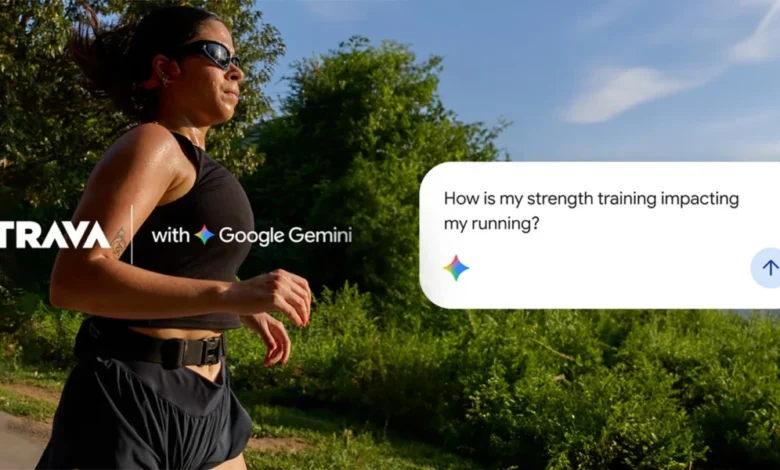
Strava, the world’s leading social platform for athletes and outdoor enthusiasts, has officially announced the integration of its extensive workout database with Google’s artificial intelligence model, Gemini. This development marks a significant shift in how fitness data is consumed and interpreted, moving away from static charts and graphs toward dynamic, conversational insights. By leveraging the Model Context Protocol (MCP)—an open-source standard designed to bridge the gap between AI assistants and local or cloud-based data silos—Strava is empowering its subscribers to unlock deeper, more meaningful patterns within their training history.
The Evolution of Fitness Data Analysis
For over a decade, Strava has functioned as a digital ledger for millions of cyclists, runners, and hikers. While the platform has consistently improved its internal analytics suite, the introduction of Generative AI represents a new frontier. Historically, users have had to manually toggle between different metrics—such as pace, heart rate, elevation gain, and training load—to synthesize their progress.
The integration with Google Gemini changes this paradigm by acting as an intelligent intermediary. Instead of searching through years of activity logs, a user can now ask, "How has my endurance improved over the last six months compared to my injury-prone period last year?" The AI, possessing read-only access to the user’s specific Strava activity history, can parse thousands of data points to deliver a coherent, human-readable summary.
This move follows a successful pilot phase earlier this year, during which Strava introduced a similar integration with Anthropic’s Claude. By adopting the Model Context Protocol, Strava has positioned itself as an early adopter of standardized interoperability, ensuring that its data remains portable and functional across various AI ecosystems rather than being locked into a single proprietary walled garden.
A Chronology of Integration and Innovation
The trajectory toward AI-driven fitness coaching has been methodical. Strava’s recent push for AI integration follows a broader industry trend where consumer health companies are pivoting from simple "trackers" to "advisors."

- Early 2024: Strava begins testing internal AI-driven summary features, focusing on highlighting notable achievements in user activity feeds.
- Mid-2024: The industry sees a massive surge in interest regarding the Model Context Protocol (MCP), a framework originally spearheaded by Anthropic to solve the "context gap" in LLMs.
- Late 2024: Strava officially launches its MCP connector, allowing users to connect their accounts to Claude. This served as a proof-of-concept for the security and efficacy of external AI access.
- October 2026: Strava expands its reach by announcing the integration with Google Gemini. This expansion is critical due to Gemini’s deep integration into the Google ecosystem, including Android devices and Google Workspace, making it a more accessible tool for the average user.
Understanding the Model Context Protocol (MCP)
To understand why this integration matters, one must understand the technology behind it. The Model Context Protocol is not merely an API; it is a standardized communication language that allows AI models to "understand" data from third-party services without requiring developers to build custom integrations for every single AI model on the market.
By donating the MCP to the Linux Foundation’s Agentic AI Foundation, the industry has signaled a preference for open standards. For Strava, this means that once the infrastructure for the MCP connector was built for Claude, the effort required to extend that functionality to Google Gemini was significantly reduced. This architectural efficiency is a major win for software scalability, allowing Strava to focus on user privacy and data integrity while relying on the AI providers to handle the heavy lifting of natural language processing.
Security and Privacy Considerations
A primary concern for any fitness tracking company is the sanctity of user data. Strava has been quick to emphasize that the integration is strictly "read-only." This means that while Gemini can view the user’s history to provide insights, it cannot edit, delete, or create new activities on the user’s behalf. Furthermore, the integration is entirely optional. Users must explicitly opt-in through their settings, ensuring that they retain full agency over which AI models have access to their biometric and geospatial data.
The company’s decision to limit this initial rollout to the United States is likely a strategic move to monitor data privacy compliance and server-side latency before a global deployment. By confining the scope, Strava can iterate on the quality of the AI’s responses and address any unforeseen privacy edge cases in a controlled environment.
Implications for the Competitive Fitness Landscape
The integration of Gemini into Strava serves as a direct challenge to competitors like Garmin, Wahoo, and Whoop. While these companies have robust hardware ecosystems, they often struggle with the "interpretation" side of fitness data. By outsourcing the intelligence layer to Google Gemini, Strava effectively bypasses the need to build a massive, proprietary LLM of its own.
Analysts suggest that this could signal the beginning of "the end of the dashboard." In the coming years, the value of a fitness app may no longer be measured by the beauty of its user interface, but by the quality of the insights provided by its connected AI agent. For a cyclist training for a century ride, an AI that can synthesize sleep data, recent training volume, and weather forecasts to suggest a recovery day is infinitely more valuable than a static bar chart showing a decrease in weekly mileage.

Future Potential: From Passive Analysis to Proactive Coaching
While the current iteration of the Strava-Gemini integration is primarily retrospective—focused on analyzing past workouts—the logical next step is proactive coaching. Future updates could potentially allow the AI to look at a user’s calendar, analyze their historical performance during high-stress periods, and suggest specific adjustments to a training plan.
Furthermore, as multimodal AI models like Gemini evolve, the potential for voice-based interaction becomes profound. Imagine a runner on the trail, stopping for a moment to ask their watch, "Based on my current heart rate and the elevation of the remaining route, should I push the pace or settle into a recovery effort?" If integrated into wearable devices, the latency between physical performance and cognitive insight could effectively drop to zero.
Challenges and Limitations
Despite the excitement, the transition to AI-assisted fitness is not without hurdles. The primary risk is "hallucination"—the tendency for LLMs to confidently state incorrect information. In the context of fitness, a hallucination could lead to overtraining or injury if the AI suggests an aggressive training load based on a misinterpretation of the user’s recovery data.
Strava’s reliance on the MCP is, in part, a safeguard against this. By providing the model with a clear, structured context of the user’s history, the risk of the AI "guessing" is minimized. Nevertheless, both Strava and Google face the challenge of user literacy: ensuring that subscribers understand that the AI is an assistant, not a doctor or a certified athletic coach.
Conclusion
The expansion of Strava’s AI capabilities to include Google Gemini is a landmark moment in the "quantified self" movement. By bridging the gap between historical workout data and the reasoning capabilities of modern Large Language Models, Strava is setting a new standard for user engagement. While the feature is currently limited to US subscribers and remains in its early stages, the underlying architecture suggests a future where our fitness data is no longer a collection of numbers, but a conversational partner in our pursuit of physical excellence. As this technology matures, it will likely redefine the expectations of what a digital training platform should be, pushing the industry toward a future where insight is as accessible as the activity itself.
Related posts: