AWS Upgrades Amazon Bedrock AgentCore Runtime to Boost AI Agent Scalability and Cost-Efficiency

Amazon Web Services (AWS) has announced a significant suite of runtime upgrades to Amazon Bedrock AgentCore, designed to address the growing operational complexities, computational bottlenecks, and infrastructure expenses associated with enterprise artificial intelligence deployments. The newly rolled-out capabilities bring faster session initialization, substantial computational expansions, intelligent memory reclamation, and advanced data isolation paradigms. By fundamentally enhancing how AI agents operate under the hood, AWS aims to lower the barrier to entry for large-scale, autonomous, and multi-turn agentic workloads across global industries.
The evolution of generative AI has rapidly shifted from static, prompt-response text generation to dynamic, autonomous agents capable of multi-step reasoning, interacting with external APIs, compiling code, and executing browser-based workflows. However, these advanced agentic systems have historically placed massive strains on cloud infrastructure. Developers have frequently encountered severe limitations regarding session compute capacities, high latency during environment provisioning, and prohibitive cost structures associated with maintaining idle instances while agents wait for human approvals or external tool completions. The latest iterations of Amazon Bedrock AgentCore directly target these enterprise pain points, making the architecture robust enough to handle demanding commercial workflows.
Expanded Compute Capacities and Container Flexibility
At the core of the AWS infrastructure upgrade is a major overhaul of runtime resource allocation. Under the previous iterations of Amazon Bedrock AgentCore, complex agent workflows frequently outgrew available session boundaries. Developers were routinely forced to partition tasks awkwardly or offload critical computational processes outside of secure, isolated environments.
To alleviate these restrictions, AWS has supercharged individual session capacities. Each session now supports up to four times the previous compute power, scaling dynamically to accommodate up to eight virtual CPUs (vCPUs) and 32GB of memory. Furthermore, the updated runtime environment introduces support for container images of up to 10GB in size.
This dramatic expansion in computational headroom enables developers to execute resource-intensive tasks directly within a secure, isolated boundary. Advanced use cases—such as compiling extensive software codebases, executing complex browser-driven automation workflows, and running local model inference locally within the agent execution layer—can now be smoothly accommodated. By keeping these demanding procedures encapsulated within secure environments, organizations can minimize security vulnerabilities while maximizing processing efficiency.
Intelligent Memory Reclamation and Cost Optimization
Alongside raw computational power, managing infrastructure expenditures remains a primary priority for Chief Information Officers (CIOs) navigating broad AI adoption. Autonomous agents often spend considerable amounts of runtime simply idling—waiting for downstream model responses, complex tool calls, or mandatory human-in-the-loop interventions. Historically, maintaining these persistent sessions incurred continuous, full-capacity resource charges, inflating cloud overheads.
The upgraded Amazon Bedrock AgentCore runtime introduces advanced memory utilization controls designed to curb unnecessary spending. The updated infrastructure features automated memory reclamation, allowing the runtime to reclaim unused memory within minutes of an agent releasing it. Furthermore, the platform now enables idle agents to scale down completely to zero resource consumption during prolonged periods of inactivity.
For multi-turn conversational or autonomous agents characterized by natural operational pauses, these improvements translate to a dramatic reduction in resource footprints. According to technical metrics highlighted by the hyperscaler, these updates can reduce memory consumption per session by up to 68%.
To support always-on agents that cannot afford the latency penalties associated with absolute cold starts, AWS has concurrently introduced a baseline pricing model. This feature establishes a dependable minimum memory allocation per session while preserving the elasticity to burst up to four times that baseline when workloads suddenly demand higher computational throughput. This predictable pricing architecture allows enterprises to maintain always-on readiness without paying for peak infrastructural capacity upfront.
Advanced Data Isolation and Storage Integration
Security and governance remain paramount as enterprises transition experimental AI pilots into production environments. Previously, organizations deploying Amazon Bedrock AgentCore were compelled to custom-build proprietary mechanisms to govern how files, access credentials, and external tool outputs moved securely between an agent’s isolated execution environment and external enterprise storage repositories.
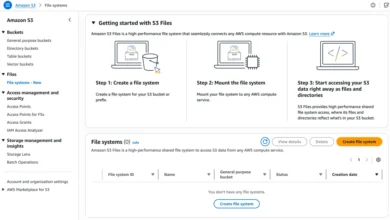
To eliminate this engineering friction, AWS has extended the runtime’s isolation capabilities directly to the data layer. Developers can now dynamically mount and safely save agent work outputs directly to external filesystems—including Amazon S3 buckets—utilizing native File System in Userspace (FUSE) support. This integration streamlines data persistence, ensuring that working states, generated documents, and intermediate artifacts are securely managed without requiring bespoke infrastructure glue code.
Industry Expert Analysis: Development and Economic Implications
The convergence of larger session limits, lightning-fast initialization times, and granular cost controls has drawn widespread commentary from technology analysts and enterprise research firms.
Ashish Chaturvedi, executive research leader at HFS Research, noted that the structural enhancements directly eliminate architectural compromises that developers previously had to navigate.
"Coding agents that compile large codebases, browser agents that load full web pages, and agents running a small model locally all outgrew the earlier session size, so developers had to either split the work awkwardly or move it outside the isolated environment altogether," Chaturvedi explained. He added that with sessions now stretching to 8 vCPUs and 32GB of memory alongside 10GB container images, these complex workloads comfortably fit inside secure boundaries.
Furthermore, startup latency—a historical bottleneck in agent provisioning—has been drastically reduced. Where traditional isolated sessions previously required nearly a minute to initialize, forcing teams to maintain costly "warm pools" of pre-provisioned capacity, the updated runtime achieves startup times of under two seconds regardless of container image size.
"With startup times of under two seconds, developers can provision isolated sessions on demand rather than maintaining idle capacity," Chaturvedi observed, emphasizing that developers are now freed from writing custom logic to handle session shutdowns, state preservation, and restarts.
From an executive budgetary perspective, Stephanie Walter, practice leader of the AI stack at HyperFRAME Research, highlighted the material impact these changes present for CIOs managing large-scale deployments.
"Agents typically should not need the same resources while waiting for approval as they do while executing code. Reclaiming unused memory and scaling idle sessions to zero could reduce the cost of keeping long-running agents available," Walter stated. Given that modern enterprises frequently orchestrate hundreds of concurrent agent sessions simultaneously, optimizing resource consumption during idle cycles delivers measurable financial relief.
Strategic Trade-Offs and Governance Considerations
Despite the clear operational advantages, industry analysts advise that enterprise technology leaders must carefully evaluate architectural trade-offs before deploying the updated AgentCore runtime at scale.
Scaling agents down to zero, while economically attractive, does not completely eliminate overhead. Storage allocations, ongoing model inference calls, external API usage, and auxiliary cloud services continue to incur charges. Additionally, dependency management upon resumption requires rigorous validation.
"Developers also need to test resumption: are files available, have credentials expired, and does the agent know whether its last action completed? Saving idle resources is useful, but not if waking the agent causes it to repeat a payment or production change," Walter cautioned.
Furthermore, absolute zero-scaling can introduce execution latency when an agent is abruptly summoned from an inactive state, making it potentially unsuitable for ultra-low-latency, real-time customer service interactions.
Governance and security risks also warrant careful internal monitoring. Chaturvedi pointed out that lower idle operational costs might inadvertently encourage organizations to leave large fleets of long-running agents active indefinitely, even when their business utility has expired. Left unmonitored, these dormant agents could retain privileged permissions and access vectors to sensitive enterprise data, necessitating rigorous, automated access reviews.
Similarly, the newly introduced baseline pricing model requires precise calibration. If an enterprise sets the memory baseline too high, it risks paying continuously for unused infrastructural capacity. Conversely, setting the baseline too low can trigger frequent, unpredictable computational bursting, undermining the financial predictability intended by the pricing tier. Consequently, CIOs must analyze historical workload patterns to determine whether stable resource profiles align with baseline commitments or if experimental, unpredictable workloads remain better suited to dynamic, usage-based pricing.
Global Availability
AWS has confirmed that the updated Amazon Bedrock AgentCore runtime capabilities are available immediately. Enterprise developers and IT leaders can access the new runtime features across 19 major AWS geographic regions, spanning North America, South America, Europe, and the Asia-Pacific region.
Supported deployment zones include Northern Virginia, Ohio, Oregon, Canada (Central), São Paulo, Frankfurt, Ireland, London, Milan, Paris, Spain, Stockholm, Malaysia, Mumbai, Seoul, Singapore, Sydney, Thailand, and Tokyo. This extensive regional rollout ensures that global enterprises operating under strict data residency mandates can immediately leverage the enhanced compute, memory reclamation, and data isolation frameworks to scale their next-generation AI agent architectures securely and cost-effectively.