Astronauts Successfully Install Final iROSA Solar Array on International Space Station, Boosting Power Generation by 30 Percent

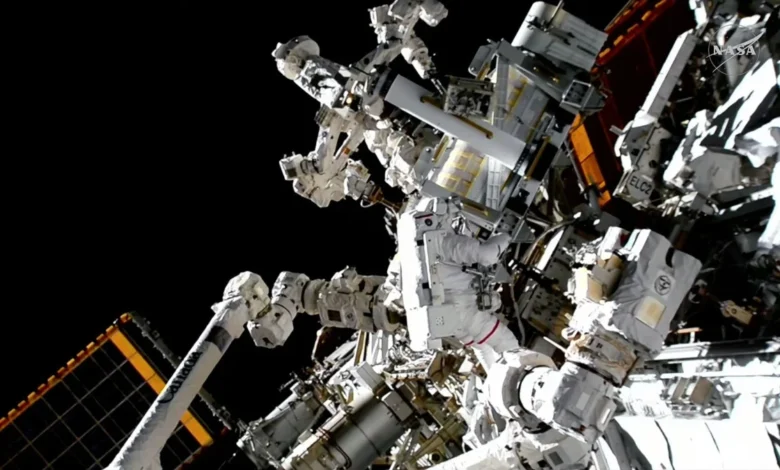
The International Space Station has officially secured its energy future. In a milestone achievement for orbital infrastructure, Expedition 75 flight engineers Anil Menon of NASA and Joshua Kutryk of the Canadian Space Agency successfully installed and deployed the eighth and final International Space Station Roll-Out Solar Array (iROSA) on Thursday, November 5, 2026. This complex extravehicular activity (EVA) marks the culmination of a multi-year, multi-billion-dollar effort to upgrade the aging orbiting laboratory’s power architecture, ensuring that the station can continue its scientific mission safely through its planned retirement at the end of the decade.
The successful completion of the spacewalk brings a definitive end to an ambitious power-augmentation campaign initiated in response to degraded energy output from the station’s original, legacy solar arrays. With all eight iROSAs now fully operational, the orbiting laboratory’s total power capacity has increased by up to 30 percent, guaranteeing a robust electrical supply for high-demand scientific experiments, life support systems, and commercial habitation modules as humanity celebrates more than 26 years of continuous human presence in low Earth orbit.
The Spacewalk: Execution, Challenges, and Triumphs
The spacewalk began at 8:36 a.m. EST when Menon and Kutryk transitioned their spacesuits to internal battery power, officially opening the airlock hatch. The operation was meticulously planned to target the 3B power channel located on the starboard side of the station’s massive integrated truss structure.
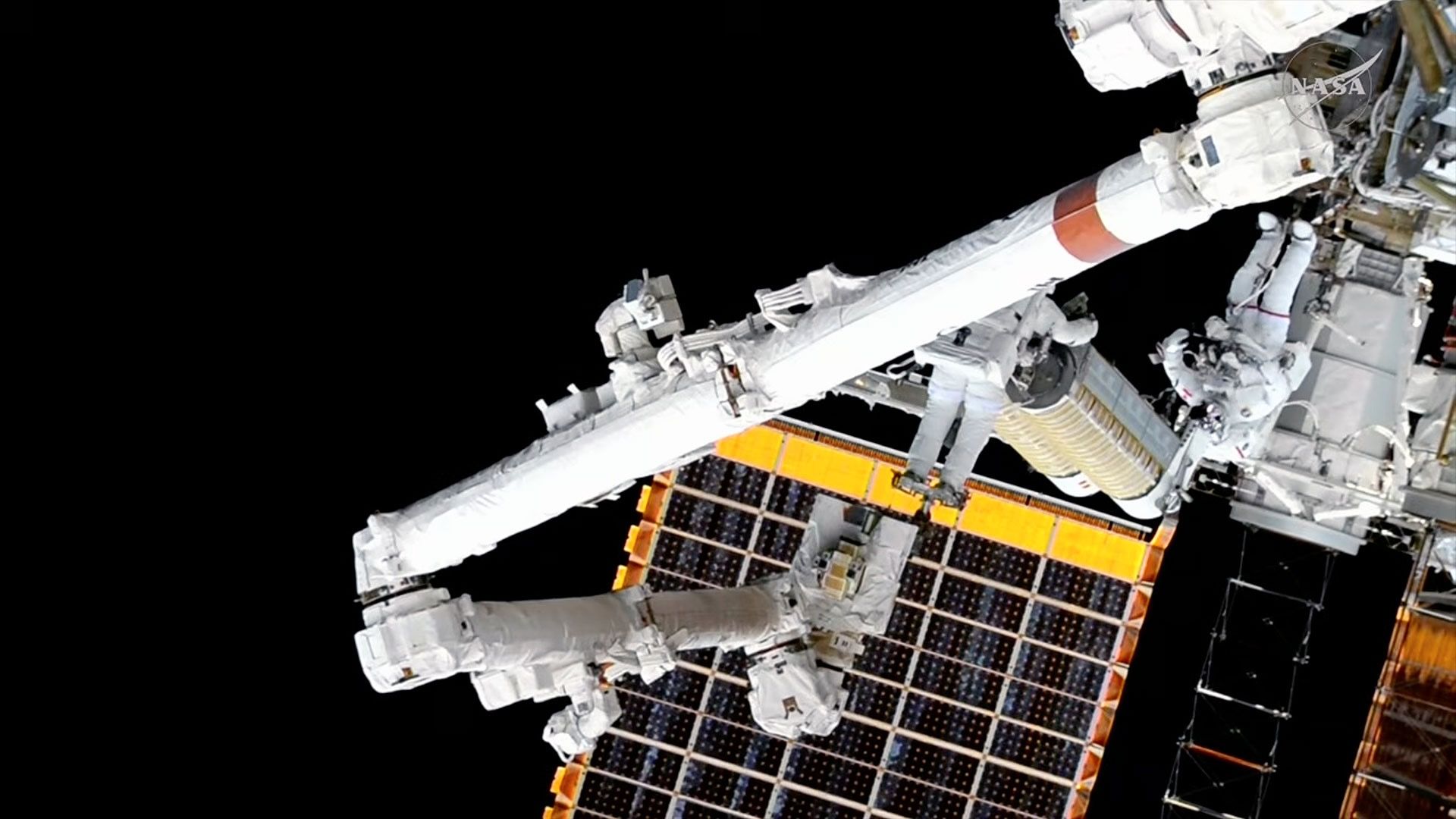
Working collaboratively, the two astronauts retrieved the 750-pound (340-kilogram) iROSA assembly from its temporary stowage platform. Utilizing the station’s robotic appendage, the Canadarm2, they maneuvered the massive, tightly bound roll-out blanket to the designated worksite on the backbone truss, securely mounting it to a previously assembled bracket kit.
However, the delicate operation hit a snag during the electrical integration phase. As Menon set about connecting the cables to tie the new array into the station’s grid, flight controllers in Mission Control Houston noted a discrepancy. Nichole Stilwell, a veteran NASA astronaut serving as the lead spacewalk officer, radioed up to report that engineers were observing only half of the expected shunt current. In that specific configuration, safety protocols prohibited the deployment of the array.
Faced with an unexpected technical hurdle, the spacewalkers paused their primary timeline. Because the arrays generate immediate and substantial electrical current whenever exposed to direct sunlight, safety regulations dictated that troubleshooting had to wait until the station orbited into the shadow of the Earth. Demonstrating exceptional operational flexibility, Menon and Kutryk used the orbital night pass to clean up their worksite and stow the Canadarm2 safely.
Once Earth’s shadow enveloped the station, shielding the hardware from solar radiation, ground controllers were able to guide the astronauts through a prompt inspection of the electrical connectors. The fix was successful. Upon re-entering orbital daylight, telemetry confirmed that optimal shunt currents had been restored.
"We are seeing good shunt currents on the ground, so we are go for deploy," Stilwell radioed to the crew.
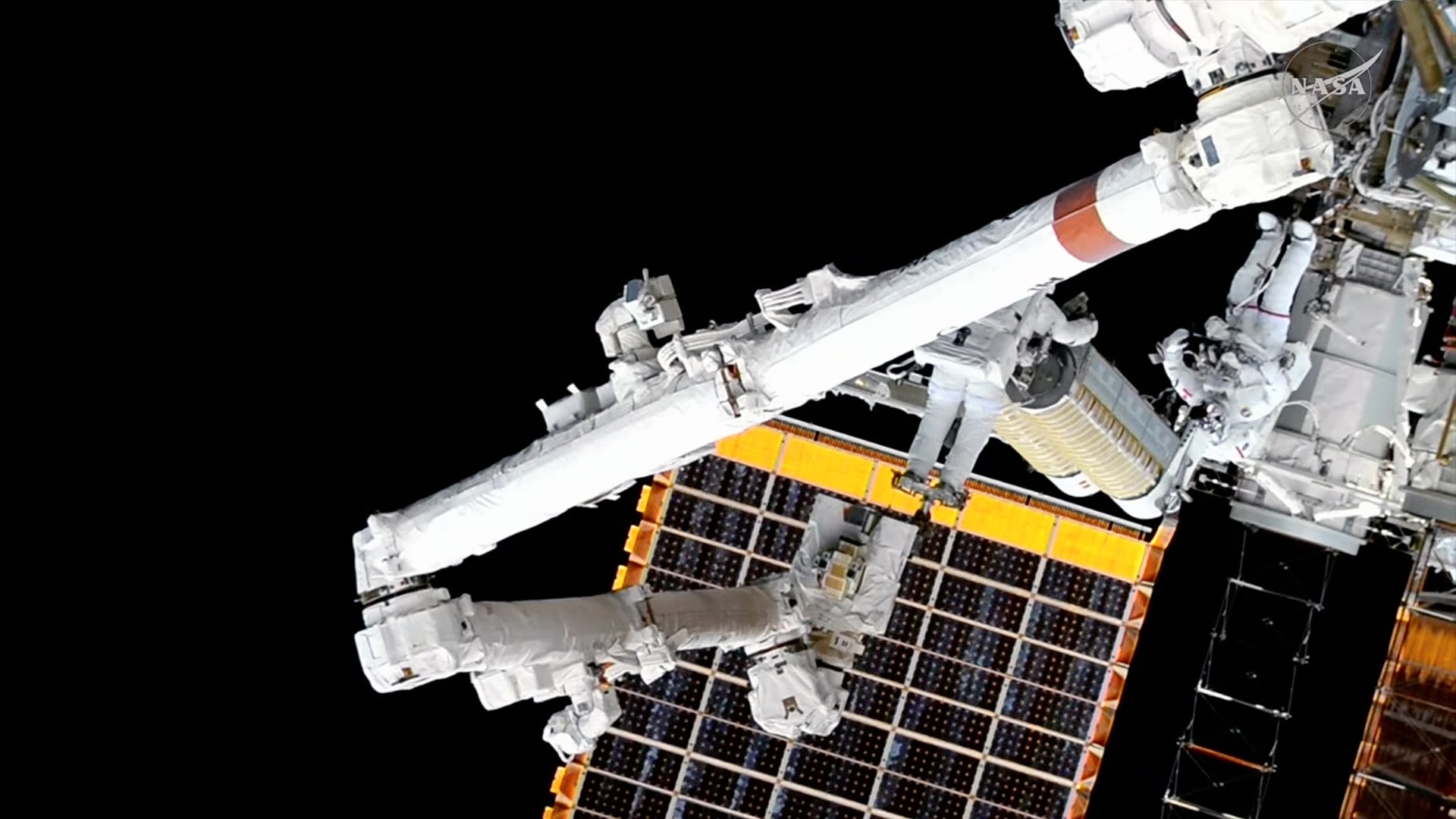
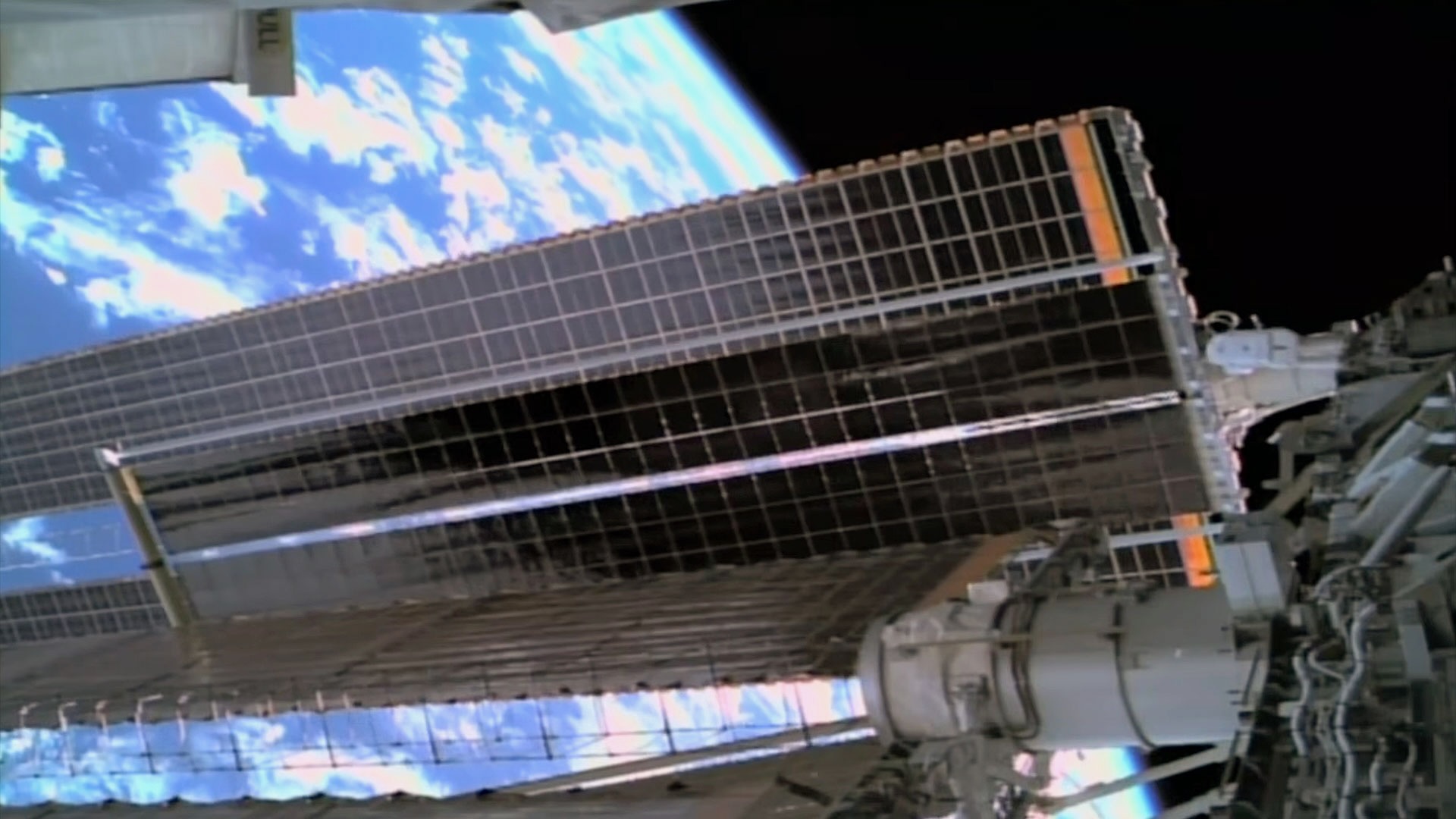
Minutes later, Kutryk and Menon released the two primary mechanical restraint bolts. True to their innovative design, the iROSAs required no motorized mechanisms to unfurl. Instead, relying entirely on the potential energy stored within their rolled-up carbon composite booms, the solar blanket rapidly and smoothly extended to its full 63-foot (19-meter) length over the course of approximately 10 minutes.
When the EVA finally concluded at 3:35 p.m. EST, lasting six hours and 59 minutes, the crew had not only solved a critical hardware puzzle but also etched their names into the storied history of human spaceflight. For Menon, the excursion added to a cumulative career total of 33 hours and 30 minutes across four spacewalks, while Kutryk brought his total to 14 hours and 10 minutes over two EVAs. Crucially, the event marked the 101st U.S. spacewalk conducted from the station without the presence of a space shuttle, and the 286th EVA overall dedicated to ISS assembly, maintenance, and structural upgrades.
An Evolutionary Timeline: The Multi-Year iROSA Campaign
The successful deployment of the eighth iROSA represents the final chapter of a complex engineering saga that spans more than half a decade. The necessity for an unprecedented power overhaul arose when flight controllers and aerospace engineers observed that the ISS’s original eight photovoltaic wings—launched between 2000 and 2009—were suffering from natural degradation. Designed with a 15-year operational lifespan, the legacy arrays were slowly losing their efficiency due to years of exposure to atomic oxygen, micrometeoroids, and solar radiation in the harsh vacuum of space.
To prevent a significant deficit in the station’s electrical budget, NASA and its international partners devised the iROSA solution: compact, highly efficient roll-out panels designed to overlay and augment the existing infrastructure rather than replace it entirely. Each new array was engineered to measure roughly half the physical size of the original wings while delivering up to 40 percent more power per unit.
The multi-phased installation timeline reflects the sheer logistical scale of upgrading a laboratory orbiting 250 miles above the planet:
- June 2021: NASA astronauts Shane Kimbrough and ESA astronaut Thomas Pesquet kicked off the campaign by installing the first two iROSAs on the 2B and 4B power channels during a historic series of spacewalks.
- December 2022: NASA astronauts Josh Cassada and Frank Rubio continued the momentum, venturing outside to mount arrays on the 3A and 4A channels.
- June 2023: NASA astronauts Steve Bowen and Woody Hoburg successfully deployed the fifth and sixth arrays on the 1A and 1B power channels.
- October 29, 2026: Preparing the final phase, astronauts laid the groundwork for the penultimate array, setting the stage for the dramatic conclusion.
- November 5, 2026: Anil Menon and Joshua Kutryk successfully deployed the eighth and final iROSA on the 3B power channel, completing the grand architectural upgrade.
Every single one of the eight iROSA units, along with their specialized mounting hardware, was ferried to the orbital outpost aboard uncrewed SpaceX Dragon cargo spacecraft, demonstrating the vital partnership between commercial enterprise and government space exploration.
Broader Implications and the Path to 2030
The completion of the iROSA project is not merely an engineering triumph; it is a critical operational enabler for the final phase of the International Space Station’s lifecycle. With an augmented power capacity of roughly 120 kilowatts to 210 kilowatts total, the station is now fully equipped to support intensive, power-hungry scientific investigations in fields ranging from biotechnology and materials science to deep-space communication testbeds.
Furthermore, the robust power supply is essential for supporting visiting commercial crew vehicles, private astronaut missions, and the assembly of upcoming commercial free-flying modules that may dock with the station before its retirement. NASA and its international partners—including agencies from Canada, Europe, Japan, and Russia—have slated the ISS for a controlled deorbit in late 2030. During this twilight era of the station’s operational history, the enhanced electrical grid ensures that all systems, including critical life support and safety infrastructure, will operate at peak performance right up until the facility is guided safely down into a remote expanse of the southern Pacific Ocean.
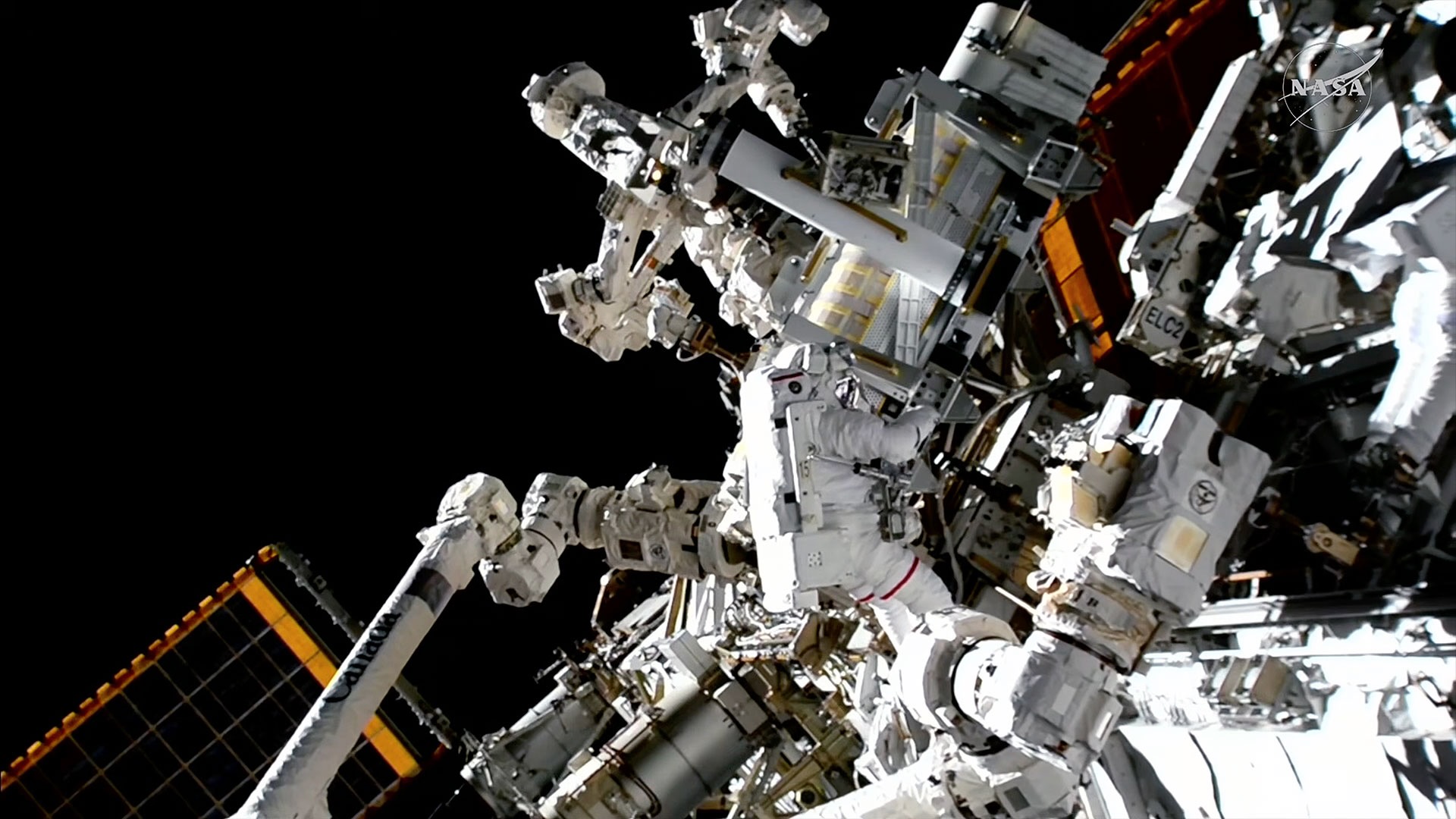
Reflecting on the magnitude of the achievement, Mission Control offered heartfelt praise to the spacewalking crew as they wrapped up their post-EVA duties.
"Congratulations to you all on your stellar work to finish the last of the roll-out solar arrays and the upgrades to the ISS power system that will take it to the end of its journey," Stilwell told Menon and Kutryk over the comms loop. "It is fitting that we just surpassed 26 years of constant human presence on the International Space Station, and you all showed us what the best of humanity looks like executing one of the most difficult and dangerous things humans do and making it look easy."
Related posts: