Apple Escalates Trade Secret Lawsuit, Issuing Preservation Letters to Dozens of Former Employees Now at OpenAI

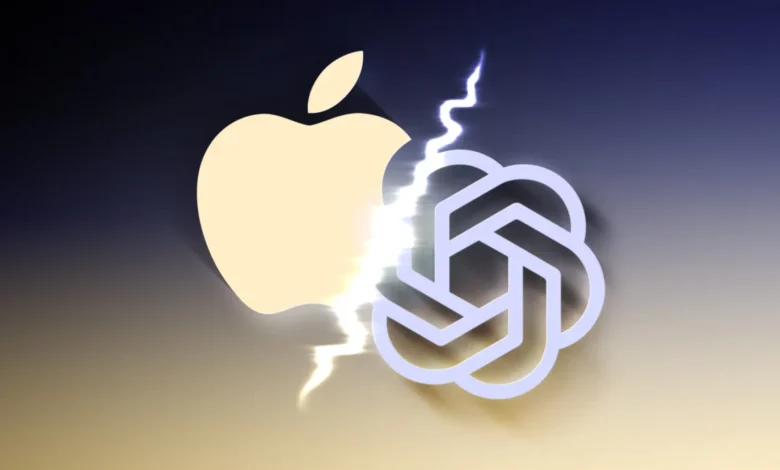
Apple has reportedly dispatched legal preservation letters to approximately 40 former employees currently working at OpenAI, marking a significant escalation in its burgeoning trade secret lawsuit against the artificial intelligence powerhouse. This move signals Apple’s intent to broaden the scope of its investigation, indicating a belief that the alleged misappropriation of confidential information may extend far beyond the individuals initially named in its complaint. The development, first reported by the Financial Times, comes just days after Apple officially filed its lawsuit, accusing OpenAI of engaging in a coordinated effort to pilfer proprietary data related to its hardware engineering and product development.
Escalating Legal Battle: Apple Targets Former Employees in OpenAI Trade Secret Lawsuit
The preservation letters, a standard legal maneuver in intellectual property disputes, instruct the recipients to retain all potentially relevant documents, communications, and electronic data that could pertain to Apple’s ongoing legal action. These letters are critical for ensuring that evidence is not destroyed or altered, laying the groundwork for potential discovery phases in the litigation. The targeting of around 40 individuals underscores Apple’s conviction that the alleged breach of trade secrets is not an isolated incident but rather a systemic issue involving a significant number of its former personnel who transitioned to OpenAI.
At the heart of Apple’s lawsuit is the accusation that OpenAI, in its aggressive pursuit of AI innovation, specifically recruited key engineers and executives with intimate knowledge of Apple’s closely guarded designs and processes. The complaint specifically highlights two prominent former Apple figures now at OpenAI: Tang Tan and Chang Liu. Tan, who now serves as OpenAI’s Chief Hardware Officer, boasts a 24-year tenure at Apple, where he reportedly led critical product design initiatives. Liu, on the other hand, is part of OpenAI’s hardware team, having previously worked as a senior system electrical engineer at Apple. Apple alleges that OpenAI directly benefited from these individuals’ proprietary insights into its hardware architecture, manufacturing techniques, and product roadmaps, constituting a direct violation of their employment agreements and a misappropriation of Apple’s trade secrets.
The scale of the talent migration is notable, with Apple’s complaint asserting that more than 400 former Apple employees are now on OpenAI’s payroll. While employee movement between tech giants is common, Apple’s lawsuit frames this particular exodus as part of a deliberate strategy by OpenAI to gain an unfair competitive advantage, leveraging confidential information gleaned from its former employees. The issuing of preservation letters to a subset of these former employees suggests Apple is meticulously building its case, seeking to establish a pattern of behavior and the extent of the alleged information transfer.
The Genesis of Conflict: A Deep Dive into the Allegations
Apple’s initial lawsuit, filed on July 10, 2026, laid bare its core allegations. The Cupertino-based technology giant claims a "coordinated effort" by OpenAI to obtain highly sensitive and confidential information. This information, according to Apple, is central to its hardware engineering and product development, encompassing everything from innovative designs and manufacturing processes to critical supply chain details and future product specifications. In an industry where innovation cycles are rapid and competitive edges are razor-thin, such proprietary information is invaluable. Apple contends that OpenAI’s alleged actions directly threaten its ability to maintain its leadership in technology and innovation.
The strategic importance of hardware engineering and product development secrets cannot be overstated for a company like Apple, which prides itself on vertical integration and groundbreaking design. Trade secrets in this domain can include custom chip architectures, advanced material science applications, intricate sensor designs, power management techniques, thermal dissipation solutions, and even the precise methodologies used to optimize manufacturing yield and cost. If such information were to fall into the hands of a competitor, especially one with ambitions in hardware, it could significantly undermine Apple’s competitive standing.
OpenAI’s reported ambitions in the hardware space add a critical layer of context to Apple’s allegations. While primarily known for its groundbreaking AI models like GPT and DALL-E, recent reports have indicated OpenAI’s strategic pivot towards developing its own specialized AI hardware. This move, aimed at reducing reliance on external chip suppliers and optimizing its AI models for custom silicon, would directly place OpenAI in competition with established hardware innovators like Apple. The presence of former Apple hardware veterans like Tang Tan and Chang Liu within OpenAI’s burgeoning hardware division lends credence to Apple’s concerns regarding the potential for trade secret infringement, particularly given their deep expertise in areas vital to Apple’s product ecosystem.
A Competitive Landscape: The AI Talent Wars and Intellectual Property
The current legal dispute between Apple and OpenAI is set against a backdrop of an unprecedented "AI talent war" engulfing the global technology sector. The demand for skilled AI researchers, machine learning engineers, and specialized hardware developers far outstrips supply, leading to aggressive recruitment tactics, exorbitant salaries, and significant signing bonuses. Tech giants like Google, Microsoft, Amazon, Meta, and increasingly, Apple, are all vying for the same limited pool of elite talent to power their AI initiatives. OpenAI, having established itself as a leader in generative AI, is naturally a prime destination for top-tier talent.
In this hyper-competitive environment, intellectual property (IP) protection becomes paramount. Trade secrets, unlike patents, are not publicly disclosed and rely on maintaining secrecy for their value. They offer a perpetual competitive advantage as long as they remain confidential. Legal frameworks, such as the Defend Trade Secrets Act (DTSA) in the United States, provide recourse for companies whose trade secrets are misappropriated. To prove misappropriation, a plaintiff typically must demonstrate that the information qualifies as a trade secret, that reasonable measures were taken to protect its secrecy, and that the defendant acquired or used the trade secret through improper means.
The mobility of employees between competing firms is a common feature of the tech industry, often fostering innovation and the spread of best practices. However, this mobility is legally constrained by non-disclosure agreements (NDAs) and, in some jurisdictions, non-compete clauses, which employees sign upon joining a company. These agreements are designed to protect proprietary information and prevent former employees from using confidential knowledge to directly benefit a competitor. Apple’s lawsuit against Tang Tan and Chang Liu for breach of contract directly relates to alleged violations of such employment agreements, emphasizing the company’s commitment to enforcing these contractual obligations. The challenge in these cases often lies in distinguishing between an employee’s general knowledge and skills, which are transferable, and specific confidential information or trade secrets, which are not.
Chronology of Accusations and Responses
The timeline of events leading to this high-stakes legal confrontation sheds light on the escalating tensions between the two tech titans:
- Prior to 2026: Tang Tan, a 24-year Apple veteran, departs from Apple to join OpenAI as its Chief Hardware Officer. Chang Liu, a senior system electrical engineer, also transitions from Apple to OpenAI, joining its hardware team. These departures, among others, would have likely raised internal flags at Apple, particularly given the strategic importance of their roles and OpenAI’s emerging hardware ambitions. The exact dates of their departures and other key employees are central to Apple’s investigation.
- Early 2026: Apple likely begins an internal investigation, gathering evidence and observing patterns of employee migration and OpenAI’s strategic moves, particularly concerning its hardware development. This period would involve assessing the potential exposure of trade secrets and identifying key personnel who could have access to such information.
- July 10, 2026: Apple officially files its lawsuit against OpenAI, alleging a coordinated effort to misappropriate trade secrets related to its hardware engineering and product development. The lawsuit details specific claims of intellectual property theft and breach of contract by former employees, seeking both injunctive relief and damages. This marks the formal commencement of legal proceedings.
- Mid-July 2026 (e.g., July 14): OpenAI issues its initial public response to the lawsuit. In a statement provided to Bloomberg, the company firmly denies the allegations, stating it is "not aware of any evidence that this complaint has merit." This immediate denial sets the stage for a contentious legal battle, indicating OpenAI’s intention to vigorously defend itself against Apple’s claims.
- July 17, 2026: Apple sends legal preservation letters to approximately 40 former employees who have since joined OpenAI. This strategic move aims to secure potential evidence, ensuring that no relevant documents or communications are deleted or destroyed as the lawsuit progresses. It also signals Apple’s belief that the scope of alleged misappropriation is broader than initially outlined, potentially involving a larger network of individuals.
The Stakes: What Apple Seeks and OpenAI’s Defense
Apple’s lawsuit is not merely a bid for financial compensation; it represents a forceful assertion of its intellectual property rights and a demand for accountability. The company is seeking an injunction that would compel OpenAI to immediately cease using any Apple-derived confidential information in the development of its burgeoning AI hardware device. Such an injunction, if granted, could significantly disrupt OpenAI’s hardware ambitions, potentially delaying its market entry or forcing a substantial redesign of its products. Beyond injunctive relief, Apple is also pursuing unspecified damages, which could amount to substantial sums given the value of the alleged trade secrets. Furthermore, the lawsuit specifically targets Tang Tan and Chang Liu for breach of contract, holding them personally liable for violating the terms of their employment agreements with Apple.
Apple’s legal team has expressed a strong conviction, stating in its lawsuit that the evidence uncovered so far may represent only the "tip of the iceberg." This metaphor suggests that the company anticipates uncovering a more extensive and potentially sophisticated scheme of intellectual property theft as the discovery process unfolds. It underscores Apple’s determination to pursue the case thoroughly and to hold all responsible parties accountable.
OpenAI, for its part, has maintained a steadfast denial of the allegations. Its statement, "not aware of any evidence that this complaint has merit," indicates a legal strategy centered on challenging the factual basis of Apple’s claims. OpenAI could argue that its employees brought general skills and experience, not confidential Apple trade secrets, to their new roles. It might also challenge whether the information Apple claims as trade secrets truly meets the legal definition of a trade secret, or if Apple took reasonable measures to protect its secrecy. The burden of proof in trade secret cases often falls heavily on the plaintiff to demonstrate clear evidence of misappropriation, which can be challenging, especially when dealing with intangible knowledge and expertise.
Broader Implications for the Tech Industry and AI Future
This high-profile legal battle carries significant implications that extend far beyond the immediate dispute between Apple and OpenAI.
Firstly, it will undoubtedly intensify scrutiny on employee mobility and recruitment ethics within the tech industry. Companies across the sector, particularly those operating in competitive fields like AI, will likely review their non-disclosure agreements, intellectual property policies, and exit procedures for departing employees. The outcome of this case could set a new precedent for how aggressively companies can recruit talent from rivals, especially when those recruits possess specialized knowledge deemed proprietary. It might also influence how individual employees navigate career changes, potentially increasing their personal legal exposure if they are perceived to have misused prior employers’ confidential information.
Secondly, the lawsuit highlights the critical importance of intellectual property protection in the rapidly evolving landscape of artificial intelligence. As AI becomes increasingly embedded in hardware, from specialized chips to consumer devices, the lines between software and hardware IP will continue to blur. This case could redefine the boundaries of what constitutes a "trade secret" in the context of AI hardware development and how effectively such secrets can be protected across company lines. An outcome favoring Apple could empower other companies to pursue similar actions, leading to a more litigious environment around AI talent and technology. Conversely, if OpenAI successfully defends against the claims, it might embolden companies to aggressively pursue talent, potentially leading to an even more fluid movement of employees and knowledge.
Thirdly, the legal dispute could significantly impact the broader relationship between Apple and OpenAI. Prior to this lawsuit, there had been speculation about potential collaborations or partnerships between the two companies, particularly concerning integrating OpenAI’s advanced AI models into Apple’s ecosystem. This lawsuit introduces a profound adversarial dynamic that will likely make any future collaboration challenging, if not impossible, in the near term. It could force Apple to double down on its internal AI development efforts, while OpenAI might seek partnerships with other hardware manufacturers or accelerate its own internal hardware development, albeit under heightened legal scrutiny.
Finally, the trajectory of AI hardware development itself could be influenced. If Apple prevails, it could send a strong message that established hardware expertise and IP are sacrosanct, potentially slowing down the entry of new players into the AI hardware space who rely heavily on recruiting from incumbents. Conversely, if OpenAI successfully fends off the claims, it could validate a more aggressive approach to talent acquisition and hardware development in the AI sector, accelerating the pace of innovation but potentially at the cost of increased legal disputes over intellectual property. The case serves as a stark reminder that in the high-stakes world of advanced technology, innovation and competition often come hand-in-hand with complex legal challenges.