AWS Weekly Roundup: Generative AI Voice Upgrades, Continuum Vulnerability Management, and Enterprise Cloud Migrations

Cloud computing and enterprise infrastructure continue to evolve at a relentless pace, driven by rapid advancements in generative artificial intelligence, zero-trust security postures, and architectural efficiency. In recent weeks, Amazon Web Services (AWS) has rolled out a sweeping series of updates, ranging from natural language audio engines tailored for the agricultural sector to automated vulnerability management tools designed to counter near-instantaneous cyber threats. This comprehensive roundup examines the most significant product launches, architectural enhancements, security advisories, and enterprise migrations announced across the global AWS ecosystem.
The Intersection of Generative AI and Traditional Industries
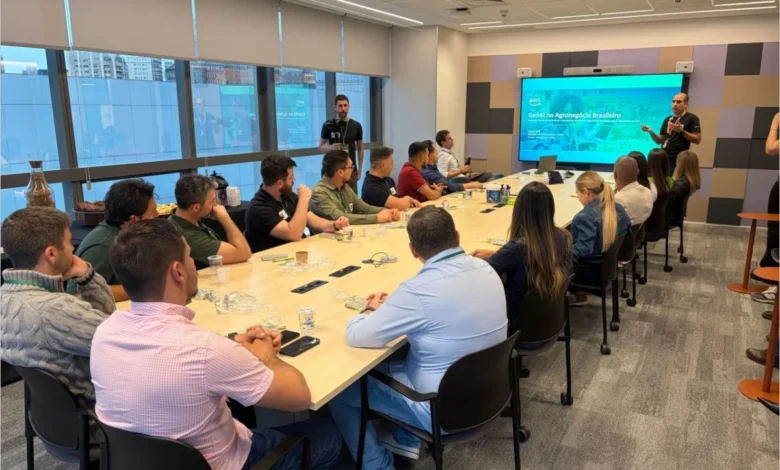
The practical application of generative artificial intelligence is shifting away from theoretical demonstrations toward deep industry integration. During a recent presentation to technology and commercial leaders from the Brazilian agribusiness sector at the AWS corporate offices in São Paulo, industry analysts emphasized that traditional markets stand to gain the most by keeping pace with cutting-edge technological shifts. Rather than debating the utility of artificial intelligence in agricultural operations, enterprise leaders focused primarily on delivery mechanics: accessibility, multi-language support, multi-device compatibility, and contextual usability for field personnel operating machinery.
Because field operators frequently rely on hands-free interfaces while navigating between rural properties, voice recognition and synthesis have become primary UI mechanisms. In response to these real-world demands, AWS implemented a major upgrade to its Amazon Polly Generative engine, expanding its catalog to 57 expressive voices across 11 languages and 25 locales. The update introduces 14 new voices spanning nine locales, including Hindi, Finnish, and two distinct Brazilian Portuguese variants: Leo and Carolina. Operating as a drop-in upgrade, the service preserves existing API naming conventions, pricing models, and SynthesizeSpeech method calls while delivering significantly enhanced natural inflection and conversational pacing.
Automating End-to-End Security with AWS Continuum
While edge-user interfaces focus on accessibility, the backend cybersecurity landscape is confronting an accelerated threat timeline. Modern vulnerability management can no longer rely on traditional scan-and-report models. According to recent threat intelligence data, the historical window between public vulnerability disclosure and active exploitation has effectively vanished.
Addressing this paradigm shift, AWS announced the general availability of AWS Continuum, an advanced security service designed to reframe vulnerability management from a passive reporting mechanism into an active, end-to-end remediation pipeline. Continuum constructs a comprehensive context graph linking an organization’s source code repositories with its live cloud infrastructure. Instead of merely assigning severity labels, the service validates findings by reproducing exploitable vulnerabilities within an isolated sandbox environment, generating verifiable proof-of-concept code.
Continuum ranks identified vulnerabilities based on their proximity to business-critical network pathways and automatically drafts fixes as standard pull requests. To maintain rigorous operational control, current iterations of the service require explicit human approval before merging any remediation code, though future iterations plan to introduce confidence-gated autonomous patching classes. At launch, AWS Continuum is available in the US East (N. Virginia) and US West (Oregon) commercial regions.
The Shrinking Patch Window: Threat Intelligence and Honeypot Telemetry

The urgency behind automated security tools like AWS Continuum was underscored by recent telemetry data published by Amazon Threat Intelligence. Monitoring data from MadPot honeypots revealed active exploitation attempts targeting the PHP2Shell vulnerability (tracked under CVE-2026-109618 and CVE-2026-109619) as early as October 17. This malicious activity occurred four full days prior to the public disclosure of the vulnerabilities on October 21. Furthermore, verified proof-of-concept exploits were actively circulating online by 02:00 UTC on disclosure day, giving IT administrators roughly twelve hours of visibility before the official embargo lifted at 14:00 UTC.
This timeline illustrates that traditional patch deployment windows measured in days are no longer viable against sophisticated threat actors. Cybersecurity experts recommend that incident responders initiate forensic investigations from the earliest recorded exploitation timestamp rather than relying on official vulnerability advisory dates. Concurrently, AWS released specific AWS WAF (Web Application Firewall) mitigation rules to help organizations protect their web applications against these remote code execution vectors.
Simplifying Microservice Exposure with Amazon ECS Gateway
In the realm of container orchestration, managing ingress traffic and network security has historically required complex coordination between distinct networking and application development teams. To alleviate this operational friction, AWS introduced Amazon ECS Gateway, a managed feature designed to decouple network provisioning from service deployment.
Under the new architecture, centralized platform teams define a single gateway encompassing organizational subnets, security groups, Transport Layer Security (TLS) certificates, listener configurations, and AWS WAF web access control lists (ACLs). Application development teams can subsequently opt into the gateway by incorporating a lightweight connector into their service definitions. The underlying ECS control plane automatically provisions an AWS Certificate Manager (ACM) certificate, a unique DNS hostname, necessary listener rules, target groups, and isolated security groups that exclusively permit inbound traffic originating from the designated Application Load Balancer.
The economic and architectural advantages of ECS Gateway are substantial. A single Application Load Balancer can now handle up to 25 separate services. ECS manages the lifecycle of the load balancers automatically, provisioning the initial infrastructure upon the first connection and decommissioning them when they are no longer active. A single gateway can scale to associate with up to 10,000 clusters, with a maximum of five gateways permitted per cluster. Organizations can adopt the capability incrementally using standard service update commands without disrupting existing load-balancing configurations. Amazon ECS Gateway is available at no additional charge in all commercial AWS regions where Amazon ECS is supported.
Advancing Machine Learning Infrastructure and Customization
Machine learning infrastructure continues to expand across compute, model customization, and developer tooling. A central milestone is the public beta release of TorchNeuron, an open-source PyTorch backend designed to provide native PyTorch support for AWS Trainium chips. By modifying initialization code to reference the Neuron device backend, developers can execute complex models on Trainium hardware without rewriting core architectures, maintaining full compatibility with eager execution and the torch.compile framework. Integrated with the Neuron Kernel Interface for custom operator deployment, TorchNeuron supports both Trainium2 and Trainium3 hardware instances and launches alongside the broader AWS Neuron 2.33 software development kit.
In parallel, Amazon SageMaker AI introduced generally available Training Sessions, empowering data scientists and machine learning engineers to exert granular control over the post-training lifecycle—including custom loss functions and reinforcement learning reward signals—without the operational overhead of managing underlying GPU clusters. SageMaker AI automatically handles distributed execution, hardware allocation, fault recovery, and checkpoint persistence, utilizing a consumption-based pricing model where compute meters are paused while custom reward scripts evaluate model batches. These capabilities launch alongside expanded platform support for advanced open-weights models, including Muse Glimmer, Qwen 3.8, and Ministral 3.
Enhancing Generative AI Integration and Data Management

Application developers utilizing foundation models on Amazon Bedrock received a significant productivity enhancement with the release of native structured output support for Anthropic Claude models. Developers can now compel Claude models to return strictly schema-compliant JSON outputs directly from bedrock-runtime and bedrock-mantle endpoints, eliminating the need for complex custom parsing logic, retry scripts, or post-processing validation layers. This capability drastically improves the reliability of automated workflows involving complex financial reporting, clinical note parsing, and intent-based customer support routing.
For data-intensive enterprise architectures, Amazon ElastiCache Serverless for Valkey introduced zero-downtime online migration capabilities. Organizations can now seamlessly migrate self-managed Valkey or Redis OSS databases running on Amazon EC2 directly into ElastiCache Serverless without incurring client-side errors or application downtime. The managed migration pipeline handles data synchronization and cutover scheduling internally, removing the dependency on third-party replication utilities across all commercial, Chinese, and AWS GovCloud regions.
Enterprise Migrations and Emerging Developer Tools
Enterprise cloud migration case studies continue to demonstrate the scalability of AWS for mission-critical relational databases. Notably, U.S. Bank completed a massive migration of four Oracle Exadata database instances—totaling approximately 119 terabytes of data—to Amazon RDS for Oracle. Utilizing a configuration-driven pipeline powered by Oracle XTTS (Cross Platform Transportable Tablespaces), AWS DataSync, and Amazon EFS, the initial baseline data copy was completed in approximately seven days over bandwidth-constrained Direct Connect links. Subsequent production cutovers averaged roughly four hours per database with zero recorded data loss.
On the developer tooling front, AWS introduced the AWS Agent Registry, a managed catalog designed to host Model Context Protocol (MCP) servers, autonomous agents, and specialized agent skills. Rather than statically compiling every potential tool into an application at build time, orchestrators can dynamically query approved capabilities at runtime. The registry returns necessary connection metadata while strictly withholding invocation credentials, enhancing security and modularity in agentic AI architectures.
Additionally, industry analysts have highlighted the emerging field of "tokenomics" for coding assistants, releasing open-source benchmarking utilities that allow engineering teams to evaluate cost-and-quality frontiers across various model architectures, execution harnesses, and hosting environments for internal repositories.
Upcoming Industry Events
As the autumn conference season reaches its peak, the technical community is preparing for major industry gatherings. AWS Community Day Brasil Norte is scheduled to take place in Belém, marking the conclusion of the 2026 Brazilian community event calendar. Meanwhile, registration and session catalog scheduling are officially open for AWS re:Invent, which will run from November 30 to December 4 in Las Vegas, featuring more than 2,200 technical sessions, workshops, and keynote presentations highlighting the next generation of cloud computing advancements.
Related posts: