ISACA Faces Urgent Transformation as AI and Regulatory Shifts Redefine Cybersecurity Governance

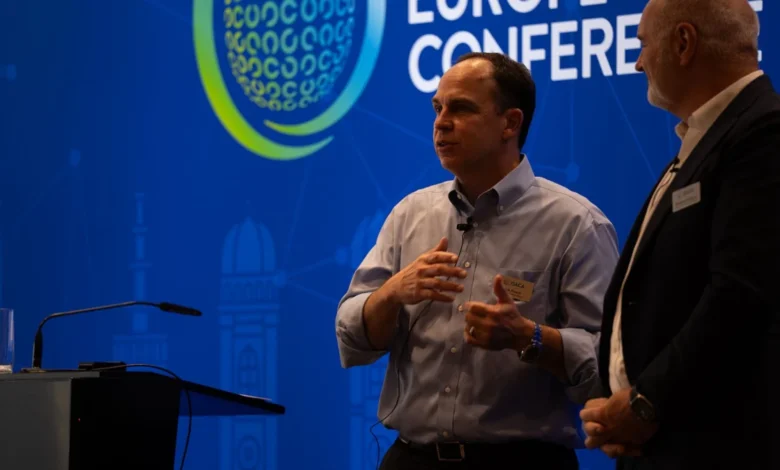
The global landscape of information technology security and governance is currently undergoing its most profound transformation in decades, driven by the relentless integration of artificial intelligence into enterprise operations. At the recently concluded ISACA Europe Conference 2026 in Munich, Germany, the mood among thousands of industry professionals was one of urgent transition. As an organization with a decades-long history of setting standards for IT security, governance, and risk, ISACA now finds itself at a critical juncture: it must accelerate its own internal evolution to ensure that its members—the auditors, security officers, and risk managers who guard the digital world—are not left behind by the rapid pace of technological and regulatory change.
The conference, which served as a focal point for these discussions, highlighted the reality that the once-predictable cycle of professional development has been shattered. Where practitioners previously sought new certifications every five to six years to climb the corporate ladder, the current environment demands near-constant upskilling. This shift is not merely a preference but a professional necessity, as roles in audit, compliance, and cybersecurity are being rewritten in real-time by the emergence of new AI tools and the regulatory frameworks designed to contain them.
A Chronology of Crisis and Adaptation
The urgency currently felt by the cybersecurity community is the result of a compounding series of events that began accelerating in late 2022. Following the mainstream emergence of generative AI, industry bodies like ISACA observed a fundamental shift in member inquiries. In 2023, the focus remained on the existential threat of automation replacing human roles. By 2024, that narrative shifted toward the practical, immediate risks of AI integration—specifically data privacy, algorithmic bias, and the erosion of digital sovereignty.
By early 2025, governments began formalizing their responses. The European Union’s enactment of the AI Act, paired with existing mandates like the Network and Information Security Directive (NIS2) and the Digital Operational Resilience Act (DORA), created a complex, multi-layered regulatory environment. These regulations were intended to provide stability, but for many organizations, they have created a "compliance scramble." At the 2026 conference in Munich, attendees were still navigating the granular details of implementation, proving that the gap between policy and practice remains significant.
ISACA’s response to this timeline has been proactive. Recognizing that the association’s governance structure was designed for a slower era, the board has proposed a series of fundamental amendments to its bylaws. These include the relocation of its legal headquarters to Washington, D.C., to better align with global policy influence, the introduction of staggered three-year board terms to ensure continuity, and a reduction in the quorum required for member votes to allow for more agile decision-making.
Data-Driven Realities and the Skills Gap
The pressure on the workforce is underscored by stark data points. According to the European Union Agency for Cybersecurity (ENISA), there is currently an estimated shortfall of over 300,000 cybersecurity professionals across the European Union. This vacancy rate is not merely a product of a lack of interest, but rather a structural mismatch between entry-level job requirements and the skills that educational pipelines are producing.
Industry leaders at the conference expressed deep concern that AI is further widening this gap. As organizations lean on automated tools to handle entry-level monitoring and compliance tasks, the traditional "apprenticeship" model—where junior staff cut their teeth on foundational security work—is disappearing. Tara Wisniewski, senior vice president of advocacy at ISACA, noted the paradox of a market that demands three years of experience for "entry-level" roles. Without a clear path for younger professionals to acquire that experience, the industry risks a long-term talent drought that could leave critical infrastructure vulnerable.
Furthermore, the "cost of compliance" is increasingly eating into budgets that were previously earmarked for training. For smaller and mid-sized enterprises, the sheer administrative burden of complying with NIS2 and DORA is forcing a reallocation of resources. If an organization must spend its entire security budget on audits and legal reporting to satisfy EU regulators, there is little left to invest in the professional development of the staff who must actually implement those safeguards.
Institutional Responses and Strategic Pivots
To address these challenges, ISACA has begun a strategic pivot, moving away from its role as a static credentialing body toward that of an agile knowledge hub. The organization has launched three dedicated AI-focused certifications, with a fourth in the pipeline, and is systematically integrating AI management modules into its legacy certifications, such as CISA (Certified Information Systems Auditor) and CISM (Certified Information Security Manager).
Erik Prusch, CEO of ISACA, emphasizes that the goal is to formalize roles that have, until now, been defined by ad-hoc responsibilities. "IT audit managers are now effectively IT and AI audit managers," Prusch noted. "The responsibility has landed on their desks, but the structured training and professional recognition for that role have lagged behind."
Beyond training, ISACA is stepping into the role of a de facto regulator. As policymakers struggle to keep pace with the technical depth required to draft effective legislation, ISACA is providing technical expertise to ensure that new laws, such as the UK’s Cyber Security and Resilience Bill, are grounded in operational reality. The association is also engaging in high-level debates regarding whether cybersecurity should transition to a licensed profession, similar to law or medicine, given the increasing stakes for public safety.
Implications: The Regulatory and Operational Frontier
The implications of this transition period are twofold. First, the burden on organizations to maintain "digital sovereignty" is higher than ever. With the EU’s regulatory standards acting as a global benchmark, businesses operating internationally are finding that they must adhere to the highest common denominator of compliance, often without the necessary budget or headcount to do so. This is driving a consolidation of security functions, where only the largest, best-capitalized firms can comfortably navigate the regulatory maze.
Second, the professional landscape for IT practitioners is becoming more specialized and more volatile. The "jack-of-all-trades" security professional is being replaced by the AI-literate auditor, the quantum-resilient architect, and the supply-chain security specialist. This specialization requires a robust, lifelong learning ecosystem—a challenge that ISACA is currently attempting to solve by shrinking the lag time between the emergence of a new technology and the release of standardized training materials.
However, the speed of this transition remains the primary concern. As noted by the association’s leadership, the industry does not have the luxury of a decade-long development cycle for infrastructure. The threat landscape is evolving weekly, and the legislative environment is being drafted in months. For the thousands of professionals represented by ISACA, the path forward is clear: the era of static expertise is over.
As the conference concluded, the message was one of cautious urgency. The integration of quantum computing and further advancements in generative AI are already on the horizon for 2027, promising to add yet another layer of complexity to an already strained system. The bylaw changes voted upon by ISACA members in Munich are, in this context, essential. They represent an attempt to build a flexible, responsive organization that can provide the necessary guardrails for an industry that is, in many respects, already playing catch-up.
Ultimately, the goal of the association is to bridge the chasm between the rapid, often chaotic pace of innovation and the slow, deliberate pace of governance. By fostering a workforce that is trained to anticipate rather than just react, ISACA aims to turn the current period of instability into a foundation for a more resilient, AI-integrated digital future. Whether this can be achieved before the next wave of technological disruption hits will be the defining challenge for the association in the years to come.
Related posts: