Google successfully pioneers automated memory-safety migrations by leveraging Gemini to translate legacy C infrastructure into Rust.

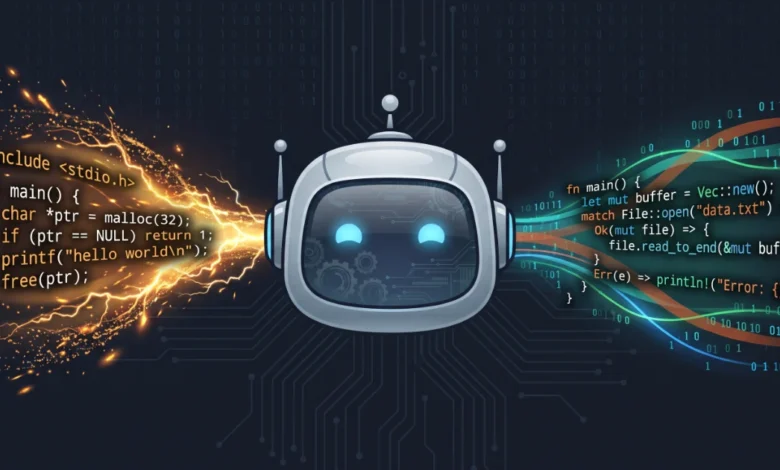
In a landmark achievement for software security and systems engineering, Google’s security researchers have successfully demonstrated a scalable, AI-driven methodology for migrating legacy C codebases to memory-safe Rust. By applying this framework to the giflib image-processing library, the team not only eliminated long-standing security vulnerabilities but also achieved performance gains by dismantling the heavy-handed sandboxing previously required to protect against memory corruption. This development marks a critical shift in how major technology organizations approach the daunting task of modernizing foundational code that underpins the modern internet.
The Memory Safety Crisis in Legacy Stacks
Memory corruption remains the single most persistent threat to software security, accounting for approximately 70 percent of high-severity vulnerabilities in mature C and C++ environments. For decades, the industry has relied on a "patch and pray" approach, where developers manually hunt for buffer overflows, use-after-free errors, and heap corruption issues. While modern languages like Rust provide compile-time guarantees against these classes of errors, the sheer volume of legacy code—estimated in the hundreds of millions of lines—has historically rendered wholesale rewrites economically and technically unfeasible.
Google’s initiative, led by engineers Bastian Kersting and Max Hils, sought to bypass these limitations through a three-stage automated pipeline. Rather than opting for a manual, multi-year porting process or relying on performance-degrading runtime bounds checking, the team employed an autonomous feedback loop centered on Google’s Gemini AI model. This project serves as a proof-of-concept for the industry, suggesting that the "manual rewrite" barrier can be bypassed through strategic AI integration and rigorous automated verification.
Chronology of the Migration and Validation
The project began with the identification of giflib, a critical library responsible for decoding image data. Because this library frequently processes untrusted user input without the benefit of robust isolation, it represented an ideal candidate for a security-first migration.
- Phase One: Automated Transpilation. The team utilized a single-shot prompt with Gemini to translate the C logic into idiomatic Rust. To ensure compatibility with the existing ecosystem, the team maintained strict Application Binary Interface (ABI) parity, preserving all original exported symbols and struct definitions.
- Phase Two: Refinement and FFI Correction. Initial model outputs inevitably contained unsound raw pointer semantics—a common pitfall when bridging C and Rust. Human domain experts intervened to refine pointer ownership and lifetime invariants. This stage was critical, as the Foreign Function Interface (FFI) acts as the bridge between the safe Rust world and the memory-unsafe legacy environment.
- Phase Three: Differential Testing and Feedback. The engineers implemented an automated differential fuzzer that compared the output of the original C library against the new Rust implementation. Over a six-day period, the system processed 200 million iterations, ensuring that the two libraries produced identical results across a diverse dataset of 30 million real-world GIF assets.
The Definitive Test: Neutralizing CVE-2026-26740
The efficacy of the automated migration was validated in a real-world scenario that surprised even the research team. During the staging phase of the project, an external security researcher discovered a critical out-of-bounds heap write vulnerability in the upstream giflib project, which was subsequently catalogued as CVE-2026-26740.
While production systems running the original C-based library remained vulnerable, the nodes running the Google-compiled Rust replacement were found to be structurally immune to the exploit. Because the Rust implementation enforced strict memory safety at the type-system level, the illegal memory access was prevented by design. This incident provided the most compelling evidence to date that architectural language shifts are not merely a matter of code quality, but a proactive defense strategy that preempts entire classes of security vulnerabilities before they are even discovered.
Performance Parity and Operational Efficiency
A common critique of moving from C to Rust is the potential for performance degradation due to mandatory bounds checking. Critics often argue that the overhead of safety checks can introduce latency, particularly in high-throughput image-decoding clusters. However, telemetry from Google’s production environment revealed that the Rust implementation achieved runtime parity with the legacy C binary.
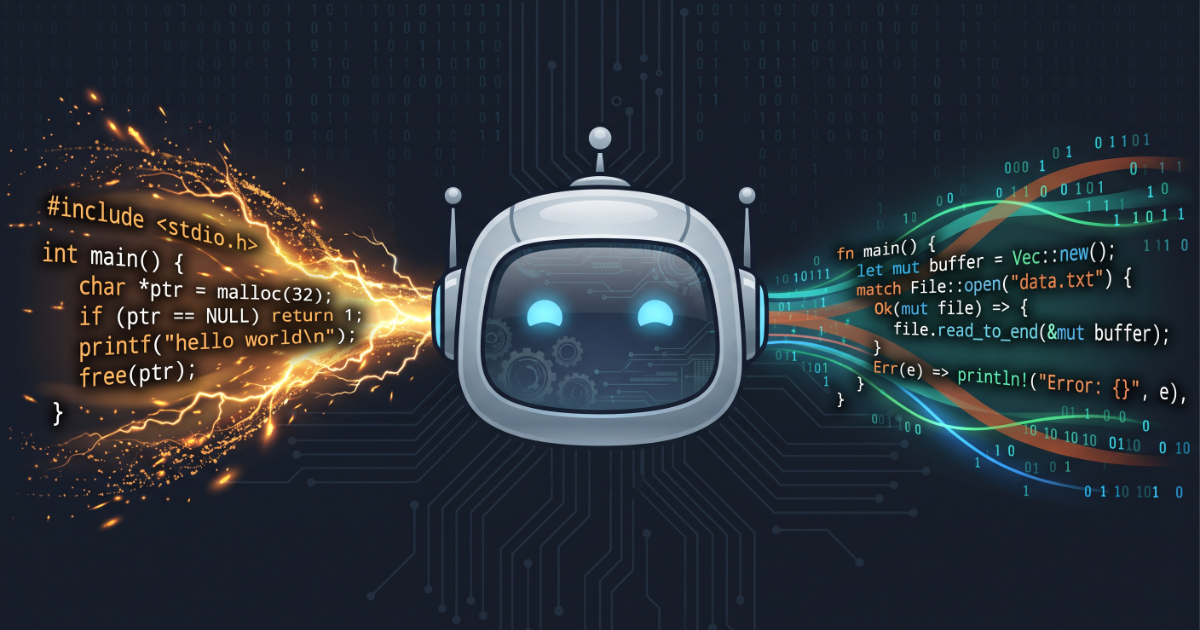
Furthermore, the migration led to an unexpected infrastructure benefit: the decommissioning of process isolation sandboxes. In the past, Google was forced to run giflib in isolated environments to minimize the impact of a potential crash or exploit. By moving to a memory-safe Rust environment, the need for these expensive, resource-heavy sandboxes was eliminated. The removal of these isolation boundaries resulted in a measurable reduction in p99 tail latency, proving that memory safety can actually improve system efficiency rather than hindering it.
Expert Reactions and the Role of Human Expertise
The broader software engineering community, particularly on platforms like Hacker News and the Rust-focused subreddit, has responded with a mixture of enthusiasm and cautious scrutiny. While the success of the differential fuzzing framework—which even uncovered latent bugs in Google’s own legacy C patches—was widely praised, many experts emphasized that AI-assisted porting is not a "magic button."
"The human effort required to audit subtle semantic regressions and fix unsound FFI boundaries is still substantial," noted one industry commentator. The consensus among senior developers is that while LLMs are powerful tools for generating code, they cannot yet replace the domain expertise required to manage thread-safety invariants and complex memory lifetime issues. Several engineers suggested that a hybrid approach—combining deterministic transpilers like c2rust with AI-driven refactoring—may be the more reliable path for larger, more complex codebases.
Broader Implications for Enterprise Software
The success of the giflib-rs project suggests that the era of manual, line-by-line migration is coming to a close. For enterprise organizations managing millions of lines of C and C++ code, the ability to automate the migration process provides a viable path to long-term security. However, the project also highlights a new challenge: maintenance divergence. Once a library is forked and translated into Rust, the team must implement processes to synchronize future updates from the original upstream repository.
Google’s decision to open-source the giflib-rs library provides a template for other organizations. By sharing their validation pipeline, differential fuzzing configurations, and FFI wrappers, they have lowered the barrier to entry for other teams looking to secure their own foundational utilities.
As software stacks continue to grow in complexity, the industry is increasingly moving toward a "secure by design" philosophy. The ability to systematically replace unsafe legacy components with modern, memory-safe alternatives using AI-assisted workflows represents a significant evolution in cybersecurity. While the transition will undoubtedly take time, the precedent set by Google serves as a clear indicator of where the industry is heading: a future where memory corruption is no longer a standard hazard of software development, but a relic of the past.
In conclusion, the project confirms that language migration, when supported by robust automated testing and expert oversight, is a potent tool for hardening the internet’s infrastructure. The focus now shifts to whether this methodology can scale beyond self-contained libraries to larger, more tightly coupled systems, a challenge that will define the next decade of systems engineering.
Related posts: