Wall Street Braces for the Federal Reserve Interest Rate Hike as Inflation and Political Pressures Mount

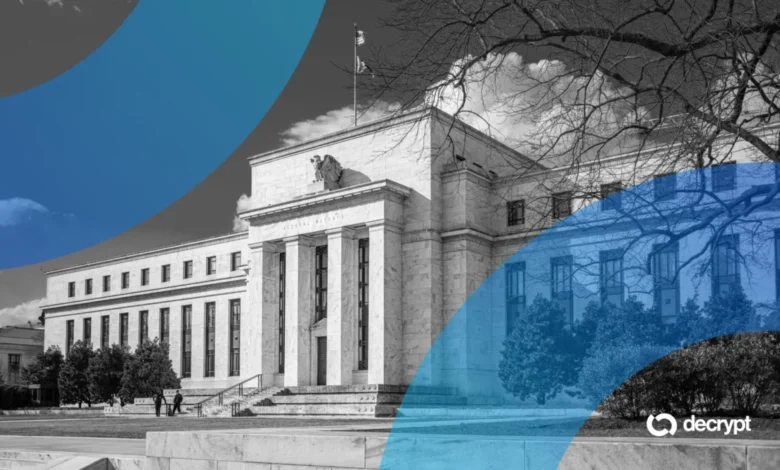
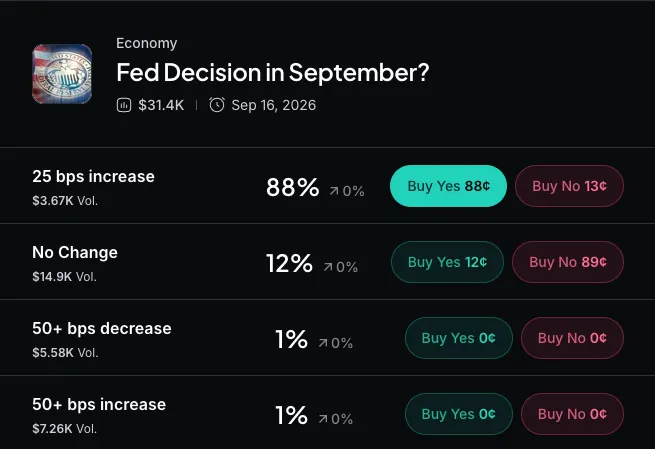
Wall Street financial institutions are aggressively repositioning portfolios in anticipation of a pivotal monetary policy shift by the Federal Reserve, bracing for an interest rate hike—a maneuver the central bank has not executed since 2023. As the Federal Open Market Committee (FOMC) concludes its high-stakes, two-day policy meeting on Wednesday, market sentiment has rapidly solidified. According to CME Group’s FedWatch tool, the implied probability of a quarter-percentage-point rate hike currently sits at 94.5%, a dramatic escalation from the sub-50% odds registered just one month prior.
This seismic shift in market expectations has rippled across global financial centers. A comprehensive survey published this week by the Wall Street Journal indicates that nearly every major tier-one financial institution has abandoned its previous forecasts of prolonged monetary easing, now projecting a tightening phase to commence immediately. Major banking giants—including Barclays, Citigroup, JPMorgan Chase, Morgan Stanley, and UBS—are forecasting an aggregate of 50 basis points of total monetary tightening before the conclusion of the calendar year. Meanwhile, more hawkish institutions such as Bank of America, Deutsche Bank, and RBC are projecting up to 75 basis points of tightening over the same period. Conversely, Goldman Sachs remains an outlier on the dovish end of the consensus spectrum, maintaining a projection limited strictly to Wednesday’s anticipated quarter-point increase with no subsequent hikes factored into their near-term outlook. Jefferies and Oxford Economics stand completely apart from the mainstream consensus, continuing to forecast rate cuts heading into December and deep into 2027, respectively.
The Macroeconomic Drivers Behind the Pivot
The sudden urgency driving the Federal Reserve toward monetary tightening stems from persistent inflation metrics that continue to resist downward normalization. According to data released by the Bureau of Labor Statistics, headline Consumer Price Index (CPI) inflation printed at an annualized rate of 3.4% in August, while core inflation—which strips out volatile food and energy sectors—stood stubbornly at 2.5%. Both primary indicators remain comfortably above the central bank’s steadfast 2.0% medium-term target.
Compounding these domestic pricing pressures are geopolitical flashpoints, most notably the ongoing armed conflict involving Iran, which has driven international crude oil prices higher. This persistent energy shock has injected an additional layer of cost-push inflation into the global supply chain—pressures that cannot be easily neutralized by standard domestic trade tariffs or localized monetary adjustments.
The impending policy pivot also underscores a shifting internal dynamic within the central bank itself. During the July policy meeting, the FOMC opted to hold the federal funds rate steady within a target range of 3.50% to 3.75%. However, that decision exposed significant friction among committee members, passing by a surprisingly narrow 9-3 vote. Three regional Federal Reserve Bank presidents dissented in favor of an immediate rate hike at that time. Combined with a stronger-than-expected August employment report that demonstrated robust labor market resilience, that internal division effectively paved the way for the committee’s hawkish turn heading into this week’s deliberations.
Political Tensions and the Independence of Fed Chair Kevin Warsh
The prospective rate hike places Federal Reserve Chair Kevin Warsh in an exceptionally delicate political and economic position. Appointed to lead the central bank in January by President Donald Trump, Warsh was publicly urged by the president during his swearing-in ceremony in May to maintain absolute institutional independence while simultaneously receiving clear signals that the administration expected lower borrowing costs.
Reality has diverged sharply from those political expectations. Over the preceding two weeks, President Trump, Vice President JD Vance, and Treasury Secretary Scott Bessent have engaged in unprecedented public lobbying campaigns demanding immediate monetary easing. President Trump’s rhetoric escalated further when he threatened to enact punitive trade measures against foreign nations running persistent trade surpluses with the United States should domestic interest rates fail to decline. Despite intense political pressure, Chair Warsh has consistently maintained that executive branch commentary exerts zero influence over independent monetary policy decisions formulated by the FOMC.
The timing of this potential rate hike compounds these political sensitivities, arriving merely two months ahead of the November midterm elections. Public opinion polling consistently demonstrates deep voter frustration regarding persistent high consumer prices and elevated borrowing costs. Ironically, the necessity for a rate hike has been amplified by economic tailwinds stemming from the very trade tariff policies and geopolitical frictions championed by the administration itself.
Bond Market Reactions and Yield Curve Movements
Fixed-income markets have not waited for the official FOMC announcement to adjust to the shifting economic landscape. Yields across the United States Treasury curve have surged significantly as bond traders price in both Wednesday’s expected rate increase and a prolonged plateau of elevated borrowing costs.
The benchmark 10-year Treasury yield touched 5.04% earlier this week, marking its highest sustained level since July 2007. Simultaneously, the 2-year Treasury yield—historically sensitive to shifts in immediate Federal Reserve policy expectations—climbed to its highest level since July 2024.
The implications of these elevated yields are profound. Higher yields dramatically increase the opportunity cost of holding non-yielding assets, making risk-free government debt considerably more attractive relative to equities, real estate, and digital assets. Furthermore, rising yields tend to bolster the international valuation of the U.S. dollar, creating persistent headwinds for risk-on asset classes that historically thrive in low-interest-rate environments characterized by abundant liquidity.
Implications for Bitcoin, Cryptocurrencies, and Risk Assets
Digital asset markets are approaching the Federal Reserve’s policy decision from a position of relative vulnerability. Earlier in the week, Bitcoin suffered a sharp corrective move, trading down to approximately $75,700—a single-day decline of roughly 3.2%. This downward pressure was exacerbated by legislative setbacks on Capitol Hill, where the "Clarity Act," a highly anticipated comprehensive market structure bill designed to establish clear regulatory guidelines for the digital asset industry, failed to secure the necessary votes for cloture in the United States Senate. Consequently, Bitcoin remains significantly depressed relative to its early-September highs near the $82,000 threshold.
Market technicians are closely monitoring critical support levels for the primary cryptocurrency. Financial analysts identify $73,200 as a crucial line in the sand for Bitcoin. A decisive daily market close beneath this threshold could trigger accelerated technical liquidations, potentially exposing the asset to deeper retracement targets at $71,000 and $66,900. Such a decline would effectively invalidate the broader price expansion that previously triggered a bullish golden cross pattern on daily technical charts.
Nevertheless, analytical opinions regarding the macroeconomic impact of a quarter-point rate hike are not universally bearish. Some market participants argue that if the anticipated rate increase is framed primarily as a technical measure designed to anchor long-term Treasury yields rather than an aggressive campaign to systematically crush economic activity, the medium-term outlook for digital assets could remain resilient. In this view, the ultimate market reaction will depend less on the baseline quarter-point hike—which is already overwhelmingly priced into derivatives markets—and more on the forward-looking economic projections contained within the Fed’s updated dot plot and Chair Warsh’s post-meeting press conference.
Higher-beta altcoins, characterized by thinner order book liquidity and heavier reliance on leveraged trading positions, are widely expected to experience amplified percentage volatility relative to Bitcoin regardless of the policy outcome.
Conclusion and Chronology of Events
The formal announcement detailing the FOMC’s interest rate decision, alongside the updated economic projections and dot plot, is scheduled for release at 2:00 p.m. Eastern Time on Wednesday. This will be followed immediately by Chair Kevin Warsh’s live press conference at 2:30 p.m. ET. Global financial markets will parse every word of the statement to determine whether the Federal Reserve intends to pause following a single adjustment or initiate a sustained tightening cycle matching the more aggressive forecasts put forward by Wall Street’s leading institutional forecasters.