Prentis, new AI lab co-founded by Reid Hoffman, Marc Pincus in talks to raise $100M


This substantial early-stage valuation, confirmed by sources familiar with the ongoing negotiations, underscores the intense investor interest in the rapidly evolving field of artificial intelligence, particularly in the domain of AI agents designed for computer automation. Launched in April, Prentis has swiftly positioned itself at the forefront of developing sophisticated AI models capable of understanding and navigating routine workflows across various digital documents and enterprise systems. The ultimate objective is to create autonomous AI agents that can control computers to automate these complex tasks, thereby revolutionizing office productivity and operational efficiency across numerous industries.
Pioneering the Next Frontier of Enterprise Automation
Prentis’s strategic focus lies in training AI models to observe and learn how human office workers interact with computers, applications, and data. This deep learning approach aims to empower AI agents to perform tasks traditionally requiring human intervention, moving beyond mere data processing to active computer control. The company envisions developing highly specialized agents tailored to the unique needs of its diverse clientele. For instance, these agents could autonomously handle intricate insurance claims, meticulously process customs duty refund exceptions, or manage complex supply chain logistics without a human needing to manually retrieve and reconcile vast amounts of paperwork. This represents a significant leap from current robotic process automation (RPA) solutions, which typically follow predefined scripts, to truly intelligent and adaptive agents.
The startup has already demonstrated significant market traction, having reportedly secured contracts worth up to $50 million with several key customers. These early adopters span critical sectors, including a prominent healthcare management service organization, a major manufacturer, and multiple goods and clothing manufacturers. Investor materials obtained by TechCrunch further project an estimated $75 million annualized run rate by the third quarter of this year, signaling robust early demand for Prentis’s innovative solutions. It is crucial to note, as highlighted in Prentis’s pitch deck, that these figures reflect an estimated annualized value based on a contracted fee equal to 20% of the savings realized by the client, rather than recognized revenue. These performance-dependent agreements are subject to final execution, indicating a confidence in the tangible value Prentis expects to deliver.
Technological Superiority and Cost Efficiency
Prentis asserts that its proprietary Hive-32B model exhibits superior performance compared to leading rivals, including OpenAI’s GPT-5.4 and Anthropic’s Claude Opus 4.6, across two critical computer-use benchmarks. The first, WindowsAgentArena, is designed to measure the end-to-end task completion capabilities of AI models on real Windows applications, assessing their ability to navigate complex interfaces and execute multi-step processes. The second, ScreenSpot-v2, evaluates a model’s precision in identifying and interacting with the correct on-screen controls, a fundamental requirement for autonomous computer operation. While these benchmark results have not been independently verified by TechCrunch, Prentis’s claims, if substantiated, suggest a significant technical advantage in a highly competitive domain.
A cornerstone of Prentis’s strategy, as outlined in its pitch deck, is its ability to operate a much smaller and more cost-effective model. The company claims roughly 10 times lower cost per task compared to frontier APIs, making its deployment across everyday workflows significantly more economical. This efficiency could prove to be a decisive factor in enterprise adoption, as businesses increasingly seek AI solutions that offer not only performance but also a compelling return on investment. The pursuit of smaller, more specialized, and efficient models represents a growing trend in AI development, contrasting with the prevailing focus on ever-larger general-purpose models.
The Illustrious Founding Trio
The formation of Prentis is notable not only for its ambitious mission but also for the formidable team at its helm. Ritankar Das, the CEO of Prentis, is a recognized prodigy and the founder of Titan, a holding company dedicated to building and operating AI enterprises. At just 31 years old, Das has an extraordinary academic and entrepreneurial history. He achieved the distinction of being UC Berkeley’s youngest University Medalist in over a century, graduating at 18 with double majors in bioengineering and chemical biology. He further pursued a master’s in biomedical engineering at Oxford before embarking on his entrepreneurial journey.
Das founded Titan in 2014 after leaving an AI PhD program at Cambridge, where he was a Gates Cambridge Scholar. He has conceptualized Titan as a modern iteration of an old-fashioned holding company, akin to Berkshire Hathaway, funded by its own successful exits rather than relying solely on external limited partners. Titan’s portfolio includes several successful AI-powered ventures:
- Tala Health: An AI-powered virtual care provider that raised a $100 million seed round last year, highlighting Das’s expertise in applying AI to complex sectors like healthcare.
- Forta Health: An autism care startup that secured $55 million in Series A funding in 2024, led by Insight Partners, demonstrating Titan’s commitment to addressing critical societal needs with AI.
- Dascena: A disease prediction company founded by Titan, which was acquired by CirrusDx in 2022, showcasing a proven track record of successful venture creation and exit.
Prentis also benefits from the strategic guidance and profound industry experience of its two other co-founders, Reid Hoffman and Marc Pincus, for whom Prentis represents a significant "side project" amidst their other high-profile engagements.
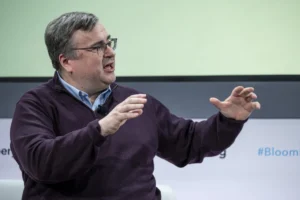
Reid Hoffman, the co-founder of LinkedIn and a prominent partner at Greylock, announced last month his departure from Microsoft’s board after nearly a decade. This move signifies his intensified focus on what he terms "founder mode" with Manas AI, an AI drug-discovery startup he is actively backing. Hoffman is a foundational figure in the AI ecosystem, having been an early investor in OpenAI and co-founding Inflection AI with Mustafa Suleyman before Microsoft absorbed the majority of that team in 2024. His involvement brings unparalleled insight into scaling technology companies and navigating the complex landscape of AI innovation and investment.
Marc Pincus, the visionary founder of Zynga, now co-leads the investment firm Reinvent Capital, where Hoffman serves as a senior adviser. Pincus also recently published his memoir, "Life at the Speed of Play," reflecting on his entrepreneurial journey. His expertise in consumer-facing technology, user engagement, and rapid scaling adds a crucial dimension to Prentis’s leadership. The combined experience of Das, Hoffman, and Pincus provides Prentis with a unique blend of deep technical knowledge, strategic investment acumen, and a proven track record of building and scaling transformative technology companies.
A Crowded and Competitive Landscape
Prentis’s audacious bet is that automating everyday office tasks will soon eclipse coding as the largest and most impactful use case for artificial intelligence. This vision, however, places the startup in a highly competitive and rapidly expanding market. The race to develop advanced AI agents for computer use is attracting significant attention and resources from established tech giants and well-funded startups alike.
Prominent players like Anthropic, OpenAI, and Mira Murati’s Thinking Machines are all actively engaged in developing their own iterations of AI agents designed to interact with and control computers. Anthropic, a leading AI research company, has been particularly aggressive in this space, even acquiring talent directly through strategic acquisitions. Earlier this year, Anthropic acquired Vercept, a Seattle-based computer-use AI startup, integrating its founders into their team and discontinuing its product, signaling a clear intent to dominate this emerging category. The consolidation and intense competition underscore the perceived immense value and transformative potential of AI agents.
Strategic Implications and Market Outlook
Prentis’s emergence and rapid ascent highlight several critical trends shaping the future of enterprise technology and the broader economy. The shift towards AI agents signifies a move from analytical AI to actionable AI, where models not only process information but also execute complex operations autonomously. This could lead to unprecedented levels of productivity gains for businesses, fundamentally altering the nature of office work and potentially reconfiguring existing job roles.
The emphasis on a "smaller, cheaper model" with superior performance is a potent differentiator in an industry often characterized by a "bigger is better" philosophy for foundational models. If Prentis can indeed deliver on its promise of cost-effective, high-performing agents, it could democratize access to advanced automation, making it viable for a wider range of businesses, including small and medium-sized enterprises (SMEs) that might be deterred by the high computational costs of larger models.
However, the path to widespread adoption is not without its challenges. The complexity of integrating AI agents into existing enterprise systems, ensuring data privacy and security, and addressing potential ethical concerns surrounding autonomous decision-making will be critical. Furthermore, the market for AI agents is still nascent, requiring significant education and trust-building among potential clients. The reported $50 million in early contracts, particularly with customers in regulated industries like healthcare and manufacturing, suggests that Prentis is making strides in overcoming these initial hurdles.
The ongoing discussions for a $100 million funding round at a $1 billion valuation place Prentis firmly in the unicorn club just months after its launch. This valuation reflects investor confidence not only in the team’s capabilities but also in the vast untapped potential of AI agents to transform enterprise workflows. The involvement of such high-profile figures as Reid Hoffman and Marc Pincus further legitimizes Prentis’s ambitions and signals to the market that this is a venture with serious potential to disrupt.
Prentis has already assembled a formidable team of over 25 employees, including researchers who previously honed their skills at leading AI research institutions and tech giants such as OpenAI, Google DeepMind, Meta, Tencent, and Alibaba. This concentration of top-tier talent is essential for driving the innovative research and development required to stay ahead in the fiercely competitive AI landscape.
Despite the significant developments, Prentis has yet to publicly comment on the funding discussions or its ambitious claims. TechCrunch’s request for comment remained unanswered, a common practice for startups during sensitive fundraising periods. As the AI agent market continues to heat up, Prentis, with its seasoned leadership, technological claims, and early market traction, is poised to be a significant player in shaping the future of work and enterprise automation. The coming months will be crucial in determining whether its Hive-32B model can indeed deliver on its promise to outperform and whether its strategy of economic, efficient AI agents will gain widespread adoption.