Gemini Spark, Google’s Advanced Personal AI Agent, Expands Rollout to AI Pro Subscribers in the US, Promising Enhanced Automation and Productivity

Google’s sophisticated personal AI agent, Gemini Spark, is now actively rolling out to AI Pro subscribers across the United States, marking a significant expansion of its capabilities since its initial launch in May alongside AI Ultra. This strategic deployment positions Spark as a pivotal tool for automating complex workflows, with Google indicating that availability for AI Pro members in other countries will follow "soon." The move underscores Google’s commitment to delivering advanced artificial intelligence directly into the hands of its premium user base, transforming how individuals interact with their digital environments and manage intricate tasks.
Understanding Gemini Spark: A Deep Dive into its Capabilities
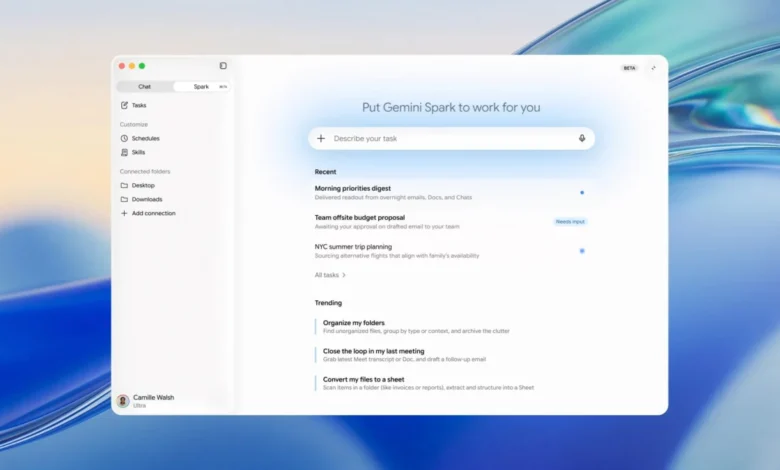
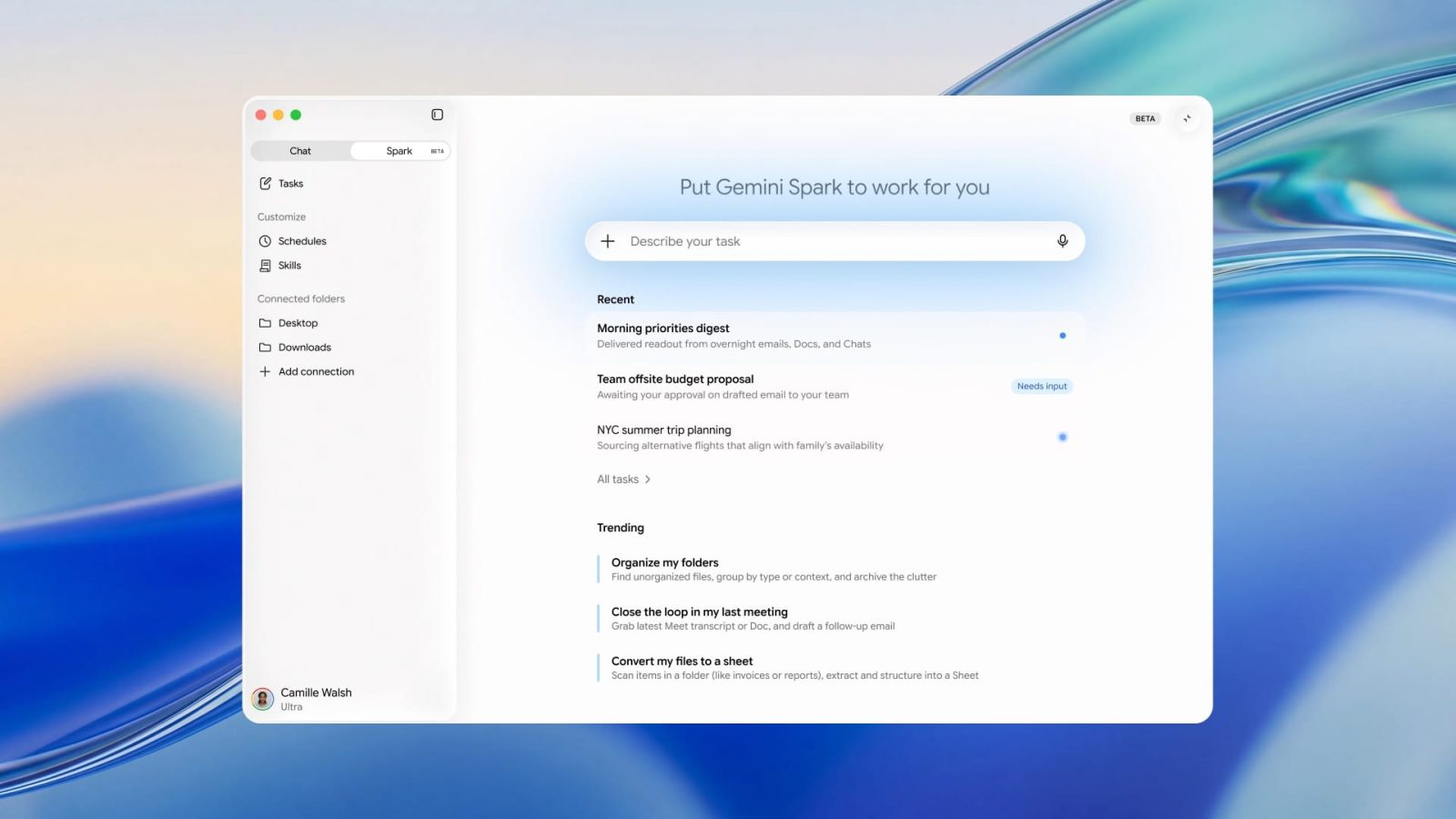
Gemini Spark is engineered as a highly intuitive and powerful personal AI agent designed to streamline and automate multi-step processes that typically demand significant manual effort. At its core, Spark leverages a suite of integrated tools and intelligence layers to execute tasks autonomously. Users access Spark through a dedicated interface—a new tab in the navigation drawer on the web, and a distinct page within the Gemini application on Android and iOS devices. This consistent access point ensures a unified user experience across platforms.
The power of Spark stems from its deep integration with what Google terms "Connected Apps." These include vital services such as Google Workspace, enabling Spark to interact seamlessly with productivity tools, and Google Search, providing it with real-time access to vast amounts of information. Beyond these, Spark incorporates "Personal Intelligence," allowing it to learn from individual user preferences and patterns, thus tailoring its operations over time. Its capabilities are further extended by a remote web browser and a computer with code execution functionality, empowering it to perform actions that go beyond simple data retrieval, such as data analysis or script running. The system also supports direct chats with the AI for clarification and refinement of tasks, utilizes a "Canvas" for visual organization and brainstorming, and can leverage location data for context-aware automation. These combined elements allow Spark to accomplish a wide array of workflows, from scheduling complex meetings to drafting extensive reports.
Central to Spark’s operational framework are two innovative concepts: "Skills" and "Schedules." Skills are essentially reusable instructions augmented with additional context, allowing users to define repeatable actions or sequences that Spark can recall and execute efficiently. For instance, a "Skill" could be defined for "summarize project updates from last week’s emails and compile into a brief." "Schedules," conversely, are automated triggers that initiate tasks based on specific conditions, such as a particular time, an incoming email from a certain sender, or the completion of another task. This programmatic approach allows users to set up sophisticated, hands-free automation. The overarching objective a user wishes to achieve through these mechanisms is referred to as a "Task." Users are currently permitted to have up to 15 tasks running concurrently, with Spark operating under the same compute-based usage limits applicable to the broader Gemini platform, ensuring fair resource distribution.
A Chronology of Gemini’s Evolution and Spark’s Genesis

The journey to Gemini Spark is rooted deeply in Google’s long-standing ambitions in artificial intelligence. For decades, Google has been at the forefront of AI research and development, pioneering advancements in search algorithms, natural language processing, and machine learning. Earlier iterations of Google’s AI efforts, such such as Google Assistant and Duplex, demonstrated the company’s vision for conversational AI and automated task execution. However, the advent of large language models (LLMs) and generative AI marked a new era.
Project Gemini, Google’s most ambitious and multimodal AI model to date, was unveiled with considerable fanfare. Designed from the ground up to be multimodal, capable of understanding and operating across text, code, audio, image, and video, Gemini represented a significant leap forward in AI capabilities. It was positioned not just as a competitor to existing LLMs but as a comprehensive AI system engineered for versatility and advanced reasoning. The introduction of different tiers, such as Gemini Ultra, Gemini Pro, and Gemini Nano, allowed Google to cater to a spectrum of user needs, from basic on-device AI to powerful cloud-based intelligence.
Gemini Spark itself made its debut in May, accompanying the launch of the most powerful tier, Gemini Ultra. Initially, Spark was made available to a select group of users, likely as part of an early access or premium offering, allowing Google to gather crucial feedback and refine its functionalities. This initial phase was critical for stress-testing the agent’s capabilities, particularly its integration with Google’s vast ecosystem. The current rollout to Google AI Pro subscribers in the US signifies the transition from this initial, more limited availability to a broader, albeit still premium, audience. The phased approach, starting with the US before expanding internationally, is a common strategy for large-scale software deployments, allowing for localized adjustments and infrastructure scaling. Since its launch, Google has been actively expanding Spark’s capabilities, with a particular focus on enhancing its integration with Google Workspace, reflecting a strategic emphasis on enterprise and professional productivity. The recent introduction of a macOS app for Gemini further extends Spark’s reach, allowing users to initiate tasks and browse files directly from their Apple devices, enhancing cross-device functionality.
Integrated Ecosystem: The Power of Connected Apps
The true strength of Gemini Spark lies in its deep and sophisticated integration with Google’s sprawling ecosystem of applications, particularly Google Workspace. This interconnectedness allows Spark to not only understand user requests but also to act upon them within the very tools where users conduct their daily work.
- Google Calendar: Spark can effortlessly manage schedules, create and modify events, invite attendees, and resolve scheduling conflicts. For instance, a user could instruct Spark to "find a 30-minute slot next week for a team sync, avoiding Mondays, and send out invitations."
- Gmail: The AI agent can draft emails, summarize lengthy threads, filter important messages, and even manage attachments. A command like "draft a follow-up email to John about the Q3 report, summarizing our last conversation and attaching the latest draft" becomes a simple request.
- Docs, Sheets, Slides, & Drive: This suite of applications sees some of the most powerful integrations. Spark can assist in content creation, data analysis, and presentation generation. For example, it could "analyze the sales data in the Q2 report spreadsheet, identify key trends, and generate a five-slide summary presentation highlighting these findings." However, recognizing the collaborative nature and sensitivity of shared documents, Google has implemented a crucial safeguard: to edit shared documents, spreadsheets, and presentations, Gemini Spark’s planned edits will require explicit user review and confirmation. This ensures user oversight and maintains data integrity in shared environments.
- Google Keep: Spark can help organize notes, create new ones, and even extract action items or tasks from free-form text within Keep. A user might say, "Review my Keep notes from yesterday and create tasks for all action items mentioned."
- Google Tasks: For personal task management, Gemini Spark offers significant automation. It can create, modify, and manage tasks, even performing bulk actions on private tasks without requiring confirmation. This feature, while powerful for efficiency, comes with an important advisory from Google: "Please review your request before you submit or manage directly in Google Tasks," emphasizing the need for user vigilance when delegating such autonomous actions.
Beyond Workspace, Spark’s integration with Google Search provides it with an unparalleled ability to fetch and synthesize information from the web, making it an invaluable research assistant. The macOS app further enhances this by enabling tasks like browsing local files, effectively blurring the lines between cloud and local computing resources. This comprehensive integration means that Spark isn’t just an external tool; it’s an intelligent layer woven into the fabric of a user’s digital life.
The Broader Landscape: AI Agents and the Future of Productivity
The expansion of Gemini Spark occurs within a rapidly evolving technological landscape, characterized by an intense race among tech giants to dominate the artificial intelligence agent market. The concept of an AI agent, capable of executing complex, multi-step tasks autonomously, represents the next frontier in AI development, moving beyond conversational chatbots to proactive digital assistants. Industry analysts predict a significant paradigm shift in productivity, both for individuals and enterprises, as these agents become more sophisticated and widely adopted. The market for AI-powered productivity tools is projected to grow exponentially, driven by the promise of increased efficiency, reduced operational costs, and the ability to free human capital for more creative and strategic endeavors.
Google’s deep integration strategy with its existing ecosystem provides Gemini Spark with a distinct competitive advantage. While other players in the AI space are developing their own agents, few can match the seamless interoperability with a suite as comprehensive and widely used as Google Workspace. This could accelerate adoption, particularly within businesses and educational institutions already reliant on Google’s cloud services. For individual users, Spark promises to alleviate digital overload, automating routine administrative tasks and allowing for greater focus on high-value work. From scheduling appointments and managing email inboxes to drafting documents and analyzing data, the potential for Spark to fundamentally alter daily work patterns is immense.
However, the deployment of such powerful AI agents also brings into focus critical considerations, particularly concerning data privacy and security. An AI agent like Spark, with access to emails, documents, calendars, and personal files, handles highly sensitive information. Google’s explicit safeguards, such as requiring confirmation for edits to shared documents and advising caution with bulk task actions, demonstrate an awareness of these concerns. As AI agents become more autonomous, ensuring robust data protection, transparent data handling policies, and unwavering user control will be paramount for fostering trust and widespread adoption. The ethical development and deployment of AI, particularly regarding bias, accountability, and the potential for unintended consequences, remains a continuous challenge that Google and other developers must address proactively.
Expert and Industry Reactions
The rollout of Gemini Spark is largely viewed by industry experts as a strategic and necessary move by Google to solidify its position in the competitive AI market. A company spokesperson, speaking generally about Google’s AI initiatives, emphasized the commitment to empowering users with tools that enhance creativity and productivity, positioning Spark as a key enabler of this vision. "Our goal is to make AI a truly helpful assistant, seamlessly integrated into your daily workflow, allowing you to focus on what truly matters," a representative might state, underscoring the user-centric design philosophy behind Spark.
Technology analysts have largely lauded Google’s decision to leverage its existing ecosystem, noting that this approach provides a distinct competitive edge. "Google’s strength lies in its ecosystem," remarked one prominent tech analyst. "By deeply integrating Spark with Workspace, Search, and even local device functionality via the macOS app, they are creating a sticky experience that will be hard for competitors to replicate without their own comparable suites. The AI Pro subscription model also ensures they are targeting users who are already invested in premium Google services and likely to derive the most value from such an advanced agent." However, some analysts also caution that the learning curve for fully utilizing Spark’s complex "Skills" and "Schedules" could be a hurdle for some users, suggesting that intuitive onboarding and continuous user education will be crucial for widespread success.
Early feedback from users who have had access to Spark, though anecdotal, points to its significant potential. Users report feeling a tangible increase in efficiency, particularly for recurring tasks. The ability to delegate routine administrative work has been highlighted as a major benefit. Yet, initial observations also suggest a period of adjustment as users learn to trust the AI with more complex responsibilities and formulate clear, actionable instructions for optimal performance.

Challenges and Future Outlook
Despite its promising capabilities, Gemini Spark faces several challenges on its path to becoming an indispensable tool. User adoption and the learning curve represent significant hurdles. While powerful, the concepts of "Skills" and "Schedules" require a certain level of understanding and investment from users to configure effectively. Google will need to provide robust tutorials and intuitive interfaces to simplify this process.
Accuracy and reliability will remain paramount. As Spark takes on more complex and critical tasks, any errors or misinterpretations could lead to significant user frustration or even detrimental outcomes, particularly in professional settings. Continuous refinement of its underlying AI models and robust error handling mechanisms will be essential. Ethical AI development, especially concerning data privacy and the potential for autonomous actions to be misunderstood or misused, will require ongoing vigilance and transparent communication from Google. The company’s commitment to responsible AI principles will be under constant scrutiny as Spark gains more agency.
Looking ahead, the international expansion of Gemini Spark will involve overcoming complexities related to language support, cultural nuances in task management, and varying regulatory environments concerning data privacy and AI governance. Each market presents its own set of challenges and opportunities for customization. The future of Gemini Spark likely involves continuous feature development, with new integrations beyond the current suite of Connected Apps, potentially extending to third-party services. The ambition is clear: to evolve Spark into an ever-more intelligent, proactive, and indispensable digital assistant that anticipates needs and proactively addresses them, ushering in a new era of automated personal and professional productivity.
The expanded rollout of Gemini Spark to AI Pro subscribers in the US marks a pivotal moment in Google’s AI strategy. By combining advanced AI capabilities with deep ecosystem integration, Spark promises to redefine productivity, offering users an unprecedented level of automation and intelligent assistance. As this technology matures and becomes more widely accessible, its impact on how we live and work is poised to be transformative.