Japan Achieves Milestone with Successful Maiden Flight of RV-X Reusable Rocket Prototype

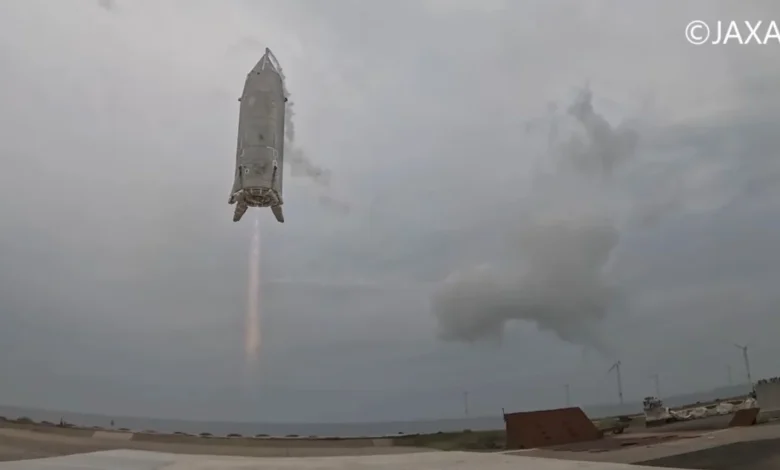
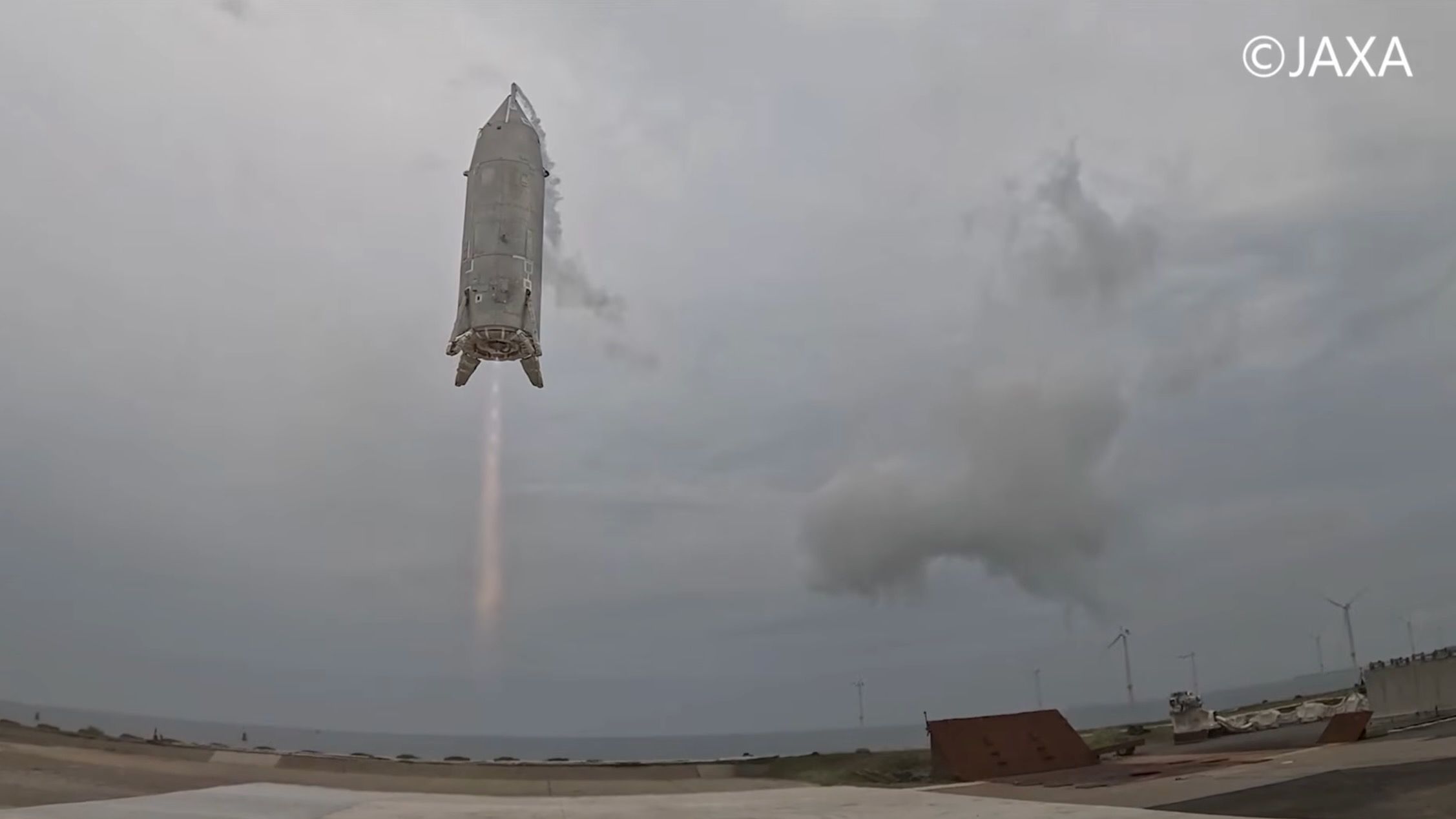
The Japan Aerospace Exploration Agency (JAXA) has successfully completed the inaugural flight test of its RV-X experimental reusable rocket prototype, marking a pivotal shift in the nation’s aerospace strategy toward sustainable and cost-effective space access. The test, conducted on July 11 at the Noshiro Testing Center in Akita Prefecture, involved a controlled vertical takeoff and landing (VTOL) maneuver, often referred to in the industry as a "hop." Although the flight lasted only 40 seconds, its successful execution signifies Japan’s entry into an elite tier of spacefaring nations currently developing or operating reusable launch vehicle (RLV) technology.
During the demonstration, the 7.3-meter (24-foot) tall vehicle, powered by a single high-performance engine, ascended to an altitude of approximately 10 meters (33 feet). Upon reaching its peak, the RV-X performed a lateral translation, traveling roughly 15 meters (50 feet) horizontally across the concrete test pad. The vehicle then executed a precision descent, touching down softly on its landing legs. This maneuver verified the integration of complex guidance, navigation, and control (GNC) systems required to stabilize a rocket during the volatile transition from ascent to descent.
Technical Specifications and the RV-X Development Program
The RV-X is not merely a standalone project but serves as a critical technology demonstrator for JAXA’s broader "Reusable Rocket Engine" and "Return Flight" initiatives. Developed in close collaboration with Mitsubishi Heavy Industries (MHI), the vehicle is designed to test the fundamental physics of retropropulsion—the process of using engine thrust to slow down and steer a rocket back to a designated landing zone.
Standing at a height comparable to a two-story building, the RV-X prototype is equipped with a variety of sensors and a gimbaled engine capable of rapid adjustments. These adjustments are necessary to counteract aerodynamic forces and the inherent instability of a vertical cylinder balancing on a plume of fire. The July 11 test focused specifically on "operational feasibility," a term JAXA uses to describe the entire lifecycle of a reusable vehicle, including pre-flight preparation, autonomous flight execution, and post-flight maintenance procedures.
By successfully hovering and moving laterally, the RV-X demonstrated that Japan’s indigenous software and hardware can handle the "closed-loop" control cycles necessary for more ambitious flights. This involves real-time processing of altitude and velocity data to adjust engine throttle and orientation instantaneously.
The CALLISTO Project: An International Collaboration
The RV-X is a precursor to a more advanced international endeavor known as CALLISTO (Cooperative Action Leading to Launcher Innovation in Stage Toss-back Operations). This project is a joint venture between JAXA, the French National Centre for Space Studies (CNES), and the German Aerospace Center (DLR). The objective of CALLISTO is to develop a reusable single-stage demonstrator that can fly more complex trajectories, including higher altitudes and supersonic speeds, before returning to a landing pad.
Within this framework, the RV-X serves as the "pathfinder" for CALLISTO. While the RV-X tests are conducted at the Noshiro facility in Japan, the lessons learned from these low-altitude hops will be integrated into the CALLISTO vehicle, which is expected to undergo testing at the Guiana Space Centre in Kourou, French Guiana. The partnership leverages French expertise in launch site operations and German advancements in aerodynamic modeling, combined with Japan’s proven track record in liquid hydrogen propulsion and robotics.
Contextualizing the Shift: From H-2A to H3 and Beyond
Japan’s push toward reusability is driven by the shifting economics of the global space industry. For decades, the Japan Aerospace Exploration Agency relied on the H-2A rocket, a highly reliable but expensive expendable launch vehicle. In 2023, JAXA introduced the H3 rocket, intended to be more cost-effective and flexible than its predecessor. However, despite being a significant upgrade, the H3 is still a primarily expendable system.
The emergence of private companies like SpaceX has fundamentally altered the market. The Falcon 9’s ability to land and reuse its first stage has dramatically lowered the cost per kilogram to orbit, making it difficult for traditional expendable rockets to compete for commercial satellite launch contracts. While the H3 remains essential for Japan’s national security and sovereign launch capability, JAXA leadership recognizes that the successor to the H3 must incorporate reusable technology to remain economically viable on the world stage.
JAXA’s official statements emphasize that reusability is not just about the hardware but about the "operational infrastructure." This includes the ability to quickly refurbish a rocket after landing, minimize the time between launches, and reduce the logistical footprint of the launch pad. The RV-X tests are designed to establish these procedures early in the development cycle.
A Chronology of the RV-X and Reusable Aspirations
The journey toward the July 11 test has been one of incremental progress and rigorous ground testing.
- 2016–2019: Initial conceptualization and engine testing. JAXA began focusing on the "deep throttling" capabilities of engines, a requirement for landing where the engine must provide enough thrust to slow the vehicle without being so powerful that it pushes the rocket back into the air.
- 2020–2022: Structural assembly of the RV-X at Mitsubishi Heavy Industries facilities. Ground-based "tethered" tests were conducted where the rocket was fired while secured to the ground to verify engine stability.
- 2023: Integration of the flight control software and initial "static fire" tests at the Noshiro facility.
- July 11, 2026: The successful 10-meter hop and 15-meter lateral crossover.
- Future Milestones: JAXA has announced that the next phase of testing will see the RV-X fly to an altitude of 100 meters (330 feet). This next "hop" will involve more complex aerodynamic stresses and a longer hover period, further stressing the thermal management and fuel systems of the prototype.
Comparison with Global "Hopper" Programs
The RV-X flight bears a striking resemblance to the early development phases of SpaceX’s Starship. In 2019, SpaceX utilized a prototype known as "Starhopper" at its Starbase facility in Texas. Starhopper’s first untethered flight reached an altitude of roughly 20 meters, serving as a proof of concept for the Raptor engines and the flight control logic that would eventually allow full-scale Starship prototypes to reach the edge of space and return.
Similarly, China has recently made strides in this arena. The Long March 10B, a vehicle designed for future lunar missions, has undergone similar vertical landing tests. Blue Origin’s New Glenn and the established Falcon 9 fleet also represent the competitive landscape Japan is entering. By achieving a successful hop with the RV-X, Japan has demonstrated that it possesses the foundational technical competence to keep pace with these global powers.
Strategic Implications and Economic Analysis
The success of the RV-X has profound implications for Japan’s "Basic Plan on Space Policy." The Japanese government has expressed a desire to double the size of the domestic space industry by the early 2030s. Achieving this goal requires a reduction in launch costs to attract international satellite operators.
Industry analysts point out that while the RV-X is small, the scaling of this technology is the primary challenge. Transitioning from a 7-meter prototype to a 50-meter orbital booster requires managing significantly higher pressures, temperatures, and structural loads. However, the data collected from the Noshiro test—specifically regarding how the engine plume interacts with the ground during landing—is invaluable. This "ground effect" can cause turbulence that destabilizes a rocket in the final seconds of flight; mastering this at a small scale is a prerequisite for larger vehicles.
Furthermore, the RV-X program strengthens the industrial partnership between the Japanese government and Mitsubishi Heavy Industries. As MHI looks to expand its commercial aerospace portfolio, the intellectual property generated from the RV-X and CALLISTO programs will be central to its future competitiveness.
Future Outlook: The Path to 100 Meters and Beyond
Following the successful July 11 test, JAXA engineers are currently analyzing the telemetry data to ensure that all systems performed within their expected parameters. If the data confirms that the engine and structural components remained healthy throughout the 40-second flight, the agency will move forward with the 100-meter test flight.
This upcoming test will be a significant escalation. At 100 meters, the vehicle will be exposed to higher wind speeds and will require a more aggressive descent profile. It will also test the durability of the landing legs and the reliability of the ignition sequence for the landing burn.
The ultimate goal remains the integration of these technologies into a full-scale orbital launcher by the mid-2030s. By proving that it can successfully land a rocket, Japan is not only preserving its status as a leading space power but is also contributing to a global future where space travel is no longer a "one-way trip" for the hardware involved. The successful hop of the RV-X may have been small in distance, but it represents a massive leap in the trajectory of Japanese aerospace engineering.