Jennifer Hudson to Perform National Anthem at 2026 World Cup Final as FIFA Navigates American Market Growth and Fan Tradition

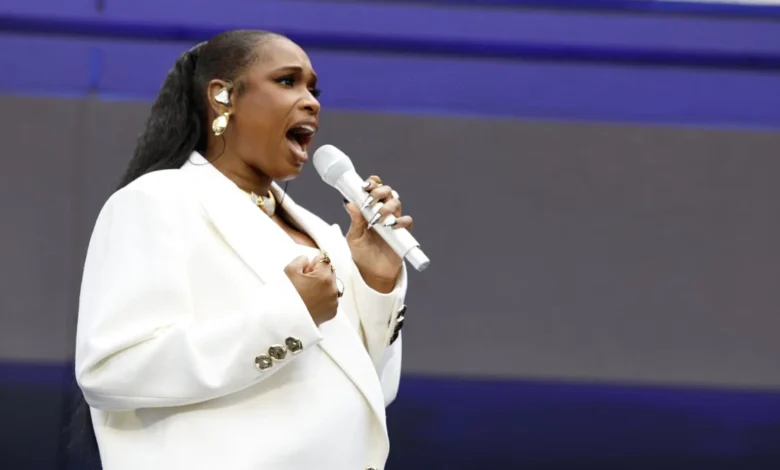
The 2026 FIFA World Cup is set to conclude with a blend of global athletic excellence and high-octane American showmanship, as FIFA announced that Academy Award and Grammy-winning artist Jennifer Hudson will perform “The Star-Spangled Banner” before the final match on Sunday, July 19. The performance will take place at the New York New Jersey Stadium, widely known as MetLife Stadium, in East Rutherford, New Jersey. While the United States Men’s National Team (USMNT) failed to reach the final round of the tournament, the inclusion of the American national anthem has sparked a global conversation regarding the "Americanization" of the world’s most popular sporting event.
The final match, which will see Spain face off against Argentina, is expected to be the most-watched sporting event in history. However, the decision to feature Hudson performing the U.S. national anthem has raised questions among international soccer purists. In traditional FIFA protocol, national anthems are reserved for the participating teams. FIFA officials clarified that Hudson’s performance is part of a separate, elaborate pre-game closing ceremony designed to honor the host nation. Because the final is being held on American soil, the organization viewed the anthem as a necessary tribute to the primary host of the 2026 tournament, which is being shared across the United States, Canada, and Mexico.
The Pre-Game Spectacle and Closing Ceremony Logistics
The closing ceremony is scheduled to begin at 1:30 p.m. ET, approximately 90 minutes before the scheduled 3:00 p.m. ET kickoff. This expanded window for entertainment reflects a shift in FIFA’s strategy to treat the World Cup final more like the NFL’s Super Bowl—a multifaceted entertainment property rather than a standalone soccer match.
Jennifer Hudson, a celebrated vocalist and talk show host who achieved the rare EGOT status (winning an Emmy, Grammy, Oscar, and Tony), is expected to deliver a "special rendition" of the anthem. FIFA’s choice of Hudson signals a desire for a high-prestige, broad-appeal performance that resonates with both domestic and international audiences. Following Hudson’s performance, the ceremony will transition into a high-energy musical showcase headlined by Post Malone. The lineup also includes international pop veteran Robbie Williams, Pussycat Dolls frontwoman Nicole Scherzinger, Italian superstar Laura Pausini, and the popular internet personality and streamer IShowSpeed. Adding to the star-studded atmosphere, Hollywood actor Tom Cruise is slated for a special appearance, the details of which remain under wraps.
Despite the inclusion of the American anthem in the ceremony, FIFA has assured fans that the standard international protocols will remain intact for the match itself. Once the pre-game entertainment concludes, the players from Spain and Argentina will take the field for their respective national anthems, "La Marcha Real" and the "Himno Nacional Argentino," immediately prior to the whistle.
Historical Precedent and Cultural Friction
The decision to feature "The Star-Spangled Banner" is not entirely without precedent, though it remains a rarity in the world of soccer. The last time the men’s World Cup final was held in the United States, in 1994, the closing ceremony featured famed saxophonist Kenny G performing the anthem before Brazil and Italy competed for the trophy at the Rose Bowl in Pasadena, California.
However, the 2026 tournament is unique because it is a tri-nation host effort. This has led to criticism from fans in Mexico and Canada, who have questioned why their respective national anthems are not being afforded the same platform during the final’s closing festivities. Online discourse has been divided, with some fans arguing that the host nation’s anthem is a standard sign of respect in international events like the Olympics, while others view it as an unnecessary intrusion into a match that involves two entirely different nations.
This friction highlights a larger debate regarding the "Americanization" of soccer. For decades, the World Cup has maintained a relatively rigid structure focused on the 90 minutes of play. The 2026 cycle, however, has introduced elements familiar to American sports fans but foreign to global soccer culture, including more elaborate opening and closing ceremonies and "hydration breaks" that critics argue are strategically timed to allow for additional television commercial slots.
The First-Ever World Cup Halftime Show
Perhaps the most significant departure from tradition is the introduction of a formal halftime show. Curated by Coldplay frontman Chris Martin, the 11-minute performance will take place during the interval between the first and second halves of the final. The show features a global roster of talent, including Madonna, Shakira, BTS, and Justin Bieber.
The halftime event is also tied to a philanthropic cause: the FIFA Global Citizen Education Fund. This initiative aims to raise money and awareness for children’s access to education and sports programs worldwide. While the charitable component has been praised, the structural change to the game’s rhythm has been a point of contention. Traditional soccer broadcasts feature analysis and highlights during the 15-minute halftime break; the introduction of a musical spectacle reduces the time available for tactical discussion and, according to some fans, disrupts the flow of the match.
Economic Incentives and the $13 Billion Target
The shift toward a more entertainment-heavy format is driven by significant financial goals. FIFA has projected that it will generate a record-breaking $13 billion in revenue during the 2023–2026 commercial cycle. A substantial portion of this growth is expected to come from the North American market.
By integrating A-list American celebrities and familiar sporting tropes, FIFA is making a calculated play for the "casual" American viewer. The strategy appears to be yielding results. According to data from Fox Sports, group-stage broadcasts for the 2026 tournament averaged more than 5 million viewers, nearly doubling the audience from the same stage of the 2022 World Cup in Qatar. Furthermore, Spanish-language broadcasts on Telemundo and Peacock have seen record-breaking engagement, particularly during matches involving the U.S. team and major Latin American powerhouses like Argentina.
For FIFA, the American audience represents a massive, relatively untapped well of media rights revenue and sponsorship opportunities. The presence of Jennifer Hudson and Post Malone is as much a marketing decision as it is an artistic one, designed to ensure that even if the U.S. team is not on the pitch, American eyes remain glued to the screen.
Impact on Local Infrastructure and Global Viewership
The selection of MetLife Stadium for the final has also necessitated significant logistical coordination. Renamed "New York New Jersey Stadium" for the duration of the tournament to comply with FIFA’s sponsorship regulations, the venue has undergone modifications to accommodate the larger international pitch requirements and the massive technical infrastructure needed for the halftime and closing ceremonies.
Local officials in New York and New Jersey expect the final to generate hundreds of millions of dollars in economic activity for the region. The influx of international fans, combined with the high-profile celebrity presence, has turned the final into a week-long cultural festival.
Conclusion: A New Era for the World Cup
As Spain and Argentina prepare to vie for the most prestigious trophy in sports, the 2026 final stands as a symbol of the changing landscape of global athletics. The inclusion of Jennifer Hudson to sing "The Star-Spangled Banner" serves as a bridge between the traditional world of international soccer and the commercial powerhouse of American entertainment.
While the "Americanization" of the event continues to draw criticism from some corners of the globe, the television ratings and revenue figures suggest that FIFA’s gamble is paying off. The 2026 World Cup final will likely be remembered not only for the quality of the soccer played on the pitch but also as the moment when the world’s biggest game fully embraced the spectacle of American show business.
How to Watch the World Cup Final and Closing Ceremony:
- Date: Sunday, July 19
- Location: New York New Jersey Stadium (MetLife Stadium), East Rutherford, NJ
- Closing Ceremony Start: 1:30 p.m. ET
- Match Kickoff: 3:00 p.m. ET
- English Broadcast: Fox, Fox Sports App, Fox One
- Spanish Broadcast: Telemundo, Peacock (Streaming live)