Formal Methods and AI Reshape Software Engineering Landscape, Boosting Precision and Confidence

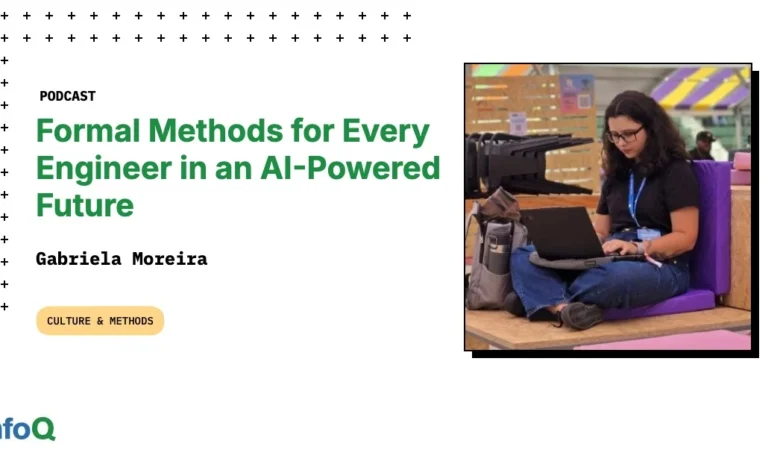
The traditionally complex and often niche field of formal methods is experiencing a significant resurgence, driven by advancements in generative Artificial Intelligence (AI) and the increasing complexity of modern software systems. This paradigm shift, championed by figures like Gabriela Moreira, CEO of the newly spun-out Quint, promises to enhance software reliability, mitigate costly errors, and redefine the role of software engineers in an AI-driven development era. The integration of AI is making formal specification languages more accessible, transforming them from academic tools into practical instruments for everyday software development.
The Enduring Challenge of Software Complexity
For decades, software engineers have grappled with the inherent difficulty of developing robust systems free from critical defects. Modern software, particularly distributed and concurrent systems, operates in a labyrinth of potential interactions, event sequences, and failure modes. Predicting and accounting for every possible scenario is a monumental, if not impossible, cognitive task for human developers. Industry reports consistently highlight that software bugs cost billions annually in lost revenue, remediation efforts, and reputational damage. A 2022 study by the Consortium for Information & Software Quality (CISQ) estimated that the cost of poor quality software in the U.S. alone reached approximately $2.41 trillion, with a significant portion attributed to operational software failures and technical debt. This pervasive challenge underscores the urgent need for more rigorous approaches to software design and verification.
Traditional testing methodologies, while crucial, often fall short in exhaustively covering all edge cases, especially in highly parallel or distributed environments where timing, message delays, and resource contention introduce non-deterministic behaviors that are notoriously difficult to reproduce and debug. Developers often find themselves in a reactive cycle, fixing bugs that emerge in production rather than proactively preventing them during design.
Formal Methods: A Historical Perspective and Modern Revival
Formal methods are mathematically based techniques for the specification, development, and verification of software and hardware systems. They involve expressing system requirements and behaviors using precise mathematical notation, allowing for rigorous analysis and proof of correctness. Languages like TLA+ (Temporal Logic of Actions), developed by Leslie Lamport, have long been lauded for their ability to model complex concurrent and distributed algorithms. TLA+, for instance, uses set theory and predicate logic to define system states and transitions, enabling exhaustive exploration of possible behaviors through model checking.
Historically, the adoption of formal methods in mainstream software engineering has been limited due to several factors:
- Steep Learning Curve: The mathematical rigor and abstract nature of formal languages often intimidated developers without specialized training.
- Tooling Complexity: Early tools for formal methods could be cumbersome and difficult to integrate into existing workflows.
- Perceived Overhead: The effort required to write formal specifications was often seen as an additional, time-consuming step that did not immediately translate into tangible benefits in agile development cycles.
- Cultural Resistance: A prevailing mindset that "good enough" testing was sufficient often overshadowed the pursuit of mathematical certainty.
Despite these hurdles, formal methods have seen critical application in safety-critical systems, aerospace, defense, and high-assurance computing, where the cost of failure is catastrophic. Companies like Intel have famously used formal verification for microprocessor design, and NASA has employed them for mission-critical software. However, the broader software industry, particularly in consumer and enterprise applications, largely remained distant.
Gabriela Moreira and the Quint Initiative: Bridging the Accessibility Gap
Gabriela Moreira embodies the new wave of advocates seeking to democratize formal methods. Her journey into this field began during her bachelor’s degree when she was introduced to compilers and type systems, eventually leading her to TLA+. "I was really like in love with it," Moreira recalls, highlighting the language’s power to define system behavior and properties with mathematical precision. This passion propelled her into developing tooling for TLA+ during her bachelor’s and master’s studies.
Moreira’s industry experience, working with event-driven distributed systems, starkly revealed the chasm between the theoretical power of formal methods and the practical challenges faced by developers. The difficulty of anticipating all corner cases in complex systems underscored the need for more accessible tools. Her path converged with Informal Systems, a company similarly dedicated to advancing formal methods. Joining them four years ago, Moreira spearheaded the development of Quint, a new specification language designed to be a more accessible derivative of TLA+.
Quint aims to retain the core benefits of TLA+ – its mathematical foundation and ability to express complex state machines – while simplifying its syntax and improving its user experience. "The parts of TLA+ that were too difficult for new people to learn, we tried to fix that and have Quint make this more accessible version of TLA+," Moreira explains. This initiative represents a conscious effort to lower the barrier to entry, enabling a broader range of software engineers to leverage the power of formal verification without needing extensive mathematical backgrounds. Recently, Informal Systems spun out Quint into a new venture, with Moreira taking on the role of CEO, a testament to her deep commitment and vision for the language.
AI as the Catalyst: Democratizing Formal Methods in 2026
The advent of powerful generative AI, particularly large language models (LLMs), has emerged as a critical accelerator in making formal methods widely applicable. Moreira emphasizes that "right now, in 2026, you should try to ask your favorite AI to write some formal specification for you." This shift marks a profound change from even a year ago, when learning a new formal language and its associated tooling was a significant undertaking.
AI tools can now assist engineers in several key areas:
- Specification Generation: By describing a problem, solution, or system in natural language, engineers can prompt AI to generate initial formal specifications in languages like Quint or even TLA+. This significantly reduces the initial effort and learning curve.
- Behavioral Exploration: Once a specification is generated, AI can help run and analyze the model. Engineers can ask for random executions, specific behaviors, or scenarios that lead to particular states, making the abstract model concrete and observable.
- Corner Case Discovery: AI-powered model checkers can explore the state space of a system far more comprehensively than human intuition, identifying rare and complex event sequences that could lead to unexpected outcomes. Engineers can then ask, "Give me a behavior that does this," or "Give me a behavior that reaches that," to gain deeper insights.
This interactive process, where AI acts as an intelligent assistant, transforms formal methods from a theoretical exercise into an exploratory and discovery-driven activity.
Beyond Testing: Model-Based Verification and Runtime Monitoring
Moreira stresses that formal methods are not merely a replacement for traditional testing but a complementary and foundational approach. While testing verifies that a system behaves correctly under known conditions, formal methods prove that a system will behave correctly under all possible conditions defined by its model.
Model-Based Testing (MBT): This technique leverages the formal model to generate test cases for the actual code implementation. Once a robust formal specification is developed, engineers can use it to create test scenarios that cover a wide array of system behaviors, including rare edge cases discovered by the model checker. The challenge historically has been writing "glue code" or "harness code" to translate model behaviors into executable tests against the actual software. This glue code, often trivial but tedious to maintain, was a major deterrent to MBT adoption.
Here, AI provides a breakthrough. "With AI it really becomes something completely different because then you can just delegate that part… it’s easy to generate," Moreira notes. Tools like Quint Connect (an open-source library for Rust, with community-driven versions for TypeScript, Zig, and Go) provide interfaces that AI can easily fill to generate and maintain this glue code, seamlessly integrating formal models into the continuous integration/continuous deployment (CI/CD) pipeline. This means formal specifications don’t just sit in a "specs folder in GitHub… to die," but become living, evolving parts of the development process.
Trace Validation and Runtime Monitoring: The utility of formal models extends into production. Moreira highlights the importance of "trace validation," where real-time production data and behaviors are continuously checked against the formal specification. "What you test is not always the same thing that your users do," she explains. By monitoring actual system traces against the expected behaviors defined in the model, deviations can be identified immediately, signaling potential bugs or unexpected interactions. AI is also poised to simplify this, particularly in parsing complex logs and orchestrating the validation process, making runtime monitoring against formal specs more feasible.
Precision in the Age of Generative AI: The Human Imperative
A critical point emphasized by Moreira is the non-negotiable role of human understanding and precision, especially as AI becomes more prevalent in code generation. While AI can write code and even generate formal specifications, the ultimate responsibility for defining "correct" behavior and identifying "good" or "bad" outcomes rests with the engineer. "I think you only can get closer to that check mark if you have lots of understanding," Moreira states.
Formal methods compel engineers to articulate their system’s intended behavior with unprecedented clarity. This process of defining state machines, properties (invariants, safety, liveness), and failure modes forces a deep understanding that might otherwise be overlooked. For instance, in distributed systems, explicitly defining failure modes (e.g., network partitions, node crashes) and the system’s response to them is crucial. This proactive definition helps engineers comprehend how their software breaks, confirming if observed failures align with expectations or reveal unforeseen vulnerabilities.
Moreira recounts her own experience at Informal Systems, where grappling with complex distributed algorithms like Byzantine fault tolerance and consensus protocols became manageable only after writing and running formal specifications. "When I finally managed to write like one reproducible example for the most corner case of the entire algorithm, that’s when I felt like I understood it," she shares. This personal anecdote underscores that formal methods are not just about verification, but fundamentally about enhancing developer understanding and confidence.
The Problem of Divergence: A Timeless Challenge with a New Solution
The perennial problem of code diverging from its design documentation is an age-old challenge in software engineering. Moreira cites the example of a major AWS DNS outage in October of the previous year. The outage was not due to a design flaw; the original design and initial code were correct. However, over time, the production code subtly diverged from the intended design, leading to a critical bug. AWS’s response, presented at a Re:Invent conference, involved making their design model formal and then using AI tools to compare the model against the codebase. The AI successfully identified the divergence, allowing engineers to fix the code and ensure synchronization.
This case highlights that even well-designed systems can degrade over time without rigorous mechanisms to keep design and implementation aligned. While this problem existed long before AI (Moreira humorously notes its presence even for COBOL programmers), AI provides a "much better solution." The ability of LLMs to parse logs, generate glue code for model-based testing, and identify inconsistencies between models and code drastically reduces the manual effort previously required. "All of these things are things that AI is great at, and like with LLM code generation… it’s so good at that, and it’s so boring to do that ourselves," Moreira affirms. This new solution promises to fundamentally alter how design integrity is maintained throughout a system’s lifecycle.
Redefining the Software Engineering Profession
The rise of AI in code generation prompts crucial questions about the future of the software engineering profession. While AI may increasingly handle boilerplate code and even complex implementations, Moreira argues that the core intellectual challenge of defining desired behaviors, understanding edge cases, and ensuring correctness will remain firmly with human engineers. "This part of the profession of like thinking about edge cases and defining what behaviors are correct or not, it has to be ours to take," she asserts.
For complex, safety-critical, or high-assurance software, the nuanced understanding of concurrency, distributed interactions, and failure modes requires human expertise. Non-technical product managers, while leveraging AI for basic product generation, will struggle with these intricate technical details. Engineers, equipped with formal methods, can maintain a deep understanding of the system’s true behavior, even if AI writes the underlying code. This also empowers them to "assert that the AI-generated code is correct via these techniques."
The future software engineer may spend less time on rote coding and more time on high-level design, formal specification, property definition, and critical analysis of AI-generated artifacts. This shift elevates the role from mere implementer to architect and verifier of intelligent systems, fostering greater confidence in the product and adding significant value to the profession. Moreira concludes optimistically, "They are not taking away the fun part from us. AI is not taking that away." The integration of formal methods and AI is not just about building better software; it’s about empowering engineers to tackle increasingly ambitious challenges with unprecedented precision and confidence.