Apple iPhone 18 Pro Max Versus Google Pixel 11 Pro XL: The Ultimate Flagship Showdown

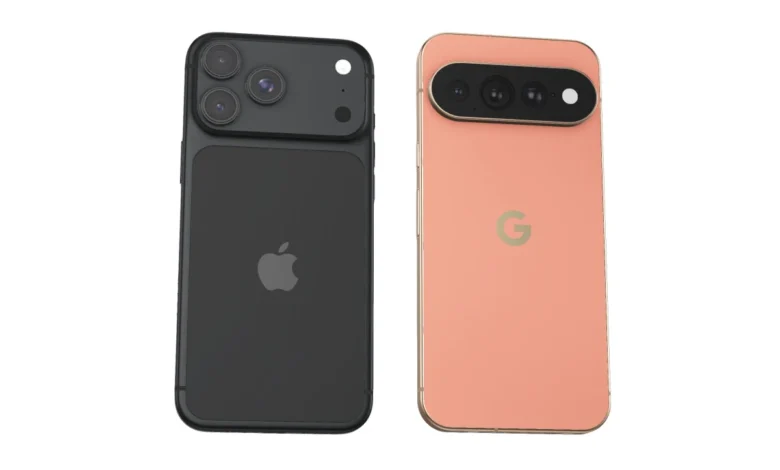
The release of each year’s top-tier smartphones marks a pivotal moment for the consumer technology sector, setting benchmarks for mobile processing, design ergonomics, and computational photography. In this year’s premier clash of ecosystems, Apple’s iPhone 18 Pro Max goes head-to-head with Google’s Pixel 11 Pro XL. Representing the pinnacle of their respective engineering philosophies, these two devices cater to discerning users willing to invest in premium hardware. However, a significant market variance separates them: current street pricing indicates that the iPhone commands a $500 to $600 premium over its Google competitor. This stark price delta forces a critical consumer question: what features, performance metrics, and compromises accompany those savings? Analyzing these titans across hardware design, computational capability, battery longevity, and photographic output reveals whether Apple’s steep price tag is justified or if Google’s flagship offers superior value.
Design, Build Quality, and Ergonomics
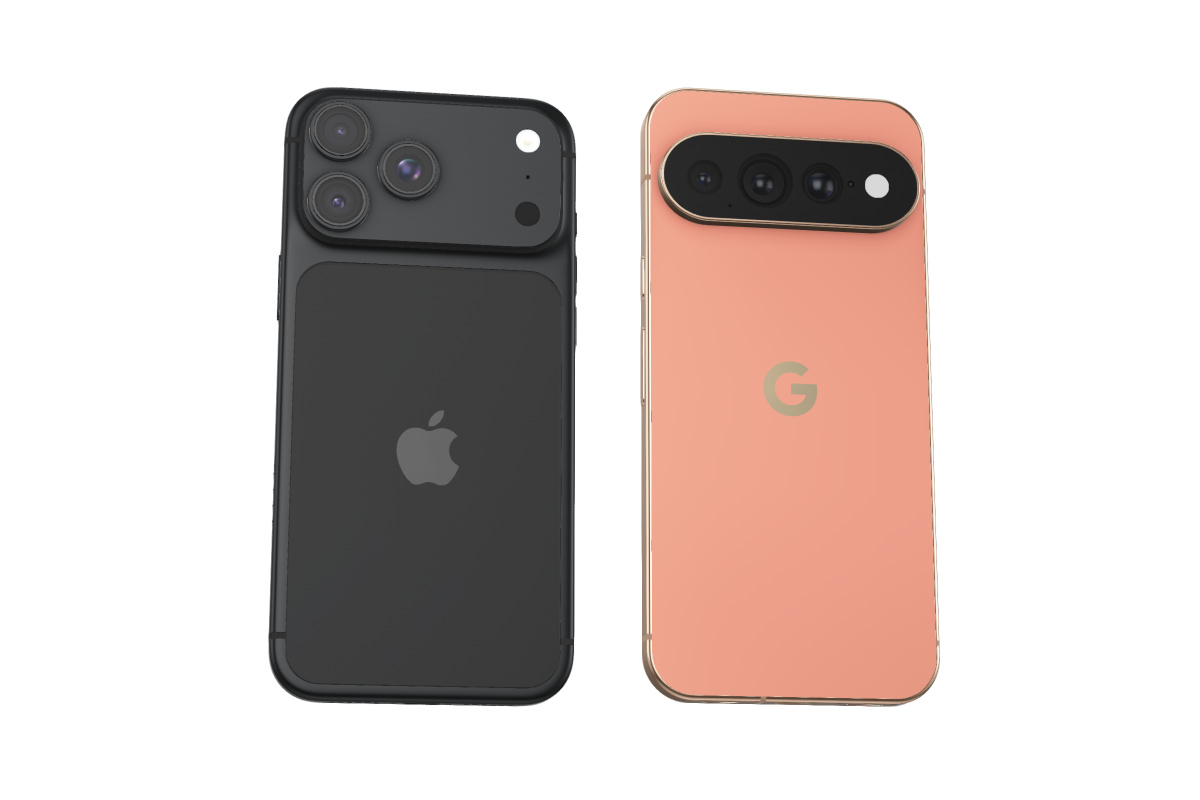
At first glance, both smartphones adhere to contemporary ultra-premium standards, utilizing aluminum chassis paired with resilient glass protection. Nevertheless, distinct philosophies govern their physical construction. The Apple iPhone 18 Pro Max stands as the bulkier and heavier device, housing a sprawling 6.9-inch display protected by Apple’s proprietary Ceramic Shield. Apple’s device emphasizes durability in extreme environments, boasting an enhanced IP68 water-resistance certification capable of surviving submersion at depths of up to 6 meters.

Conversely, the Google Pixel 11 Pro XL prioritizes daily ergonomics, weighing 23 grams less than its Cupertino rival. It relies on Gorilla Glass Victus panels for structural integrity, though its IP68 certification is constrained to the industry-standard 1.5-meter depth limit. Google has also integrated a distinctive hardware flourish termed "HiLight"—a suite of multicolor LEDs embedded within the camera flash module. These lights illuminate in customized patterns to signal incoming calls from priority contacts or to visually acknowledge interactions with Google’s Gemini assistant. While conceptually innovative, industry analysts note that its practical utility remains limited, often reading more as a stylistic novelty than a functional necessity. Ultimately, both devices achieve parity in build quality, resulting in a design tie that hinges entirely on user preference for weight and footprint.

Display Technology and Visual Performance
Display engineering has evolved to a point where marginal gains dictate superiority, yet Google manages to capture a distinct victory in this category. The iPhone 18 Pro Max features a 6.9-inch LTPO OLED screen boasting a pixel density of 460 ppi, a 120Hz adaptive refresh rate, and comprehensive support for HDR10 and Dolby Vision. Apple applies advanced oleophobic and anti-reflective coatings, recording a maximum automatic brightness of 969 nits and a staggering peak brightness of 2,722 nits in lab testing.

The Pixel 11 Pro XL counters with a slightly more compact 6.8-inch LTPO OLED panel. Despite the marginal reduction in screen real estate, it achieves a higher pixel density of 486 ppi, incorporates a 120Hz refresh rate, and supports HDR10+. In rigorous luminescence testing, Google outperforms Apple, registering a maximum auto brightness of 2,333 nits and a peak brightness of 3,118 nits. Although Apple maintains an advantage in proprietary coatings and Dolby Vision integration, the Pixel 11 Pro XL secures the display victory due to its superior pixel density, higher overall brightness thresholds, and a less intrusive punch-hole cutout for the front-facing camera.

Processing Architecture and Raw Performance
Under the hood, the divergence in silicon philosophy between Apple and Google becomes starkly apparent. The iPhone 18 Pro Max is propelled by Apple’s cutting-edge 2nm A20 Pro chipset, which features a 6-core CPU and a 7-core GPU. Apple claims this architecture yields up to a 40% generational leap in graphics performance compared to its predecessor. Furthermore, the Neural Engine core count has doubled to 32, dramatically accelerating machine-learning workloads. A revolutionary design choice in the A20 Pro is the side-by-side memory architecture, placing DRAM directly adjacent to the processor die. Paired with a wider 96-bit memory bus, Apple achieves a 50% increase in memory bandwidth. All storage configurations, ranging from the base 256GB tier up to a massive 2TB, come standard with 12GB of RAM.

Google’s flagship relies on the 3nm Tensor G6 processor, which prioritizes energy efficiency and a 50% boost in dedicated AI processing power over previous iterations. However, its IMG CXTP-48-1536 graphics processing unit struggles to match Apple’s raw muscle, lacking hardware-based ray-tracing support and lagging significantly in high-end mobile gaming compatibility. The Pixel is configured with 12GB of RAM for the 256GB model, while the 512GB and 1TB variants receive an upgrade to 16GB.

Benchmark evaluations underscore this performance chasm. In multi-core Geekbench 6 assessments, the iPhone 18 Pro Max commands an approximate 70% lead, while its score in the 3DMark Wild Life Extreme graphics test is more than double that of the Pixel. While the Pixel 11 Pro XL easily handles everyday multitasking and general fluidity, Apple’s silicon offers vastly superior headroom for intensive computational tasks, heavy gaming, and professional creative applications.

Battery Longevity and Charging Speeds
Power management remains a cornerstone of flagship usability. The iPhone 18 Pro Max houses a robust 5,391mAh battery in its nano-SIM configuration, while the eSIM-only variant expands cell capacity to 5,567mAh. Google equips the Pixel 11 Pro XL with a comparatively modest 5,115mAh battery.

In standardized active-use testing, Apple’s optimization triumphs. The iPhone 18 Pro Max outperforms the Pixel across all four testing metrics, delivering superior endurance across web browsing, video streaming, and standby periods. Charging speeds further solidify Apple’s dominance. The iPhone supports a maximum wired charging speed of 54W—an upgrade from the previous generation’s 42W limit—alongside 25W wireless charging. The Pixel 11 Pro XL matches the 25W wireless charging standard and supports up to 45W wired charging via USB-C. Despite carrying a larger physical battery, the iPhone completes a rapid charge faster, reaching 50% capacity in 15 minutes compared to the Pixel’s 44%, and achieving a full 100% charge in 55 minutes versus the Pixel’s 60-minute duration.

Software Ecosystems and Artificial Intelligence Integration
Software experiences continue to define brand loyalty. The iPhone 18 Pro Max runs iOS 27, while the Pixel 11 Pro XL operates on Android 17. Both operating systems deliver mature, highly polished user interfaces, though they diverge fundamentally in customization philosophy and ecosystem synergy. Apple’s software excels for users deeply embedded in the Apple product family, whereas Android on the Pixel emphasizes granular customization and deep, native integration with Google’s cloud services.

Artificial intelligence serves as a major battleground for both manufacturers. Apple Intelligence and Google Gemini approach computational assistance from distinct angles, with practical utility dependent on user habits. However, regulatory hurdles in Europe have temporarily stalled the deployment of Apple’s advanced Siri AI assistant, giving Google a distinct geopolitical advantage as Gemini remains fully operational on European Pixel units. For long-term viability, Google offers an industry-leading seven-year commitment for operating system and security updates. While Apple does not formally guarantee a seven-year timeline in writing, its historical precedent of supporting legacy devices for approximately seven years provides comparable peace of mind.

Photographic Capabilities and Imaging Quality
Imaging hardware and software processing define the modern ultra-premium smartphone tier. Both devices feature sophisticated triple-lens rear camera arrays composed of 48-megapixel to 50-megapixel sensors. While focal lengths are largely comparable, the Pixel offers a slightly wider ultrawide field of view and a longer telephoto reach than its Apple counterpart.

In daylight photography using the primary 1x sensor, differences emerge in default image rendering. The iPhone outputs 24-megapixel files by default, whereas the Pixel defaults to 12.5-megapixel captures. Apple’s images exhibit a slight edge in native micro-detail, while Google applies its signature contrast-heavy processing for a distinct, high-definition look. Color science remains a matter of brand preference, though the iPhone consistently leans toward warmer color temperatures. At the 2x zoom threshold, the iPhone produces noticeably sharper results, while native telephoto comparisons show the Pixel’s updated 1/1.95-inch telephoto sensor capturing sharper definition at its longer optical zoom range.

Low-light performance reveals contrasting engineering choices. In dimly lit environments, the iPhone main camera retains finer textural details in low-contrast areas that the Pixel tends to aggressively smooth out. Conversely, the Pixel’s telephoto sensor excels in night conditions, producing cleaner and better-exposed shots than the iPhone’s longer-range zoom. Ultrawide performance in the dark yields mixed results: the iPhone struggles with elevated noise levels, while the Pixel introduces a softer overall aesthetic to combat grain.

Final Market Implications and Verdict
The showdown between the Apple iPhone 18 Pro Max and the Google Pixel 11 Pro XL crystallizes the ongoing rivalry between the industry’s two dominant mobile ecosystems.

The iPhone 18 Pro Max stands as the definitive choice for consumers whose priorities lie in raw processing power, graphics capability, superior battery endurance, and top-tier video recording. Its dominance in benchmark testing and physical longevity justifies its heavy hardware investment for power users.

On the other hand, the Google Pixel 11 Pro XL emerges as a compelling alternative for users seeking a lighter physical profile, an exceptionally bright outdoor display, uncompromised Android flexibility, and a substantial cost savings of several hundred dollars. By delivering competitive photographic performance and a guaranteed seven-year software support window at a vastly lower price point, Google presents a formidable challenge to Apple’s dominance in the ultra-premium sector.
Related posts: