Three Years of Mobile AAA Gaming: How the iPhone 15 Pro and iPhone 18 Pro Define Apple’s Portable Gaming Evolution

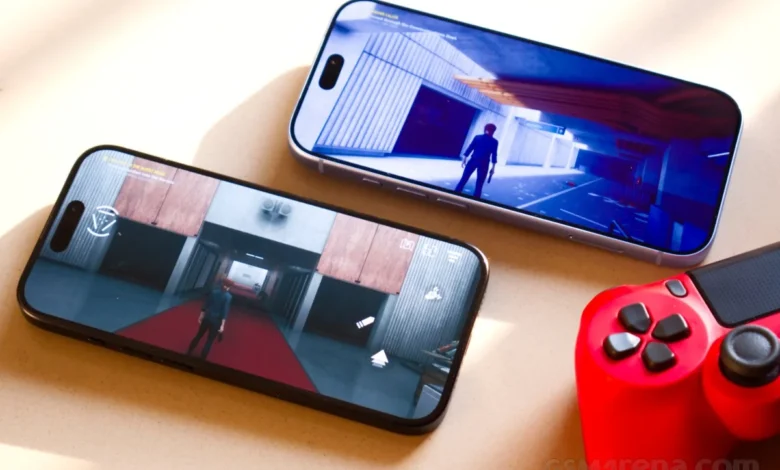
The landscape of mobile gaming underwent a profound structural shift with the release of the iPhone 15 Pro, a device that fundamentally redefined what consumers expected from pocket-sized hardware. By introducing support for current-generation, console-quality AAA titles—such as Capcom’s Resident Evil series and Ubisoft’s Assassin’s Creed Mirage—Apple bridged a historical gap between desktop/console architectures and mobile system-on-chips. Powered by the groundbreaking Apple A17 Pro processor, the iPhone 15 Pro demonstrated that advanced graphical techniques like hardware-accelerated ray tracing and spatial upscaling could be integrated into a smartphone chassis. However, these early releases frequently highlighted the boundaries of first-generation hardware, often struggling with thermal throttling, frame rate volatility, and memory constraints.
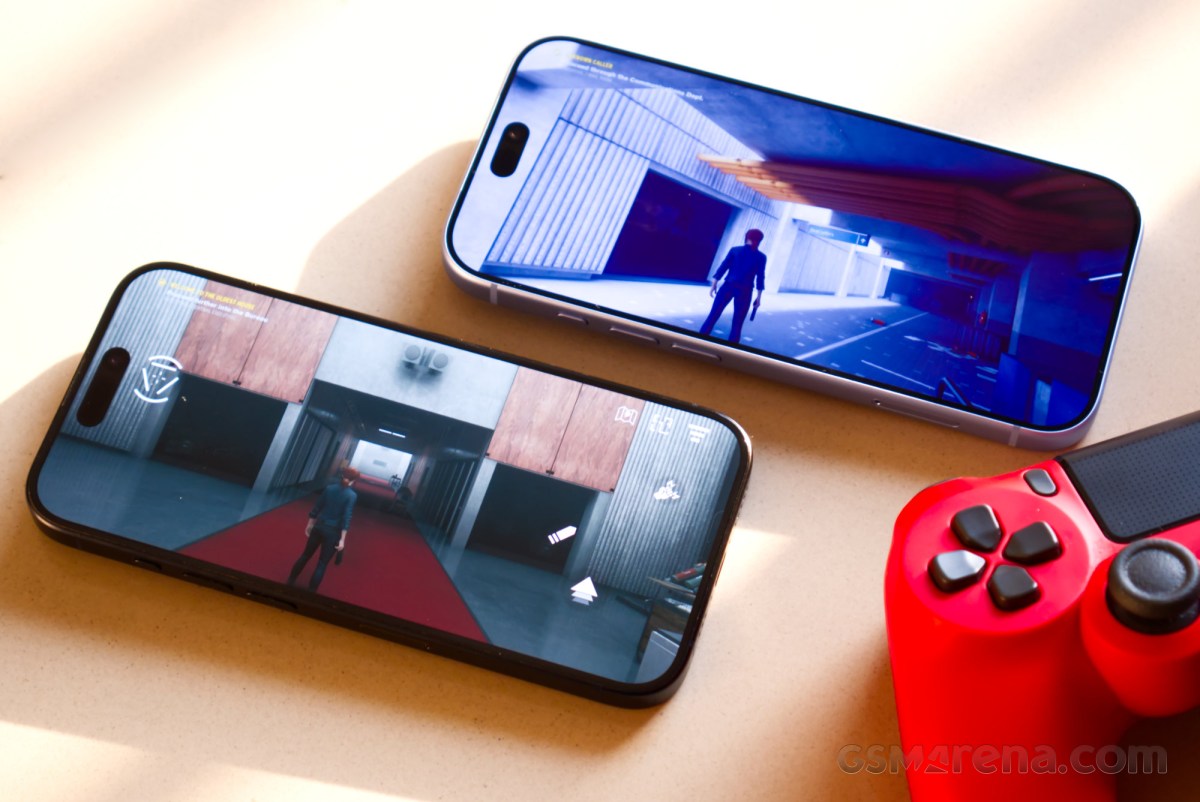
Three years following that technological watershed, the launch of the iPhone 18 Pro provides a definitive benchmark for how far mobile silicon has progressed. By evaluating how demanding, legacy console ports perform on both the pioneering iPhone 15 Pro and the contemporary iPhone 18 Pro, industry analysts and hardware reviewers can map the trajectory of Apple’s high-end gaming ecosystem. This three-year evaluation sheds light on how thermal management, memory scaling, and architectural enhancements have transformed high-end mobile entertainment, while simultaneously exposing persistent software limitations and shifting developer priorities within the mobile games industry.

The Hardware Leap: From A17 Pro to iPhone 18 Pro Silicon
The architectural progression from the iPhone 15 Pro to the iPhone 18 Pro represents a massive leap in processing power, energy efficiency, and memory bandwidth. When the iPhone 15 Pro debuted, it relied on an 8GB memory buffer to handle titles originally engineered for consoles and PCs equipped with significantly more extensive memory pools. Real-world testing across multiple titles reveals that this 8GB limitation was frequently the primary bottleneck for sustained gaming performance, often overshadowing raw graphical processing limitations. Data swapping between the system memory and storage regularly triggered stuttering and elongated load times, particularly when capturing gameplay video or managing background tasks.

In contrast, the iPhone 18 Pro integrates a significantly expanded memory buffer—featuring 12GB of high-speed RAM—coupled with a substantially upgraded CPU and GPU architecture. Furthermore, advancements in the device’s thermal design allow sustained workloads to execute without the aggressive thermal throttling that frequently plagued the A17 Pro. Consequently, the iPhone 18 Pro handles resource-intensive software with exceptional stability, maintaining targeted frame rates where its predecessor historically faltered.

Comparative Performance Analysis Across Major AAA Titles
Revisiting the vanguard of iOS console ports on both hardware generations yields critical insights into performance scaling, engine optimization, and software adaptability.

Resident Evil Village
As the pioneering title in Capcom’s mobile port initiative, Resident Evil Village remains distinct for offering a comprehensive graphical settings menu. Tested under the "Prioritize Graphics" preset, the iPhone 15 Pro routinely struggles in the opening village environment, hovering between 22 and 24 frames per second accompanied by noticeable frame pacing issues. Shifting to the "Balanced" preset stabilizes performance at a locked 30fps. Conversely, the iPhone 18 Pro effortlessly surpasses these figures, averaging close to 50fps on graphical settings and easily hitting the 60fps ceiling on

balanced parameters. The combination of increased memory bandwidth and architectural headroom allows Capcom’s engine to fully exploit the modern hardware without compromising visual fidelity.

Resident Evil 4
Unlike Village, Capcom adopted a streamlined configuration approach for the remake of Resident Evil 4, stripping away most granular visual settings to ensure out-of-the-box stability. On the iPhone 15 Pro, optimizations implemented over the three-year lifecycle have resulted in surprisingly stable 30fps performance in standard traversal. However, because the title lacks deep configurability, the iPhone 18 Pro exhibits few performance differences beyond eliminated micro-stutters during area transitions and faster asset loading times. The internal rendering resolution remains capped, meaning the visual softness and jagged edge artifacts on high-contrast objects like character hair persist across both generations.

Resident Evil 7 and Resident Evil 3
Resident Evil 7 benefits from output resolution scaling options, allowing users to balance performance and visual clarity. While the iPhone 15 Pro experiences performance degradation into the 40fps range when rendering native resolutions on performance presets, the iPhone 18 Pro consistently maintains its 60fps ceiling. Similarly, the Resident Evil 3 remake exposes the hardware disparities of the older generation; the iPhone 15 Pro routinely dips to 24fps during intensive test sequences under maximum native resolution, whereas the iPhone 18 Pro maintains a locked 30fps frame cap with absolute consistency.

Death Stranding Director’s Cut
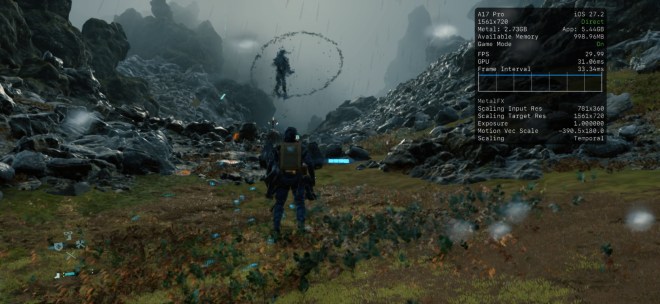
Kojima Productions’ critically acclaimed title arrives on iOS with minimal user customization, restricting visual adjustments primarily to brightness. Operating at an aggressive internal rendering resolution with reduced PC-equivalent graphical parameters, the iPhone 15 Pro maintains acceptable 30fps performance during standard exploratory traversal. However, high-speed transit via vehicles or dense combat encounters reliably triggers severe frame drops, pointing directly to CPU and memory bottlenecks. The iPhone 18 Pro completely neutralizes these drops, sustaining a locked 30fps throughout the experience, though the lack of advanced graphical sliders prevents the hardware from leveraging its idle capacity for higher resolutions or enhanced fidelity.
Assassin’s Creed Mirage
Ubisoft’s historical stealth title targets a fixed 30fps experience across three distinct quality presets. On the iPhone 15 Pro, performance is inconsistent, frequently disrupting the fluid execution of parkour movements. Furthermore, background data streaming continues to induce anomalous animation freezes on the legacy hardware. The iPhone 18 Pro eliminates these anomalies entirely, maintaining stable frame pacing on the highest quality preset and delivering a seamless traversal and combat loop.

Hitman World of Assassination
IO Interactive’s stealth sandbox franchise utilizes complex rendering techniques, such as render-to-texture reflections and screen-space reflections, to simulate ray-traced mirror surfaces in locations like the Dubai mission. The iPhone 15 Pro struggles heavily within these environments, yielding unplayable sub-20fps metrics unless graphical parameters are reduced to absolute minimums. The iPhone 18 Pro navigates the same scenarios with only minor shader compilation stutters, adhering closely to its 30fps operational target despite occasional inconsistencies in the game’s internal frame-rate limiter menus.

Control Ultimate Edition
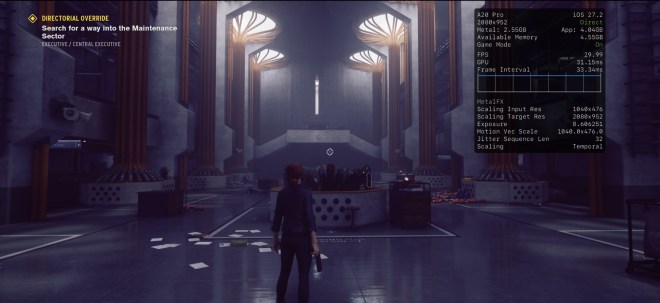
Remedy Entertainment’s Control serves as a technological tour de force for mobile hardware, featuring the studio’s proprietary Northlight Engine and supporting full ray-tracing pipelines alongside frame generation options. On the iPhone 15 Pro, the title runs near baseline quality settings at 30fps, though activating ray tracing or pushing resolution parameters renders the game unplayable due to engine speeds being tied directly to frame rates. The iPhone 18 Pro completely alters this dynamic, running the game near-lock at 30fps with advanced rasterized settings enabled. Moreover, by dialing back options to medium presets, the iPhone 18 Pro successfully integrates selective ray-tracing features—an unprecedented engineering feat for a pocket-sized mobile device, outperforming legacy home consoles and specialized handheld PCs in specific rendering contexts.

Industry Implications and the Shift in Developer Strategy
While the technical evolution from the iPhone 15 Pro to the iPhone 18 Pro validates Apple’s engineering ambitions, the broader commercial and ecosystem implications present a complex picture for mobile software development.

Industry analysts note that while Apple’s hardware capability has matured past the limitations that constrained early console ports, publisher enthusiasm for high-budget, premium iOS releases has visibly cooled. Major publishers who initially committed to the platform—such as Capcom with its extensive Resident Evil catalogue—have not systematically announced day-and-date ports for subsequent franchise entries. Market response data indicates that traditional AAA pricing models and premium single-player titles face severe commercial friction within an app store ecosystem dominated by free-to-play monetization, microtransactions, and gacha mechanics.

Furthermore, ergonomic and platform-specific barriers remain a persistent challenge. Console-class experiences engineered for large living room displays and dedicated controllers frequently translate awkwardly to compact touchscreens or necessitate the additional friction and expense of external gamepad peripherals. Coupled with high battery consumption and thermal dissipation requirements, these factors position mobile AAA ports primarily as technological showcases rather than primary revenue drivers for major studios.

Conclusion and Future Outlook
The three-year progression from the introduction of the iPhone 15 Pro to the maturation of the iPhone 18 Pro demonstrates that mobile silicon has successfully crossed a historic performance threshold. Apple has delivered hardware capable of running complex, ray-traced console games without structural compromise, neutralizing the memory and thermal bottlenecks that restricted earlier implementations.
Nevertheless, the long-term viability of high-end console gaming on iOS will depend heavily on whether Apple can incentivize publishers to maintain ongoing software updates, expand platform-specific optimizations, and foster consumer demand for premium gaming models. Until then, while the technical achievement of running titles like Control and Resident Evil Village on a smartphone remains an impressive milestone of modern engineering, the broader market trajectory suggests that mobile platforms will continue to navigate a delicate balance between bleeding-edge technological capability and mainstream consumer habits.