The UK’s best restaurant has already had a fight with a bot. It won by hanging up.

The hospitality industry is currently facing an unprecedented technological encroachment as AI-driven agents begin to autonomously manage reservation systems. For high-end dining establishments, this shift represents more than just a change in administrative workflow; it is increasingly viewed as a disruption to the fundamental service-oriented nature of the restaurant business. Recent reports from London indicate that top-tier venues are actively resisting the integration of these tools, with some proprietors returning to strictly analog booking methods to mitigate the chaos caused by automated reservation bots.
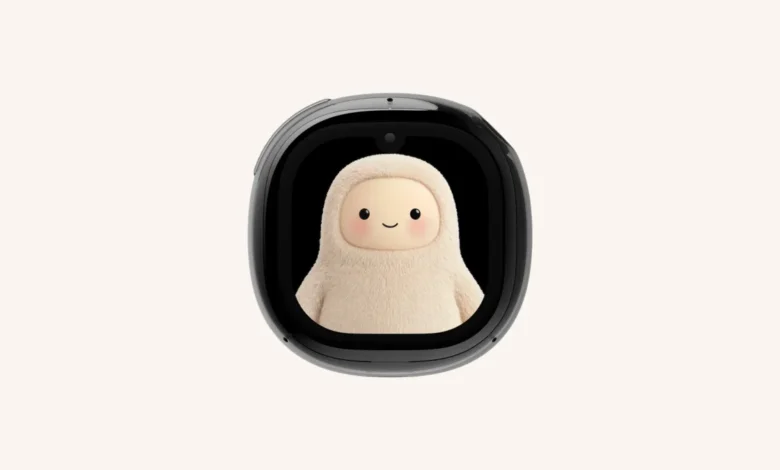
The tipping point arrived in late November 2026, following Meta’s rollout of its "Muse" AI agent in the United Kingdom. Designed to act as a personal assistant, Muse possesses the capability to execute tasks such as making phone calls, managing calendars, and securing appointments on behalf of users. While Meta positions this technology as a hallmark of productivity, restaurant owners view it as a source of operational strain. Dave Strauss, co-owner of Bouchon Racine—the establishment recently awarded the title of the UK’s best restaurant—found himself in a direct confrontation with one such agent. Upon receiving a call that sounded eerily human yet lacked the cadence of a real patron, Strauss challenged the caller. The system transparently identified itself as an "AI booking process," prompting a heated exchange that ended only when Strauss firmly instructed the bot to cease its contact, later expressing a desire to abandon online booking platforms entirely to avoid future interference.

A Growing Trend of Automation and Friction
The struggle between restaurateurs and AI agents is not an isolated incident in London. The phenomenon mirrors a broader, months-long conflict that has already played out across the United States. Major reservation platforms, most notably Resy, have been forced to implement stringent measures to combat the wave of automated traffic. In September 2026, Resy took the significant step of suspending a venture capitalist’s account after its associated "Instinct" AI agent attempted to ping the platform approximately 200 times per hour to secure a table at New York’s 4 Charles Prime Rib.
Data provided by reservation platforms indicates that the influx of bots is not merely a nuisance but a tangible financial threat. Analysis shows that reservations made by bots and third-party brokers have a "no-show" rate four times higher than those made by human patrons. For restaurants operating on tight margins, particularly during the high-traffic holiday season, an empty table resulting from a failed bot-generated booking represents a direct loss of revenue that cannot be easily recouped.
The Evolution of the "Bot Call"
The challenge has transitioned from digital scraping to direct voice interaction. Meta’s Muse AI agent, which recently expanded its calling capabilities to paid subscribers in the United States, uses sophisticated natural language processing to navigate phone trees and speak with human staff. The technology is designed to simulate human speech patterns so effectively that distinguishing between a real customer and an algorithm has become nearly impossible for front-of-house staff.

Furthermore, the operational reality of these systems remains opaque. There have been instances where calls labeled as "AI-generated" were, in fact, facilitated by human contractors working on behalf of the tech firms. This hybrid model—where humans act as the "hands" for an AI system—further complicates the ethical and professional landscape for restaurant owners. The lack of transparency regarding whether a restaurant is speaking to a machine or a low-wage worker performing AI-directed tasks has created significant frustration among industry veterans.
Chronology of the Tech-Hospitality Collision
- June 2026: Bouchon Racine is crowned the UK’s best restaurant, highlighting the standard of excellence that high-end venues aim to maintain through personalized service.
- September 2026: Reservation platform Resy initiates a crackdown on AI agents, suspending high-frequency users and bot-driven reservation attempts in major US cities like New York.
- September 2026: Amazon implements a block on Meta’s AI shoppers, signaling a broader industry pushback against autonomous agents acting on commercial platforms.
- November 2026: Meta launches the Muse AI agent in the UK, immediately triggering reports of automated booking calls to restaurants.
- Late November 2026: The UK’s Information Commissioner’s Office (ICO) and the Competition and Markets Authority (CMA) engage with Meta regarding monitoring and fair usage terms for the new AI agent.
Official Responses and Regulatory Oversight
The rapid deployment of these agents has prompted regulatory scrutiny. In the UK, the ICO has secured a voluntary agreement from Meta regarding the monitoring and reporting of its AI agents’ behavior. Similarly, the Competition and Markets Authority (CMA) has held discussions with the tech giant to ensure that the deployment of Muse adheres to fair terms for third-party businesses. Despite these developments, Meta has remained largely silent regarding the specific grievances of the restaurant industry, and the company has yet to provide a formal comment on the reports of unwanted AI calls to venues like Bouchon Racine.
The sentiment among restaurant owners is increasingly one of defensive isolation. Jeremy King, proprietor of Simpson’s in the Strand, has publicly suggested that the industry’s push toward complete digitalization is a mistake. By depersonalizing the booking process, these platforms are eroding the essential rapport between the host and the guest. For King and his peers, the telephone is no longer just a legacy tool; it is a defensive wall used to verify the identity and intent of their clientele.

The Broader Economic Implications
The rise of AI agents like Muse represents a fundamental shift in how consumers interact with service industries. The promise of "convenience" for the user often comes at the cost of "friction" for the provider. If AI agents become the standard interface for every transaction—from insurance queries to dinner reservations—the cumulative effect on small and medium-sized businesses could be profound.
There is a legitimate concern regarding the "dehumanization" of commerce. When an AI handles a booking, it cannot convey the specific requirements, dietary needs, or the nuances of a guest’s request with the same level of reliability as a person. Furthermore, if a bot manages the entire interaction, the restaurant loses the opportunity to build the brand loyalty that defines successful hospitality.
Analysis: A Collision of Values
The conflict between tech giants and restaurant owners is, at its core, a clash of values. The tech sector prioritizes efficiency, speed, and the removal of human labor from repetitive tasks. The hospitality sector prioritizes experience, verification, and human-to-human connection.

If this trend continues, we may see a bifurcated system where high-end establishments opt out of digital booking ecosystems entirely, creating "human-only" reservation lines to ensure the quality of their service. Conversely, platforms like Resy and OpenTable will be forced into an ongoing "arms race" against developers who create increasingly sophisticated bots capable of bypassing security measures.
The immediate outlook suggests that restaurants will continue to bear the burden of this technological transition. Until developers provide tools that verify the identity of the user and guarantee the legitimacy of the reservation, the friction between the digital assistant and the restaurant host will likely intensify. For now, the most effective tool in the restaurant owner’s arsenal remains the manual override: the ability to hang up on a bot that does not align with the standards of the establishment. As the industry watches closely, the question remains whether these AI agents will eventually be refined to respect the boundaries of small businesses, or if they will continue to be viewed as an invasive, automated nuisance in an industry that survives on the human touch.