Pioneering Beat-Aligned Mobile Audio Streaming: Colossal’s Innovative Solution to Real-Time Interactive Music Discovery


Before its strategic pivot towards agentic commerce, Colossal spearheaded the development of a sophisticated mobile beat-discovery application that pushed the boundaries of interactive audio streaming. This groundbreaking app allowed music producers to upload their beats, which artists could then seamlessly explore through a personalized, machine learning (ML)-driven feed. The core innovation lay in its ability to deliver immediate, beat-aligned, and artifact-free track or section switches, a formidable technical challenge given the inherent constraints of mobile latency, network jitter, and fluctuating bandwidth. This engineering feat, meticulously crafted, provides a compelling case study in overcoming complex real-time audio challenges on mobile platforms.
The Genesis of an Audio Challenge: Colossal’s Vision for Interactive Music
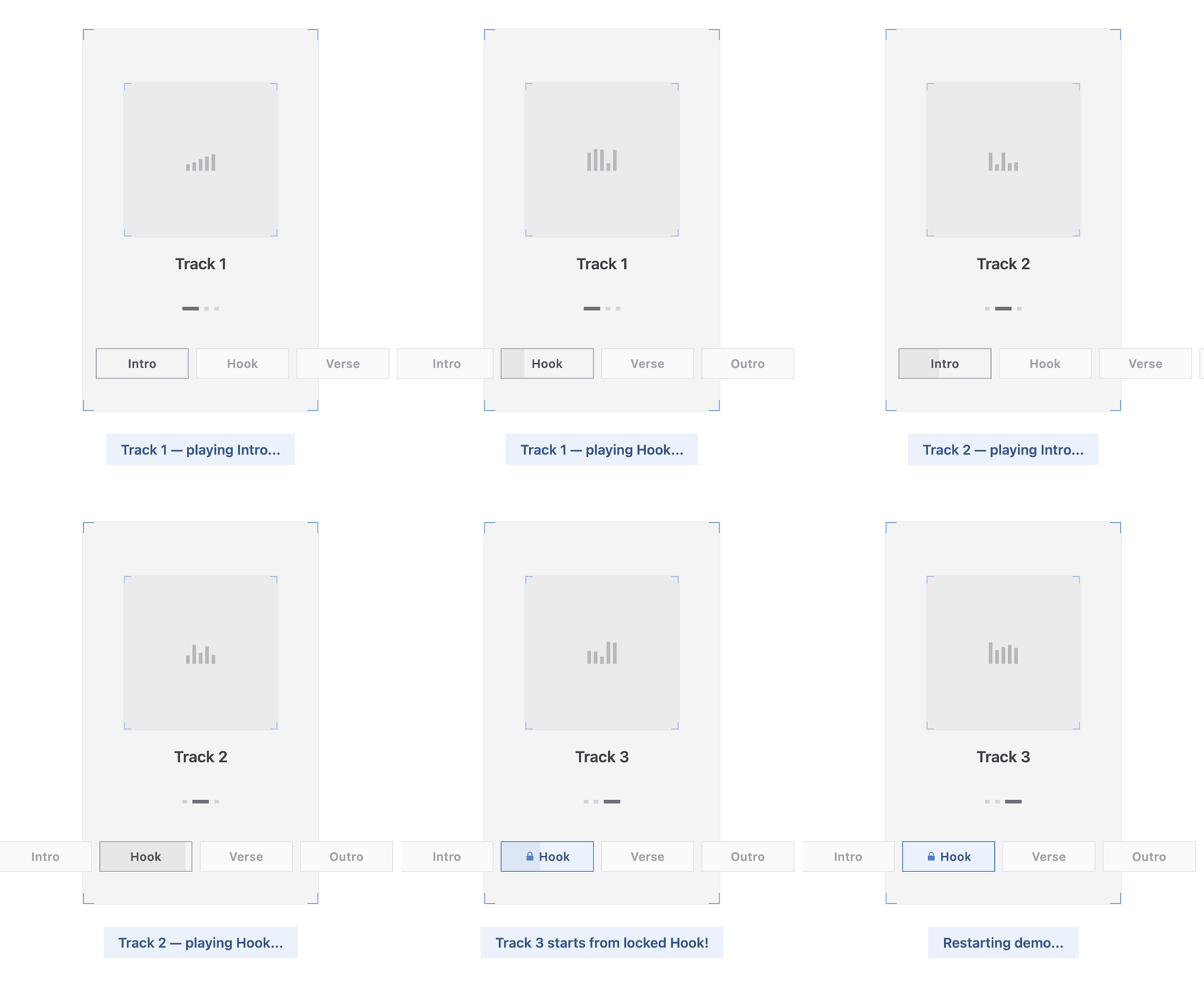
Colossal’s initial vision for its beat-discovery platform was ambitious: to create an intuitive, highly responsive experience where musical exploration felt as fluid as swiping through a social media feed. Users could navigate a curated stream of beats, with a recommender system dynamically ranking content based on real-time in-session signals like skip rate, listening time, repeated section locks, and replays. The critical interaction model demanded not just personalized feed navigation but also rigid audio constraints. Every swipe to a new beat or jump to a different section within a track had to trigger an instantaneous audio transition, perfectly aligned to the beat, without any audible glitches or delays.
This requirement presented a multi-faceted engineering puzzle. Traditional audio streaming, designed for linear playback, simply could not accommodate the app’s dynamic, non-linear demands. The challenge was compounded by the unpredictable nature of mobile environments – varying network speeds, device processing power, and operating system overheads. Vladyslav Melnychenko, the architect responsible for this intricate system, took on the end-to-end responsibility, encompassing backend audio analysis, metadata generation, binary descriptor formats, mobile range-streaming strategies, and the development of a native C++ playback engine seamlessly integrated with React Native on both iOS and Android. This comprehensive approach underscored the necessity of treating the entire audio pipeline as a singular, interconnected design problem.
Evaluating Existing Paradigms: Why Off-the-Shelf Solutions Fell Short

Before embarking on a custom solution, Melnychenko rigorously evaluated existing audio playback and streaming technologies against Colossal’s stringent product requirements. The findings consistently revealed that no standard approach could simultaneously satisfy the need for immediate, beat-aligned transitions under mobile constraints.
Standard Audio Players and React Native Limitations:
Initial investigations into standard audio player libraries, commonly used in mobile development, quickly hit roadblocks. While proficient at basic linear playback, these libraries lacked the granular control necessary for instantaneous, beat-aligned section and track switching. They did not expose the low-level playback controls or targeted prebuffering capabilities essential for Colossal’s use case.
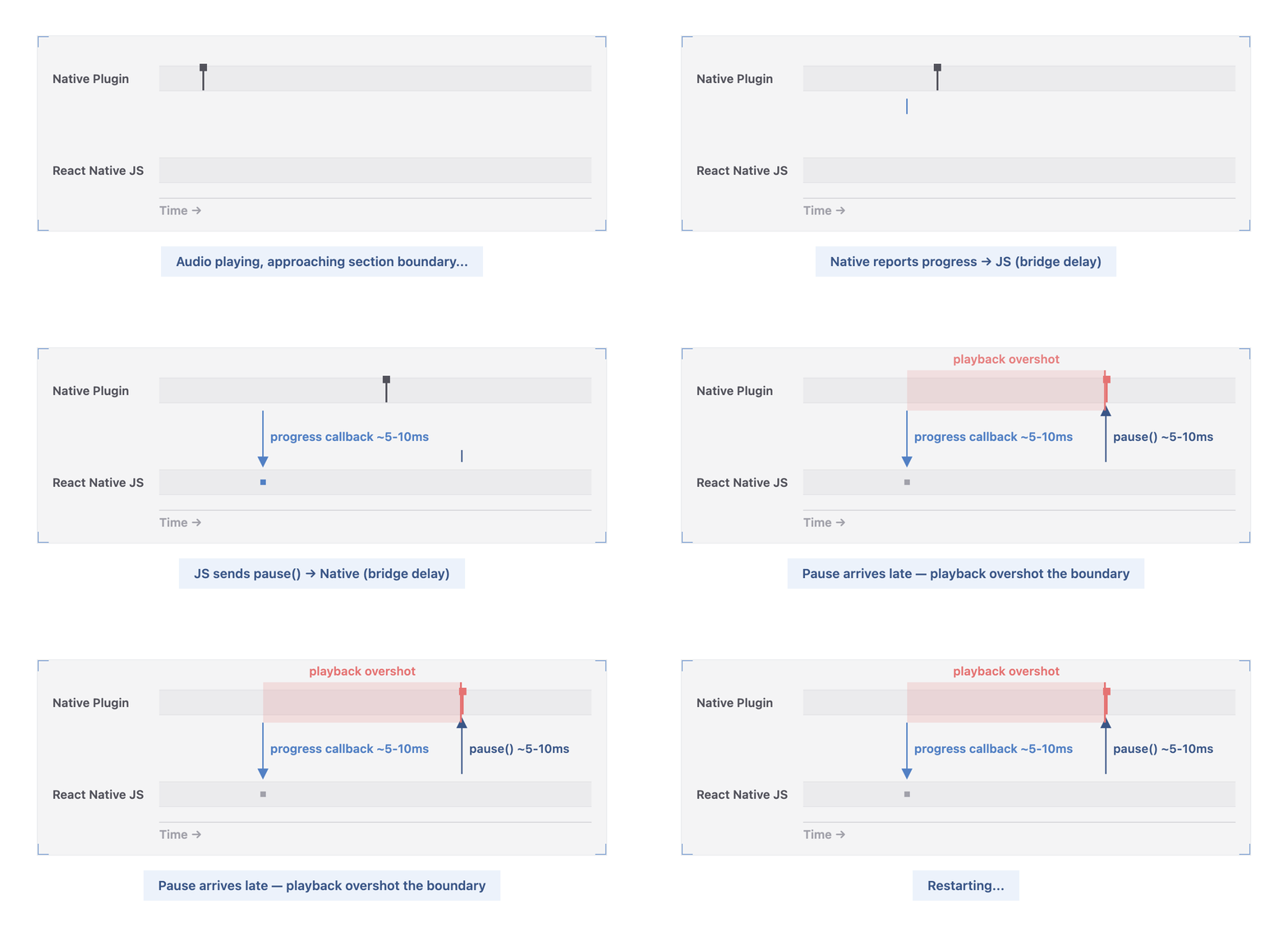
A significant hurdle also emerged from the React Native (RN) bridge architecture. A track switch, requiring communication between the JavaScript layer and native modules, introduced an unacceptable delay. Tests indicated that pausing one player and initiating another across the RN bridge added approximately five to ten milliseconds of latency, coupled with unpredictable jitter. By the time progress callbacks reached the JavaScript layer, playback had already advanced, making precise, beat-aligned timing virtually impossible. For an app where rhythmic accuracy was paramount, this level of delay rendered standard players unviable.
HLS/DASH: Optimized for Sequential, Not Interactive:
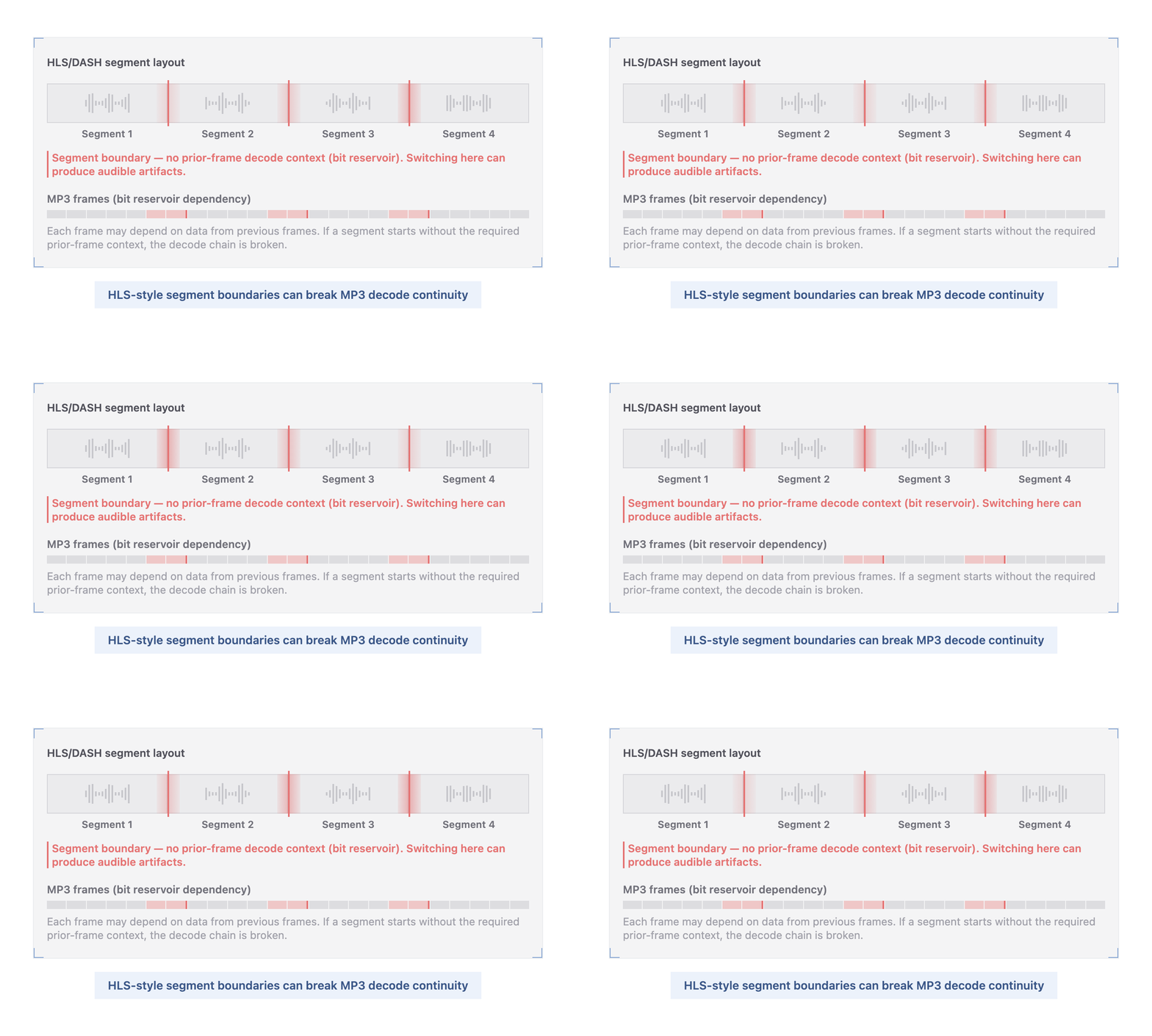
HTTP Live Streaming (HLS) and Dynamic Adaptive Streaming over HTTP (DASH), prevalent protocols for media delivery, were also considered. These protocols excel at delivering media as a sequence of small segments, optimized for sequential playback, adaptive bitrate switching, and efficient streaming over varying network conditions. However, their design ethos fundamentally conflicted with the app’s requirement for rapid, non-linear "section hopping."
A critical technical challenge arose from the nature of MP3 decoding. MP3 frames are not always independently decodable; they often depend on context from preceding frames due to "bit-reservoir" behavior. If playback commenced at a physical segment boundary without this necessary context, the initial decoded samples could be incorrect, leading to noticeable audible artifacts. While techniques like crossfades can mask some issues, they do not restore the missing decode context, and such compromises were deemed unacceptable for the desired interaction model.
Furthermore, the buffering behavior of HLS/DASH was problematic. Users could jump to any section at any moment. If the target section was not already buffered, playback would inevitably pause while the segment was fetched and decoded. This introduced latency precisely at the point where an immediate, seamless response was required, fundamentally undermining the interactive experience.
Full File Downloads: A Bandwidth Impasse:
The most straightforward approach – fully downloading each audio file before playback – was quickly dismissed due to prohibitive bandwidth requirements. The average beat size was approximately three megabytes. Given that users typically spent only two to three seconds on a beat before swiping away, fully downloading the next beat within this narrow window would demand around eight megabits per second (Mbps) of sustained throughput for audio data alone. Accounting for decoding overhead, network variability, and bandwidth shared with other application assets, the practical requirement soared to roughly fourteen Mbps.
Colossal’s target operating condition for reliable performance was around five hundred kilobits per second (Kbps). Even the most optimistic estimate for full-file downloads exceeded the available bandwidth by a factor of sixteen, rendering this approach entirely unfeasible. This comprehensive evaluation made it unequivocally clear that a custom transport model and a native playback engine were indispensable to meet the product’s unique constraints.
Crafting a Bespoke Architecture: The Colossal Approach to Real-Time Audio
The inability of existing solutions to meet Colossal’s rigorous demands necessitated the development of a custom, end-to-end system. At a high level, the architecture comprised six distinct, yet interconnected, stages: upload, server-side processing, descriptor generation, storage, mobile range fetching, and native playback. This holistic approach allowed for precise control over every aspect of the audio pipeline, from source material to user experience.
Virtual Chunking: Precision and Efficiency:
A pivotal design decision centered on how to support selective loading on mobile. The choice lay between physically segmenting files into many smaller ones or employing "virtual chunks." Virtual chunking was chosen because it offered granular control over which bytes were fetched next, without the storage and request overhead associated with managing numerous physical segment files. This allowed for highly optimized byte-range requests.
For version one (v1) of the system, MP3 and Constant Bitrate (CBR) encoding were selected. MP3 offered simpler frame-level inspection and chunk planning, predictable decoder behavior across target devices, and accelerated the v1 delivery timeline. Forcing CBR during audio processing was a strategic move, ensuring most chunks were roughly the same size. This facilitated a simple pool of preallocated buffers in the player, significantly reducing allocation complexity and simplifying buffer reuse at runtime, which is crucial for real-time audio.
The optimal chunk size involved a careful trade-off. While smaller chunks might seem to improve responsiveness, they increased request overhead. Conversely, larger chunks reduced request pressure but could consume too much bandwidth on audio the user might skip, delaying more critical chunks. Through iterative testing, approximately 3.5 seconds of audio per chunk was found to strike the best balance for the app’s interactive model, offering a practical lower bound for efficient player operation.
MP3 Boundary Handling: Eliminating Audible Artifacts:
One of the most insidious challenges in selective MP3 decoding is the "bit-reservoir" behavior, where frames are not always independently decodable. The first valid samples of a chunk can depend on data from earlier frames. If a chunk was decoded in isolation, this dependency could lead to audible artifacts when stitched into the playback buffer.
To preserve PCM continuity, Colossal’s system prepended nine "overlap frames" to every non-initial chunk during chunk planning. These frames provided the necessary warm-up context for the decoder. After decoding with this context, the warm-up samples were discarded before writing the PCM into the playback buffer. Skipping this overlap consistently produced audible artifacts on real devices. This nine-frame value was empirically determined based on MP3 decoder warm-up behavior and validated against the specific target decoder path, highlighting the meticulous attention to detail required for artifact-free playback.
Compact Binary Descriptors: Fast Metadata Access:
For efficient operation on weak mobile connections, the mobile client needed to fetch and parse chunk metadata rapidly. This led to the design of a compact binary descriptor format, optimized for fast mobile parsing and minimal overhead. Each track had two descriptors: a human-readable JSON version for debugging and a compact binary version containing the essential chunk metadata.
Each chunk was described by a structure containing start_frame, frames, start_byte, and bytes. Track position was derived from the frame index. With a v1 product constraint of a ten-minute maximum track length, each chunk record could fit into a mere twelve bytes. This was achieved by carefully sizing fields: uint16_t for start_frame (supporting about 23,000 MP3 frames per track) and uint32_t for byte offsets and chunk payload sizes. While Protobuf and MessagePack were considered, a tiny custom format was chosen due to the fixed record shape, trivial parsing logic in Python and C++, absence of additional serialization dependencies, and precise control over byte layout and versioning.
The Native Playback Engine: Heart of the Real-Time Experience
Recognizing the limitations of React Native players for the app’s stringent playback requirements, the playback layer was implemented in native C++ atop Superpowered, a high-performance audio engine. Packaged as a native Expo module, control-critical logic remained in native code, ensuring shared core logic across iOS and Android. This design choice was crucial because audio callbacks operate under strict deadlines, and even minor stalls can cause audible artifacts. Keeping state transitions and buffer writes in shared C++ circumvented the React Native bridge path and avoided JavaScript runtime pauses in playback control.
The JavaScript/TypeScript interface was intentionally minimal, exposing only high-level commands like play, pause, loadTrack, unloadTrack, setCurrentTrack, seekTo, and loopTrackSection. While basic audio playback was straightforward, the real challenge lay in maintaining correct playback under intense timing, looping, and network pressure.
Beat-Aligned Switching and Section Loops:
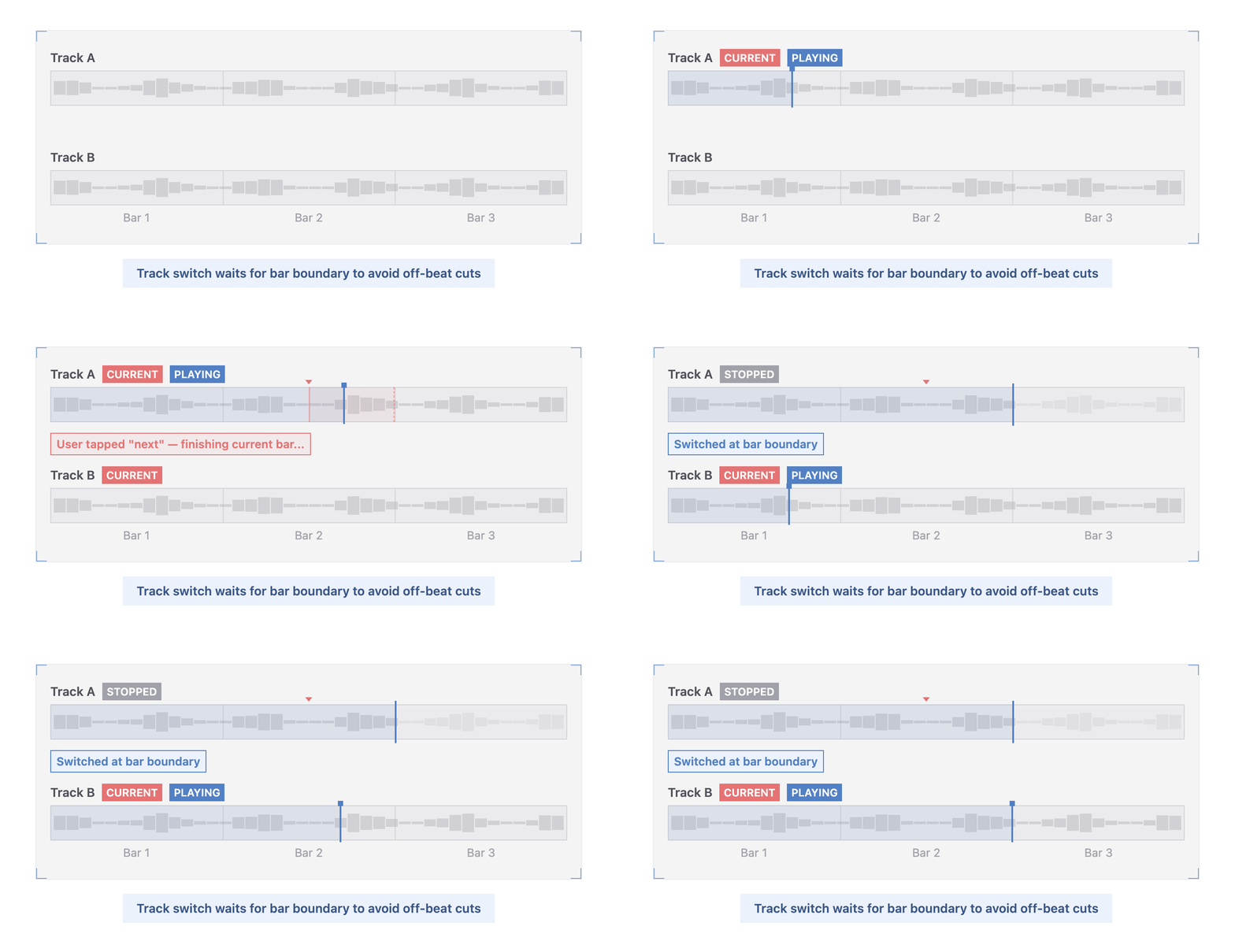
To ensure rhythmic correctness and avoid jarring off-beat cuts, the app did not allow instantaneous jumps to arbitrary points in the playback stream. Instead, track and section switches were not executed immediately upon user input. They were meticulously scheduled within the native control loop to occur precisely at the next bar boundary. Similarly, section loops were designed to activate only after at least the first chunk of that section was buffered, guaranteeing a seamless transition without clicks, gaps, or silent starts.
Native Transport and Descriptor Parsing:
Given the performance demands, the native layer was tasked with directly fetching binary descriptors and audio byte ranges using shared C++ code. Since React Native C++ modules typically lack a full cross-platform HTTP stack, a custom transport layer was necessary. The implementation leveraged libcurl to ensure consistent handling of range requests, retries, and error management across both iOS and Android. This choice, while requiring more initial setup, prevented duplication of transport logic and mitigated the risk of behavioral drift between the two platforms.
For parsing, the native reader was meticulously crafted to match the backend’s compact binary wire format, using struct ChunkData with explicit uint16_t and uint32_t fields and pragma pack(push, 1) to guarantee identical in-memory and serialized representations.
Runtime Decode Pipeline and Thread Model:
Upon metadata availability, the native layer preallocated one PCM buffer slot per chunk, allowing worker threads to decode directly into these slots as data arrived, avoiding costly allocations during real-time playback. The runtime flow was meticulously orchestrated: first, metadata was fetched; then, PCM buffers were preallocated; next, worker threads fetched audio bytes via range requests; these bytes were then copied into a decoder-owned buffer; finally, a worker thread decoded the compressed audio directly into the target PCM slot. This design kept both memory allocation and decoding operations off the critical audio callback thread, minimizing its workload and significantly reducing the chance of audible artifacts.
/filters:no_upscale()/articles/android-beat-aligned-mobile-audio-streaming/en/resources/99figure-4-1783412012793.jpg)
The system’s thread model was carefully segmented into three types of work: the audio thread (real-time safe for playback), worker threads (handling network fetches and decode operations), and the UI thread (managing user interactions). The audio thread’s real-time safety was paramount; network fetches, decode work, allocations, and lock-heavy coordination were strictly prohibited. Atomicity for simple shared state and short critical sections ensured the audio thread was never blocked by lower-priority tasks. Runtime optimizations like keeping multiple players "warm" (current, previous, upcoming tracks), reusing downloader connections, and maintaining a small pool of reusable PCM buffers further enhanced efficiency.
Intelligent Prefetching: Anticipating User Intent
A key component of the seamless experience was the prefetch priority algorithm. Instead of attempting to download everything at once, the prefetcher continuously ranked a small set of possible next playback paths, allocating bandwidth to the chunks most likely to be needed.
The priority algorithm was deterministic, adapting its strategy based on whether "section lock" was enabled. When enabled, the highest priority was given to the same section of the next beat, as this was the most probable next playback target. When section lock was disabled, the first section of the next beat received highest priority, serving as the default entry point. Subsequently, the prefetcher prioritized neighboring track and section targets (e.g., previous track, next section, previous section). Other chunks were loaded opportunistically once higher-priority playback paths were covered. This approach ensured that the most likely next playback targets were ready before the user reached them, preventing long preload queues that would often be invalidated by user swipes or feed re-ranking.
The decision to start with a deterministic prefetch model, rather than a predictive, probabilistic one, was strategic. At the project’s inception, there wasn’t enough behavioral data to train a learned model. A deterministic strategy, based on section-lock state and neighboring targets, made the system immediately understandable, testable, and highly effective, paving the way for potential future enhancements with learned models once sufficient data accrued.
Ensuring Robustness: Debugging and Validation
/filters:no_upscale()/articles/android-beat-aligned-mobile-audio-streaming/en/resources/72figure-5-1783412012793.jpg)
Developing such a complex, real-time audio system inevitably presented formidable challenges, primarily centered around cross-layer timing and state-synchronization failures. For instance, by the time a UI action was processed, the audio engine could already be milliseconds ahead, leading to desynchronization. Boundary chunks often exposed edge cases in the MP3 warm-up skip logic, requiring special handling for clean chunk starts. Even seemingly correct prefetch scheduling could fail under real-world network packet jitter, starving critical chunks. Shared-state synchronization demanded extreme care; patterns harmless in normal code paths could introduce audible artifacts on the audio thread, necessitating minimal mutex usage and lightweight state handoffs.
Extensive reliance on instrumentation, detailed timing traces, and controlled, repeatable network throttling tests were crucial for achieving and maintaining system reliability. While specific production telemetry remains proprietary, the development validation confirmed the system’s robustness. It performed reliably on weak 3G-class connections, preserving the product’s core playback experience. Section loops were artifact-free, section switches remained clean and beat-aligned, and beat-to-beat switching was usable under constrained mobile bandwidth, even during swipe-heavy interactions.
The design, typical of a v1 implementation, had clear, acceptable limits. Descriptor integer sizes assumed a maximum track length of ten minutes, aligning with product requirements. MP3 overlap handling was validated against a specific decoder, not a universal solution. The prefetcher was intentionally simple. These constraints were acceptable for the product’s immediate needs but are important considerations for broader applicability.
Broader Implications for Interactive Audio and Mobile Development
Colossal’s work on this beat-discovery app, though specific to a niche, offers profound insights and engineering patterns that generalize across a wider array of domains. The meticulous handling of dependent codec boundaries to preserve PCM continuity across segment transitions is a critical lesson for any selective audio decoding system. The design of prefetch strategies, intelligently prioritizing resources based on a constrained set of user actions, is applicable to countless interactive applications where anticipating user intent is key to a fluid experience.
Furthermore, the principles behind building a responsive, native mobile playback pipeline under weak or variable network conditions are universally valuable for developers aiming to deliver high-quality audio and video experiences in challenging mobile environments. The concept of beat- and bar-aligned transition control is particularly relevant for a growing class of interactive audio products, including music education tools, DJing apps, and even rhythm-based games, where precise synchronization with user input is paramount.
This project underscores a fundamental truth in complex system design: success often hinges on a holistic, integrated approach. Treating codec handling, metadata formats, transport protocols, prefetch prioritization, native scheduling, and audio-thread safety not as isolated components but as a unified design challenge was ultimately the differentiating factor. Each piece was interdependent; correct chunk boundaries needed decoder warm-up, efficient fetching depended on intelligent prefetch prioritization, and low-latency playback required timing-critical decisions to reside within the native audio path. It was the seamless synergy of these elements that transformed an ambitious vision into a tangible, high-performance reality, demonstrating the power of dedicated engineering in pushing the frontiers of mobile interactive experiences.
About the Author
Vladyslav Melnychenko
Vladyslav Melnychenko was responsible for the end-to-end system design and implementation discussed in this article, encompassing backend audio analysis, chunk-metadata generation, binary descriptor format, mobile range-streaming strategy, and a native C++ playback engine integrated with React Native on iOS and Android.