Nancy Grace Roman Space Telescope Poised for Two Decades of Discovery Following Major Fuel Efficiency Breakthrough

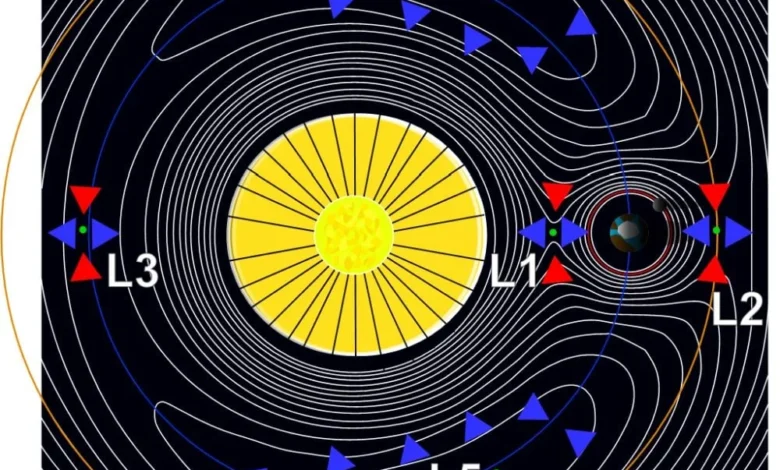
The Nancy Grace Roman Space Telescope has not yet arrived at its destination at the Sun-Earth Lagrange point 2 (L2), yet it has already achieved a monumental success that fundamentally alters the mission’s scientific legacy. NASA officials announced this week that, due to a series of highly efficient orbital maneuvers and a precise launch profile, the observatory is projected to carry sufficient propellant to sustain operations for at least 22 years. This represents a significant expansion beyond the initial 10-year mission baseline, which comprised a primary five-year survey phase followed by a potential five-year extension.
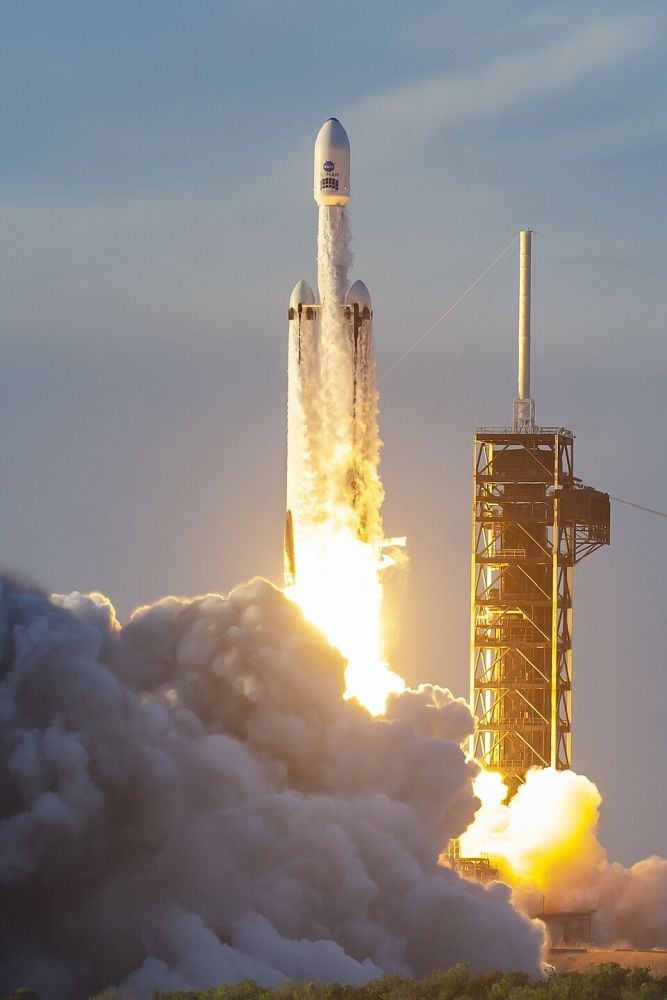
This windfall of operational time is the result of a "perfect storm" of engineering precision, from the initial separation from the SpaceX Falcon Heavy launch vehicle on August 30, 2026, to the meticulous management of the spacecraft’s mass throughout its lengthy development cycle. By maximizing fuel reserves and minimizing consumption during critical transit maneuvers, NASA has essentially doubled the potential lifespan of its next-generation infrared flagship.
A Chronology of Exceptional Performance
The path to this 22-year horizon began long before the launch pad. The Roman Space Telescope, originally conceived as the Wide-Field Infrared Survey Telescope (WFIRST), underwent extensive design evolution. In a 2015 design reference document, the mission projected a wet mass of 4,166 kg with a modest 107 kg of propellant. As the mission matured and the scientific objectives grew more ambitious, the spacecraft’s design specifications changed, leading to a much larger 9,800 kg design projection in later years.
However, the final "as-built" mass of the spacecraft at the time of launch was 8,056 kg—significantly lower than the mission’s maximum budget. This disparity provided engineers with an unexpected opportunity: because the propellant tanks were sized for a heavier vehicle, the reduced mass allowed NASA to load the tanks to their full structural capacity rather than the minimum required for a 10-year mission.
The operational efficiency was further demonstrated during the mission’s first critical milestone: the mid-course correction burn on August 31, 2026. Data from NASA’s Goddard Space Flight Center indicates that this maneuver was executed with better than 99% accuracy. While 200 kg of propellant had been allocated for this specific course correction, the spacecraft utilized only 18 kg. This efficiency suggests that subsequent maneuvers, including a second planned correction and the final insertion into a halo orbit at L2 in early December, will likely require significantly less fuel than conservative estimates initially predicted.
Engineering Excellence and Institutional Strategy
Jamie Dunn, the center director at NASA’s Goddard Space Flight Center, attributed the success to a combination of high-level project management and technical execution. "As a result of exquisite planning by our orbital dynamics team, brilliant execution by the operations team, and a precise launch from SpaceX, Roman has fuel for at least 22 years of potential science operations," Dunn noted in a recent statement.
The contribution of the SpaceX Falcon Heavy cannot be overstated. The accuracy of the launch vehicle’s low-Earth orbit departure burn established a trajectory that required minimal correction. In spaceflight, every gram of fuel saved during the initial transit translates into additional station-keeping capability at the destination. Because the Roman telescope will operate in a halo orbit around L2—a point of gravitational equilibrium—it requires periodic, small "station-keeping" burns roughly every 28 days to maintain its position. With the current fuel reserves, these monthly adjustments can be sustained for over two decades.
Alison Rao, the Roman propulsion lead at NASA Goddard, explained the logic behind the propellant management strategy: "A spacecraft’s mass changes throughout the design and build process, so we base the propellant budget on a set maximum value so we won’t come up short. We track the propellant needed based on actual mass throughout integration and testing as well, to make sure we have wiggle room."
Technical Context: From Spy Satellite Heritage to Science Icon
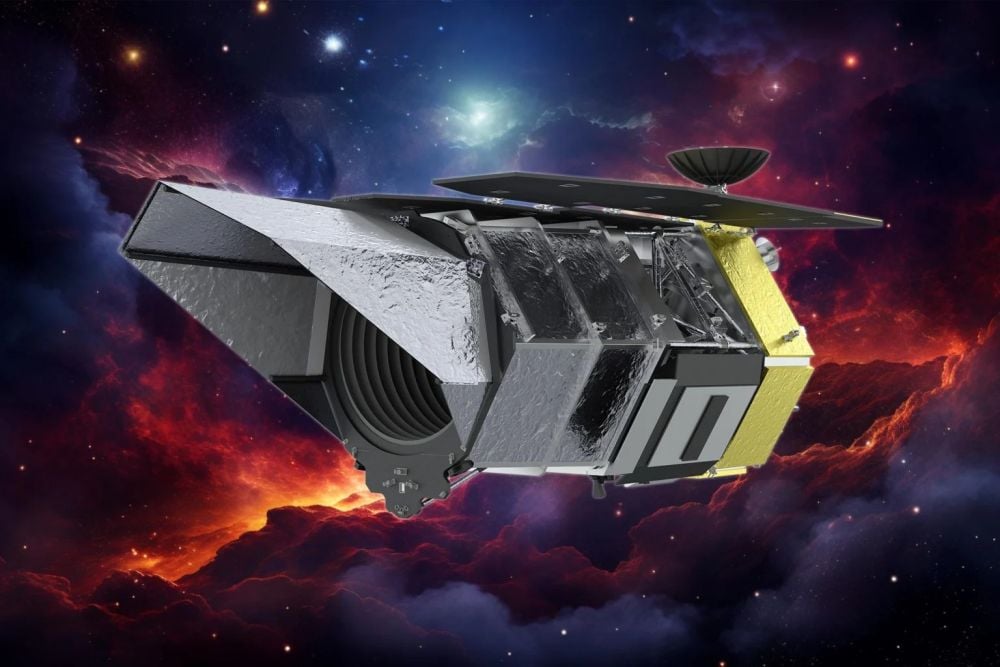
The Roman Space Telescope carries a unique lineage. It features a 2.4-meter primary mirror, a component originally designed for a reconnaissance satellite. This legacy hardware was repurposed to provide a field of view 100 times greater than that of the Hubble Space Telescope, while maintaining comparable resolution. The integration of this large mirror into a modern infrared-capable bus required decades of engineering, redesigns, and budget negotiations, but the final product is now positioned to become one of the most productive assets in the history of astronomy.
The mission is named in honor of Dr. Nancy Grace Roman, NASA’s first chief of astronomy and a foundational figure in the development of space-based observatories. Her vision for a wide-field survey telescope is now poised to exceed even the most optimistic projections of her contemporaries.
Scientific Implications and Future Research
The expansion of the mission timeline to 22 years has profound implications for the global scientific community. The first five years of the mission are strictly reserved for the Core Community Surveys, which include the High-Latitude Time-Domain Survey. These surveys are designed to map the distribution of matter and the expansion history of the universe, providing critical data on dark energy and dark matter.
Following the core surveys, the mission will transition into the General Observer (GO) program. In this phase, the telescope’s observing time is allocated to the wider astronomical community through competitive proposal cycles. With an extra 12 years of operational life, the GO program could potentially triple in size compared to original projections.
Furthermore, the Roman telescope carries a sophisticated coronagraph—a technology demonstrator capable of blocking the glare of distant stars to image exoplanets directly. While initially intended as a pilot study, the extra mission duration allows for a much more comprehensive testing and observation program for the coronagraph. If successful, this instrument could pave the way for future flagship missions dedicated to identifying biosignatures in the atmospheres of Earth-like planets.
Broader Impact on Astrophysics
The scientific community has reacted to the news with optimism. Researchers who had planned their work around a 10-year horizon are now reconsidering the scope of their long-term projects. The ability to monitor celestial events—such as transient phenomena like supernovae or the movement of objects in the Kuiper Belt—over a two-decade span creates an entirely new category of temporal data.
Astronomers will now be able to observe the evolution of variable stars, the dynamics of galactic structures, and the behavior of distant quasars with a consistency and duration that was previously impossible. This long-baseline data is essential for understanding the life cycles of stars and the formation of galaxies over time.
Looking Ahead to L2
As the Nancy Grace Roman Space Telescope approaches its final maneuver into its halo orbit at L2, it will join an elite company of space observatories, including the James Webb Space Telescope (JWST) and the Euclid mission. This location offers a stable environment with an unobstructed view of the deep universe, free from the thermal and gravitational interference of the Earth.
Once the telescope completes its commissioning and testing phase, it will begin its primary mission. The engineering team will continue to monitor fuel consumption metrics closely, as even small deviations in orbital maintenance could influence the final timeline. However, with the current trajectory and the surplus of propellant, the scientific community can now look forward to two decades of unprecedented observation.
The extension of the Roman mission serves as a testament to the benefits of robust engineering margins and precise mission planning. In an era where space exploration is increasingly defined by its longevity and the reusability of high-tech assets, the Roman Space Telescope stands as a new benchmark for endurance. The data gathered over the next 22 years will likely rewrite textbooks on cosmology and planetary science, ensuring that the legacy of Nancy Grace Roman remains at the center of astronomical discovery well into the 2040s.
Related posts: