Motorola Begins Android 17 Rollout for the Edge 60 Fusion Starting in India

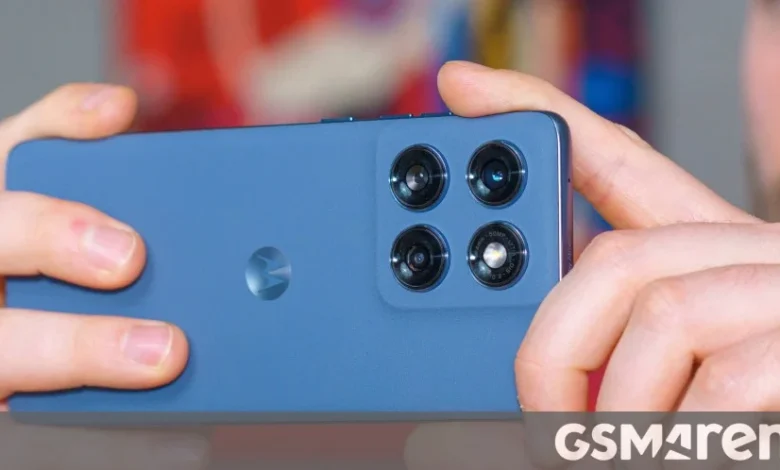
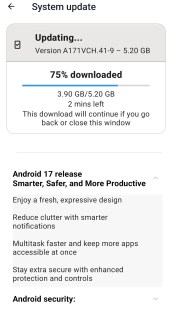
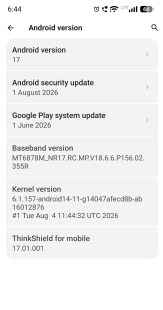
Motorola has officially commenced the rollout of the Android 17 operating system update for the Edge 60 Fusion, with initial user reports surfacing across online communities such as Reddit. The software update, which is currently making its way to devices in the Indian market, arrives over-the-air (OTA) carrying the specific firmware build version A171VCH.41-9. Given the substantial size of the installation package—weighing in at approximately 5.2GB—device owners are strongly advised to download and install the update over a stable and high-speed Wi-Fi network to avoid unexpected cellular data charges or incomplete installations.
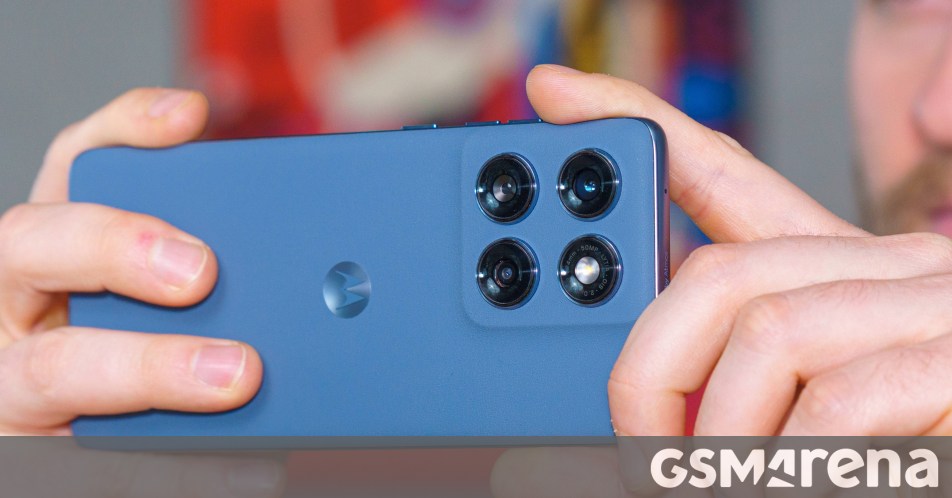
The deployment of Android 17 to the Motorola Edge 60 Fusion marks a significant milestone in the manufacturer’s software support lifecycle. As one of the brand’s prominent mid-range offerings, the device is receiving the latest major Android iteration ahead of many competing models in its segment. While early adopters in India are the first to report receiving the notification prompt, regional availability is expected to expand progressively. Industry observers anticipate that the firmware will hit international markets, including Europe and Latin America, in the coming days and weeks, following Motorola’s established phased rollout methodology.
Technical Specifications and Software Package Details
The A171VCH.41-9 build brings the full suite of native Android 17 enhancements to the Motorola Edge 60 Fusion. Although official, comprehensive change logs from Motorola are still rolling out alongside the firmware, the update inherently includes core system upgrades focused on privacy controls, background process management, enhanced notification channels, and visual refinements to the user interface.

Of particular interest to tech enthusiasts is the potential inclusion of Motorola’s proprietary Qira AI assistant. While initial user reports have yet to definitively confirm whether the Qira AI suite is fully integrated into this specific regional build, recent software deployment strategies from the company suggest that expanding the reach of Qira AI is a primary objective of the Android 17 lifecycle. The AI assistant, designed to offer deeper contextual awareness, predictive task management, and enhanced device interactions, has become a cornerstone of Motorola’s modern software ecosystem.
To accommodate the hefty 5.2GB download, users should ensure their devices have sufficient internal storage available and a battery charge of at least 50 percent before initiating the installation process. The hardware configuration of the Edge 60 Fusion—typically featuring robust memory options such as 8GB or 12GB of RAM paired with 256GB of internal storage—ensures that the device is well-equipped to handle the memory and processing demands of the new operating system without performance degradation.

The Evolution of Motorola’s Update Strategy
The timely arrival of Android 17 for the Edge 60 Fusion reflects a broader shift in Motorola’s approach to software maintenance and ecosystem support. Historically, mid-range smartphone manufacturers have faced criticism for sluggish update cadences, often prioritizing flagship devices at the expense of more affordable alternatives. However, recent quarters have seen Motorola accelerate its software deployment schedules significantly.
The company has been systematically pushing out Android 17 firmware updates across a widening portfolio of devices. This aggressive timeline indicates a strategic effort by Motorola to enhance brand loyalty and compete more directly with rival manufacturers who have established rigid, long-term software support guarantees. By delivering major operating system upgrades promptly, Motorola aims to bolster consumer confidence in the longevity and security of its hardware lineup.

Furthermore, the phased rollout structure—starting typically in key demographic regions like India before scaling globally—allows the engineering teams to monitor server loads, identify unforeseen bugs, and halt deployments if critical vulnerabilities are discovered. This cautious yet efficient methodology helps safeguard the user experience while maintaining momentum in the global software release cycle.
Market Position and Consumer Impact
The Motorola Edge 60 Fusion has carved out a distinct niche in the competitive mid-range smartphone sector, appealing to consumers seeking premium design elements, capable camera systems, and reliable performance without incurring flagship costs. Available globally through various retail channels—with pricing generally hovering around $257 in the United States, €278 in Europe, and ₹28,799 in India for higher-tier memory configurations—the device represents a vital volume driver for the manufacturer.
The arrival of Android 17 directly impacts the residual value and practical lifespan of the Edge 60 Fusion. For existing owners, the update breathes new life into the hardware, introducing modern software capabilities that extend the device’s relevance in a fast-moving market. For prospective buyers browsing current retail offers, the confirmation of active, up-to-date software support serves as a strong purchasing incentive, reassuring consumers that their investment will remain secure and technologically current.
Broader Implications for the Android Ecosystem
As Android 17 continues its migration across the broader smartphone landscape, the rollout by manufacturers like Motorola highlights the ongoing maturation of the mobile operating system. Google’s latest iteration places heavy emphasis on cross-device synchronization, granular permission frameworks, and artificial intelligence integration.
Motorola’s successful deployment of such a massive software package on a mid-tier device demonstrates that the engineering challenges associated with major OS migrations are increasingly being managed with greater efficiency. As more regional variants of the Edge 60 Fusion—and subsequently other models in the Edge and Moto G families—receive the update, the industry will closely watch how features like the Qira AI assistant perform under diverse real-world conditions.
For now, Edge 60 Fusion owners in India are encouraged to manually check their system settings for the arrival of the A171VCH.41-9 build, provided they have access to a reliable, unmetered network connection. As the deployment expands, global consumers can expect formal announcements regarding regional timelines to follow shortly.
Related posts: