The Week’s 10 Biggest U.S. Startup Funding Rounds: AI Infrastructure and Space Technology Lead the Market


The landscape of venture capital in the United States underwent a noticeable recalibration this week as investors shifted their focus toward mid-to-large-scale growth rounds. Following a preceding week characterized by several unprecedented billion-dollar-plus capital injections, the market sentiment appeared to stabilize, with a heavy emphasis on AI-adjacent infrastructure, aerospace innovation, and enterprise software. While the sheer volume of "megadeals" retreated from the highs seen in early September, the quality of the companies securing funding suggests a sustained institutional commitment to technologies that solve foundational bottlenecks in computing, energy, and logistics.
Leading the charge for the week of September 12–18, 2026, was Temporal Technologies, which secured a significant $550 million Series E round. This capital infusion, which values the Bellevue-based company at $12.55 billion, underscores the growing demand for robust infrastructure capable of sustaining long-running AI agents. As enterprise organizations move from experimenting with AI to deploying complex, multi-step automated systems, the underlying "plumbing" of these models—the orchestration layers that Temporal provides—has become a primary target for venture capital firms, including Lightspeed, Wellington Management, Goldman Sachs Alternatives, and Tiger Global.
The Strategic Shift in Capital Allocation
The current funding environment reflects a transition from speculative AI experimentation to industrial-grade implementation. The presence of companies like Cornelis Networks, which raised $205 million to bolster high-performance networking for AI workloads, indicates that the "AI gold rush" is increasingly benefiting the suppliers of the essential technology stack. Investors are no longer merely funding the models themselves; they are pouring capital into the networking, data center, and developer tools required to maintain the computational intensity these models demand.
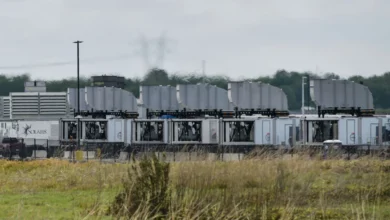
This trend is further exemplified by the massive $3 billion-plus raise for Crusoe Energy Systems, which became official this week. By focusing on data center development and energy-efficient computing, Crusoe sits at the intersection of two of the most critical challenges facing the tech sector: infrastructure capacity and energy sustainability. The participation of Atreides Management, Valor Equity Partners, and Mubadala Capital in this round signals that major global investors view energy-efficient AI infrastructure as a long-term, high-yield asset class.
Detailed Breakdown of the Top 10 Rounds
The following list represents the most significant capital raises by U.S.-based startups for the week of September 12–18, 2026, ranked by the total dollar value of the announced financing.
1. Temporal Technologies ($550 Million)
Operating as the backbone for complex enterprise automation, Temporal’s Series E brings its total valuation to over $12.5 billion. The investment, led by a consortium of elite institutional investors, marks a pivotal moment for the company as it scales to meet the demands of global corporations integrating AI into their core operations.
2. Impulse Space ($308 Million)
The aerospace sector continues to attract heavy investment, with Redondo Beach-based Impulse Space securing an additional $308 million in Series D extension funding. This brings the company’s total round to $808 million. Impulse Space is currently developing advanced in-space propulsion vehicles, a niche that is increasingly vital as the satellite and orbital economy moves beyond mere launching and into active space logistics.
3. Ridgeline ($250 Million)
In the fintech sector, Ridgeline continues to gain momentum with a $250 million Series E round. The company’s focus on AI-enabled investment management software has resonated with institutional investors, pushing its valuation to $1.45 billion. The round was notably backed by founder and chairman Dave Duffield, a veteran of the enterprise software industry whose continued personal investment serves as a strong signal of confidence in the platform’s trajectory.
4. Cornelis Networks ($205 Million)
As AI clusters grow in size and complexity, the need for high-speed, low-latency networking becomes paramount. Cornelis Networks, based in Pennsylvania, closed a $205 million round to expand its high-performance computing (HPC) technology, ensuring it remains competitive against incumbents in the networking hardware space.
5. Factory ($200 Million)
Factory, a San Francisco-based firm specializing in AI-driven enterprise software development, achieved a $5 billion valuation with its latest $200 million round. The company’s growth highlights the shift toward AI agents that do not just write code but manage the entire software development lifecycle, reducing the manual burden on enterprise engineering teams.
6. Profound ($180 Million)
Marketing tech (MarTech) is seeing a resurgence through the lens of AI search optimization. Profound’s $180 million Series D, led by Sequoia Capital and Kleiner Perkins, values the company at $1.8 billion. The startup provides tools that help businesses ensure their brand presence remains visible as consumer search behavior moves toward AI-generated summaries rather than traditional web links.
7. Arcee AI & Nex (Tie, $150 Million Each)
Arcee AI, focused on foundational, open-weight AI models, raised $150 million, validating the market’s appetite for flexible, customizable AI architectures. Simultaneously, Nex, which is pioneering motion-based gaming for home environments, secured $150 million in a mix of equity and debt, signaling that the gaming hardware sector is finding new ways to innovate beyond traditional controller-based interfaces.
9. Mazama Energy ($135 Million)
Energy innovation remains a critical pillar of the venture ecosystem. Mazama Energy’s $135 million Series B round, led by Centaurus Capital and Doerr Capital, highlights the resurgence of geothermal power as a viable, base-load renewable energy source capable of powering the next generation of AI data centers.
10. Sling Therapeutics ($123 Million)
Rounding out the top ten is the biotech firm Sling Therapeutics. Their $123 million Series C financing, led by Forbion Capital Partners, will support the development of targeted small-molecule therapies for thyroid eye disease. This deal serves as a reminder that biotech remains a resilient sector, often insulated from the cyclical volatility of the broader software market.
Chronology of Recent Funding Trends
The past month has demonstrated a clear trajectory in venture capital. Early September was defined by a surge of "mega-deals" that pushed total venture activity to a yearly high. However, the period of September 12–18 suggests a "digestion phase." Investors are being more selective, prioritizing companies that demonstrate a clear path to revenue or that serve as foundational infrastructure for other emerging technologies.
Analytical Implications for the Market
The data from this week suggests that the "AI premium" is beginning to bifurcate. General-purpose AI startups are finding it harder to secure funding unless they possess proprietary data or massive scale. Conversely, companies providing "picks and shovels"—infrastructure, energy, networking, and enterprise integration—are seeing massive valuation growth.
The $5 billion valuation for Factory and the $12.55 billion valuation for Temporal indicate that investors are willing to pay a premium for software that promises to replace or significantly augment high-cost human labor. Furthermore, the inclusion of biotech and space tech in the top 10 list confirms that venture capital is not exclusively focused on software; it is hedging against long-term physical-world challenges.
Official Perspectives and Market Sentiment
While specific statements from the leadership of these companies have been limited, the involvement of tier-one venture firms—such as Sequoia, Kleiner Perkins, and Lightspeed—suggests a unified strategy. These firms are doubling down on companies that can successfully bridge the gap between AI theory and enterprise utility.
For the broader market, the implications are clear: the era of "growth at any cost" has been replaced by "growth through utility." Startups that can prove they are indispensable to the enterprise—whether by optimizing AI data centers, automating code development, or providing clean energy—will continue to command the interest of global capital allocators throughout the remainder of 2026. As the fourth quarter approaches, market participants will be watching to see if this trend of mid-sized, high-valuation rounds persists or if the market experiences another wave of extreme, billion-dollar-plus capital events.