Microsoft CEO Satya Nadella Unveils Frontier Diffusion and Control Strategy to Combat Spiraling AI Costs Through In-House MAI Models

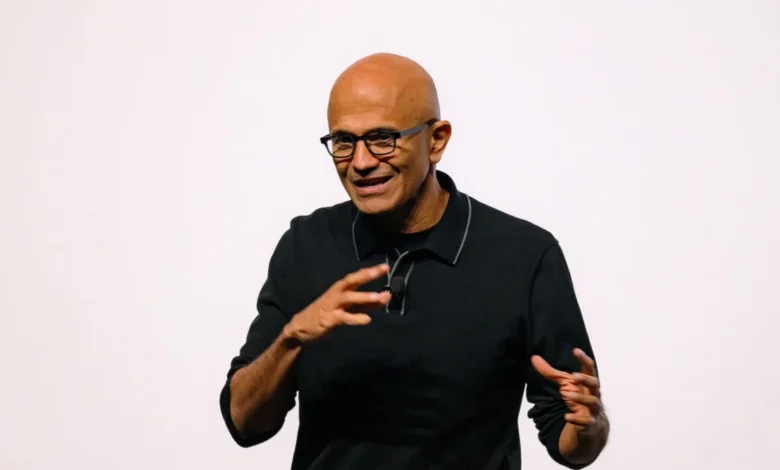
Microsoft CEO Satya Nadella has formally announced a strategic shift in the company’s artificial intelligence roadmap, signaling an aggressive expansion of the in-house MAI model range. This move is designed to provide enterprise customers with lower-cost, high-efficiency AI alternatives as the industry grapples with the escalating financial burden of deploying large-scale "frontier" models. The announcement, detailed in a comprehensive strategy outline released on July 23, introduces the "Frontier Diffusion and Control" framework, a concept aimed at decentralizing AI capabilities and allowing organizations to optimize their return on investment by matching specific tasks with appropriately sized models.
The expansion of the MAI (Microsoft AI) suite follows the initial unveiling of these internal models in June. Designed as domain-specific tools rather than general-purpose giants, the MAI range encompasses a variety of specialized functions, including image and voice generation, high-accuracy audio transcription, and sophisticated coding assistance. By prioritizing "model choice" over a one-size-fits-all approach, Microsoft is positioning itself to address a growing "cost-to-outcome" crisis currently facing the corporate sector.
The Economic Necessity of Model Diversification
For the past eighteen months, the tech industry has been dominated by the pursuit of "frontier models"—massive, multi-billion parameter systems like OpenAI’s GPT-4 or Anthropic’s Claude 3. While these models offer unprecedented reasoning capabilities, they come with significant overhead in terms of compute power, energy consumption, and subscription fees. Nadella’s latest comments highlight a pivot toward pragmatism, acknowledging that for many enterprise tasks, using a frontier model is akin to using a supercar to deliver groceries.
"In a world where software has real marginal cost for the first time, how do we ensure frontier benefits are diffused across the entire ecosystem?" Nadella wrote in his strategy update. He emphasized that the "key is to optimize the cost-to-outcome frontier in real-world context," which necessitates a shift away from over-reliance on the most expensive infrastructure.
This strategic pivot arrives at a critical juncture. Many enterprises have reported "bill shock" as they scale AI implementations. Trends such as "tokenmaxxing"—the practice of maximizing token usage within prompts to improve output quality—and the industry’s shift toward consumption-based pricing have led to spiraling costs. For large-scale deployments, these expenses can quickly outpace the productivity gains the AI was intended to provide. Microsoft’s MAI models are specifically engineered to deliver "frontier-level" performance in specialized niches while utilizing only a fraction of the tokens required by general-purpose systems.
The Frontier Diffusion and Control Strategy
The "Frontier Diffusion and Control" strategy is built on the premise that the value of AI should not be concentrated solely in the hands of the labs that build the largest models. Instead, Microsoft intends to "diffuse" these capabilities through a tiered system where MAI models handle the bulk of specialized, repetitive, or domain-specific tasks, while frontier models are reserved for complex, high-level reasoning.
Nadella explained that these in-house models have been built "from the ground up with clean data lineage." This is a significant point of differentiation, as it addresses enterprise concerns regarding copyright, data privacy, and the "black box" nature of some third-party models. These models are optimized for "learning transfer," allowing them to move from generalist capabilities to specialized skills within an enterprise’s specific Reinforcement Learning Environment (RLE).
A central pillar of this strategy is the implementation of rigorous evaluation processes. Nadella urged enterprises to adopt "product-specific evals" and maintain "model independence." This approach allows businesses to keep refining their AI implementations until they reach the precise "quality-cost target" required for their specific business case. By not being locked into a single provider or a single massive model, companies gain the "control and a direct hill to climb" to optimize their operations.
Chronology of Microsoft’s AI Evolution
To understand the significance of this shift, it is necessary to look at the timeline of Microsoft’s AI trajectory over the last few years:
- 2019–2022: Microsoft establishes a deep partnership with OpenAI, investing billions and securing exclusive cloud rights for GPT models. The focus is almost entirely on large-scale frontier capabilities.
- Early 2023: The launch of Microsoft Copilot marks the integration of GPT-4 across the Microsoft 365 suite. Enterprise adoption surges, but concerns about latency and inference costs begin to surface.
- Late 2023: Microsoft diversifies its portfolio by striking a deal with Anthropic and exploring open-source integrations via Azure AI Studio, signaling a move away from an OpenAI-only ecosystem.
- June 2024: Microsoft quietly unveils the first iteration of its MAI models, focusing on smaller, more efficient architectures that can run on-premises or on edge devices.
- July 23, 2024: Satya Nadella publishes the "Frontier Diffusion and Control" blog post, officially cementing the shift toward cost-optimized, task-specific AI as a core corporate strategy.
Addressing the Reverse Information Paradox
One of the more provocative elements of Nadella’s recent communication is his warning regarding the "reverse information paradox." This concept describes a scenario where enterprises "pay twice" for AI: first through subscription fees, and second by handing over their proprietary data to model providers.
Nadella argued that if learning flows in only one direction—toward the owners of the AI infrastructure—the economic value will eventually converge at the top, leaving the creators of the knowledge (the enterprises) with little long-term advantage. "It’s imperative that we distribute the learning infrastructure to every firm so that they can control their own learning loop," Nadella stated.
By providing the MAI model range, Microsoft is essentially offering a "private loop" option. Businesses can use these models to process their data without the risk of that data being used to train a competitor’s general-purpose model. This focus on data sovereignty is expected to resonate strongly with highly regulated industries such as finance, healthcare, and defense.
Internal Piloting and Performance Data
Microsoft has already begun integrating MAI models into its own flagship products to test their efficacy. According to Nadella, internal testing has delivered "promising early results." The company has piloted these models within GitHub Copilot, Outlook, and various Microsoft 365 services.
Preliminary data suggests that for tasks like code completion or email summarization, MAI models can outperform general-purpose frontier models in specific metrics while using significantly less computational power. This efficiency translates directly to lower latency for the end-user and lower operating costs for the provider. Microsoft plans to expand this approach to Copilot Chat, PowerPoint, and other high-traffic services in the coming months.
Industry Reactions and Market Implications
Analysts have noted that Nadella’s comments align closely with recent research from firms like Gartner. In a recent advisory, Gartner warned that surging AI costs could exceed developer salaries by 2028 if not properly managed. The consultancy recommended that enterprises establish a "use-case-driven decision framework"—exactly the type of approach Nadella is now advocating.
Gartner’s research suggests that many companies are currently "needlessly allocating agents to tasks they’re not designed for." By providing a menu of models with different price points and capabilities, Microsoft is attempting to fix this inefficiency.
However, some industry observers find the timing of this pivot notable. For years, Microsoft was the primary cheerleader for the "bigger is better" philosophy of AI, largely due to its relationship with OpenAI. The shift toward smaller, in-house models could be interpreted as a sign of cooling relations between the two entities, or simply a recognition that the "brute force" era of AI development is reaching a point of diminishing economic returns.
Broader Impact and Future Outlook
The broader implications of Microsoft’s "Frontier Diffusion" strategy are significant for the entire tech ecosystem. If the world’s largest software company is signaling that frontier models are too expensive for routine tasks, it may trigger a market-wide correction in how AI startups are valued and how enterprise IT budgets are allocated.
For competitors like Google and Meta, who have also been developing tiered model families (such as Gemini Nano/Pro/Ultra and Llama 3), Microsoft’s move validates the "multi-model" world. It also places a premium on "context engineering"—the ability to wrap a model in the right tools, skills, and "agent harnesses" to make it useful in a specific business context.
As we move toward 2026, the success of Microsoft’s strategy will likely be measured by the "cost-to-outcome" ratio of its enterprise customers. If the MAI model range can successfully lower the barrier to entry for AI adoption while maintaining high performance, Microsoft will have successfully navigated the transition from the experimental phase of generative AI to the era of sustainable, industrial-scale deployment.
For now, the message from Redmond is clear: the future of AI is not just about building the most powerful brain, but about building the most efficient one for the job at hand. By empowering firms to control their own "learning loops" and offering a diverse range of specialized models, Microsoft is attempting to ensure that the "AI revolution" remains economically viable for the long haul.
Related posts: